Posts tagged: air

unEARTHED. The Earthjustice Blog

air


    SIGN-UP for our latest news and action alerts:
   Please leave this field empty

Facebook Fans

Featured Campaigns

Everyone has The Right To Breathe clean air. Watch a video featuring Earthjustice Attorney Jim Pew and two Pennsylvanians—Marti Blake and Martin Garrigan—who know firsthand what it means to live in the shadow of a coal plant's smokestack, breathing in daily lungfuls of toxic air for more than two decades.

Coal Ash Contaminates Our Lives. Coal ash is the hazardous waste that remains after coal is burned. Dumped into unlined ponds or mines, the toxins readily leach into drinking water supplies. Watch the video above and take action to support federally enforceable safeguards for coal ash disposal.

ABOUT EARTHJUSTICE'S BLOG

unEARTHED is a forum for the voices and stories of the people behind Earthjustice's work. The views and opinions expressed in this blog do not necessarily represent the opinion or position of Earthjustice or its board, clients, or funders.

Learn more about Earthjustice.

View Liz Judge's blog posts
12 April 2011, 3:02 PM
"Once you love something, you are willing to fight for it," says Earthjustice's Preso
Earthjustice attorney Tim Preso

(This is the fourth in a series of Q & As with Earthjustice staff who work to protect our nation's forests and their critical natural resources and wildlife. Protecting our national forests, in particular, is essential for the future of our nation. The Obama administration recently proposed new planning rules that may leave our national forests in peril. National forests are the single largest source of clean drinking water in the United States, serving 124 million Americans. Visit our Forests For Our Future campaign site to learn more. Tim Preso is attorney based in Earthjustice's Northern Rockies office in Bozeman, Montana.)

EJ: How did your fight to protect our forests begin, Tim?

TP: I walked into the Earthjustice office in Bozeman, Montana for my first day of work in March of 2000 and immediately became involved in a controversy over the federal regulation protecting our last national forest roadless lands. That marked the beginning of an 11-year campaign during which I have worked as part of a team of Earthjustice lawyers to defend the Roadless Rule against a variety of challenges. But outside the legal context, protecting our national forest lands has been close to my heart since I developed a love for wild places and wild creatures amid the rugged mountains and canyons of northeast Oregon's Wallowa-Whitman National Forest, near where I was raised. I had the now-all-too-uncommon privilege of growing up near big, open wild country filled with impressive wildlife. I want to make sure that opportunity remains for future generations instead of becoming something that kids can only read about in history books.

View Sam Edmondson's blog posts
11 April 2011, 3:10 PM
Decade-long effort to improve life in Port Arthur wins Kelley the "Green Nobel"
Hilton Kelley in Port Arthur, TX. Photo: Goldman Prize

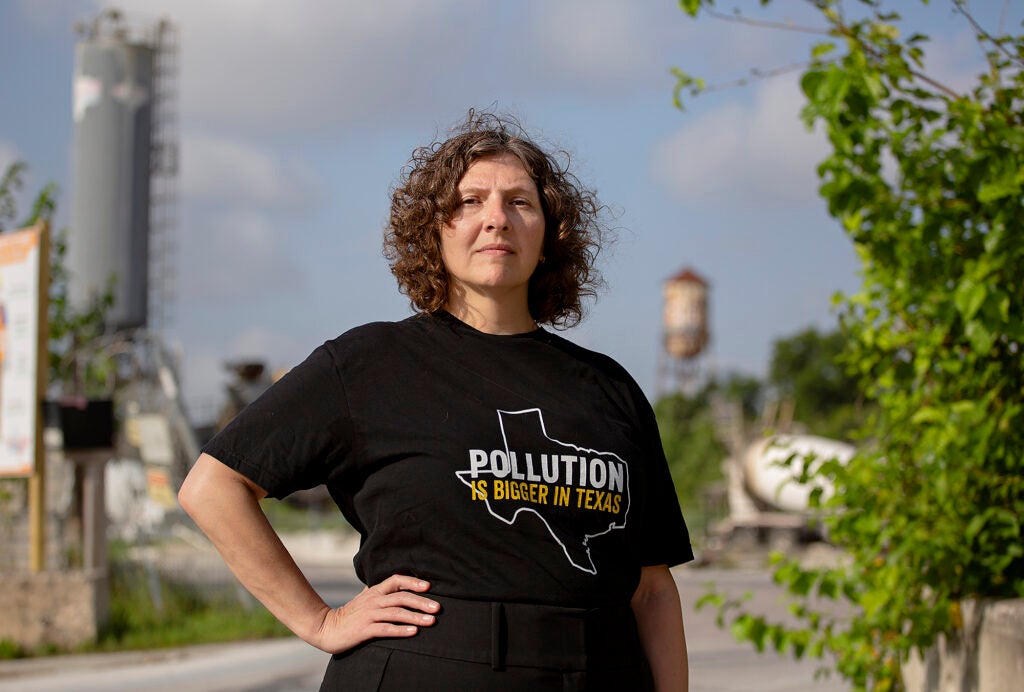
Port Arthur, Texas is home to a high density of oil refineries, chemical plants and hazardous waste facilities that have made the Gulf Coast city one of the most polluted in America. Asthma and cancer rates in the largely African-American neighborhood known as West Side—which sits at the fenceline of Port Arthur's heavy industry—are among the highest in the state.

But thankfully, Port Arthur is also home to Hilton Kelley, a force-of-nature environmental justice advocate whose tireless efforts in his community have reduced the toxic burden that he and his neighbors bear. Kelley's inspirational work earned him a 2011 Goldman Environmental Prize, which every year goes to six outstanding grassroots environmental heroes (one from every inhabited continent). Mr. Kelley, alongside the five other recipients, will receive the North American award at a ceremony in San Francisco later today.

The 50-year-old Kelley was born in Port Arthur but left in 1979 to pursue a career as a stuntman and actor in television and film. On a visit home in 2000, Kelley was shocked by the decline his hometown was experiencing—though Port Arthur had faced poverty and air pollution in his youth, the prevalence of cancer and respiratory illness, crime and economic hardship he saw was devastating. Resolved to help his community, Kelley returned home and learned all he could about industrial air pollution—and how to stop it.

1 Comment   /   Read more >>
View Sam Edmondson's blog posts
08 April 2011, 3:09 PM
Affordable, effective technology exists to make our air safer to breathe

When the U.S. Environmental Protection Agency proposed last month to clean up the toxic air emissions of coal-fired power plants, it wasn't a surprise. The date actually had been set for about a year, thanks to a court-ordered deadline won by Earthjustice and other groups. And for years prior to that deadline, a back-and-forth legal battle raged between a coalition of environmental and public health organizations—with Earthjustice in a leading role—and the coal-fired power industry's lobbyists and political cronies.

In fact, the effort to clean up power plants' emissions of mercury, arsenic and other toxics could legally drink a beer if it were a person. The seed of that effort was planted by Congress 21 years ago in amendments to the Clean Air Act.

So, don't believe the protestations from some sectors of the power industry that they can't possibly comply with these important health protections in time. These health protections have been coming to town for many, many years and would've arrived much sooner had the intransigence of industry not delayed them time and again.

View Liz Judge's blog posts
08 April 2011, 3:03 PM
Earthjustice legislative counsel explains why she's dedicated to the fight
Rebecca Judd and her beloved greyhound Shooter

(This is the third in a series of Q & As with Earthjustice staff who work to protect our nation's forests and their critical natural resources and wildlife. Protecting our national forests, in particular, is essential for the future of our nation. The Obama administration recently proposed new planning rules that may leave our national forests in peril. National forests are the single largest source of clean drinking water in the United States, serving 124 million Americans. Visit our Forests For Our Future campaign site to learn more. Rebecca Judd is legislative counsel for Earthjustice, based in Washington, D.C.)

EJ: Were there any formative moments in national forests that set you about this path to fight for them?

RJ: In the summer of 2003, I clerked for Sierra Club after my first year of law school and assisted with a case challenging the logging and burning of over 5,000 acres of the Eldorado National Forest in California. A group of us was able to hike in an area slated for timber removal, and it was eerily disturbing to witness firsthand how many trees were marked for destruction. That experience motivated me to continue my work to advocate for the protection of our environment, our cherished landscapes and natural habitat, and the species that depend upon them. 

View Sam Edmondson's blog posts
07 April 2011, 4:21 PM
New report highlights prevalence, cost of asthma and the need for clean air
Photo: Chris Jordan/Earthjustice

People who suffer from asthma often say an attack feels like breathing through a pool of water or with a pillow covering their face. Unfortunately, millions of Americans know all too well what that's like.

In the United States, asthma is a bona fide public health epidemic: 17 million adults and 7 million children suffer from the disease. Every year, our society pays in excess of $53 billion to treat it. Millions of asthmatics, including hundreds of thousands of kids, make visits to the emergency room for medical attention. And in thousands of severe cases, people die.

The scope of this epidemic, broken down by state, is laid out in a report released yesterday by Health Care Without Harm, The National Association of School Nurses, and The Alliance of Nurses for Healthy Environments. The report notes that environmental triggers like air pollution can cause and exacerbate asthma, so it's critically important that we defend existing clean air protections and work for new ones.

No argument here, but many of our elected leaders in Congress apparently don't agree.

View Raviya Ismail's blog posts
07 April 2011, 1:19 PM
DC Circuit Court rejects industry and state pushback of air rules

Amid the wrangling back and forth in Congress over our clean air protections, there is some good news for our air. This morning the DC Circuit Court of Appeals rejected an effort from industry groups and allied states  to suspend an EPA rule adopted last June that will limit dangerous sulfur dioxide emissions from power plants and factories. The court also denied attempts to delay implementation of this health protection. 

Exposure to sulfur dioxide is linked to asthma symptoms and respiratory illnesses, particularly in children, senior citizens and asthmatic patients. The EPA’s stronger standards will help prevent thousands of asthma attacks and hospital and emergency room visits. And since sulfur dioxide emissions transform into fine particles in the air, this standard will significantly reduce extremely harmful particulate matter pollution, saving thousands of lives.

View Liz Judge's blog posts
06 April 2011, 3:14 PM
Squashes attempts to favor big corporate polluters over American citizens
Sen. James Inhofe

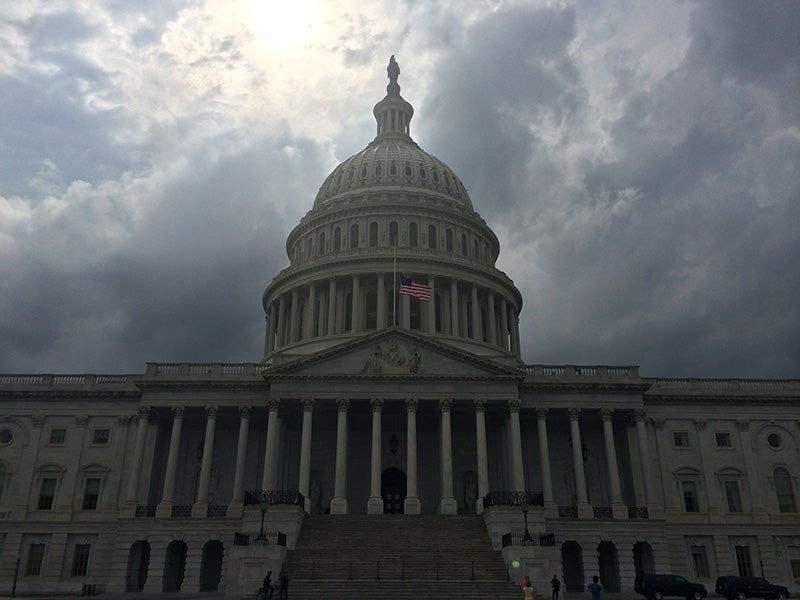
The Senate just voted to reject four—count 'em 1-2-3-4—bad amendments that would strangle and block the U.S. Environmental Protection Agency from being able to limit dangerous carbon dioxide pollution from the nation's biggest polluters.

These Dirty Air Acts went down in the upper chamber today because enough of the Senate still obviously believes that the well-being, future and health of Americans are more important than corporate special interests.

The amendments were offered on an unrelated small business innovation bill (S.493) by Sens. Rockefeller (S.AMDT.215), McConnell and Inhofe (S.AMDT.183), Baucus (S.AMDT.236), and Stabenow (S.AMDT.265).

Read Earthjustice's statement on today's Senate win for Americans, our health, and our future.

Now that the Senate has secured a victory for all Americans who breathe and whose businesses, families, and livelihood depend on a secure future for this country, eyes turn to the House, which is debating a Dirty Air Act of its own at this very moment.

View Liz Judge's blog posts
06 April 2011, 10:27 AM
Attorney Tom Waldo explains why our National Forests are worth fighting for

(This is the second in a series of Q & As with Earthjustice staff who work to protect our nation's forests and their critical natural resources and wildlife. Protecting our national forests, in particular, is essential for the future of our nation. The Obama administration recently proposed new planning rules that may leave our National Forests in peril. National forests are the single largest source of clean drinking water in the United States, serving 124 million Americans. Visit our Forests For Our Future campaign site to learn more. Tom Waldo joined Earthjustice in 1989 and is a staff attorney in the Juneau, Alaska office.)

EJ: Tell us about your work to protect national forests.

TW: In a couple dozen cases or more, I have represented a wide variety of clients in lawsuits and administrative appeals seeking to protect the old growth of the Tongass National Forest in southeast Alaska as well as pristine roadless areas in all the national forests. The main threat we have countered is clearcut logging and its associated road construction, though this work sometimes encompasses mining operations, proposed highways, and the like. Besides the litigation, we work closely with our clients in administrative and Congressional advocacy, ensuring that our legal and political strategies are integrated.

EJ: How did this work begin?

1 Comment   /   Read more >>
View Liz Judge's blog posts
05 April 2011, 1:44 PM
Earthjustice attorney Kristen Boyles speaks of her efforts to help national forests
Kristen's son, Henry, at Shi Shi Beach in Olympic National Forest.

(This is the first in a series of Q & As with Earthjustice staff who work to protect our nation's forests and their critical natural resources and wildlife. The Obama administration's recently proposed planning rule for our national forests may leave our waters and wildlife in peril. Kristen Boyles is a staff attorney in Earthjustice's Northwest office in Seattle.)

EJ: Tell us about your work to protect forested areas in the U.S.

KB: One of my first cases when I came to Earthjustice in 1993 (then called the Sierra Club Legal Defense Fund) focused on the six “salmon” national forests in Idaho—the Boise, Challis, Nez Perce, Payette, Salmon, and Sawtooth—and getting them to adopt consistent, protective standards for threatened and endangered salmon and steelhead. A large part of the wonder of learning about those fish and forests stays with me even today—that salmon, these salt-water, ocean-cruising sea creatures, swim upstream some 600 miles to return to their natal streams thousands of feet above sea level. Or that the young salmon fry are swept backwards toward the ocean with the spring currents, eyes locked on their inland past.

View Jared Saylor's blog posts
05 April 2011, 12:55 PM
New ads in the D.C. region target attacks on Clean Air Act protections

House GOP members have been attacking clean air standards by pumping the stalled budget bill up with “riders” that remove the agency’s ability to clean up mercury, dioxins, arsenic and a host of other toxic chemicals from power plants, cement kilns, incinerators and the like.

But last week, a group called American Family Voices ran some compelling ads in the Washington, D.C. region targeting the value of the U.S. Environmental Protection Agency's efforts and the benefits of the Clean Air Act to get this pollution out of our lungs and out of the lungs of our children.

Here’s the ad: