Posts tagged: Environmental Protection Agency

unEARTHED. The Earthjustice Blog

Environmental Protection Agency


    SIGN-UP for our latest news and action alerts:
   Please leave this field empty

Facebook Fans

Featured Campaigns

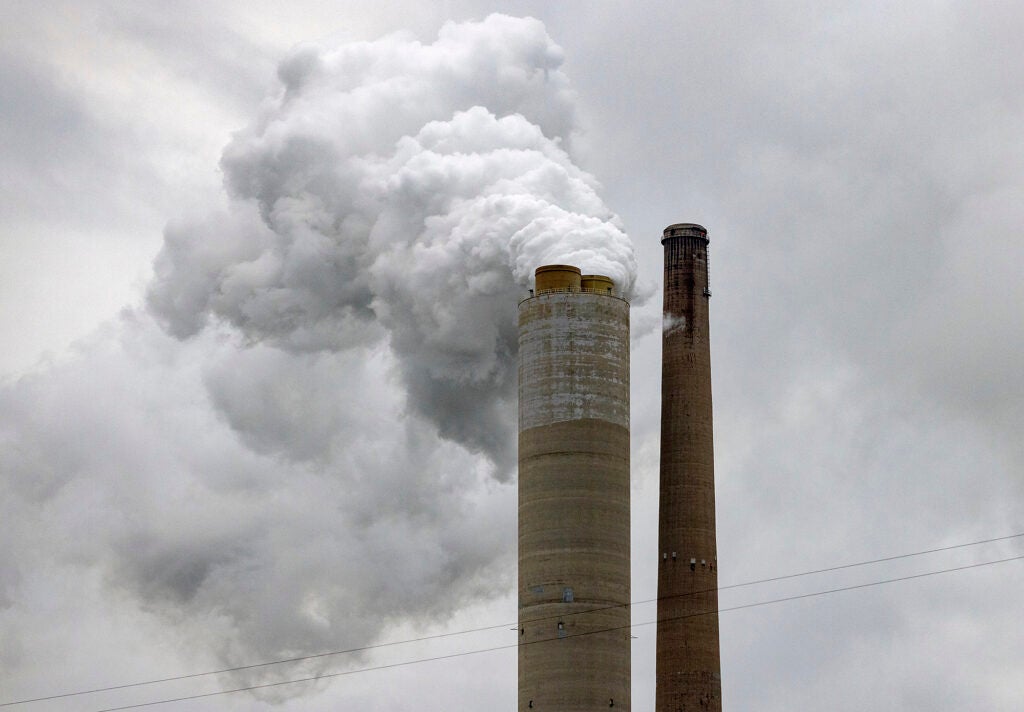
Everyone has The Right To Breathe clean air. Watch a video featuring Earthjustice Attorney Jim Pew and two Pennsylvanians—Marti Blake and Martin Garrigan—who know firsthand what it means to live in the shadow of a coal plant's smokestack, breathing in daily lungfuls of toxic air for more than two decades.

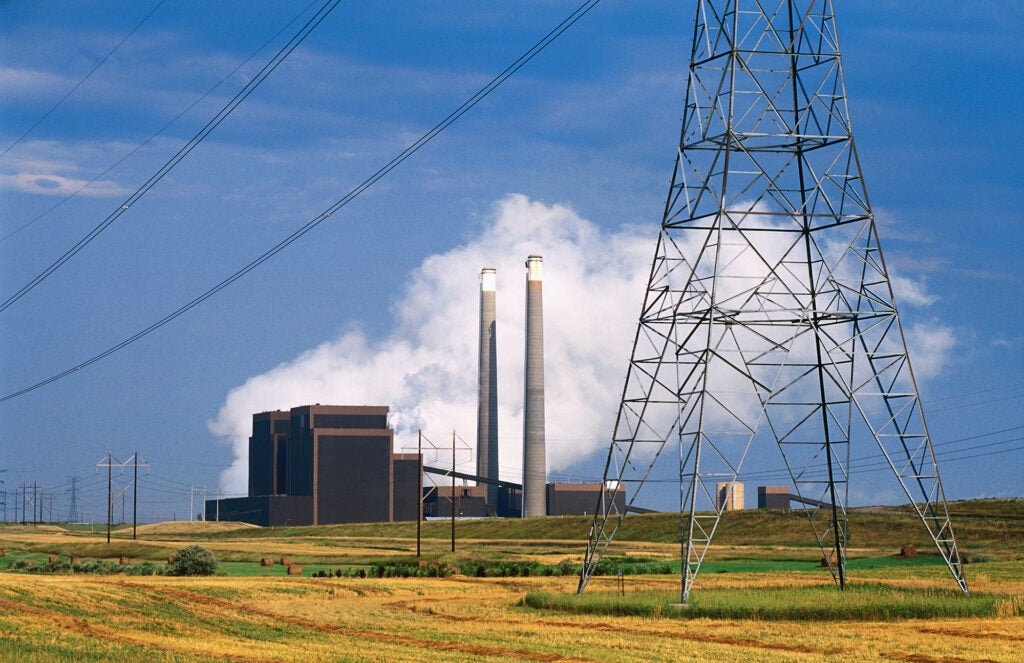
Coal Ash Contaminates Our Lives. Coal ash is the hazardous waste that remains after coal is burned. Dumped into unlined ponds or mines, the toxins readily leach into drinking water supplies. Watch the video above and take action to support federally enforceable safeguards for coal ash disposal.

ABOUT EARTHJUSTICE'S BLOG

unEARTHED is a forum for the voices and stories of the people behind Earthjustice's work. The views and opinions expressed in this blog do not necessarily represent the opinion or position of Earthjustice or its board, clients, or funders.

Learn more about Earthjustice.

View Trip Van Noppen's blog posts
20 April 2010, 10:30 AM
EPA embraces science and the law in two strong actions

In Appalachia, moving mountains is easy. What's hard is keeping them where they are. Coal companies have used dynamite's muscle to blast hundreds of the earth's oldest summits into neighboring valleys, permanently altering the landscape. But two recent developments are shaking the foundations of mountaintop removal mining, signaling that perhaps, at long last, what's moving is the mountain of science and law that compels the end of this destructive practice.

In late March, the Environmental Protection Agency took dramatic action in proposing to veto a permit issued by the U.S. Army Corps of Engineers for the Spruce No. 1 mine in West Virginia—one of the largest mountaintop removal projects ever approved—on the grounds that mine operations would violate the Clean Water Act. The action was presaged by an Earthjustice lawsuit filed in 2007 that challenged approval of a Clean Water Act permit for the mine for failing to follow science and the law.

If the EPA does veto the permit, the agency's invocation of the Clean Water Act to curtail operations at the Spruce mine will be an important victory. It could have broader repercussions on mountaintop removal in general. (The agency is currently accepting public comments on the veto proposal. You can take action by telling EPA to follow through with the veto and enforce the Clean Water Act.)

But the good news doesn't end there.

10 Comments   /   Read more >>
View Jared Saylor's blog posts
15 April 2010, 1:13 PM
239 public interest groups urge Pres. Obama to regulate coal ash

When the EPA said on its website that April was going to be the month when we'd see the first ever federal coal ash regulations, environmental groups were in support. Sure, it would be four months later than what the EPA originally promised when a billion gallons of coal ash spilled across 300 acres in Tennessee, but we remained optimistic.

Now the month is half over and still no coal ash regulations. So, we're taking our fight up the ladder.

Today, 239 public interest groups representing all 50 states signed a letter to President Obama, asking him to make coal ash regulations public. This unprecedented display of unified support for strong federal safeguards against coal ash is needed to counter the mistruths and fearmongering spread by the coal and power industries.

2 Comments   /   Read more >>
View Liz Judge's blog posts
08 April 2010, 7:43 AM
And why we still need all we can muster to take on climate change
Sen. John Kerry, co-author of a forthcoming Senate climate bill

Last week was a rollercoaster for the environment. One minute it was down, the next it was up. First came Obama's announcement of offshore drilling, then came the new EPA policy clamping down on mountaintop removal mining, new clean car standards were finally finalized, then came the adoption of a key household energy efficiency standard that makes a big difference, then a major setback for public lands with an Obama announcement to stick with a Bush-era policy.

Many of us wonder, will a good environmental decision one day make way for a bad decision the next? And with our eyes on the bigger picture, we ask, What does this all mean for the upcoming climate bill?

Newsweek's Daniel Stone posits that this flip-flopping signals that the Obama administration is willing to make some big sacrifices in order to get a climate bill passed. One big sacrifice, and a very wasteful one, would be a Senate bill that strips the EPA of its authority to fight climate change by regulating greenhouse gas emissions under the Clean Air Act.

1 Comment   /   Read more >>
View Liz Judge's blog posts
27 March 2010, 6:01 AM
It's time for this label to grow some teeth
A GAO image of a fraud item that earned the Energy Star label

A government report today exposed some startling problems with the federal Energy Star labeling program. In a secret audit, the Government Accountability Office found that several preposterously inefficient and even laughable fake appliances were able to earn the government's gold-standard label intended for exceptionally efficient products.

According to this New York Times article, the fictitious appliances included a gasoline-powered alarm clock and an "air purifier" that was nothing more than a space heater with a feather duster attached on top. They were submitted to the EPA and DOE, who jointly run the Energy Star program, by the Government Accountability Office under the guise of made-up company names and addresses.

3 Comments   /   Read more >>
View Liz Judge's blog posts
22 March 2010, 1:08 PM
Urge EPA to adopt strong ozone pollution standards today

As sure as April brings showers and May brings flowers, June brings ozone pollution warnings. These alerts come to us by way of air quality reports in our local weather forecasts, and they let us know when ground-level ozone pollution, the primary component of smog, reaches a dangerous level in the air we breathe. We see the alerts almost exclusively in the summer because sunlight and hot weather spur chemical reactions between air pollutants, thereby forming ground-level ozone and, in turn, smog.

Smog, then, fills the air until it's hard for some of us to breathe, especially babies and children, whose lungs are more delicate and less developed. Babies, children, senior citizens, and people who suffer from asthma, allergies, breathing problems, and lung disease bear the brunt of the suffering from smog, but scientific research shows us that no matter how healthy, we all are vulnerable to this dangerous pollutant.

Anyone who spends time outdoors in the summer may be affected, and millions of Americans live in areas where the national ozone health standards are exceeded. (Conversely, ozone in the upper atmosphere -- the good kind of ozone -- forms a layer that protects life on earth from the sun's harmful rays.)

Today until midnight, March 22, is final day of the EPA's public comment period for this ozone pollution standard. Please join tens of thousands of others and take a moment to send EPA Administrator Lisa Jackson a message, urging her to adopt the strongest possible standards for ozone pollution.

1 Comment   /   Read more >>
View Kathleen Sutcliffe's blog posts
16 March 2010, 9:43 AM
They all want EPA to protect rural kids from pesticides

As I write, officials at the U.S. Environmental Protection Agency are wading through the tens of thousands of letters Earthjustice supporters and their counterparts at MomsRising, Pesticide Action Network and United Farmworkers sent asking the agency to protect rural kids from pesticides.

These 42,000 people—along with 51 groups in 18 states—are publicly supporting our petition for safety standards to protect children who grow up near farms from the harmful effects of pesticide 'drift'—the toxic spray or vapor that travels from treated fields—and for immediate no-spray buffer zones around homes, schools, parks and daycare centers for the most dangerous and drift-prone pesticides.

As EPA officials complete their tally, I hope they're paying particular attention to the personal stories people shared in their letters. People like Cynthia Piper, of Lakewood, OH, who after seeing children exposed to pesticides suffer from deformities, fought for a right-to-know pesticide spray ordinance in her town. Or JeanAnn Hurst of Chowchilla, CA, whose son was exposed to the nerve-gas pesticide chlorpyrifos while on school grounds. You can find Cynthia and JeanAnn's stories on our interactive map. And if you've had a close encounter with pesticides yourself, please consider submitting your story as well.

3 Comments   /   Read more >>
View Trip Van Noppen's blog posts
04 March 2010, 11:29 AM
It's time to break industry stranglehold on clean water legislation

A year ago, the 111th Congress looked like a friend to those who care about clean water. I praised Senators Russ Feingold (D-WI), Barbara Boxer (D-CA), Ben Cardin (D-MD) and others back then for introducing legislation that would restore teeth to the Clean Water Act.

Things moved swiftly as a compromise version of this bill, the Clean Water Restoration Act, passed through the Senate's Environment and Public Works Committee last June. Attention then shifted to the House side, where Transportation and Infrastructure Committee Chairman Jim Oberstar (D-MN) was expected to reintroduce the bill by early autumn.

But, despite promises for quick action, we still do not have a bill in the House. And momentum on strengthening clean water protections has slowly diminished under the weight of industry pressure.

Until now.

20 Comments   /   Read more >>
View Kathleen Sutcliffe's blog posts
03 March 2010, 2:02 PM
Saving the world 140 characters at a time

The microblogging site Twitter is poised to hit a major milestone: sometime in the next day or so one lucky Twitter user is expected to send out the ten billionth tweet (real-time counter is here).

Whether you love exchanging ideas in 140-character bursts, or if U H8 the resulting abbrevs, people will be paying very close attention to the string of words that mark Twitter's ascension into the big, big time.

So what will that 10 billionth tweet say? How about "Protect Rural Kids From Pesticides! Take action here:http://bit.ly/dyq39N"?

2 Comments   /   Read more >>
View Jared Saylor's blog posts
01 March 2010, 3:45 PM
Streams, rivers & lakes are polluted; here's what we can do to stop it.

The New York Times today reported in the next chapter of their exceptional "Toxic Waters" series that:

"Thousands of the nation's largest water polluters are outside the Clean Water Act's reach because the Supreme Court has left uncertain which waterways are protected by that law, according to interviews with regulators.

"As a result, some businesses are declaring that the law no longer applpies to them. And pollution rates are rising."

The saddest part of this legal debacle is that the streams, lakes and rivers losing federal protection also provide drinking water for approximately 117 million (or more than 1 in 3) Americans, according to the U.S. Environmental Protection Agency. Polluters are free to dump carcinogens, bacteria and even oil directly into our waters with little or no recourse. This all stems from two misguided rulings by the Supreme Court that cast doubt upon what waters should be protected under federal law. Their ruling on "jurisdiction" left thousands of streams, lakes and rivers unprotected; EPA officials estimate that "as many as 45 percent of major polluters might be either outside regulatory reach or in areas where proving jurisdiction is overwhelmingly difficult."

1 Comment   /   Read more >>
View Kathleen Sutcliffe's blog posts
01 March 2010, 9:25 AM
Five days left to tell EPA to protect rural kids from pesticides
Teresa de Anda, Californians for Pesticide Reform. Photo is from Tracy Perkins' collection: 25 Stories From the Central Valley

In case you missed it, NPR had a very good piece Sunday on Earthjustice's efforts to protect rural children from "pesticide drift"—the toxic spray or vapor that travels from pesticide-treated fields and into nearby communities.

Each year, nearly a billion pounds of pesticides are sprayed into fields and orchards around the country. And as our partner Teresa de Anda with Californians for Pesticide Reform told the NPR reporter, just about everyone in these agricultural areas has a story to tell about unnerving encounters with pesticides.

41 Comments   /   Read more >>