Posts tagged: gas

unEARTHED. The Earthjustice Blog

gas


    SIGN-UP for our latest news and action alerts:
   Please leave this field empty

Facebook Fans

Featured Campaigns

Everyone has The Right To Breathe clean air. Watch a video featuring Earthjustice Attorney Jim Pew and two Pennsylvanians—Marti Blake and Martin Garrigan—who know firsthand what it means to live in the shadow of a coal plant's smokestack, breathing in daily lungfuls of toxic air for more than two decades.

Coal Ash Contaminates Our Lives. Coal ash is the hazardous waste that remains after coal is burned. Dumped into unlined ponds or mines, the toxins readily leach into drinking water supplies. Watch the video above and take action to support federally enforceable safeguards for coal ash disposal.

ABOUT EARTHJUSTICE'S BLOG

unEARTHED is a forum for the voices and stories of the people behind Earthjustice's work. The views and opinions expressed in this blog do not necessarily represent the opinion or position of Earthjustice or its board, clients, or funders.

Learn more about Earthjustice.

View Kathleen Sutcliffe's blog posts
02 September 2011, 2:38 PM
That’ll go by faster than you can say ‘flaming faucets’

Next week, New York State is planning to release a 1,000+ page document that could guide how the controversial gas drilling technique, called fracking, will proceed in the state.

Hydraulic fracturing, fracking for short, occurs when oil and gas companies blast millions of gallons of chemically-treated water into the ground to force oil and gas from tightly-packed shale deposits.

2 Comments   /   Read more >>
View Jessica Knoblauch's blog posts
19 August 2011, 7:15 AM
Genetically modified dilemma, school energy savings
Monsanto's herbicide harms crops genetically modified to resist it. Image courtesy worldwidehippies.com

Monsanto's herbicide harms plants it's meant to protect
Monsanto’s popular herbicide Roundup may be harming more than just weeds, reports Reuters. A recent study by US Department of Agriculture microbiologist Bob Kremer found that repeated and widespread use of Roundup, which contains the active ingredient glyphosate, on crops genetically engineered to withstand the pesticide is harming both the soil and the plants, and potentially reducing crop yields. Unfortunately, Kremer isn’t the only researcher to find problems with glyphosate. Over the years, other researchers have linked glyphosate use to “cancer, miscarriages and other health problems in people and livestock.”
 
Despite these concerns, the government has continued to green-light so-called Roundup Ready crops like genetically engineered sugar beets, adding to the already long list of staple food items that now dominate American supermarkets. According to the Center for Food Safety, more than half of all processed food in U.S. grocery stores—items like cereals, corn dogs and cookies—contain genetically engineered ingredients. Says Earthjustice’s Paul Achitoff, who is currently litigating against the government’s approval of GE sugar beets and alfalfa:

"The main problem for the public at large is increased chemicals in the environment. But you also have consumers’ as well as farmers’ choices being adversely affected. Nobody really wants Monsanto controlling their diet, but that is in fact what’s happening."

View Jessica Knoblauch's blog posts
11 August 2011, 4:41 PM
Food foraging, corporate greenwashing, big rig gas sipping
SpongeBob SquarePants is in hot water for talking to kids about climate change. Photo courtesy of gnislew

FOX News attacks climate change believing sponge
A sea sponge is the latest target of the FOX News climate denial-sphere, reports ThinkProgress. In a recent episode of FOX and Friends, the hosts rip into the popular kids’ cartoon SpongeBob SquarePants for its segment on climate change, which points to humans as the source of Earth's carbon woes. Fox personality Gretchen Carlson and others chastise the cartoon for looking at only “one point of view”—that is, humans are the primary cause of global warming by releasing millions of tons of carbon dioxide into the air. Though this view is held by 97 percent of climate scientists, the browbeating does make for a nice segue into FOX’s other favorite past time—criticizing publicly funded agencies like the Department of Education for pushing anti-American agendas like global warming. The DOE’s latest transgression? Handing out Nickelodeon books at an event that pushes “unproven science” about climate change onto children.

6 Comments   /   Read more >>
View Jessica Knoblauch's blog posts
28 July 2011, 12:45 PM
Wrecked summer vacations, revved up gas mileage, watered down chemical regs
The agave plant, typically used to distill tequila. Courtesy of kimsdinner.

Tequila takes a shot at decreasing gasoline use
A new study that looks at the life-cycle analysis of agave-derived ethanol has found that the desert plant produces relatively few carbon emissions, positioning itself as a possible biofuel and substitute for gasoline, reports the Guardian. Though agave is best known for its use in distilling tequila, the sugar-filled plant’s ability to grow on desert lands that aren’t usable for other food crops has garnered the interest of the biofuel industry, which is eager to find a plant-based fuel that won’t drive up food prices, a la the corn ethanol disaster. Scientists are already conducting agave biofuel trials in Australia, and the technology may also have potential for use in abandoned agave plantations in Mexico and Africa. Though experts warn that biofuels can’t be the only strategy used to cut carbon emissions, finding more options to fight climate change is still a success worth drinking to.

View Kathleen Sutcliffe's blog posts
22 July 2011, 12:48 PM
More than 20,000 messages on PA pipeline catch EPA attention

If—as an Earthjustice supporter and activist—you ever wondered whether your letters and emails to government officials had an impact, we've got news that should give you heart.

Reporters are writing about the 22,093 messages sent by supporters like you, demanding a thorough environmental review of a proposed 39-mile natural gas pipeline that threatens prime forest lands and streams in the Endless Mountains of Pennsylvania. And, politicians are standing with you.

Officials at the Environmental Protection Agency are pressing pipeline regulators to conduct a thorough environmental review of the project—and citing the number of messages you sent as the reason.

4 Comments   /   Read more >>
View Jessica Knoblauch's blog posts
01 July 2011, 6:52 AM
Extreme weather, germy pillows, feminine mice
A recent Greenpeace investigation found that dirty energy companies have been financing a prominent climate change denier. Photo courtesy of L.C.Nøttaasen.

Climate change skeptic awash in oily money
A Greenpeace investigation has found that climate change denier Dr. Willie Soon, an astrophysicist at the Harvard-Smithsonian Centre for Astrophysics, has received more than $1 million in payment from major U.S. oil and coal companies over the past decade, reports the Guardian. Though Dr. Soon denies that any group influenced his studies, the fact that every new grant he has received since 2002 has been from oil or coal interests has raised more than a few eyebrows. Kert Davies, a research director at Greenpeace, summed it up well by saying, "A campaign of climate change denial has been waged for over 20 years by big oil and big coal. Scientists like Dr. Soon, who take fossil fuel money and pretend to be independent scientists, are pawns."

So who are some of the benefactors shoving money into the good doctor's coffer? None other than ExxonMobil, the American Petroleum Institute and the Koch brothers. That's right. In addition to doing some behind-the-scenes fundraising for a number of Republicans who sit on the House Energy and Commerce Committee, many of whom have vowed to restrict the reach of the Environmental Protection Agency, the Charles G Koch Foundation gave Soon two grants that ran about $175,000 in 2005/2006 and again in 2010, according to the Guardian. Apparently when it comes to pushing an anti-environmental agenda, the Koch brothers are going all in.

America’s pocketbook weathered by climate change
It’s no doubt that 2011 has been a year of extreme weather (and the year’s barely half over). All of those tornadoes, floods and droughts have taken an emotional toll on all Americans, especially those hardest hit by these events. Not surprisingly, this flood of record bad weather has also take a significant economic toll, reports Time. According to the National Center for Atmospheric Research, extreme weather costs the U.S. about $485 billion per year, which adds up to almost 4 percent of the country’s GDP. And, as we continue to release more carbon emissions into the atmosphere, the weather will only get worse and the cost to repair more steep. As the author notes, “If a broken planet isn't enough to mobilize us, a flat-broke country ought to be.” Find out how Earthjustice is encouraging the use of the cleanest, cheapest and most available source of energy to help weather this inevitable storm.

1 Comment   /   Read more >>
View Trip Van Noppen's blog posts
24 June 2011, 2:33 PM
Natural gas doesn't deserve squeaky clean image

Follow along as I walk us up the steep learning curve about natural gas that Earthjustice, the environmental community and the nation are navigating. The curve suddenly steepened a few years ago when natural gas advocates started promoting their fuel as a refreshing alternative to coal and oil, and a bridge to a clean energy future.

If we have learned anything along the way, it is this: the clean reputation of natural gas is good PR, but lousy science.
 
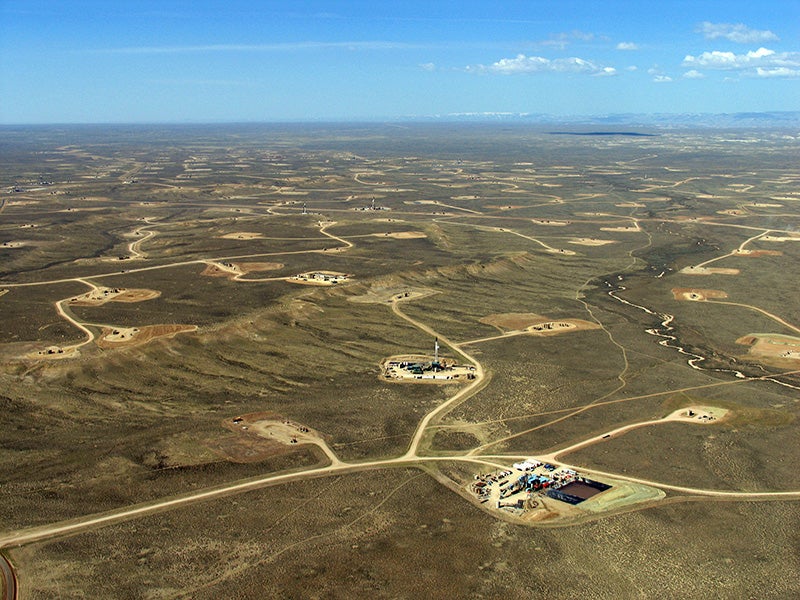
For decades, Earthjustice has worked to protect special places on our public lands from being pockmarked by gas development. Our litigation has helped protect such treasures as the Wyoming Range south of the Tetons, Otero Mesa in southern New Mexico, the Roan Plateau in western Colorado, and some of the spectacular red rock country near Arches and Canyonlands National Parks in Utah.
 
Despite some improvements by the Obama administration in leasing and drilling policies, we are forced to keep fighting some of these battles. We’ve come to know that gas development can fragment wildlife habitat and industrialize a pristine landscape, and we’ve worked on federal and state rules to reduce those impacts.

13 Comments   /   Read more >>
View Jessica Knoblauch's blog posts
24 June 2011, 12:25 PM
Oceanic catastrophe, mythological creatures, oil baron payback
Haul from a dumpster dive in Sweden. Photo courtesy of sigurdas.

Dumpster diver documentary details discard diet
Americans need to stop tossing out more of half of their food and start donating it, reports dumpster diver Jeremy Seifert in Grist. Seifert, who’s been diving into dumpsters and pulling out edible food for several years, recently created a documentary detailing our wasteful society and the dumpster diving culture. In the article, he also calls on the progressive grocery store chain Trader Joes to end food waste by donating soon-to-expire foods to homeless shelters rather than tossing them. Making sustainable food choices not only helps feed the more than one-in-eight Americans dependent on food stamps, it also helps the environment by cutting down on water use and methane emitted by rotting food. So, dive in!

Report finds oceans under attack
The world may be on the verge of the sixth mass extinction with the oceans serving as ground zero, reports Reuters. According to the International Programme on the State of the Ocean, coral reefs are dying, low-oxygen dead zones are spreading and fish populations are collapsing worldwide thanks to climate change, over-fishing, pollution and habitat destruction. Though many of these issues are all too familiar to the scientific community, the magnitude and direness of the situation managed to shock even the ocean experts who created the report. In the report, the authors issue a dire warning: "Unless action is taken now, the consequences of our activities are at a high risk of causing ….the next globally significant extinction event in the ocean.” Find out how Earthjustice is working in the courts to protect our vital oceans.

View Tom Turner's blog posts
07 June 2011, 3:04 PM
Fresno Board of Supervisors rejects a nuclear-power proposal

The Fresno, California, Board of Supervisors has decided not to endorse a proposal by the Fresno Nuclear Energy Group to build a “Clean Energy Park,” outside town. The park would boast two big, 1,600-megawatt, French-made reactors, a solar-thermal plant, and a water desalination facility.

The account in the Fresno Business Journal doesn’t mention Japan or Fukushima explicitly, but the shadow in the background is unmistakable. And it must send shivers down the backs of people promoting a nuclear renaissance as the cure for global warming—especially as Germany has recently decided to stop building new reactors and to retire existing plants as replacement power comes on-line. Japan is clearly rethinking its commitment to nuclear power as well.

1 Comment   /   Read more >>
View Jessica Knoblauch's blog posts
13 May 2011, 2:19 AM
Banning the bag, fracking's flammable water, biting back against palm oil
Coal industry-sponsored materials are making their way into school classrooms. Photo courtesy of Steve and Jemma Copley.

Coal company tries to brainwash school kids
Scholastic Inc., whose books and educational materials dominate the American classroom, is distributing fourth-grade curriculum materials paid for by the American Coal Foundation, reports the New York Times. Not surprisingly, the industry-funded class materials have drawn the ire of groups such as the Campaign for a Commercial-Free Childhood and Friends of the Earth, who argue that the one-sided curriculum conveniently leaves out coal’s environmental and human health impacts while failing to mention other useful, less polluting energy sources, like wind and solar. No word yet on whether the kids received a free inhaler to pair with their coal-friendly books and pamphlets.

Bagging bags becomes worldwide phenomenon
The U.S. may have been unable to pass meaningful climate legislation, but at least some communities have been successful in reducing their carbon footprint in other ways, like cutting down on plastic bags, reports National Geographic. Coast-to-coast and even internationally, cities like San Francisco and Washington, D.C. and entire countries like Italy have either banned plastic bags altogether or imposed taxes on the ubiquitous single-use sacks. The bans have resulted in a major drop in bag use, a big win for the environment since plastic bags clog storm drains, landfills and marine creatures’ bellies.

1 Comment   /   Read more >>