

Ezra Klein is Wrong about the Permitting Bill
The devil’s in the legal and technical details.
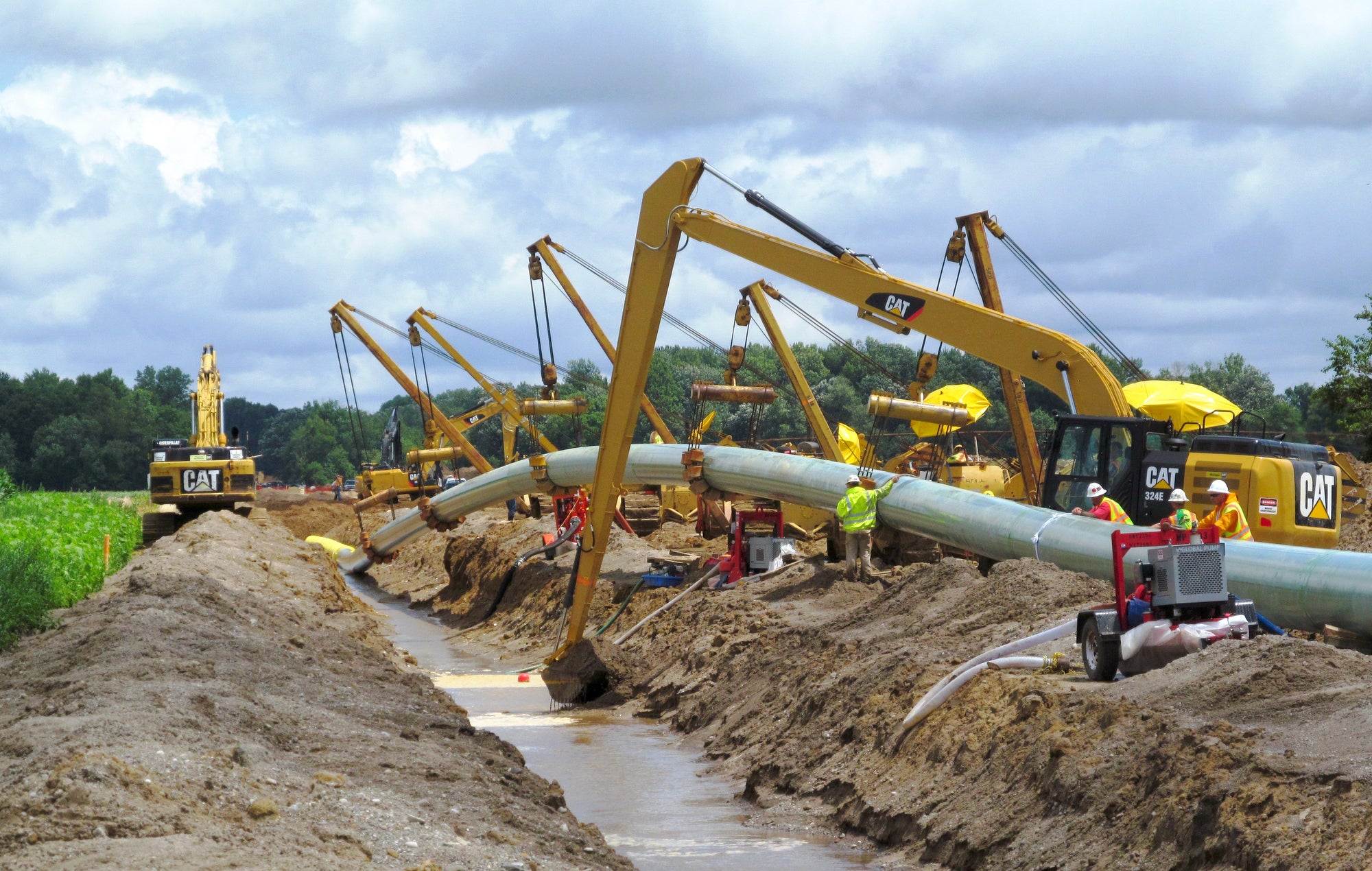
Ezra Klein is urging Congress to roll the dice on the Bipartisan American Affordability and Jobs Act (BAAJA) even though he admits in his latest column that he is “unnerved” by the differing impacts of this bill by Hill staffers and conscious that “legislation at this scale rarely plays out exactly as its architects expect.” As he recognizes, much of the 400+ page bill is “dedicated to technical changes to other laws.” Nevertheless, he remains sure that the bill will engender better politics and a nation that can deliver all the goods we need.
Earthjustice has analyzed BAAJA, including the recent manager’s amendment, and we have detailed the ways it would change the federal energy and environmental laws that we work with every day. While we very strongly support BAAJA’s package for transmission and grid reforms, the overall deal gives President Trump more power, weakens environmental protections, undermines Tribal sovereignty, and diminishes access to the courts. Very serious changes to bedrock laws and judicial review demand equally serious consideration and debate. But there has been none here — no debates, no committee hearings, no legislative reports. Legislators cannot simply assume that a major overhaul of federal law will make our lives better, not worse.
While the title of Klein’s piece tries to try to sell BAAJA as an affordability bill, there is no modeling to suggest that it will deliver relief that people will feel any time soon, if ever. Commonly-cited modeling by the well-respected Rhodium Group projects annual savings of only $50-78 on household electricity bills in 2040. BAAJA does include important provisions that may compel data centers to cover the costs they impose on the electric grid, but that depends on the development of a new policy at the Federal Energy Regulatory Commission (FERC) and subsequent implementation by states.
Regarding clean energy deployment, Rhodium projects a wide range of outcomes, from deployment of as little as 17 GW to as much as 249 GW over the current baseline. The high end assumes “continued meaningful cost declines for clean technologies with more expensive fossil fuel prices.” However, BAAJA does nothing to address the perfect storm of tariffs, high interest rates, and lost tax credits that are eroding the competitive cost advantage that renewables should enjoy relative to methane gas. Meanwhile, methane gas prices remain relatively low. For now, we appear to be living in the Rhodium scenario that assumes “much less reduction in the cost of clean resources paired with very low prices for fossil fuels.” That scenario yields only modest incremental gains in clean energy deployment and 0% reductions in greenhouse gas emissions by 2040. Even in the mid to low emissions scenarios, Rhodium projects cumulative emissions reductions of 3% and 4% respectively by 2040. These projections are all consistent with an ongoing gas rush that BAAJA would speed up.
In short, it is unconvincing to promote BAAJA, standing alone, as an affordability bill or a climate bill. Maybe that is why Klein leans into the intertwined arguments that BAAJA would deliver (1) a victory for a better functioning democracy and (2) an all-around solution for red tape.
Regarding democracy, he states that “[t]he bill represents Democrats and Republicans deciding that the fight over what gets built should play out in elections and markets rather than in the bowels of administrative agencies and courts.” To start, it’s wrong to imply that this bill is the product of any sort of considered bipartisan agreement. Again, there has never been a single hearing on BAAJA, and the Democratic Senators who negotiated the bill did so without involving their colleagues. With the exception of Senator Whitehouse, every single Democrat on the Environment and Public Works (EPW) committee voted no on moving the bill to a vote. Its passage would represent a rush job, not a deliberate agreement about the best path forward.
Based on our litigation experience, it’s also wrong to suggest that BAAJA would move the fight for our future out of the courts and into the realm of electoral accountability. Given ambiguous and even inscrutable drafting, BAAJA would drive more not less litigation. For most parties, BAAJA would make it harder to secure meaningful relief. But for the most powerful companies, it would invite litigation to secure new, extraordinary remedies. Regardless of elections, BAAJA would constrain new presidential administrations from shifting policy and responding to new and evolving circumstances.
On the red tape front, Klein points to the National Environmental Policy Act (NEPA) as the problem, and the Sunzia transmission line as the evergreen example of permitting dysfunction. Absolutely, the Sunzia project took way too long to permit, but it was proposed in 2006 and is an extreme example from a different time. Klein never acknowledges that Congress has passed a litany of changes to NEPA in recent years. The Infrastructure Investment and Jobs Act of 2021 created, among other things, a federal permitting council and a permitting fast track for large projects — for better or worse. Congress also made very significant changes to NEPA in the Fiscal Responsibility Act of 2023, including more NEPA exemptions and specific timelines for action. On top of all that, the Supreme Court limited the scope of NEPA review dramatically just last year in Seven County Infrastructure Coalition v. Eagle County, Colorado.
BAAJA would not solve a live problem, but it would create a new one by eliminating any enforceable obligation to undertake the most basic environmental review and public disclosure of impacts. Further, dispensing with upfront public engagement under NEPA and the National Historic Preservation Act (NHPA) would foreclose an important opportunity to surface problems and solutions at an early stage of project development. Eliminating enforceable obligations to take these simple steps at the outset would make the federal government less transparent and accountable at a time when people very much want it to be more of both. In the Trump administration, NEPA has been a critical tool for subjecting extremely harmful federal actions to judicial scrutiny. For example, Earthjustice, the American Civil Liberties Union (ACLU), and many state attorneys general (AGs) have relied on NEPA to prevent Immigration and Customs Enforcement (ICE) from converting warehouses into massive, inhumane detention centers.
At a time when meritorious lawsuits are often the only check on the Trump administration’s abuse of power, BAAJA would give it more license and immunity for illegal actions. Klein never grapples with the fundamental threat that this presents in a Trump administration helmed by Stephen Miller.
Members of Congress must be real about the ways that BAAJA would accelerate the Trump agenda over the next two years. As the President has promised, his administration would super-charge “Pipelines, Mines, and Power Plants faster than ever before” while the war on wind and solar would continue. Now that the Supreme Court has given the president the power to hire and fire commissioners of once-independent agencies at will, he can force the Federal Energy Regulatory Commission to follow through on its recent promises to “unleash natural gas” without a commensurate push for clean energy.
More broadly, President Trump would cash in on new powers to provide “project certainty” for developers of all kinds. The administration would lock in federal authorizations for polluting projects, most likely in communities that are routinely targeted for pollution. It would move fast to confer private rights to drill, mine, log, construct data centers, and otherwise exploit public lands. Klein himself recognizes the concern that “Trump would issue all manner of illegal permits to drill on public lands that will then be protected by the bill’s provisions in the future.” But while he concedes that this would be a “huge problem,” he brushes it off, stating that “the bill’s architects don’t think it’s true.” But the views of the bill’s architects don’t matter. It’s the courts that will interpret BAAJA’s ambiguous provisions. And in the end, it will be the Supreme Court that gets the final word, driven by a conservative supermajority that has been actively hostile to climate protection, energy transition, and social justice.
Then there are the glaring problems that Klein entirely fails to address. BAAJA systematically undermines Tribal sovereignty and the ability of all communities to uplift and preserve history and culture — this as the Trump administration is taking unprecedented steps to erase history and demolish cultural heritage. Speaking at a rally representing 1,200 Tribal nations and organizations, Martin Luther King III put it this way: “For 60 years, Section 106 of the National Historic Preservation Act has given communities a voice when federal projects may affect historic places. It asks federal agencies to identify what matters, consider the effects of their plans, and consult with those whose heritage may be at stake. It does not say that we cannot build. It says that before we build, we must listen.”
As state Attorneys General are warning, Tribal and state governments, including newly elected governors, would lose much of their power to protect waters and wetlands under BAAJA. This is especially troubling given the Supreme Court’s decision in Sackett v. EPA, which curtailed federal protection of wetlands very dramatically. The bill would also allow states to take over Endangered Species Act permitting, a move that would jeopardize the survival of imperiled species while complicating the federal permitting process immensely.
Klein elides all of these concerns and urges passage of BAAJA on grounds that the “single most important climate policy going forward is for Democrats to win elections so that they have the power to set climate policy in the future.” Agreed. But why would this bill be popular with voters who turned out in record numbers to reject Trump?
Maybe Klein is assuming that voters won’t notice or remember that Democrats passed this bill in the immediate aftermath of a historic wave election. That would be a mistake and a betrayal. Eviscerating laws that protect our health, our communities, and the environment will hurt people in profound ways that they will notice. Abandoning federal trust obligations and government-to-government relations will create rifts that will not be forgotten. And we can be sure that President Trump will brag incessantly (and accurately) that this deal codifies a suite of regulatory changes that he has proposed as part of his “America First Agenda.”
Building everything, from clean energy infrastructure to gas pipelines and dirty data centers, is not a prescription for sustaining the momentum of a transformative election. An overwhelming number of people have experienced what happens when the most powerful companies in the world can build whatever they want as fast as they want without transparency or guardrails. They want it to stop, and their analysis is sharp. It is not going unnoticed that BAAJA’s package for pipelines is precisely crafted to speed up gas delivery to power more and bigger data centers complexes.
Support for Democrats is at best fragile. Rather than passing a bill that will do predictable and enduring damage, Democrats should negotiate a better deal that reforms the law without dismantling it. Transmission reforms have bipartisan appeal: gas-fired power plants will benefit from expanded transmission capacity as much or more than clean energy generators. Speed-to-power is still an imperative from the perspective of AI hyperscalers. These structural incentives will remain in the next Congress and can drive the votes needed for a bipartisan deal. Democrats can and must pursue legislation that protects people and their well-being while incentivizing the infrastructure that will genuinely serve all of us.
Established in 1989, Earthjustice's Policy & Legislation team works with champions in Congress to craft legislation that supports and extends our legal gains.