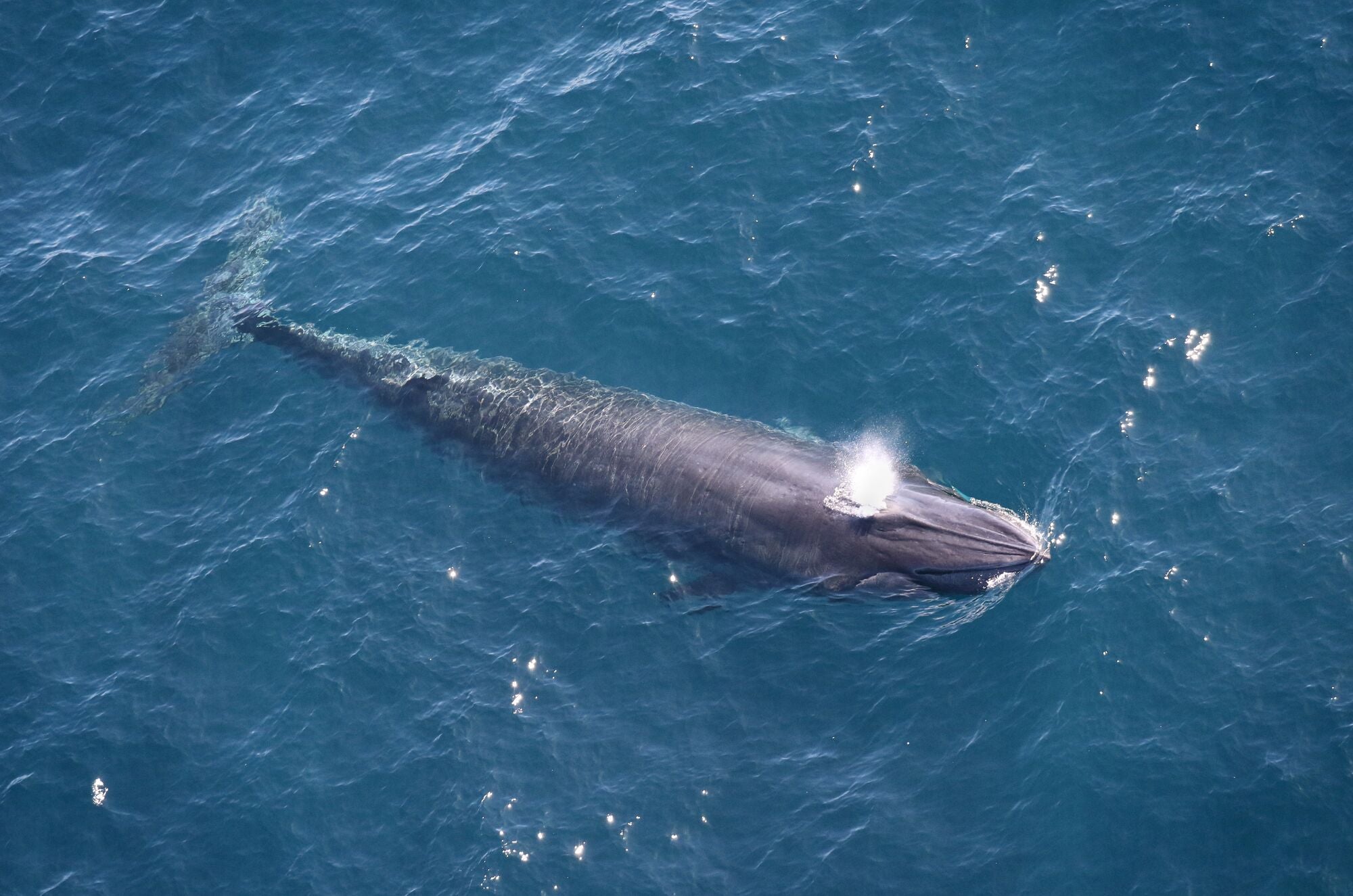
As a kid, he came face to face with one of the rarest whales in the world — he just didn’t know it yet
A photo of the whale caught a researcher’s eye, sparking a scientific odyssey spanning 56 years. Today, amid a push to expand fossil fuel drilling in the Gulf, Rice’s whales face extinction.
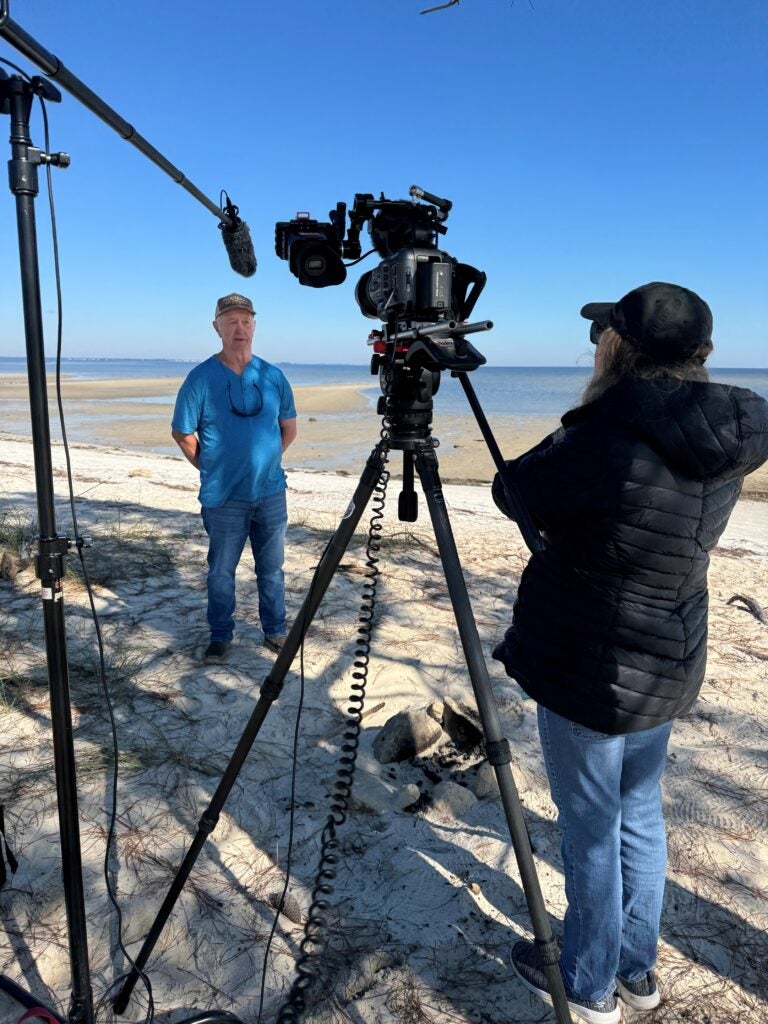
Rex Wheeler, a retired commercial fisherman in the Gulf Coast town of Panacea, tells his story. (Lee Berger)
Rex Wheeler was a 10-year-old boy searching for arrowheads along the wild marshes of Florida’s Panhandle Gulf coast when he came upon a sight he would never forget: a large whale washed up on the beach.
“I’d never seen a whale,” Wheeler says about that day in 1965. “But I’d seen pictures of whales in books.”
Wheeler, in his 70s now, told his story standing on the beach where it happened — in the tiny town of Panacea, south of Tallahassee. Sixty-one years later, this part of the coast has no Florida high-rises — it is still remote and rich with wildlife. Like other communities in Florida, Alabama, Mississippi, Louisiana, and Texas, Panacea is at risk from oil spills in an increasingly industrialized Gulf. And so are the Gulf’s whales.
Wheeler spent his life as a commercial fisherman before retiring. He agreed to record an interview to preserve his moment in Gulf history.
“I walked down there to it, and it was still alive. Its eyes were open and, every once in a while, it’d wiggle its tail a little bit,” Wheeler said. “It was kind of unique to see something like that when you’re 10 years old — you don’t realize what you found.”
It would take 56 years for Rex to learn that he’d seen a very unique species — a Rice’s whale. It’s the only large whale that lives in the Gulf of Mexico year-round and doesn’t migrate elsewhere.
Today, fewer than 100 Rice’s whales exist on Earth. When the BP Deepwater Horizon drilling rig exploded and spilled oil into the Gulf waters for 87 days in 2010, nearly 20 percent of the Rice’s whale population was wiped out.
Rice’s whales are now threatened by a planned surge in offshore oil drilling operations. The Trump administration issued a plan to let companies to drill for oil and gas deeper and over larger areas in in the Gulf — including areas closer to Florida that have been off limits for more than 40 years.
You can make your voice heard about this: The Bureau of Ocean Energy Management is accepting public comment until Jan. 23 about its plan to lease millions of acres of our public waters to fossil fuel companies, and you can comment.
Back in 1965, news of the beached whale that Wheeler found in Panacea spread, and people flocked to see it. Hoping to save the whale, someone towed it offshore, but it beached itself again and died. Florida journalist Craig Pittman researched the history and reported in 2024 that “a Coast Guard captain snapped a photo of the bizarre sight of the crowd crawling all over the ailing whale.”
The picture ran on the Associated Press wire, sparking a scientific odyssey. Whale biologist Dale W. Rice saw the photo and spotted unique features that no one had identified before in the Gulf. At the time, most scientists thought the Panacea beached whale was another species called the Bryde’s whale.
But Rice was proven right in 2019, when a similar whale washed up near Everglades National Park. Scientists from Japan and the U.S. studied the carcass and declared in 2021 that this was a new-to-us species. They named it after researcher Rice, who had died several years before.
Today, advocates along the Gulf coast are fighting for Rice’s whales. The whales are at risk from oil drilling and ship strikes. Deafening underwater blasting that drillers use to find oil and gas interferes with the whales’ ability to communicate, find food and mates, and rear their young. (Listen to the audio from this National Public Radio story for more.)
Rice’s whales are now so endangered that the National Marine Fisheries Service concluded that losing even a single breeding female could collapse the population. In 2020, over 100 scientists warned that unless the U.S. does more to protect the whales, we could witness the first human-caused extinction of a great whale species.
“You hate to see something that was put on this Earth all of a sudden disappear off of it,” says Wheeler, who has been lucky to see a few other whales in the Gulf but never again saw a Rice’s whale. “Anything they can do to protect it, I think they should do it.”
After the Trump administration released its latest proposal to offer new oil and gas leases for sale off of Florida’s west coast, all 30 members of the Florida congressional delegation wrote a letter in opposition. Florida Sen. Rick Scott and Florida Rep. Ashley Moody co-sponsored a bill, the American Shores Protection Act, to maintain the moratorium on offshore drilling off Florida that Trump signed in his first term.
At Earthjustice, we are pursuing several legal avenues to fight for the whales and Gulf marine life:
- On behalf of several groups, we are challenging a federal biological opinion for Gulf drilling and exploration because it fails to protect Rice’s whales and would rubber-stamp a stunning amount of harm and death to numerous marine species, including sea turtles and Gulf sturgeon.
- We are challenging the Trump administration’s decision to hold its first offshore oil sale in the Gulf of Mexico with no environmental review. A bill passed by Congress last year requires the government to hold two Gulf oil and gas lease sales each year for the next 14 years.
- We are opposing the Trump administration’s five-year offshore oil drilling plan that would dramatically increase the number of offshore oil and gas lease sales across the country — a staggering 1.27 billion acres of public waters, including off the Florida Gulf coast, every available offshore area of Alaska, and California’s entire shoreline.
- We are fighting against a proposal by BP to drill a new oil field in waters even deeper than where the 2010 spill happened and took 87 days to stop flowing.
Earthjustice’s Oceans Program uses the power of the law to safeguard imperiled marine life, reform fisheries management, stop the expansion of offshore oil and gas drilling, and increase the resiliency of ocean ecosystems to climate change.
Julie Hauserman
Public Affairs and Communications Strategist, Earthjustice
jhauserman@earthjustice.org