

Four Years in, Southern California’s First-in-the-Nation Approach to Clean up Warehouse Pollution is a Beacon
If the WAIRE program were a state, it would rank 21st in electric trucks.
It’s the day we’ve all been waiting for. And no, I’m not talking about the release of Dune Part Two or ticket sales for Bad Bunny’s next tour. Today, regulators in Southern California presented their long-awaited study on how Southern California warehouses are complying with the region’s innovative warehouse pollution program, WAIRE. The results are promising and a bright spot in an otherwise rough moment for anyone trying to breathe clean air.
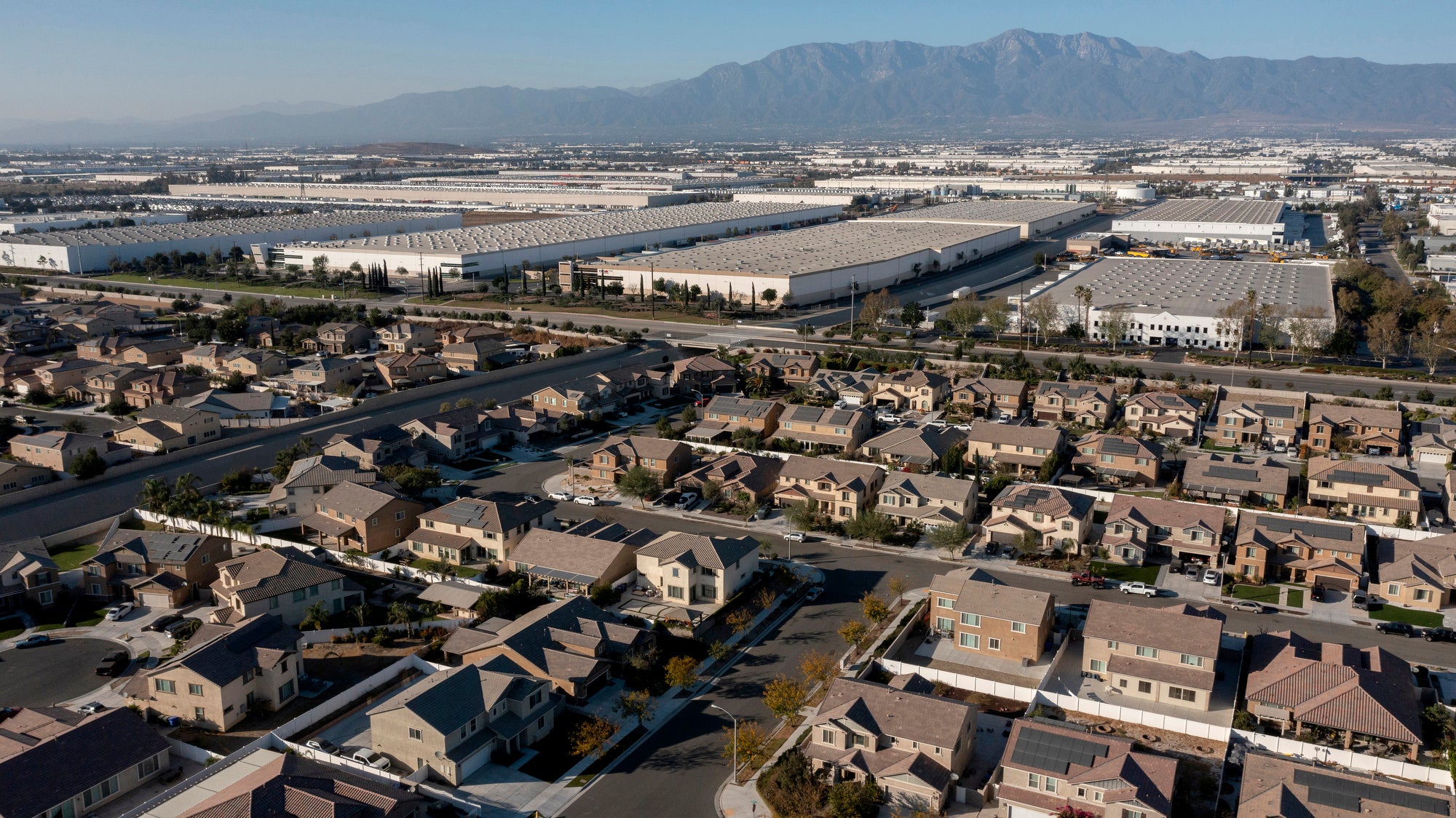
Mega-warehouses sit right next to homes in Jurupa Valley, California. (MattGush / Getty Images)
If you haven’t followed the ins and outs of this regulation (it’s okay, there’s a lot going on), here’s a brief history. Back in 2021, Southern California made waves by approving the first-ever warehouse indirect source rule, which provided the region’s air regulators with an innovative way to clean up pollution from the area’s growing mega-warehouse industry. Indirect source rules help regions turn hubs of air pollution into hubs of clean energy solutions. The rule was a big win for communities calling for rules to address pollution from freight facilities like warehouses, ports, and railyards.
The rule was created to be exceptionally flexible, giving warehouse operators a range of pathways to comply. Over the last several years, operators have had the choice of acquiring zero-emission trucks, installing charging infrastructure or solar panels, or taking actions to reduce health harms by installing air filtration systems in schools and hospitals. Each action earns points toward a required total.
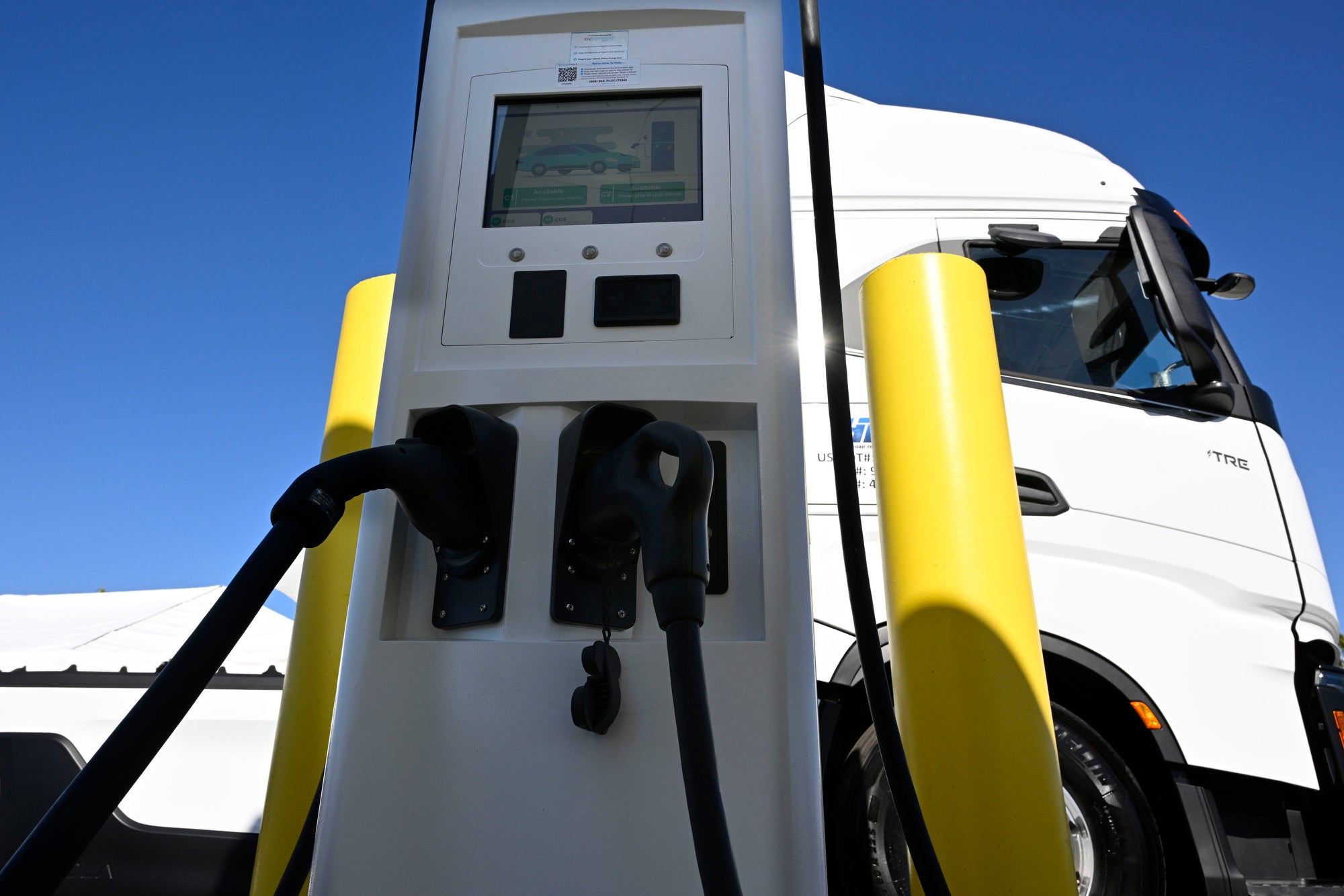
Heavy-duty electric trucks at a charging station at the Port of Long Beach in California. (Brittany Murray / MediaNews Group / Long Beach Press-Telegram via Getty Images)
The new report hot off the presses from the South Coast Air Quality Management District shows that the rule is clearly working. Here are three key takeaways:
1. The Program is Leading to Meaningful Reductions in Air Pollution from the Busiest Freight Hub in the Nation. Hallelujah.
For a sense of the scale of the pollution problem from warehouses in the region, the Inland Empire has enough warehouses to blanket three quarters of the city of San Francisco. The twin ports in Southern California are the largest and busiest by far in the country. These facilities generate thousands of diesel truck trips each day, delivering health-harming pollution to nearby communities and contributing to the region’s notoriously smoggy skies.
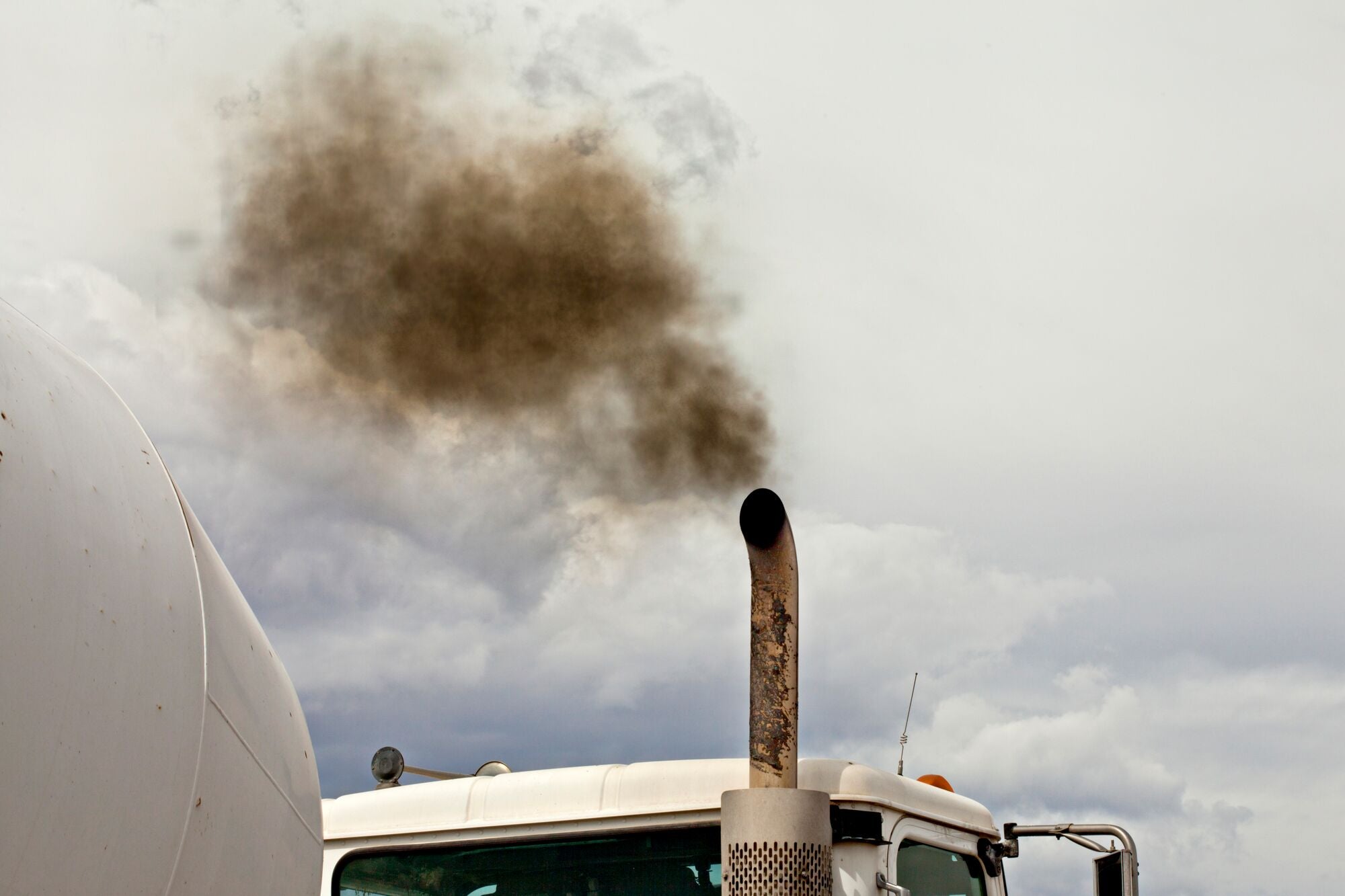
Exhaust from a diesel truck belches into the sky. (Chmiel / Getty Images)
With mega-warehouses (meaning over 100,000 square feet in size) upgrading to electric trucks that produce no tailpipe pollution, we’re seeing real world and measurable air quality benefits. Staff estimated that in 2024, the rule reduced pollution by 1.47 tons per day of nitrogen oxides (NOx), a lung-searing pollution that is one of the key ingredients in smog. Keep in mind that most regions measure pollution in tons per year. But, in the nation’s smog capital, we measure pollution in tons per day.
The Warehouse Rule also reduced a pollutant called diesel particulate matter, a toxic that imposes immense harms on people living near warehouses, hence the phrase “diesel death zones” for communities in the shadow of freight hubs.
2. The 4,000+ Mega-Warehouses in SoCal are Complying, and They’re Leaning Heavily Towards Electric Trucks and Charging Equipment.
On average, participating warehouse operators earned 3.5 times more points than the rule called for. Plus, warehouses aren’t simply paying fees to skirt making significant upgrades—they’re actually transforming how they operate. The new study shows that just 5% of the total WAIRE points went to pay mitigation fees. Further, zero-emission vehicles and equipment make up 65% of the total points earned. That’s transformative change where we need it the most. Dirty diesel trucks are the worst polluters on our streets, and their emissions are linked to asthma in kids, heart disease, cognitive problems, and even early death.
Since the rule was passed, warehouses in the region have purchased over 800 zero-emission trucks and yard hostlers (tractors that move containers and trailers of goods). This is huge. These numbers mean that the WAIRE program alone is responsible for almost 11% of the total zero-emission trucks in all of California.
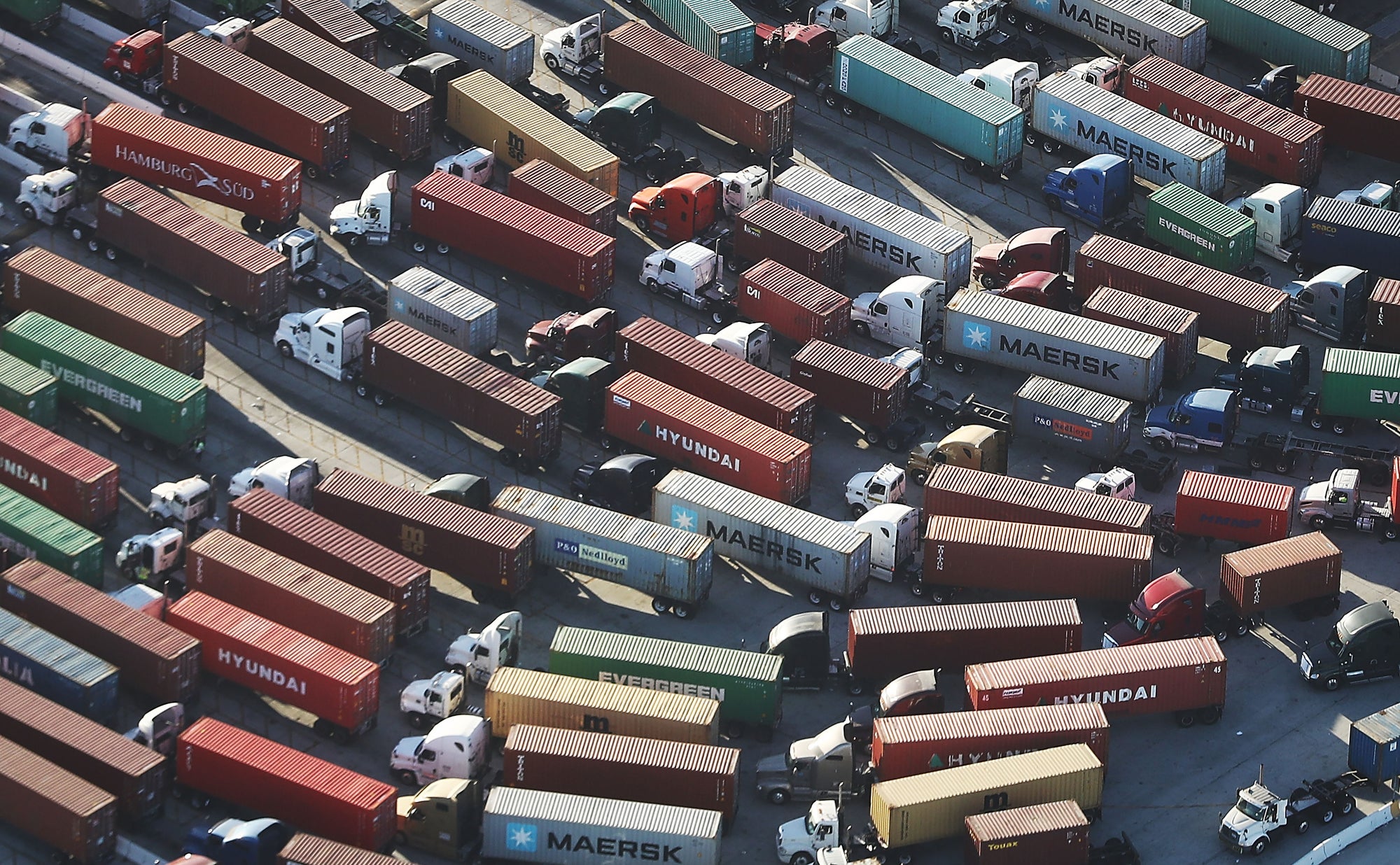
A sea of trucks haul shipping containers at the Port of Los Angeles. (Getty Images)
For a sense of scale, if the WAIRE program were a state, it would rank 21st out of fifty states for zero-emission truck deployments-. That’s higher than states like Oregon, Minnesota, South Carolina, Kentucky, and Missouri. An astonishing 518,110 truck trips in the South Coast Air Basin have been made by electric trucks in 2024 under the rule. Onsite yard trucks registered close to 1 million hours of usage in 2024 alone.
We’ve also seen warehouses leaning into solar in the program. This makes sense given that warehouses have huge flat roofs and Southern California is one of the most sunshine-drenched corners of the country. Since 2021, mega-warehouse operators have used 315 million kilowatt hours of solar power, which is enough to power 50,000 homes for a year.
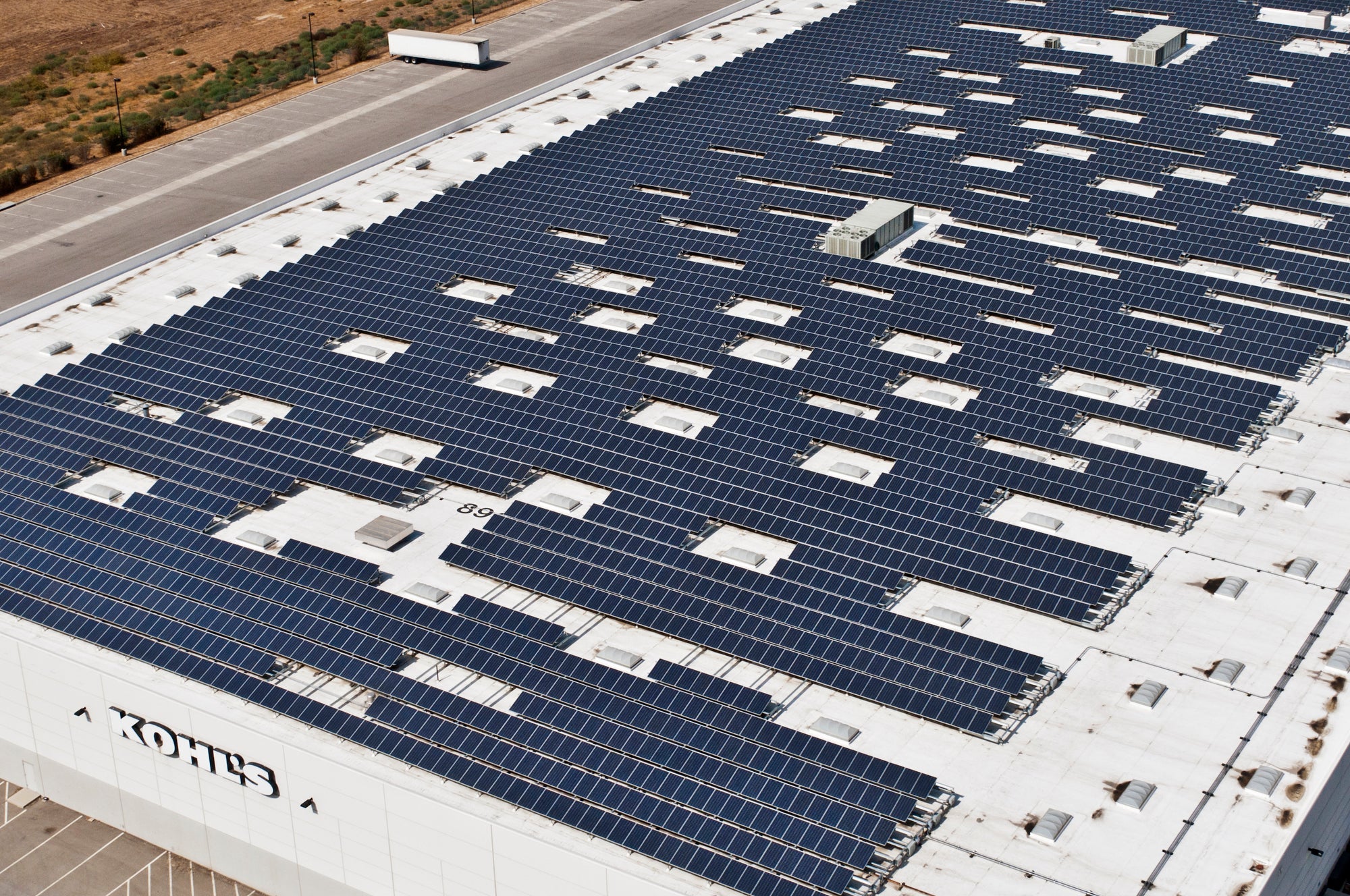
A warehouse with solar panels on the roof in San Bernardino, California. (Steve Proehl / Getty Images)
Despite claims from some of the program’s hater s, WAIRE hasn’t been bad for business and it hasn’t driven warehouses to flee and look for new places to set up shop. Since the rule was adopted, the warehouse industry has steadily grown. The rule now covers a staggering 4,000+ mega-warehouses, and the region has added 100 million square feet of new warehousing since rule adoption. This is the equivalent of adding more than 1,200 Madison Square Gardens in warehouse square footage to the region.
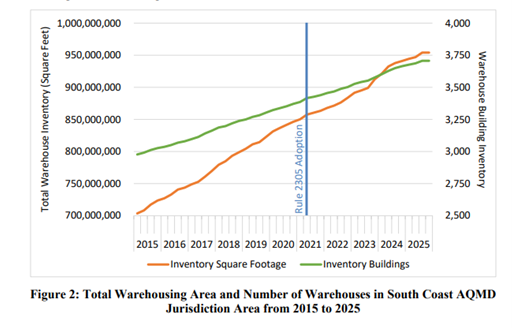
The warehouse industry has continued to grow in Southern California. (Credit: SCAQMD)
3. Southern California is Sending a Signal about the Future.
So where do we go from here? As states across the country grapple with how to combat the federal administration’s reckless and shortsighted approach to pollution and transportation, these results offer a powerful signal. For other places that are considering adopting their own rules to reduce pollution from mega-warehouses—like the Bay Area and states like New York—the lesson is clear: Indirect source rules provide a path forward, and they don’t require a federal waiver to do it.
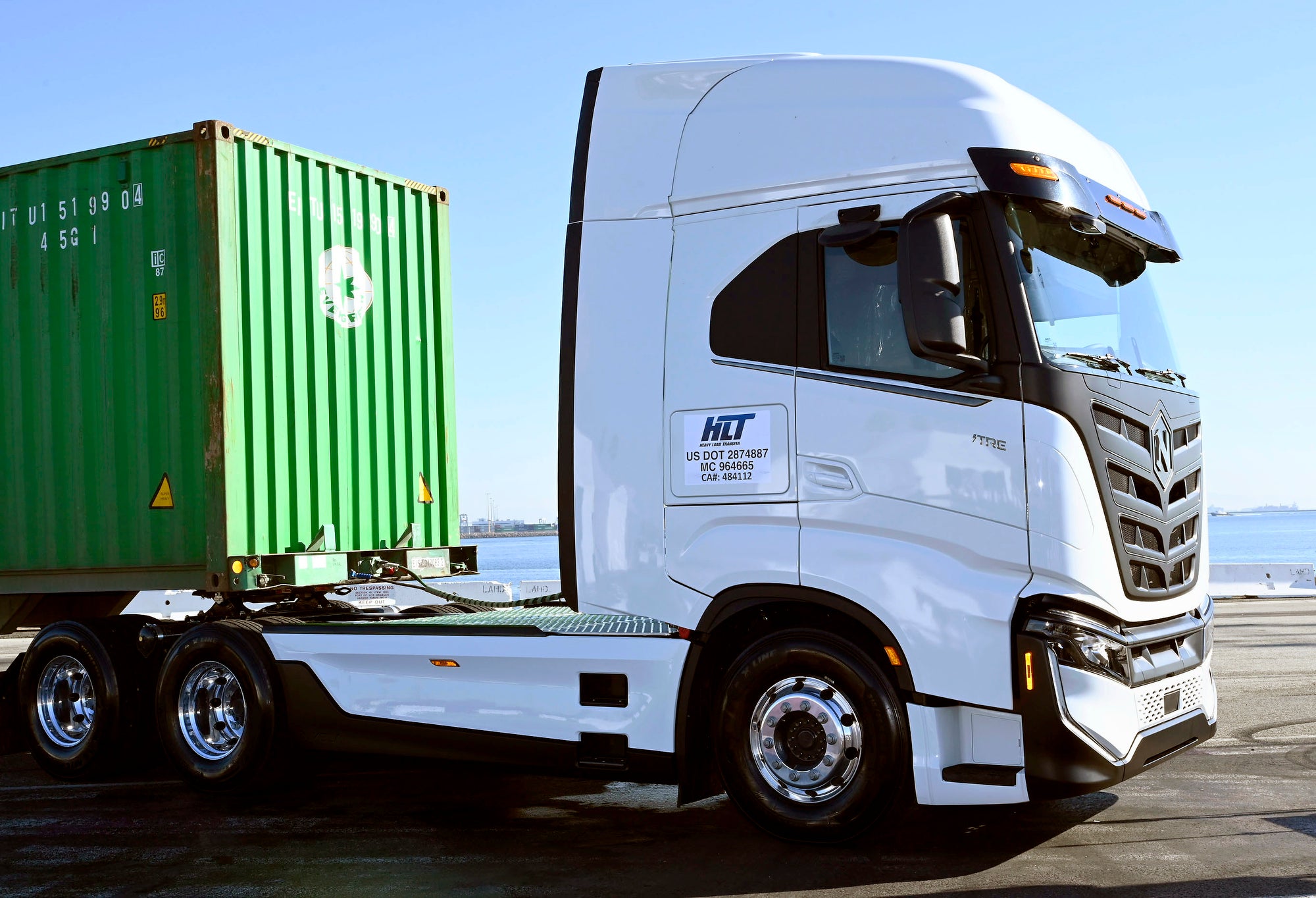
A zero-emissions electric truck at the Port of Los Angeles in San Pedro, California. (Brittany Murray / MediaNews Group / Long Beach Press-Telegram via Getty Images)
In California we are leading the charge, but there is more work to be done. We have the chance to take this momentum and improve upon the South Coast rule to provide even more benefits. And why stop at Southern California? The state should build off this regional success and implement statewide rules to help Californians breathe easier everywhere in the state.
While the Trump administration and Republicans in Congress try to keep us stuck on old, polluting technology, California should double down on our investment in zero-emission trucks and charging equipment. As federal attacks on the Golden State’s vehicle rules carry on, it’s more critical than ever that the state make robust investments in key programs like California’s HVIP program to help transit agencies, school districts, ports, and companies shift to zero-emission trucks and buses.
Perhaps the most exciting thing of all is this report shows that we’re seeing the creation of a modern goods movement right before our eyes. The federal government might be trying to slow California down, but a strong case of nostalgia for the dirty fuels of the 1900s is not a strategy. Claims from industry lobbyists that the technology is not there is belied by the clear evidence in the Los Angeles region. Adopting these air-clearing policies is not a technological hurdle, but rather an issue of political will. Zero-emissions technology is where the future lies, and indirect source rules can help us keep pace with the rest of the world.
Zoe Woodcraft
Public Affairs and Communications Officer, Earthjustice
zwoodcraft@earthjustice.org