Progress
Report
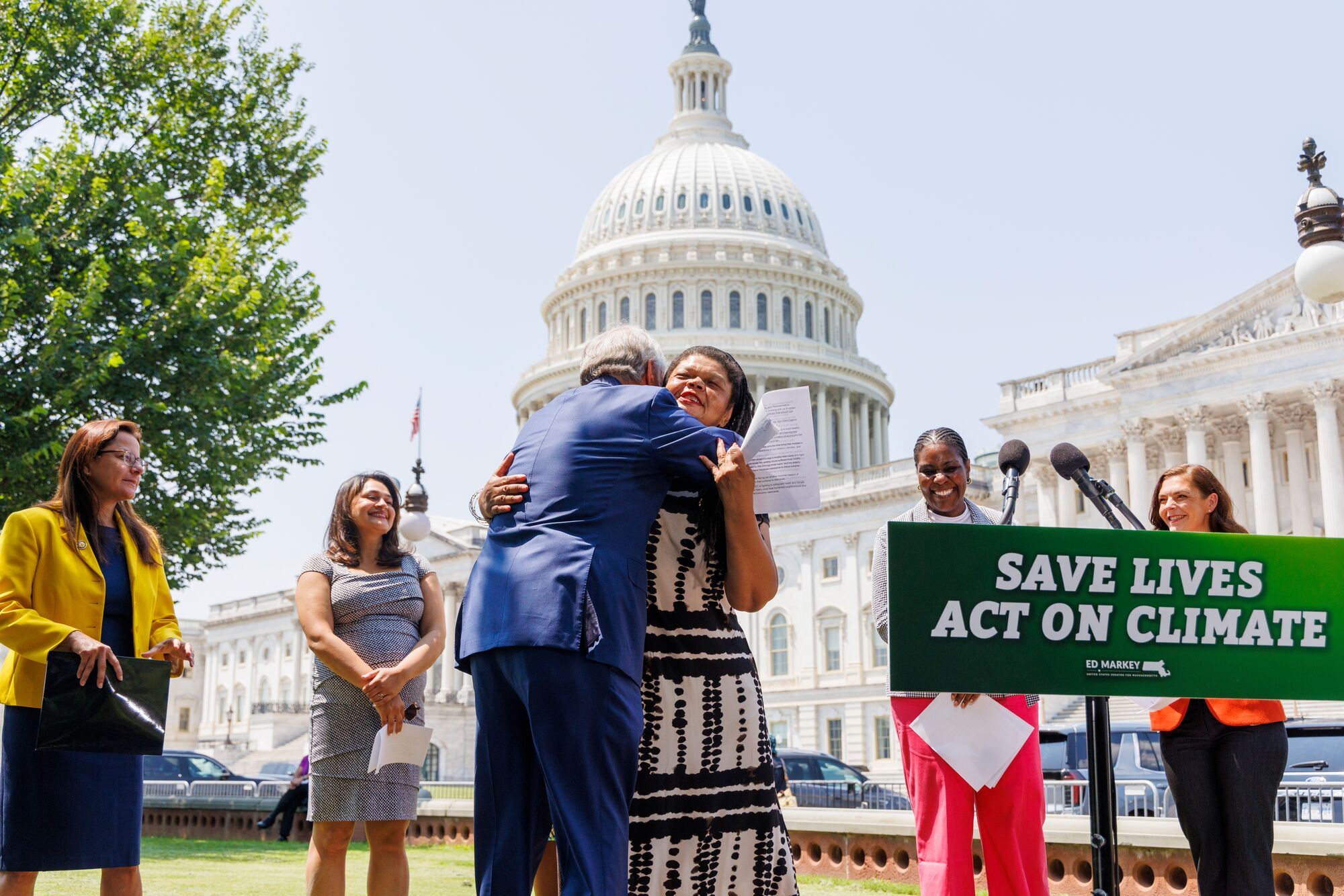
Organizers deliver more than 250,000 petitions to the U.S. Environmental Protection Agency opposing the rollback of federal greenhouse gas regulations.
Alyssa Schukar for Earthjustice
In this report
We are in a defining moment in the fight for our future.
The Trump administration is attacking every environmental protection it can and hoping to make the damage permanent with the help of the Supreme Court. It is rewriting the rules — and putting all of us in danger along the way.
To secure vital protections for people and the planet, Earthjustice is expanding how we drive change.
While facts still matter in the court of law, hostile courts are making it harder to secure decisive wins. But smart litigation offers more than one way to make change. Whether we win or lose a case, our legal work shapes policy and public opinion — spaces where Earthjustice has always pushed for progress.
We have seen the power of this multifaceted approach over the first year of the Counter/Act campaign. Case by case, we’re working toward a sea change that can outlive any administration.
Bring the Fight
Counter the Trump administration’s assaults and take polluters to task through strategic litigation
A coal plant in Pennsylvania. (Chris Jordan-Bloch / Earthjustice)
Jill Tauber, Earthjustice’s vice president of litigation for climate and energy, speaks during a press conference condemning the Trump administration’s repeal of the endangerment finding. (Matt Roth for Earthjustice)
When they “flood the zone,” we hold the line.
The administration spent its first year back in office trying to overwhelm opponents with a wave of attacks on our environment. But Earthjustice was ready for the chaos.
By deepening our bench of experts before Trump’s second term even began, we positioned ourselves to act nimbly as challenges emerged. That preparation powered an unmatched response — we showed up where we were needed most, and we refused to be knocked off course.
Keeping the Trump Administration in Check
When the administration tried to slash protections across the board, Earthjustice countered it on every major environmental front. As the barrage continues to demand more from us, we’re scaling up our response as never before.

53%
Increase
414
632
The number of legal matters Earthjustice opened during the first year of the first Trump administration, compared to the same period under the second Trump administration.
When they harm the environment, we take them to court.
Again and again, Earthjustice showed up in court for our clients — prevailing with facts, defending progress, and preventing the worst ideas from taking root.
Legal Victories Against the Trump Administration:
Victory
Defending a $5 billion federal initiative to build reliable, high-speed electric vehicle charging infrastructure along America’s highways.
lechatnoir / Getty Images
Victory
Protecting the Pacific Islands Heritage Marine National Monument and its rich cultural heritage from destructive commercial fishing.
Jim E. Maragos / USFWS
Victory
Restoring farmers’ access to vital climate data illegally purged by the Agriculture Department and supporting the next generation of farmers and food security.
Aristide Economopoulos For Earthjustice
We’re Carrying This Momentum Into the Fights Ahead:
Legal Work
Challenging the repeal of the endangerment finding and elimination of clean vehicle standards.
David McNew / Getty Images
Legal Work
Protecting the Western Arctic from oil and gas leasing.
Kiliii Yuyan for Earthjustice
Legal Work
Defending the Everglades from a proposed illegal detention center.
Daniel Torok / White House
When they fail to keep people safe, we enforce environmental protections directly.
The Trump administration has gutted agencies charged with the enforcement of environmental laws. In response, Earthjustice launched an enforcement team to support communities as they demand real accountability from polluters. In just six months, the team, led by a 19-year veteran of the Department of Justice, has more than 20 active investigations underway — and growing.
“Citizen enforcement” provisions in our laws allow ordinary people to sue polluters when federal agencies fail to enforce the laws themselves.
Earthjustice has been doing this work for years. Now, our newest team is building on this progress.
In April 2026, Earthjustice sued xAI for powering its data center with 27 unpermitted gas turbines in Southaven, Mississippi. The turbines are polluting the air and could emit up to 19 tons of carcinogenic formaldehyde.
Because the government is failing to step in and protect communities, it is our enforcement team that will hold them accountable.
Our Clients
Mississippi State Conference of the NAACP and the national NAACP
Our Co-Counsel
The Southern Environmental Law Center
About the photo: The xAI data center, Colossus II, in Memphis, Tenn., just north of Southaven, Miss.
Brad Zweerink / Earthjustice
The need for Earthjustice to take on enforcement work has never been greater.
Federal enforcement cases are plummeting. The Department of Justice’s environmental enforcement section is half the size it was at the beginning of the administration. The administration is directing agencies not to enforce disfavored regulations and propping up the fossil fuel industry at all costs.
The message could not be more clear: This administration is not interested in holding polluters accountable.
That is where we come in.
$1.88 billion
2024 penalties
$15.1 million
2025 penalties
DOJ Enforcement
In the first year of the Trump administration’s return to office, the Department of Justice filed just 21 environmental enforcement cases and imposed only $15.1 million in penalties, down from $1.88 billion in penalties issued in 2024.
20
Earthjustice investigations
in six months
Our Response
Earthjustice launched an enforcement team to support communities as they demand real accountability from polluters.
In just six months, the team has more than 20 active investigations underway — and growing.
Shape the Law
Blunt the impact of the Supreme Court’s harmful rulings while working in the lower courts to protect bedrock laws and the foundations of government
A protest in front of the U.S. Supreme Court. (Office of U.S. Rep. Salud Carbajal)
David Henkin, Earthjustice deputy managing attorney for the Mid-Pacific office, successfully argued a clean water case before the U.S. Supreme Court. (Melissa Lyttle for Earthjustice)
When the Supreme Court disrupts the legal landscape, we strengthen the movement to navigate new terrain.
In the face of increasingly politicized courts, Earthjustice launched our Strategic Legal Advocacy initiative to create a hub of Supreme Court and appellate expertise for the environmental community.
Launched in 2021, the team is now six strong and more in demand than ever — supporting clients by crafting arguments, drafting briefs, and arguing cases, both in the spotlight and behind the scenes.
How Earthjustice Bolsters the Movement
40%
Earthjustice is already involved in roughly 40% of the Supreme Court’s cases in the current term — all in support of our clients, partners, and allies.
Influence That Can Move the Court
We filed “friend of the court” amicus briefs in four cases so far this term, including the cases below. These briefs inject outside expertise into a case, providing crucial context justices wouldn’t otherwise hear:
Chevron v. Plaquemines Parish
Question presented Whether oil companies can avoid liability for historic damage to state coastlines.
Update The Court agreed with the oil companies that the suit can move from state to federal court. Justice Jackson’s concurring opinion, which took a narrower view than the oil companies wanted, cited the amicus brief that Earthjustice filed.
Adrienne Bloch / Earthjustice
Enbridge v. Nessel
Question presented Whether Michigan has authority to shut down an aging oil pipeline under the Great Lakes.
Update Thanks in part to our support, the Court unanimously rejected the oil company’s belated attempt to move the fight from state court to a venue it hoped would be more sympathetic to its position.
David Ruck for Earthjustice
Monsanto v. Durnell
Question presented Whether pesticide companies can avoid liability for failing to warn people of their products’ health risks.
A decision is expected in summer 2026.
Paul Giamou / iStock
Rigorous prep for stronger cases
19
Moot Courts
We organized and took part in 19 Supreme Court practice arguments, or moot courts, for our peers and allies. These simulations — which our partners regularly ask Earthjustice to join — strengthen cases and prepare litigators before they enter the courtroom.
When critical issues hang in the balance, we work to keep the Supreme Court from eroding the law.
Earthjustice works to reduce the risks of cases that could potentially undermine progress for the environmental movement. This includes participating in the Court's case selection process to prevent new decisions that would take us backward.
For example, in 2025, Earthjustice led the drafting of a brief in opposition to a petrochemical company’s request for the Supreme Court to take up two issues that — if resolved in the company’s favor — would have eliminated ordinary people’s ability to sue to enforce pollution control statutes like the Clean Air Act. The Court decided not to review the case, preserving citizen suits as an avenue for enforcement, for the time being.
Case to Watch
The Long Game of Shaping the Endangered Species Act
Earthjustice is involved in a case about Florida manatees with potential consequences for all species protected under the Endangered Species Act.
- In Bear Warriors United v. Florida Department of Environmental Protection, we’ve stepped in as amicus curiae — a “friend of the court” offering expert input — to defend a core principle of the law: protecting habitat, not just individual animals.
- The case also threatens Endangered Species Act citizen enforcement because Florida argues plaintiffs lack standing unless they’re “likely to encounter dead manatees,” a gross misreading of Congress’s intent.
- Our brief provides the court with the strongest legal and scientific analysis for habitat preservation amid heavy industry pressure for deregulation.
The case will be argued and decided in spring and summer 2026.
Our Clients
Center for Biological Diversity, Florida Springs Council, Indian Riverkeeper, Kissimmee Waterkeeper, Matanzas Riverkeeper, Miami Waterkeeper, Save the Manatee Club, Sierra Club, and Waterkeepers Florida
About the photo: A manatee and calf at Three Sisters Springs, Florida.
James R.D. Scott / Getty Images
When the Supreme Court undermines bedrock laws, we find new ways to win in the lower courts.
Shaping the law starts long before a case reaches the Supreme Court, which hears fewer than 2% of federal cases. The rest are decided in lower courts, where the real groundwork happens. Earthjustice is fighting in these arenas where future Supreme Court cases can take shape.
Forging Outcomes in the U.S Courts of Appeals
Appellate courts are a key battleground for environmental decisions, as rulings from these courts determine how laws are interpreted and how future cases are decided. Over the last year, Earthjustice worked on some of our most important legal matters in the U.S. Courts of Appeals*, including:
D.C. Circuit
103
Cases in the D.C. Circuit
Spotlight This is where Earthjustice is challenging Clean Air Act rollbacks and agency decisions to approve pipelines and liquefied natural gas export terminals.
About the D.C. Circuit With primary responsibility for reviewing Clean Air Act challenges, the D.C. Circuit is often where challenges to the actions of federal government agencies are filed.
9th Circuit
35
Cases in the 9th Circuit
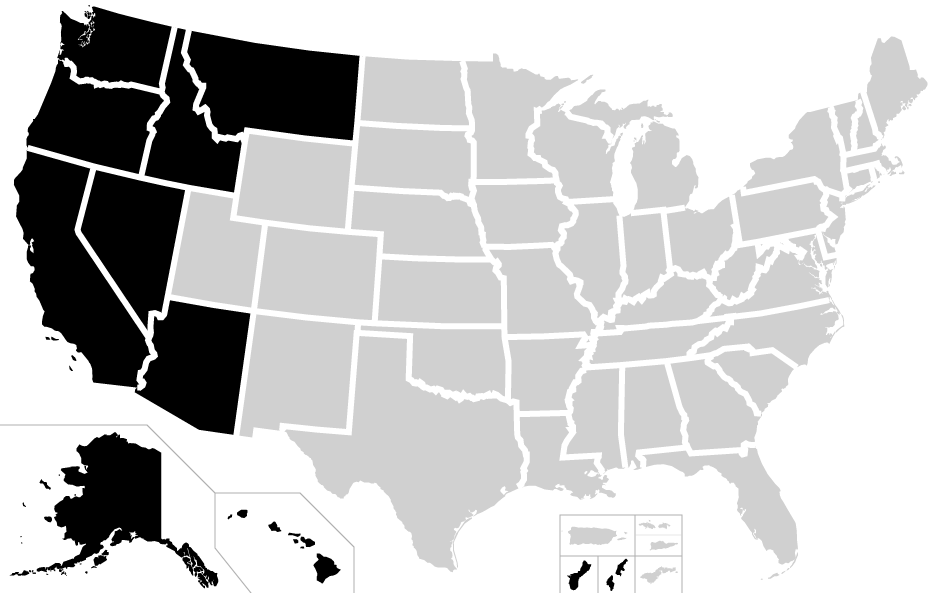
Spotlight This includes Earthjustice’s decades-long litigation to protect salmon in the Columbia River basin.
About the 9th Circuit The country’s largest circuit, the 9th Circuit covers over 20% of the U.S. population, including in Alaska and California, and known for environmental cases.
5th Circuit
11
Cases in the 5th Circuit
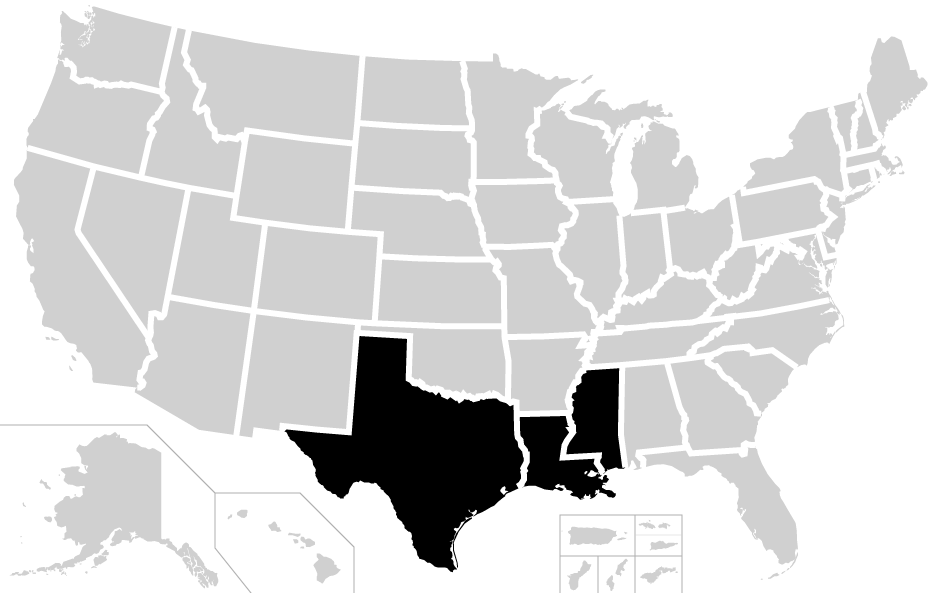
Spotlight This would cover any appeals to Earthjustice’s actions challenging xAI’s unpermitted gas turbines in Mississippi.
About the 5th Circuit Covering Louisiana, Mississippi, and Texas, the 5th Circuit is known for oil and gas and administrative law cases.
10th Circuit
5
Cases in the 10th Circuit
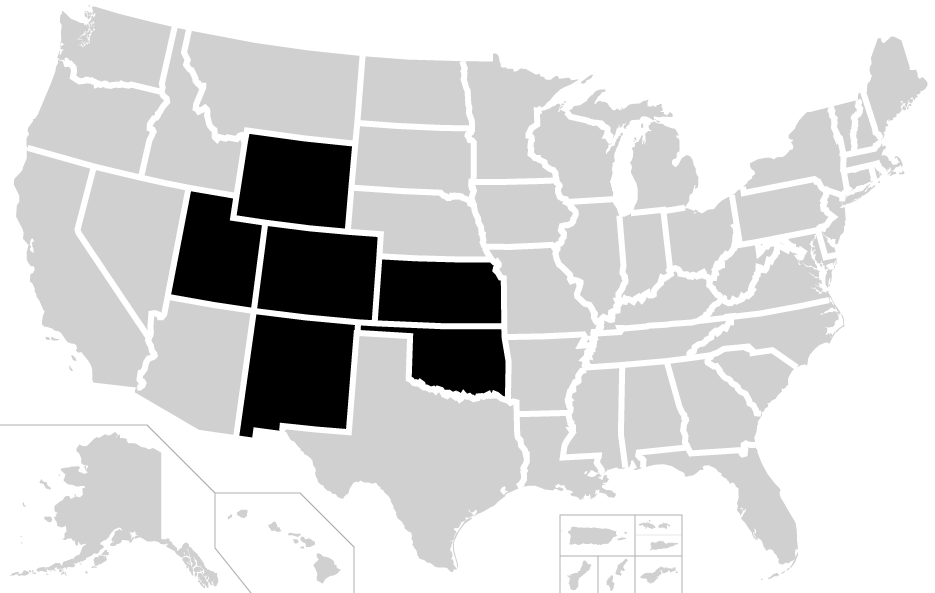
Spotlight This includes our appeal for our Suncor Clean Air Act citizen suit and Bears Ears and Grand Staircase-Escalante National Monuments defense.
About the 10th Circuit Covering Colorado, Utah, Wyoming, and other Western states, the 10th Circuit is where core issues around federal land and Native American law often come to a head.
11th Circuit
4
Cases in the 11th Circuit
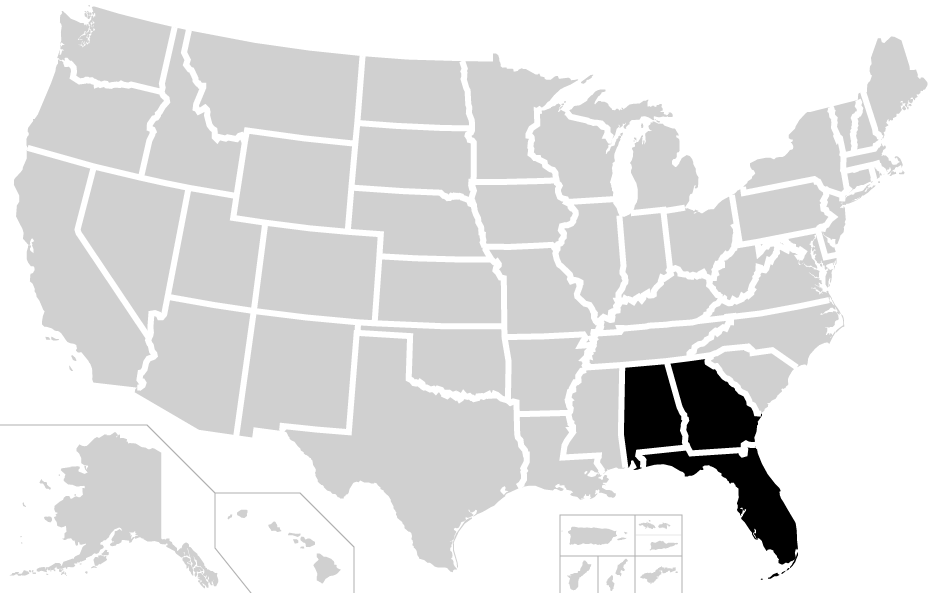
Spotlight This includes Earthjustice’s historic work to challenge the Everglades detention facility and defend the Endangered Species Act.
About the 11th Circuit Covers Alabama, Florida, and Georgia
* Earthjustice worked on these legal matters in the U.S. Courts of Appeals between January 1, 2025, and February 20, 2026. Many of these were opened or filed prior to 2025 and are now winding their way through the courts.
Force Progress
Act locally and in the states to make advances for clean energy, climate resilience, and public health
Families at a park near a petroleum refinery in California. (Hannah Benet for Earthjustice)
Adrian Martinez, director of the Right to Zero Campaign, leads Earthjustice’s efforts to electrify states with zero-emissions clean energy. (Hannah Benet for Earthjustice)
When they abandon clean energy and health commitments, we advance the work that can’t wait.
We’re developing the blueprint for bolder change, starting in the states, where solutions can be tested, proven, and scaled.
What’s Next
Frontline Fights Against Toxics
Earthjustice is building a region-by-region effort to protect communities from harmful chemicals — beginning with a legal director dedicated exclusively to protecting the safety of our drinking water.
- Looking ahead, we’ll launch state-level legal campaigns to stop toxic exposures wherever they poison people and the environment.
- This means pushing for new protections while enforcing existing laws so communities are no longer burdened by preventable chemical and plastic threats.
Johnny McClung / Unsplash
Ramping Up In The States
Electrifying Everything
In 2017, Earthjustice launched an effort in California to transform how people use energy.
Today, we have expanded this work to Colorado, D.C., Illinois, Maryland, New Jersey, New York, Texas, Washington, and beyond.
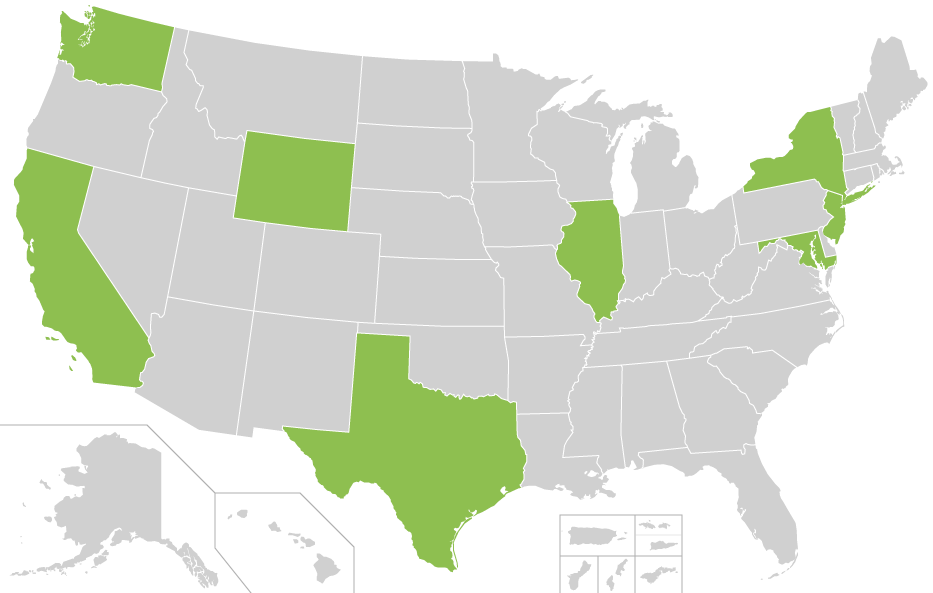
Notable Wins secured
From 2025 to spring 2026:
California Commitment to transition harbor craft, such as ferries and tugboats, to zero emissions by 2035 in the Port of Long Beach

Colorado $1B plan to modernize the state’s electrical grid

Maryland Legislative wins that include fast-tracking 1,600MW of battery storage for clean energy

New Mexico Adoption of a clean transportation fuel program — the first to be adopted beyond the West Coast

New York Defense of the state’s congestion pricing program, resulting in over $550M flowing to city transit
Marco Bottigelli / Getty Images
Spurring cleaner, fairer energy
Earthjustice more than doubled our work pushing power companies to supply people with cleaner, fairer energy — growing from 96 cases in 2018 to 197 in 2025.
We’re now driving progress in 26 states and territories.
96 cases
2018
197 cases
2025
Notable Wins Secured
From 2025 to spring 2026:


California, Oregon, Washington, D.C. Hundreds of millions in ratepayer savings from unnecessary investment in unneeded and leaky gas pipes
Florida Energy efficiency upgrades for 100,000 low-income households

Kentucky Defeat of a proposal that included a new gas plant in 2029 and reliance on coal until 2045

Louisiana Defeat of a proposal to build a floating gas plant atop barges in the bayou

Pennsylvania The state’s largest residential solar project
alacatr / Getty Images
When the federal government backslides, we build stronger protections in the states.
Case in Point
Colorado Moves Beyond Federal Landfill Emissions Standards
Colorado scored a major climate and public health win in December 2025 by adopting its first-ever rule to curb landfill air pollution, becoming only the sixth state to exceed federal standards.
- Landfills release a dangerous mix of methane, toxic chemicals, and PFAS (known as “forever chemicals”) as waste breaks down.
- The new rule requires stronger leak-detection monitoring and, for the biggest polluters, systems that capture and destroy harmful gases.
- These protections are expected to prevent up to 12.3 million metric tons of climate pollution each year — the equivalent of taking nearly three million cars off the road — and deliver more than a billion dollars in health and climate benefits.
How we got here
Earthjustice represented GreenLatinos throughout months of negotiations with community groups, conservation partners, and industry, pushing for the strongest safeguards possible.
- State regulators faced heavy pressure from industries and some local governments, but with Earthjustice’s representation, GreenLatinos held the line on core issues.
- Among these include defeating an industry-led push to allow open flaring — a far less reliable method of destroying methane compared to enclosed flaring.
The rule isn’t the final word, but it’s a powerful example of what coordinated advocacy can achieve in states poised for meaningful change.
Our Clients
GreenLatinos
Our Co-Counsel
Clean Air Task Force
About the photo: In addition to methane pollution, landfills can also contaminate ground water and release hazardous air pollutants that carry long-term health risks for nearby communities.
Mitch Diamond / Getty Images
Case in Point

Court Backs New Jersey’s Groundbreaking Environmental Justice Law
In January 2026, Earthjustice won a pivotal victory when a court upheld the rules implemented under New Jersey’s Environmental Justice Law, one of the nation's strongest laws designed to protect communities that have long been burdened by pollution.
- Despite multiple attacks from industry, the court sided with the New Jersey Department of Environmental Protection that its rule was lawful, affirming that claims of economic benefits cannot be used to allow new sources of pollution in overburdened communities.
- Our partners spent years helping to build, shape, and push forward the landmark law, and Earthjustice has joined them in defending it and advocating for its rigorous implementation.
What’s happening now
Industry has appealed the win to the New Jersey Supreme Court, but advocates will continue rigorously defending the rule.
We're hopeful that the resounding victory from the lower court bodes well for the rule, and that it will buoy groups engaged in ongoing permitting battles in New Jersey while inspiring other states that are considering passing similar laws.
Our Clients
Ironbound Community Corporation, South Ward Environmental Alliance, and New Jersey Environmental Justice Alliance
About the photo: Members of New Jersey’s Ironbound community in Newark march against a proposed sludge facility and the expansion of a gas plant.
Kena Betancur for Earthjustice
Fundraising Update
Since Counter/Act’s launch in July 2025, Earthjustice has raised $106.7 million of our $150 million goal.

Thank You
Each day brings new threats to our environment — yet opportunity endures.
With your partnership and the strength of our clients, we’re driving progress where we can and mounting fierce resistance where we must. A better future is still within reach, and with you by our side, we’ll keep fighting to secure it.