

2026 Justice Partners Series
Earthjustice Town Hall
Featuring Earthjustice attorneys Byron Chan and Candice Youngblood
The closed captions are auto-generated. We apologize for any transcription errors.
This text is edited and condensed from an automated transcription of the recording. It may not be in its final form and may be updated or revised in the future.
Monika von Hillebrandt: Thank you for joining our Justice Partners Town Hall, covering our Southern California oil and gas work. We are so grateful to be with you today, and to have the chance to connect with supporters who help move this important work forward.
Many of you are Justice Partners, donors who give $1,000 or more to sustain Earthjustice's work. We're tremendously thankful for that commitment and for the way it strengthens our ability to stand with communities and partners on the front lines. To our Justice Partners, and to everyone joining us today, welcome again, and thank you.
Next, it is my pleasure to introduce our speakers:
Byron Chan is a supervising senior attorney with Earthjustice's Community Partnerships Program based in Los Angeles. Byron first joined Earthjustice in 2015 as a legal fellow with Millbank LLP. In 2018, he returned to Earthjustice as an associate attorney in the California Regional Office and has since lateraled into the Community Partnerships Program. He received his JD from the New York University School of Law.
Candice Youngblood is a senior attorney with the Earthjustice's California Regional Office. Candice first joined Earthjustice as a litigation assistant before law school and later returned as a Skadden Fellow. Before returning to Earthjustice, she clerked for Judge Dale A. Drozd in the Eastern District of California. Candice received her JD from the University of California, Berkeley School of Law.
And with that, I'll pass it over to Byron.
Byron Chan: Thank you so much. Hi, everyone. Good afternoon. Thank you so much for joining. My name is Byron Chan. As was said, I'm an attorney in the Community Partnerships Program. I just wanted to thank you all for this opportunity to share some of our work today.
So, the title of my presentation is "No Drilling Where We're Living" and that's the rallying cry of our incredible clients and partners who are fighting to end neighborhood oil drilling in Los Angeles.
Here is the roadmap for today. I'll start by sharing a brief history of oil drilling in Los Angeles. I'll then talk about our advocacy around the Murphy drill site in South L.A. And I'll end by talking about our ongoing work and success in ending neighborhood oil drilling in the city.
Oil is an important part of L.A. history, because at its core, the city was built on oil. And as the city developed, its population grew alongside that oil. The city's oil boom started in the early 1900s, and by the 1920s, nearly a quarter of the world's oil came from Los Angeles.
The title of this slide, which is, “Yes, it's oil, oil, oil/ that makes L.A. boil" is a lyric from a popular song during that time. And this oil boom led to the oil industry's rapid development. So today, Southern California is known for its beautiful beaches in Santa Monica and Venice, but not too long ago, this is what Venice and other beaches in the area looked like.
This legacy of neighborhood oil drilling brings us to the drill site that is the focus of our work today in South Los Angeles, and that site is the Murphy Drill Site. This is what the Murphy Drill Site once looked like. It was the site where Daniel Murphy -- who is pictured here -- an Angelino, who made his fortune in oil and cement, built his mansion. This is Daniel Murphy's mansion and when Daniel Murphy passed away, he gave the site to his daughter, who ultimately gifted it to the Catholic archdiocese.
Then in the late 1950s, even though the site was zoned residential, the city allowed the archdiocese to lease the property to develop an oil drill site in the community. This is what the drill site looks like today. There are 33 wells there that produce about 6,000 barrels of oil a month, and there are also thousands of gallons of toxic chemicals stored at the site.
The Catholic archdiocese still owns the site, which it leases to E&B Natural Resources, the operator of the Murphy Drill site. And as this picture shows, the drill site is in a dense residential community in an area that is still zoned for residential.
The orange buildings that you see on the top of the picture, those are the St. Andrews apartments for multifamily low-income housing, and the two buildings across the street are retirement communities. And if we look just a few blocks out from the drill site, which is outlined in this image in red, you can see five schools serving thousands of students, one church, and three medical facilities, including the AIDS Healthcare Foundation's Medical Clinic and the Western Convalescent Hospital. And again, you can just see the dense layout of apartments and homes in the area.
That's the view from above the Murphy Drill Site, but if you were to look underground, this is what you would see. The wells at the drill site are horizontally drilled, so each of these black lines is an oil well, and as you can see, the wells form a toxic web underneath the community.
So what are the harms of urban oil drilling? Well, drilling is a very polluting activity that involves toxic chemicals, dangerous emissions, diesel trucks and equipment, and thousands of gallons of acid used to get oil out of aging oil wells.
That would be concerning anywhere, but it's especially harmful when all of that is happening in the middle of a dense residential neighborhood. And residents living near the Murphy Drill Site have been raising the alarm about these harms for years.
For example, at a public hearing, a resident who lives only a few doors down from the Murphy Drill Site described endless smells, fumes, and headache-causing agents coming from the site.
And residents have also shared concerns about their children. One resident said, "My biggest concern is for my 5- and 3-year-old daughters. They're being exposed to chemicals from the Murphy site."
Several health studies have confirmed these impacts and concerns. One study by researchers at USC found that residents living closest to the Murphy Drill Site experience a significant overall reduction in lung function and capacity, a greater decrease than that caused by exposure to secondhand smoke.
In the next slide, you'll see our client and partner in this work. Redeemer Community Partnership has been working with local residents to address impacts from the Murphy Drill Site. This is a picture of Richard Parks, who is the president of Redeemer, holding the megaphone at a protest against the drill site.
Together with Redeemer, we've been focusing our work on the L.A. city zoning administrator, who has the authority to review impacts from the Murphy Site and to impose operating requirements to better protect surrounding families.
Our message and advocacy for the zoning administrator is rooted in the disparate treatment of communities living around drill sites in South L.A. compared to communities living around drill sites in West L.A., which is a wealthier and wider part of Los Angeles.
I put the picture of the Murphy Drill Site here again, just to remind you what the Murphy Drill Site in South L.A. looks like. Because this is what drill sites in West L.A. look like. What's most noticeable is that the city requires operators to enclose drill sites in West L.A.
On the left here, you have the Packer drill site, which is enclosed in a fake office building. In the middle, you have the Cardiff Tower Drill Site, which is disguised as a synagogue. And on the right is an artistic structure that encloses the drill site at Beverly Hills High School. These enclosures are important because they protect surrounding residents from the fumes, odors, and noise of oil drilling.
The city also requires L.A. drill sites to use electric instead of diesel equipment and use grid electricity instead of burning methane on-site to generate electricity. These requirements are not new. They've been in place for decades at West L.A. drill sites, but they are still not required at drill sites like the Murphy Drill Site in South L.A.
For years, we presented evidence of this disparate treatment to the zoning administrator and argued for equal protections for South L.A. families. That effort led to the comments that are pictured here, where we again asked the zoning administrator to impose strict requirements on the Murphy Drill Site to protect surrounding residents.
In response to our comments, the zoning administrator called for a public hearing to review conditions at the drill site and to consider new requirements. At the public hearing, we made a presentation outlining the harms of neighborhood oil drilling, and dozens and dozens of community members shared their stories of living next to the Murphy drill site.
After the hearing, the zoning administrator in the document that's pictured here, found that the drill site was harming surrounding residents and imposed new restrictions.
Unfortunately, the fight wasn't over. E&B, the operator of the drill site, appealed the zoning administrator's decision to the City Planning Commission. This is a picture of the Planning Commission hearing for that appeal. We submitted comments to the Commission supporting the zoning administrator's decision, and again, dozens of community members shared their stories with the Commission about the harms that they regularly experienced from the Murphy Drill Site.
Despite all of this, the Commission weakened the protections that community members have fought for. This was a really tough decision. It's at this point of the story where we would normally sue the city, but we ultimately decided not to and that's because a victory in court here would not necessarily mean stronger protections at the Murphy Drill site. Those stronger protections could only come from the city through the administrative process.
Instead, we decided to build on the community advocacy that had gotten us this far and to push the city to finally declare the Murphy Drill site a public nuisance that must be shut down and together with Redeemer, that's exactly what we've been doing.
So the fight continues and what the fight looks like is organizing, building community power, and keeping pressure on the city to act.
These are some pictures of all of that effort. On the top left here is a picture of a teach-in that Redeemer hosted for community members across the street from the Murphy Drill site.
On the right is a picture of a protest that Redeemer organized in response to planned acid work at the Murphy drill site that actually led to the cancellation of that work. As you can see, the sign there says E&B stopped the acid drop, and Redeemer used balloons to fly the sign right outside the drill site.
On the bottom left here is a picture of us with Redeemer at City Hall, where we met with the zoning administrator to present evidence of ongoing harms from the oil drill site, and to push for stronger enforcement.
All of these efforts have made a difference. Earlier this year, the Los Angeles City Council directed the zoning administrator to initiate a nuisance abatement hearing for the Murphy Drill site. Unlike the earlier process that I just described, this nuisance abatement hearing gives the city authority to go further, not just to impose conditions, but to actually shut down the drill site.
The timing of this town hall is actually perfect because that nuisance abatement hearing happened last week, on July 23rd. At the hearing, 68 residents showed up and called for the Murphy Drill site to be shut down. We don't have a decision yet, but the community's message was clear, that anything less than shutting down the drill site is unacceptable.
I want to wrap up by noting that the strategy that we are using to challenge the Murphy Drill Site is not new, and it's worked before. This was the Jefferson drill site, which is about 1 mile away from the Murphy Drill site, and the Jefferson drill site was also next to peoples' homes in South L.A. We waged a similar campaign with Redeemer against the Jefferson Drill site, documenting the harms to surrounding residents and the disparate treatment of South L.A. families. That campaign led to a hearing where the zoning administrator imposed strict requirements on the site but instead of implementing those new requirements, the operator of the Jefferson drill site decided that it would rather shut down.
This is what the Jefferson Drill site looks like today; it's an empty lot with capped oil wells, and it's an incredible achievement for Redeemer. But that's not the end of the story. Redeemer partnered with the Los Angeles Neighborhood Land Trust and secured funding to actually buy the empty lot and that's because, in Richard's words, we knew that if we did not do that, the toxic violence of oil extraction would be replaced by the violence of displacement, as developers come into the community and drive out long-time residents.
This is what the Jefferson Drill site will look like in the near future. It's the Jefferson Park project, which will include affordable housing, a community center, and green space.
And again, that's the incredible character and resilience of our clients. They are not only focused on removing pollution from their communities today, but they are also focused on a vision for tomorrow that's rooted in justice and compassion.
Thank you so much.
Candice Youngblood: Hi, everyone. I'm Candice Youngblood. I am a senior attorney with the Right To Zero campaign.
Byron just shared a bit about our supply-side work to reduce our reliance on dangerous fossil fuels. I'm going to expand on some of the demand-side work that we do that will reduce that reliance and also clean the air that we breathe. I'll be focusing on some of our transportation electrification work, specifically focusing on freight. We work on freight issues as part of our mission to ensure that everyone has the right to breathe clean air, regardless of their zip code.
I'm going to start by explaining the impacts that warehousing has on communities in a Southern California region called the Inland Empire and then I'm going to give an overview of the Right To Zero campaign's work to clean up the freight industry. Finally, I'll spotlight a specific litigation effort that is in pursuit of our frontline partner's vision of justice.
Let's begin with what we mean when we say freight and how warehouses fit within the greater goods movement.
Summer is coming to an end, and Halloween is right around the corner. Imagine you may still need a costume. After a few clicks online, that costume is already on its way. But ask yourself, how does the company actually get that costume to your door?
That costume will likely come from overseas, and it'll arrive at the Port of Los Angeles and then it'll move by eastbound truck or train for about 50 miles and end up in a warehouse in the region where I grew up, which is called the Inland Empire.
It was once called the Orange Empire, and it was known for citrus groves and agricultural jobs. Now, it's called America's Shopping Mart, known for sprawling warehouses. The rise of e-commerce during the pandemic really accelerated this warehouse expansion.
Today, about 40% of the nation's goods pass through the Inland Empire before being delivered to your door, and one of the biggest hidden costs of our one-click culture is that the companies that set this stage are poisoning people. Because companies are tucking these warehouses away in industrial zones, they're right at the end of your street or across from your kid's school.
And every single warehouse brings thousands of diesel trucks every day that pump toxic exhaust onto streets and into homes. We call these neighborhoods, “diesel death zones.” These are places where the influx of diesel pollution leaves low-income communities and communities of color marked with high rates of asthma.
Heart disease, cancer, reproductive issues, and early death. Pregnant people, the elderly, and children are most at risk. Our clients have even resorted to strapping personal air monitors to their kids just to see how dirty the air they're breathing is throughout the day.
But here's the thing. None of this is inevitable. We have solutions that are already available that can clean up emissions from goods movement.
So next, I'll give an overview of our freight advocacy in Southern California, and how it grew into a larger effort called the Right To Zero Campaign.
When the Los Angeles office launched about 12 years ago, a lot of our early work focused on cleaning up air pollution by working in coalitions that stretched from the Port of Los Angeles all the way out to the Inland Empire. These communities are far apart geographically, but they're deeply connected because at each step of the freight train, communities who live there are forced to breathe dirty air.
In 2017, we launched Right To Zero, a campaign to push for the adoption of zero-emissions technologies in transportation, our buildings, and in industry, and to run it all on a clean energy grid. This campaign started in California and has since spread across the country.
Our work has several core theories of change. We must press for affirmative zero-emission mandates to speed the pace of change. We must counter fossil fuel efforts to misinform the public and decision makers. We can and often must drive change from one level of government to another. And we do all of this in partnership with frontline communities.
As part of Right To Zero's transportation work, we're pushing the entire freight chain to zero emissions, adopting solutions that are already available today. From the electric tugboats that help tow in the container ships at the port, to the electric trucks and trains that move goods along corridors, to the electric yard trucks and forklifts that handle the goods when they arrive at the warehouses, to the electric trucks that deliver the goods to your door. And we've made strides towards cleaning up the warehouse logistics industry.
For example, we've brought affirmative litigation to challenge bad warehouse projects. We challenged what was then the world's largest planned warehouse development, the World Logistics Center. That project would have brought thousands of polluting trucks to the Inland Empire every day.
And we won a landmark settlement where the developer paid for zero-emission trucks, forklifts, electric vehicle (EV) charging, and rooftop solar, setting a standard for what should be expected from these industrial projects.
We've also put out powerful communications materials, like stories and reports, that have changed the way that people are thinking about these issues.
We've worked alongside our frontline partners to win the first-ever regional warehouse rule that will require warehouse operators in Southern California to clean up their operations, including by electrifying truck fleets and that rule is now being replicated across the country.
And much of our policy advocacy also leads to defensive litigation. We successfully defended that warehouse rule in court against legal challenges from the trucking and airline industries.
But reducing pollution is only one part of the fight because industrialization is still disrupting our frontline partners' way of life. So we need to get to zero emissions and move from that approach entirely. One of California's key environmental laws allows us to do both.
We're going to zoom in on one community's resistance to the warehouse logistics industry. That fight takes place in Bloomington, a small community in San Bernardino County with roughly 25,000 residents. Most are low-income, Latino, and monolingual Spanish speakers.
Bloomington is one of the few remaining rural areas in the Inland Empire. Many residents immigrated from Mexico, and they brought a ranchero lifestyle to the community -- owning ranches and community gardens. And every day, you would see folks riding horses down streets. But today? You also see big rigs. The region's warehouse epidemic caught up with Bloomington, and the community is now boxed in by warehouses that residents have been resisting for years.
Then, in 2021, a developer approached the county with plans for a new warehouse: the Bloomington Business Park. This project is bad. It will be the size of 150 football fields and over 100 homes needed to be demolished for the project. The project would draw 1,300 trucks through Bloomington streets each day.
And the nearest residence is 11 feet away. As you can see, a high school and elementary school are right across the street. Each of the numbers on this map marks another industrial project in Bloomington. So this was really a breaking point for this community.
Our state's bedrock environmental law, the California Environmental Quality Act, or CEQA, is a tool that frontline communities use to protect themselves from a project's harm. CEQA required San Bernardino County to disclose the project's impacts in an environmental impact report and consider the public's concerns before approving a project. Unsurprisingly, the county failed to meet these standards.
One of our local partner organizations, the People's Collective for Environmental Justice, has been supporting the Bloomington residents on the ground for years. They asked us to get involved when the project's environmental impact report was published for public review.
So Earthjustice submitted comments flagging several CEQA violations, like:
- The county failed to consider a reasonable alternative to the project, like a smaller-sized project.
- The county failed to properly analyze the project's environmental impacts, like health impacts from air pollution, noise impacts, energy impacts.
- And the county failed to consider feasible mitigation measures, like using zero-emission trucks to mitigate its air pollution impacts.
Despite significant opposition, the county rubber-stamped the project so we sued them.
We brought a CEQA lawsuit against the county on behalf of the People's Collective for Environmental Justice, the Center for Community Action and Environmental Justice, the Center for Biological Diversity, and the Sierra Club.
I want to uplift 3 key lessons from this fight that I believe reflect what makes Earthjustice so effective.
The first lesson is that we have to shift power by using litigation and thinking beyond it.
Our lawsuit alleged that the county violated CEQA in numerous ways, by failing to consider alternatives, failing to properly analyze the project's various environmental impacts, and by denying the public meaningful participation in the process.
And as we litigated, our frontline clients drove bold, creative actions on the ground that shifted power. Residents created and displayed a community art installation titled “Boxed In” to tell their stories. The L.A. Times ran a front-page story spotlighting the community's years-long resistance.
On the day of the hearing, residents filled the courtroom. Even the jury box was full of residents. And Earthjustice coordinated real-time Spanish interpretation so that all residents could engage in the process.
And we won. The court ruled in our favor. In a 98-page ruling, the court found that the county failed to consider alternatives to the project, failed to properly analyze the project's impacts, including health impacts from air pollution, greenhouse gas impacts, energy impacts, and noise impacts. And that the county failed to consider feasible mitigation measures, like zero-emission trucks.
The court ordered that construction on the project stop until the county redoes its environmental impact report in compliance with CEQA.
But our clients want something more than what this win could offer. They want to stop the project from being built in their backyards. So we're pressing on, using every tactic that we can think of to help get them there, and merging our partners' on-the-ground expertise in grassroots advocacy with our legal strategies.
We're currently engaging in the next CEQA environment review to make sure it's done right, and every voice is heard. This strategy also required us to pause and ask, what does justice look like here?
Yes, we've won big settlements and other CEQA cases that raised the bar and showed that the freight industry can shift to zero-emission solutions. And the regulations that we've won will push the industry closer to zero emissions over time. Those wins are real and precedent-setting.
But our clients need something even more radical: no more warehouses in their backyards. They want systems change. And we must stay deeply connected to their vision of the future.
This means reflecting on Earthjustice's role in what Earthjustice calls the greater ecosystem of justice. It's the ecosystem of all of the partners, organizations, and individuals who are working together in our fight for justice.
When Earthjustice began in the 70s, we were a litigation shop. Today, we also shape policy, lobby, and uplift stories. But at the end of the day, what really sets us apart from other organizations in this movement is that we represent clients, and that is central to our mission. So, we stay rooted in their vision of the future, and in the principles of environmental justice: that communities speak for themselves.
Finally, we need to win, and we need trust to do it. So how do we build that with our partners?
First, we put them first. We stay anchored in their vision of justice so that when the wins are scarce, they know we will not leave them.
Second, we care for each other. These fights are hard, and they wear on all of us. So, we create moments that refill the well, celebrating a client and partner's successes, making art together, finding joy together in the midst of a struggle.
Third, we keep showing up. Trust doesn't grow in a single meeting. It builds in the mobilizations, in the meetings with board members, and in standing beside our frontline partners in court.
These lessons will allow us to win and make sure that that win matters. We have to think creatively, center justice, and remain connected. Because real change begins in connection.
Thank you.
Monika von Hillebrandt: Thank you so much, both of you. That was super inspiring, and I'm always so proud to be able to get to work with Earthjustice with such amazing colleagues as yourselves and thank you so much for all that you do.
So, we are now going to transition into our audience Q&A. As a reminder, if you have a question for our speakers, please submit it using the Q&A button at the bottom of your screen. And with that, we'll get started on our first question.
Following the hearing on the re-approval of the Bloomington project, what actions will be taken next, and how can community members stay involved?
Candice Youngblood: There are actually at least two more hearings before the county agencies, before the project could be reapproved. In late August, the project is going to go before San Bernardino County's Planning Commission. Then they'll make a recommendation of whether or not it should move up to the Board of Supervisors for the county, and then the County Board of Supervisors will have the opportunity to consider re-approving the project.
Our partners and Earthjustice will be engaged at each of those steps. We'll be engaging in public comments, and our partners are on the ground doing the local grassroots work to make sure that everyone's voices are heard throughout the process.
Because the county has to comply with the court order, there will be an opportunity in court to argue whether or not the project that was ultimately re-approved actually does comply with CEQA now.
Monika von Hillebrandt: Fascinating. I'm so intrigued by that whole process. It seems like there are so many different bodies of government to get through, and I think it's also pretty impressive the amount of community support and the amount of people that showed up. It's very telling of how on the ground you all are.
Our next question is for Byron. When were the West L.A. drills installed, and when did they become operational?
Byron Chan: Thanks for that question. The West L.A. oil wells were first drilled in the late 1960s, which was a high period for oil drilling in Los Angeles. The Murphy drill site began in the early 1960s, and the West L.A. sites were in the late 1960s. I think it's an important fact because the protections that I talked about at the West L.A. drill sites, like those enclosures — which is so TV Hollywood, right? Where it's literally a fake office building, and then when you go inside, there's a drill site in there — were in place at those West L.A. drill sites very early on. The protections that we have been fighting for at the Murphy drill site — the enclosure, for example, or the use of only electrical equipment — it's not as if the community is asking for something revolutionary or some technology that's never been used before. They're simply asking for protections that have been afforded to communities in West L.A., literally for decades. That was kind of the initial fight, going to the zoning administrator.
Unfortunately, those protections were rolled back after they were provided. But now we're in this next phase of the fight, where we're not talking about new technologies anymore, or new conditions. We're really raising the point that any condition is not enough to make this facility safe for the surrounding community. The city has the authority and the responsibility to shut it down.
Monika von Hillebrandt: Oof. I love that, and that's such a good way to view it too, like the Hollywood version versus this. At the end of the day, there just need to be stricter guidelines around this in general. That's super fascinating and helpful context as well.
This is still related: following the nuisance abatement hearing for the drill sites, what are the next steps, and how will the community be engaged throughout the process?
Byron Chan: So, we had the nuisance abatement hearing last week. As I was mentioning, over 60 community members showed up. This was a hearing on a Thursday, a week ago, from 10 a.m. to 2 p.m., so not an ideal opportunity for public participation. But despite all of that, over 60 community members showed up to provide public comment and share their personal stories about how this drill site is impacting their lives. I think a big part of Candice's work and my work, as you saw in Candice's presentation too, is that even though we are lawyers and we are presenting these arguments in legal terms, what's underpinning all of our work and success are people's stories and their willingness to show up at these meetings to share the impacts that they're experiencing and to fight for change. This change doesn't just happen within one year, within two years. These are long, long fights that require the resilience of the community.
That resilience was again demonstrated at the nuisance abatement hearing, when folks who showed up and have been showing up for so many of these hearings showed up again and presented their stories to the zoning administrator.
What happens now is that the zoning administrator is taking all of those public comments and all of the evidence under consideration. We will continue to have an opportunity to present arguments through comments to the zoning administrator over the next 60 days. After that 60-day period ends, the zoning administrator will close the proceedings and come up with a decision on the future of the drill site.
In that 60 days, it's really an opportunity for community members to respond to what was presented at the hearing, because the operator of the drill site was able to make a presentation. It's a typical story, if you want to talk about Hollywood and illusions. This was another Hollywood story of the operator of the drill site basically saying that they are following the law, that they are not causing any harms, and that the impacts residents experience and are sharing are not true and can't be attributed to the drill site itself.
Gaslighting, basically. So these next 60 days will be an opportunity for community members to share additional written comments responding to the presentation from the drill site operator. It will also be an opportunity for us, as representatives of the community, to present formal legal comments, underpinning why the zoning administrator has the authority to shut down the drill site here.
And then, sorry, this is very long-winded, but after the comment period ends, the zoning administrator will hopefully come out with a determination. We're hoping by the end of the year, if not very early next year.
Monika von Hillebrandt: That's still soon, and I appreciate that walkthrough. Thank you so much.
We have one more question, and please, I just want to encourage our audience to put your questions in the Q&A. This is a wonderful opportunity to speak directly with our lovely experts.
This is, again, related to drilling. Do you know how much pollution from the drilling industry comes from the drill sites themselves versus leaks from the underground piping?
Byron Chan: That's a great question, because I think when people think of drill sites, they're really focused on just the drilling process and the oil that comes out. But as the question notes, it's the entire industrial process that is very harmful, and all of that harm, as I mentioned, is magnified because there are literally people living right next to these industrial operations. We've heard stories, for example, of people who are washing their dishes in the kitchen, and when they look out the window into the drill site, they see people in hazmat suits. It's fundamentally incompatible for residences and industrial operations to coexist.
So the harms that we are talking about are not only from the drilling. We haven't heard about any leaking oil wells, but there's always the potential for those leaks. What we have been raising with the zoning administrator is that the operator of the drill site is not properly taking care of the oil wells and not following procedures to make sure that the oil wells are safe. So even though we haven't heard specifically of leaks, there's always the potential for that, which is so harmful.
And I would just step back for a second to say the operators of these drill sites are using really extractive methods because oil is no longer just lying on the surface in L.A. That was what oil was like 100 years ago, when you could literally put a drill in the ground and oil would come out. If you think of the La Brea Tar Pits, for example, the oil that remains now is deep within the ground. Because of that, these oil operators are using acids, for example, thousands and thousands of gallons of acids that they pour into the oil wells to literally melt away the geological formation so that they can extract more oil.
It's the trucking of these acids, for example, and the use of these acids, and the fumes that they create that are also harming residents.
Or even just the operation of the drill site, which requires electricity. Instead of using grid electricity, these operators are burning methane on-site and generating electricity that way.
So the question is perfectly on point: it's not just the oil drilling itself that's harmful. Even though there is the threat of leaks, it's all of these industrial operations happening together that are really impacting the surrounding residents.
Monika von Hillebrandt: Thank you, and I feel like that's a perfect segue into a question for Candice. Would you mind sharing more about the national approach that the Right To Zero campaign has taken?
Candice Youngblood: As I mentioned, Right To Zero is a state-by-state effort. Our theory of change is rooted in action at the state level, with all of us working together. Right To Zero started in California and has since spread across the country. We have Right To Zero teams working in the D.C., Maryland, and Virginia area; in New York and New Jersey; and in Chicago and Illinois.
We also have new Texas, Colorado, and Washington teams. Together, we're working to clean up emissions from what I would call the four legs of the stool: transportation, buildings, industry, and the grid. Some examples of initiatives that we've seen scaled up from California's successes include the warehouse rule that I mentioned, which will clean up pollution from the warehouse industry. They're considering adopting similar rules in New Jersey, New York, and Chicago.
I think Colorado and Washington are also considering these rules. We've created a model here in California that was really successful, and a lot of data has come back to show that we're seeing a lot of reductions in air pollution in Southern California from that rule. Now we have the opportunity to scale it up and ensure that communities across the country that look like the Inland Empire are also going to receive those benefits. An example of work we've done on the buildings and industry end:
In 2024, Earthjustice, in partnership with some of our frontline partners and other environmental groups, we successfully got our local air regulator to adopt a landmark zero-emission boiler rule. It requires boilers, water heaters, and process heaters in buildings in Southern California to not produce smog-forming pollution. When fully implemented, its daily emissions reductions will be equivalent to taking out the emissions from half of all the cars in Southern California.
The emissions reductions from this rule are massive. You don't think about boilers in our homes as producing such significant emissions, but the rule is one of our more significant emission-reduction rules in decades. That rule was challenged by industry in federal court. As I mentioned, a lot of our policy advocacy leads to defensive litigation, where we then have to defend these rules in court. We successfully defended it in the Federal District Court, and then they appealed to the Ninth Circuit, and on July 2, we got the ruling that the Ninth Circuit affirmed our air regulator's authority to adopt these types of life-saving regulations. That's some of the work that we're doing, both on the transportation end and on buildings and industry.
Monika von Hillebrandt: Talk about setting a precedent. I love that. That's so helpful to hear, and I love the way you broke it down in terms of the four legs., I think is really helpful to keep in mind. Okay.
I think have time for one more for Byron. What protections will be placed in effect for the housing being developed and the park so that citizens won't be impacted by toxic residues left in the land, water, etc?
Byron Chan: A really important point and consideration that's often overlooked is that we're not only talking about existing pollution but we're also talking about a legacy of pollution that remains long after these polluters are gone. Oftentimes, our laws are not strong enough to hold the polluters accountable after they've declared bankruptcy and left the state.
What's happening at the Jefferson drill site, which was once a drill site and is now becoming the Jefferson Park project, is that the community bought the site and is working with both state and local regulators to ensure the drill site is safe for all of the projects that the community envisions for it. That's working with the water boards and with our State Department of Toxic Substances Control.
All of that is easier said than done because these agencies are not always prepared to work with community members and they have some inertia and a lot of bureaucratic processes in place that can make it difficult for meaningful safeguards to be put in place.
I think that all of that ties into the incredibleness of this story, as far as the community buying the site and developing it, because only the community is going to care enough to make sure that this property is safe for future development. The drill site operator, as we've seen in other industrial operations, is just trying to get out of the situation as cheaply and quickly as possible. It's an incredible demonstration of our clients and partners who are in it for the long run. They're not in it just to win one fight and move on. They're in it to transform their communities, and the Jefferson site, I think, is a really good example of that.
Monika von Hillebrandt: Power to the people! I love it! Okay, let's squeeze in one more. More drilling questions.
Are the drills and pipes earthquake reinforced? If not, are you using that in your arguments against them?
Byron Chan: The pipes are reinforced in that they have to meet state regulatory requirements. So there hasn't really been an argument made about their structural integrity. The argument has been more about their incompatibility, by nature, with the surrounding neighborhood.
Monika von Hillebrandt: Thank you. Okay, and now, my favorite question to ask.
Who or what inspires you to maintain hope in this fight?
Candice Youngblood: I feel like we're going to have a similar answer, but you go ahead.
Byron Chan: No, Candice, please, you first.
Candice Youngblood: Okay, I was going to say our clients and our partners. I feel very lucky because I grew up in the Inland Empire. I get to support the communities out there who are really experts in their own right, as both Byron's stories and my stories highlighted. By sharing their stories, they're building up these administrative records that allow us to fight these fights in court. I feel very lucky that I get to support them.
They're also just wonderful people to be around. The clients and partners that I showed in the photos, I consider them good friends. I feel really lucky that I get to do this work, and that I get to not only support them but fight alongside them as well.
Byron Chan: Yeah, Candice is right. I have a very similar response. Our clients and partners who have been in these fights for so long and have such a long-term vision rooted in justice. That's something that keeps me going and gives me hope.
I'll also add Earthjustice. That an organization like Earthjustice exists. There are people on this call that find great value and meaning in an organization like Earthjustice and are willing to support it, which is incredible. So much injustice in our world comes from feeling isolated from one another and feeling like that wrong that is happening is not in my community. It's happening far away and it doesn't have an impact on me. But, an organization like Earthjustice, and folks like you on this call, who might not live in South Los Angeles or might not know about the Inland Empire, the fact that you're willing to spend your time with us today to learn more about it and feel connected to that work, is very inspiring. It gives me hope that there is a tide of righteousness that ultimately supports not only us, Candice and me in our work, but also our clients and partners on the ground. And none of that would be possible without you all.
Candice Youngblood: To echo the point that Byron just made about feeling very grateful to be at Earthjustice, I don't know if folks noted when Monika was introducing us that Byron and I both started at Earthjustice in 2015. Byron fresh from law school and me fresh from college. The fact that we've been here for so long is a testament to how special of a place it is and how lucky we are to get to work together, to support our clients, and also to be supported by all of you.
Monika von Hillebrandt: Earthjustice is so lucky to have you so thank you both for sharing that. I could not agree more, and you just made my day. Thank you again for the amazing work that you're doing, for the precedent that you're setting, for the communities that you're supporting and lifting up, and the domino effect that that work has, the ability to change lives for the better.
Thank you so much, and that brings us to the end of our program. Again, I want to thank our amazing speakers for sharing their brilliant work, and I want to extend another big, big thank you to everyone who joined us today. It truly means so much.
We are so grateful for your support of Earthjustice and for helping us secure protections for communities in Southern California and beyond. If you registered for this online, please check your email for a survey from our events team. We read every single survey and value your feedback about these events. I want to underscore that we host these events for you, our supporters. We want to ensure we're providing meaningful content that helps you understand the impact of your support.
Thank you again for joining us, and I hope you all have a wonderful rest of your day. Thank you so much!
About the Town Hall
Earthjustice is working to hold the oil and gas industry accountable and reduce pollution in frontline communities. From challenging drilling in neighborhoods to exposing the hidden health impacts of fossil fuel-intensive shipping and warehouse operations, our team is advancing solutions for cleaner air and safer communities.
On July 30, 2026, attorneys Byron Chan and Candice Youngblood explained how Earthjustice and our partners are fighting harmful oil and gas activities and securing protections for communities in Southern California.
About the speakers
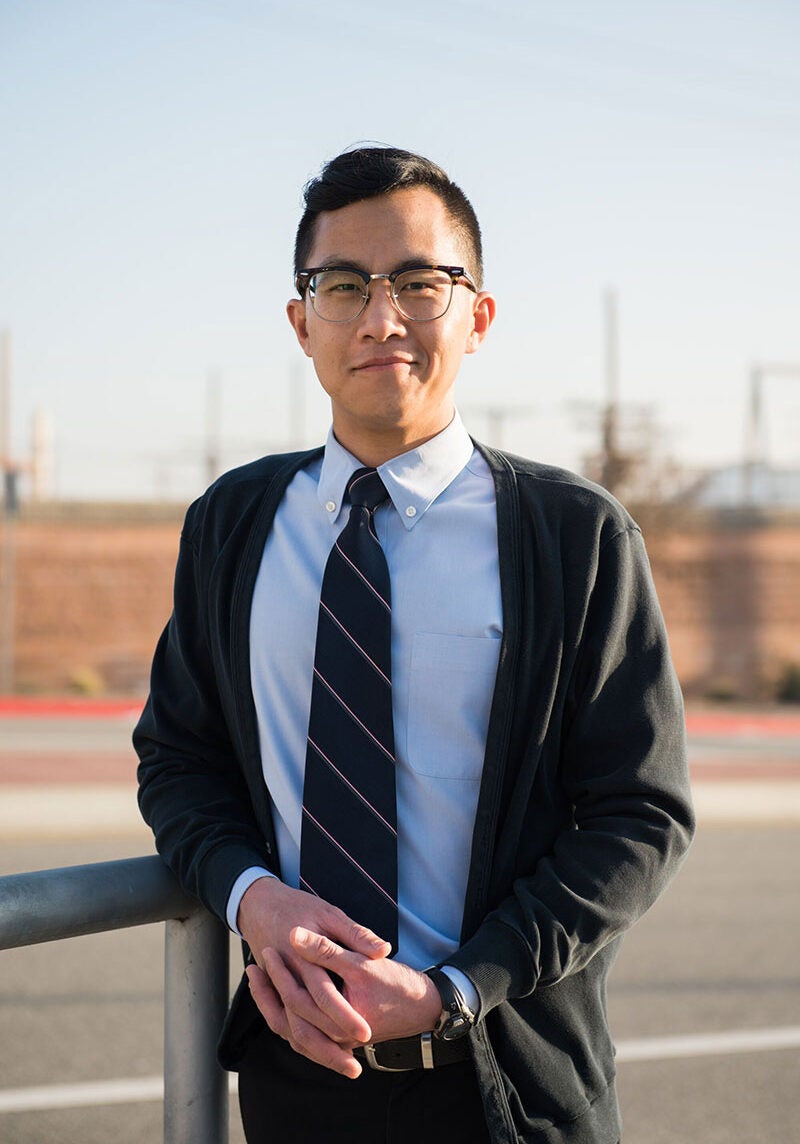
Byron Chan is a supervising senior attorney with Earthjustice’s Community Partnerships Program based in Los Angeles.
Byron first joined Earthjustice in 2015 as a legal fellow with Milbank LLP. In 2018, he returned to Earthjustice as an associate attorney in the California Regional Office and has since lateraled into the Community Partnerships Program.
He received his JD from the New York University School of Law.
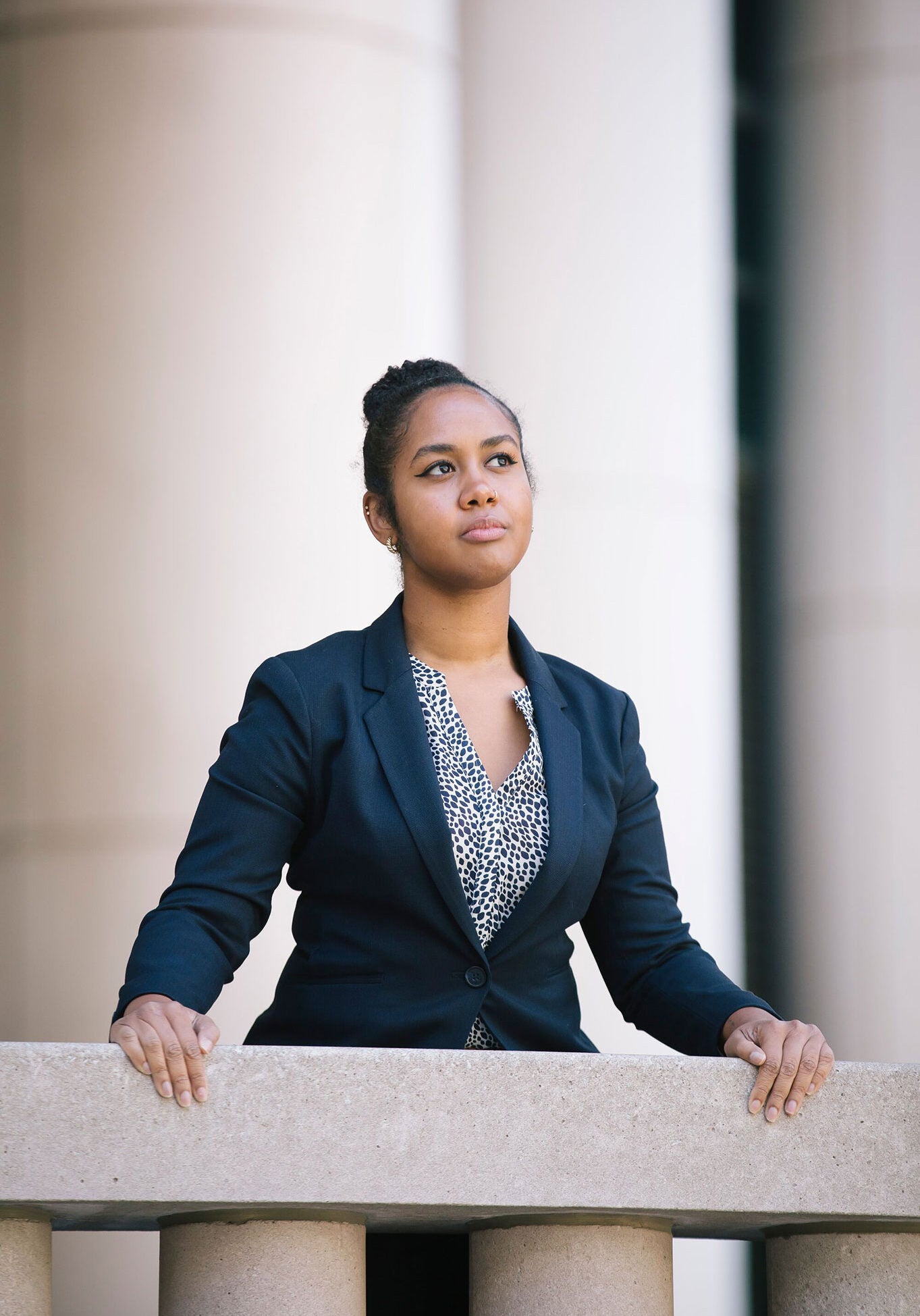
Candice Youngblood is a senior attorney with Earthjustice’s California Regional Office.
Candice first joined Earthjustice as a litigation assistant before law school and later returned as a Skadden Fellow. Before returning to Earthjustice, she clerked for Judge Dale A. Drozd in the Eastern District of California.
Candice received her JD from the University of California, Berkeley School of Law.
Photo credits:
- Byron Chan, near the Grayson power plant in Glendale, Calif. (Jessica Chou for Earthjustice)
- Top: Candice Youngblood speaks at a rally in support of electrifying buildings, ports, and industry in Southern California on Dec. 6, 2024. (Hannah Benet for Earthjustice).
- Above: Candice at federal court for a hearing on electrification of USPS vehicles. (Brad Zweerink / Earthjustice)