America’s Fisheries Law Turns 50: Let’s Skip the Mid-Life Crisis
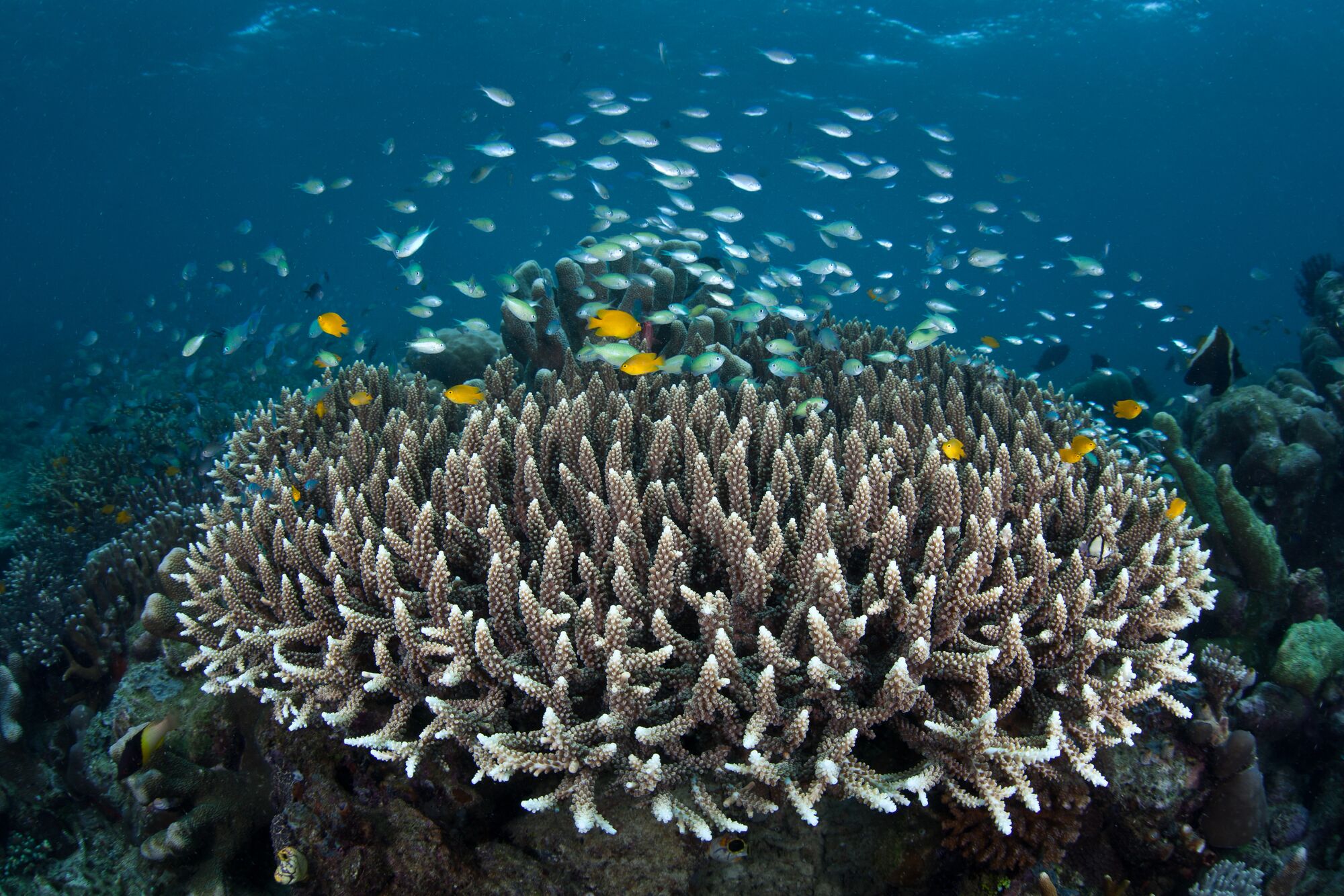
Fish depend on healthy habitats, abundant food sources, and a well-functioning food web to thrive.
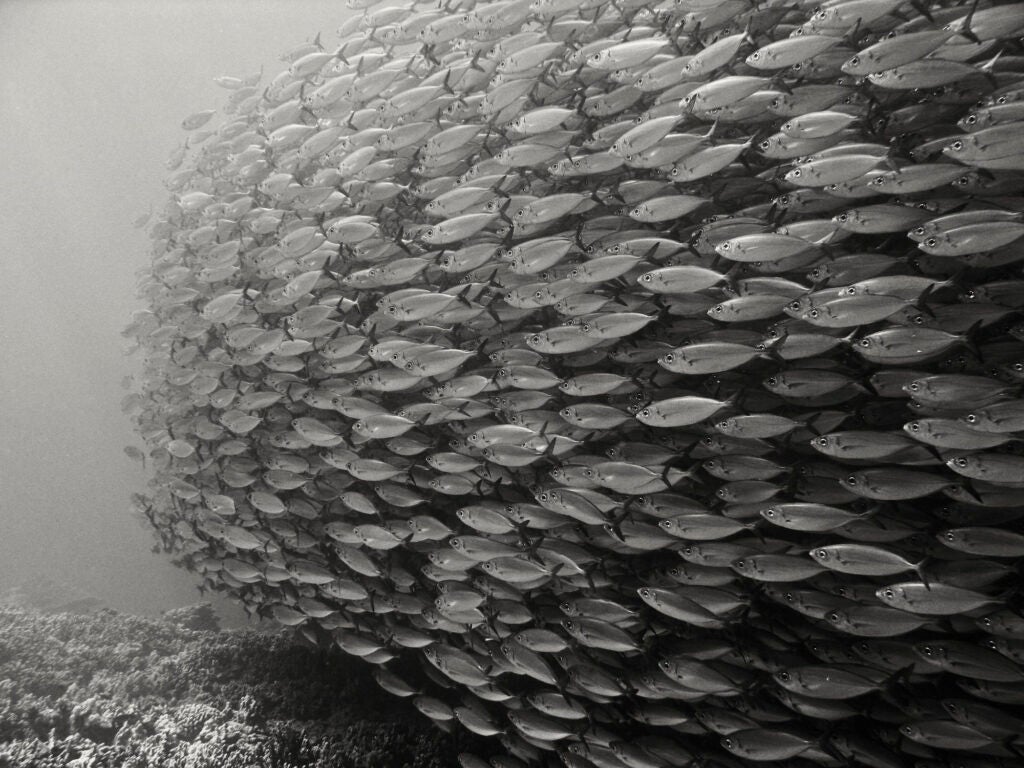
A massive baitball of akule (bigeye scad) feeds on plankton at night in Kona, Hawaii. (Steve Duleavy / CC BY 2.0)
One of America’s most important environmental protection laws turns 50 this month. It’s quite possible you’ve never heard of this law, because it governs fishing in federal waters, which isn’t something that most people think about often.
Turning 50 is a big deal, and I know a lot of people dread that birthday. But it’s a great one, nonetheless. You’ve experienced enough of life to know some things, and you’ve developed the perspective to understand what’s really important to you. You have plenty of curiosity and time left to try new things, and enough wisdom and humility to recognize that the way you’ve always done things doesn’t have to be the way you do them in the future. Fifty years brings aches, pains, laughs, and priceless perspective — we have one life and only so much time to make the most of it.
And yes, here’s where I bring this analogy home: We have only one ocean, and only so much time to protect it.
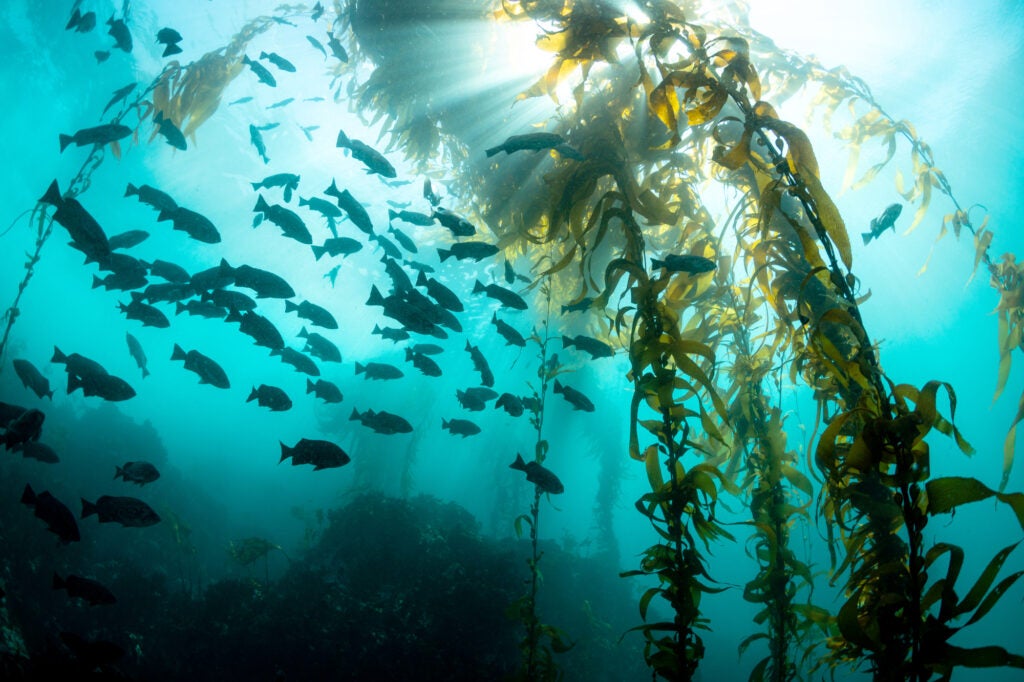
A school of Blue Rockfish is silhouetted by the sun at Monastery Beach in Monterey, California. (Brent Durand / Getty Images)
The Magnuson-Stevens Fishery Conservation and Management Act might seem like the Jan Brady of the environmental law world — nerdy, unglamorous, and often overlooked — but it’s also a big deal. This law touches everything from kelp forests to coral reefs, rockfish to sea lion rookeries, sharks to shearwaters. It comes right into our neighborhood grocery stores and the refrigerators in our homes, and affects the everyday lives of more people than you’d think.
Fishery management is about much more than the fish that eventually land on a dock or a plate. It’s also about pelicans diving for their dinner, coral thickets providing shelter, and whales bursting through shimmering schools of baitfish.
Sustainable fishing is the lifeblood of many coastal communities, an important source of food, and part of a healthy marine ecosystem. Unsustainable fishing, however, vacuums life from the ocean and damages habitats, and remains the biggest threat to marine biodiversity (even beyond climate change). Staying on the “sustainable” side of the line could hardly be more important.
We’ve learned a lot about fishery conservation and management since 1976. The law was born into a world where fishing was virtually unregulated and fish populations around the country had crashed. Its authors employed an old-school approach to the crisis by treating fish populations like investment portfolios — managing loosely with an eye to maximizing sustainable catch of a given fish population.
The problem is that fish aren’t investment instruments. They’re animals that play by their own rules in complex ecosystems and depend on healthy habitats, abundant food sources, and a well-functioning food web to thrive. Removing a particular type of fish from the system can have wide ripple effects. And many fisheries catch fish and animals they’re not trying to target, like sharks, whales, and sea turtles, spreading those ripple effects even farther.
Having learned these things, in 1996, Congress added requirements to protect fish habitat, minimize bycatch (fish caught unintentionally), and help overfished populations bounce back. Overfishing persisted, though, because most fisheries operated without any actual limit on the number of fish that could be caught every year. So in 2006, Congress added the fundamental and very important requirement that fishery managers establish annual catch limits.
Unfortunately, the current administration seems intent on tossing everything we’ve learned and returning us to the days of unregulated fishing, crashing fish populations, and emptying oceans. Stripping key protections for fish populations in the name of “freedom to fish” is a con. Fishing cannot exist without fish. Allowing overfishing for short-term gain only leads to long-term pain in the form of lost food, income, and ocean health. That’s why forward-looking members of fishing communities support catch limits and other management measures that protect their livelihoods.
Turning back the clock to an approach that never worked in the first place only moves us backward. It won’t make anything better. We need to build on what’s working, like science-based catch limits, protections for essential fish habitat areas, and developing fishing gear that efficiently catches the species fishermen want to market while leaving other fish and marine wildlife free to swim safely.
Even more importantly, we need to adapt fishery management to the world as it works in the water. Fish cannot be treated separately from their food web or habitat.
When we decide how much fishing to allow, we need to factor in how much other ocean residents need to eat. In the case of top predators, we need to consider how reducing the number of predators could affect other populations.
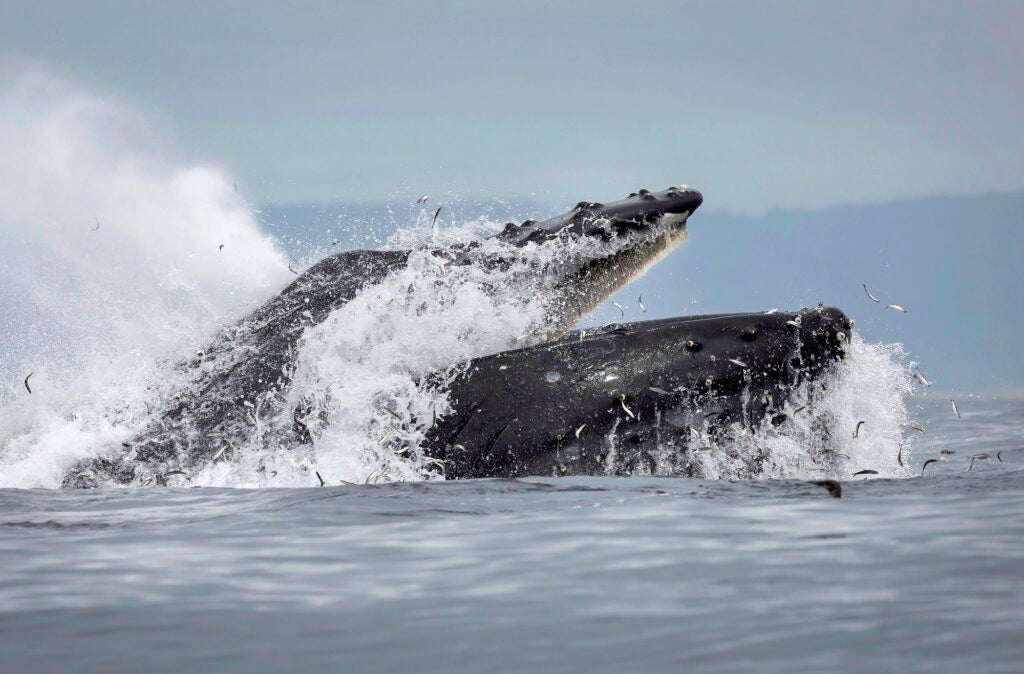
A humpback whale lunge feeds on anchovies in Monterey Bay, California. (Chase Dekker Wild-Life Images / Getty Images)
In an ocean changing rapidly due to climate change, we need to take precautionary action when the data shows early warning signs. And we need to support the vital link between fish, critters, and human communities by supporting fishers who develop and practice selective, sustainable fishing. That means empowering local, community-based fisheries that steward their ocean homes.
While this administration doesn’t appear to understand this, some members of Congress do. Representatives Jared Huffman (CA), James C. Moylan (GU), and Ed Case (HI) have introduced The Sustaining America’s Fisheries for the Future Act to make needed changes to the Act. We need more leaders to get on board.
At age 50, there’s a temptation to see innovation as a threat, to dismiss calls for change as criticism from people too naïve to know better. Let’s not do that. Let’s take this golden opportunity to drop the habits that don’t serve us, work on new ones, and embrace this precious blue planet with all the awe, reverence, and urgency it deserves.
Earthjustice’s Oceans Program uses the power of the law to safeguard imperiled marine life, reform fisheries management, stop the expansion of offshore oil and gas drilling, and increase the resiliency of ocean ecosystems to climate change.
Julie Hauserman
Public Affairs and Communications Strategist, Earthjustice
jhauserman@earthjustice.org