
Click, Click, Pollute. Washington Started the E-Commerce Boom – Now It Can Fix its Pollution
Adopting e-commerce pollution controls in Washington is a commonsense solution.
Before Jimothy the racoon took over hearts, minds, and news channels, you may have heard the lore about Amazon’s origins in a Bellevue garage, where employees packed books into cardboard boxes. Back then, purchasing goods on the internet was a novel idea, possibly just a passing experiment.
Oh, how times have changed in the world of online shopping as we now have a massive web of goods movement deliveries spanning oceans.
With the rise in online shopping, the e-commerce industry has expanded exponentially, with hundreds of massive warehouses now dotting Washington’s landscape, spiking in clusters between Seattle and Tacoma. This boom has delivered more than just the convenience of next-day shipping. The rise in mega-warehouses has also brought harmful pollution right where people work and live.
An Online Boom Spews Diesel Muck in Our Air
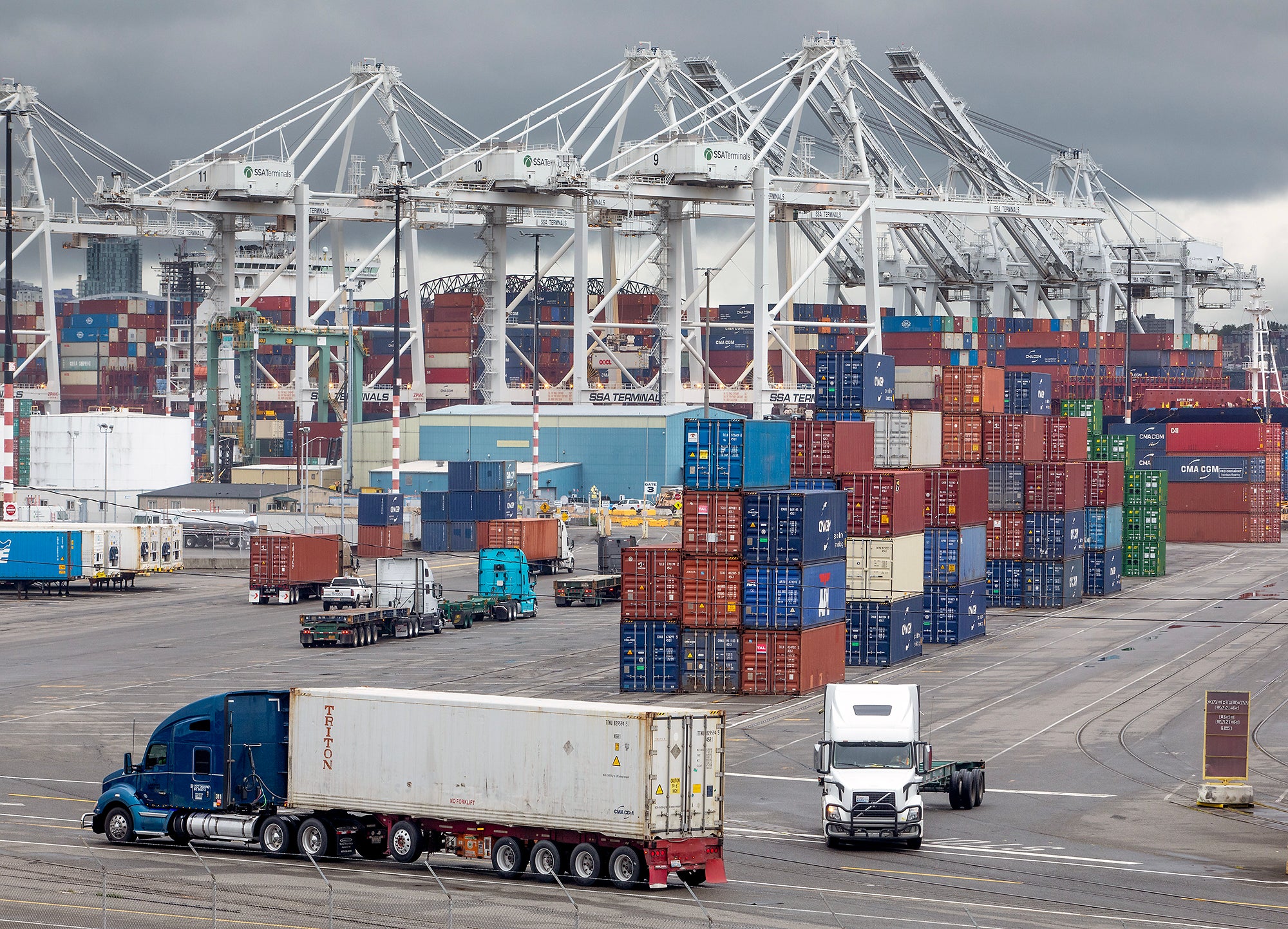
Corporations now site their sprawling mega-warehouse facilities, which are often tens of thousands of square footage, closer and closer to neighborhoods. With these facilities come large fleets of highly polluting diesel trucks, which rumble down freeways and into streets, and spew health-harming pollution into the air. This pollution is linked to asthma in children, heart disease, and even early death.
In Washington state, over 50% of the cancer risk from air toxics is due to diesel particles.
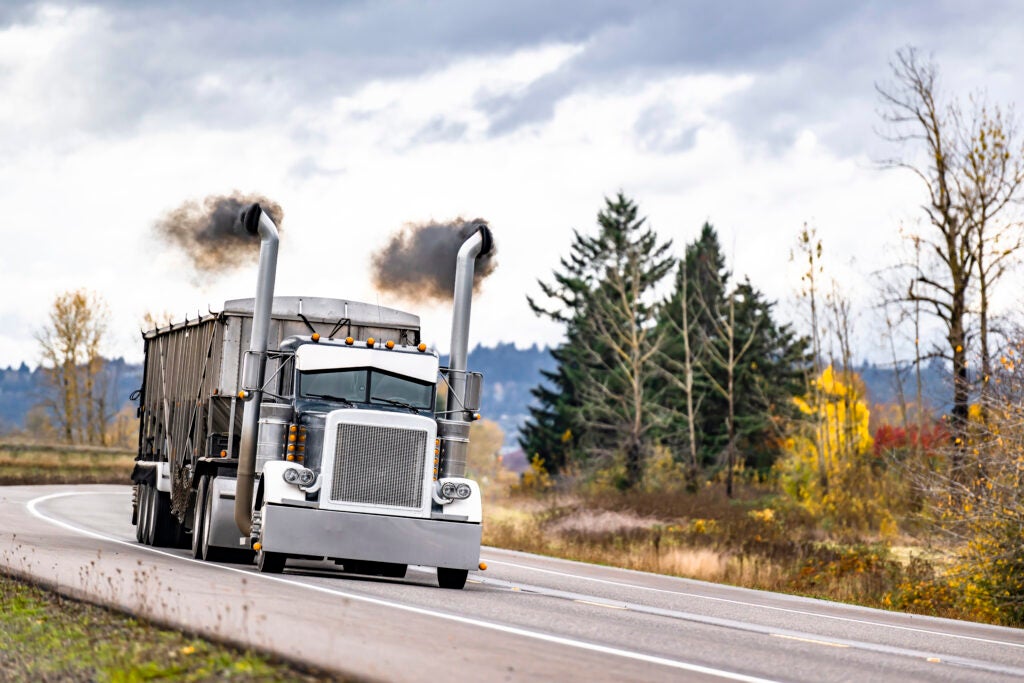
A semi truck with with black smoke coming from the exhaust pipes. (Vitpho / Getty Images)
These effects aren’t felt equally. In Seattle, because of historical redlining and racist zoning practices, communities of color are more likely to live near freeways and industrial sites, disproportionately exposing them to this deadly pollution.
A Fix for Dirty Diesel
The logistics industry fueled growth in Washington, but it has also brought problems we now need to fix.
The good news for Washingtonians is that our leaders have a clear path to clean up this pollution and safeguard the air we breathe. States regulate facilities like power plants and factories that emit air pollution directly. Now, policy solutions are emerging where states can regulate harmful pollutants concentrated around facilities because of associated activities like trucking or shipping. Because these facilities don’t produce the pollution directly, but are indirectly polluting, the tool to clean up this type of pollution is called an Indirect Source Rule (ISR).
ISRs, which are essentially pollution controls on the e-commerce logistics industry, can transform air pollution magnets like ports and warehouses into hubs that use clean energy solutions. ISRs are win-win because they can help clean up Washington’s air, help us meet our state’s clean energy goals, and protect our climate.
So how do they work? A facility that is covered by an ISR, like a port or a sprawling warehouse, can choose from a menu of options to reduce emissions from the sources it attracts. For example, a facility can invest in electric vehicle charging, develop solar generation on-site, or opt to electrify diesel trucks, shipping vessels, or port equipment. Operators can also install air filtration systems in nearby schools and communities to reduce pollution burdens. Facilities that choose not to adopt those measures can be required to pay a fee, which can then be used to support community programs that improve air quality.
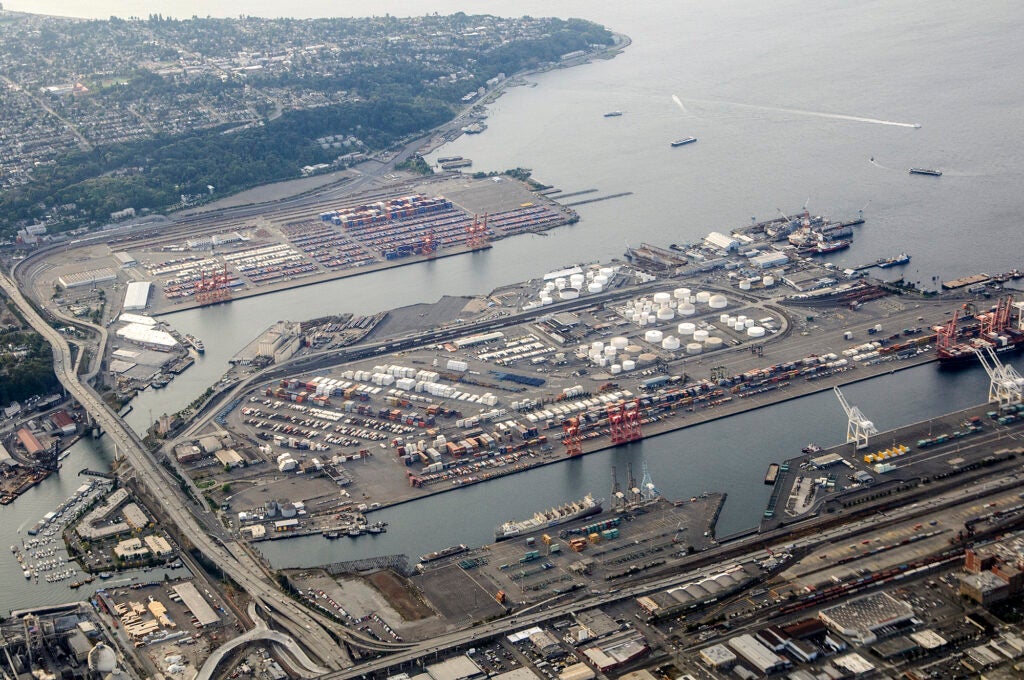
Aerial view of Harbor Island and the Port of Seattle in Seattle, Washington. (Education Images / Universal Images Group via Getty Images)
The best thing about ISR policies is that there isn’t a one-size-fits-all approach. Businesses get to choose what works best for them.
Other States are Leading the Way. Washington Can Catch Up
Washington wouldn’t be starting from scratch. These policies are tried, true, and effective. Washington can turn to Southern California as a model of success. There, the first-in-the-nation warehouse pollution rule is already leading to meaningful reductions in air pollution from the busiest freight hub in the nation where over 20 million people live.
And Southern California did it without hurting economic activity. In fact, since the region adopted the rule, the warehouse industry has added 100 million square feet of new warehousing. That’s the same as adding 67 new Lumen Fields across Washington.
Washington is Ready
Leading the world and punching above our weight is the Washington way. With its seaports and airports, Washington is a core transportation hub for moving people and goods around the world. Though Washington makes up just 2% of the country’s population, we handle around $45 billion in trade every quarter. Creating statewide e-commerce pollution controls will help the state meet its goal of having the nation’s leading green and energy efficient port and will build on the commitments made by the Port of Seattle to transition its fleet of vehicles to be nonpolluting models.
Our leaders are recognizing this and there’s energy within the state to move forward with ambitious plans to transition Washington to non-polluting transportation. The Department of Ecology published its list of 2027 legislative priorities and included a program that would decarbonize transportation in the state. This is a good start, but we can think bigger. Adding e-commerce pollution controls to Ecology’s list of priorities would help transform the largest source of greenhouse gases in the state.
Likewise, Washingtonians can urge their legislators to pass legislation to address pollution from highly polluting facilities like ports and warehouses. If the state wants to truly advance clean transportation and show the rest of the country how it’s done, a clean fix is here, and the moment is now.
Established in 1987, Earthjustice's Northwest Regional Office has been at the forefront of many of the most significant legal decisions safeguarding the Pacific Northwest’s imperiled species, ancient forests, and waterways.
Zoe Woodcraft
Public Affairs and Communications Officer, Earthjustice
zwoodcraft@earthjustice.org