

Earthjustice Policy Guide
The Impacts of the Bipartisan American Affordability and Jobs Act of 2026
A look at how the bill’s provisions would affect electric transmission, clean energy and fossil fuel development, data centers, and environmental protections.
This guide provides Earthjustice’s analysis of the ways in which the Bipartisan American Affordability and Jobs Act (BAAJA) of 2026 would affect electric transmission, clean energy and fossil fuel development, data centers, and protections under major environmental laws. We highlight very positive provisions that promise to help modernize and expand the grid and accelerate clean energy deployment. We also identify provisions that would weaken or eliminate existing environmental protections and limit the ability of future administrations to craft sound policy.
Beyond BAAJA’s implications for specific statutes and sectors, discussed below, the bill would drive very significant shifts in the orientation of federal agencies and the way that U.S. government works.
- The bill would reform energy regulation in transformative ways that are needed to harness the full potential of clean energy solutions.
- The bill prioritizes fast development as an overriding imperative. To that end, the bill minimizes upfront engagement, planning, and review, while creating new standards, new deadlines, and new rights of action that are designed to fast-track projects of all kinds, including projects related to electric transmission, mining, renewable energy production, and fossil energy transport and production. In elevating speed over deliberation, the bill could help the country build much-needed infrastructure. It could also undermine other imperatives such as protecting public health and the environment and promoting a more fair economy.
- To provide certainty for developers, the bill aims to freeze federal analysis in time and cast permits in stone. It includes provisions that make an expansive universe of federal decisions irreversible, and it amends several statutes to prohibit federal agencies from considering and responding to new information, including new science and technological innovation. In a very dynamic time, legislation that makes it harder for the executive branch to respond to new threats and opportunities will make government less, not more, effective.
- The permit certainty provisions would also exacerbate current erosion of the rule of law. While there are narrow exceptions to the proposed scheme, none cover a situation in which a future administration concludes that a prior administration violated federal law in issuing a given permit or authorization.
- Finally, while the permit certainty provisions are likely intended to prevent future targeting of industries and energy projects such as wind farms, they apply not only to energy development but projects of all kinds with “non-Federal sponsors.” This would include everything from logging, mining, drilling, and data center construction on public lands to deep seabed mining and development of petrochemical complexes and waste incineration facilities.
- At a time when courts are providing an indispensable check on illegal action by the current administration, the bill significantly restricts judicial review and access to effective legal remedies.
- The bill systematically limits the ability of Tribal Nations to participate in decision-making that directly affects their sovereign interests.
- The bill will engender years of litigation as project developers and opponents propose and attempt to enforce differing interpretations of novel statutory language that does not easily integrate into existing legal frameworks.
Positive Provisions
- Strengthens the Federal Energy Regulatory Commission’s (FERC) backstop permitting authority, which could help resolve conflicts and delays arising from state permitting processes and speed up approval and construction timelines for large multi-state transmission lines.
- Facilitates regional and interregional transmission by requiring planning and establishing a cost allocation framework, which will help increase transmission capacity, strengthen grid resilience during extreme weather events, and reduce congestion.
- Enables faster connection of new generators to the grid by consolidating the interconnection and transmission planning processes and using automation to speed up the generator interconnection study process.
- Compels integration of cost-beneficial Advanced Transmission Technologies (ATTs) to enhance the existing grid’s capacity.
- Revises federal transmission pricing policy to charge data centers for both embedded and incremental transmission costs and requires data collection on data center load.
- Bars a federal right of first refusal (ROFR) for incumbent electric utilities to construct new transmission selected in regional or interregional plans, and requires a FERC process for investigating local transmission planning and development.
Major Concerns
- Provisions designed to create “project certainty” would make it extraordinarily difficult, if not impossible, for future administrations to reconsider or modify authorizations and permits of all kinds, regardless of analytic errors, legal errors,or changed circumstances. It would prevent a future administration from reconsidering a prior administration’s flawed decisions to authorize activities such as Arctic drilling, deep seabed mining, or development of data centers on public lands. While the bill, on its face, appears to leave the Clean Air Act intact, it could preclude federal action to amend and strengthen air permits that issue without adequate conditions.
- Indeed, the project certainty provisions appear to prohibit future administrations from taking any action that might interfere with the economics of running an approved project at full capacity.
- This could be interpreted, for example, to prohibit administrations from promulgating new regulations of any kind that might have economic consequences for a permitted project. The bill creates a cause of action for developers to sue federal agencies for “improper delays” and “unreasonable denials”of permits if they can show that the government is engaged in a “pattern of disparate treatment” against a relevant category of projects, as compared to permitting decisions over the previous five years. For the next administration, this baseline will largely reflect the permitting decisions of the current administration, which has expedited fossil fuel authorizations while delaying renewable energy projects. Developers who win such claims can recover up to 100% of construction costs, plus other damages, to build the project.
- The bill effectively eliminates the authority of courts to enforce compliance with the National Environmental Policy Act (NEPA) and the National Historic Preservation Act (NHPA). It generally prevents courts from issuing injunctions to stop projects that were authorized in violation of these laws, or from vacating permits issued in violation of them. While courts can still require the government to produce new NEPA analyses, projects can proceed in the meantime, and the project certainty provisions would seem to prohibit any permit changes to reflect the new analysis.
- The bill exempts a wide array of government actions from NEPA, including loans, loan guarantees, and pipeline expansions within existing rights-of-way. It also limits an agency’s ability to consider reasonable alternatives to proposed actions and prohibits agencies from considering new information or scientific developments that arise after an agency decides to commence its review.
- The bill substantially weakens the Endangered Species Act (ESA). It allows the federal government to delegate a core duty to state agencies: the duty to ensure that federal actions will not jeopardize species. Most states lack the resources and expertise to play that role, and they would face concerted pressure to prioritize economic interests of powerful industries over protection of imperiled species. While the bill establishes a process for terminating delegations, such terminations are unlikely in practice. So long as states retain their delegated authority, the bill does not specify federal backstop authority to override state decisions that would jeopardize a species' survival. The bill would also compromise the ESA’s requirements to base decisions on the best available science.
- The bill severely limits state and tribal authority to prevent harm to waters and wetlands. For pipelines and transmission lines specifically, the bill withdraws state authority to address any impacts other than select point source discharges into federal waters, which are not typically associated with projects of either kind. It also weakens the Army Corps’ general permit program, reducing protections for waters and wetlands in the permitting process for all covered projects, including pipelines and data centers.
- The bill weakens the National Historic Preservation Act (NHPA), limiting the ability of Tribal nations, states, and other stakeholders to steward and protect culturally important sites and landscapes.
- The bill gives mine developers expansive rights to use public lands for waste disposal, road construction, and other infrastructure around mines without additional permits.
This guide is not comprehensive. Earthjustice has focused on provisions of the bill that directly implicate our litigation docket and our organizational expertise. We will continue to refine our analysis as we understand the bill more fully. For those reasons and others, nothing in this analysis reflects a final or binding view of Earthjustice or its clients, particularly for purposes of future litigation.
Transmission and Grid Reform
Key Takeaways
- The bill strengthens FERC’s backstop permitting authority, creating a pathway for building large, interstate transmission projects that deliver benefits to the grid.
- The bill supports regional and interregional transmission by requiring planning and establishing a cost allocation framework grounded in the benefits that projects confer, while also requiring consolidated planning for both generation interconnection and regional transmission.
- The bill creates a pathway for FERC to investigate utilities’ local transmission planning and development (which can be inefficient and costly as compared to regional transmission), and it also bars a federal “right of first refusal” for incumbent utilities to build new regional lines in their territories.
- The bill accelerates grid interconnection by requiring the use of automation and other computing technologies for interconnection studies, as appropriate.
- The bill drives adoption of modern grid technologies that make the grid more efficient and maximize capacity on existing transmission lines.
- The reforms are unlikely to impact the current surge of gas in interconnection queues, including fast-track queues that exist in several regions.
Summary
The bill’s transmission and grid provisions are well-designed to speed up approval of new transmission lines, modernize the grid, and maximize existing grid capacity.
The bill addresses transmission permitting, planning, and cost allocation. Section 2101 of the bill streamlines and strengthens FERC’s backstop permitting authority by setting deadlines for states to review construction permits and removing the need for the U.S. Department of Energy (DOE) to first designate National Interest Electric Transmission Corridors. § 2101(a)–(b), pp. 185–190; § 2101(f), pp. 195–197; § 2101(j), pp. 199–200. By setting deadlines for permit evaluations and empowering FERC to act when states either fail to act or deny a permit, the bill could improve the construction timeline for transmission projects, while still requiring FERC to consider concerns from states, Tribes, and other interested parties. Importantly, section 2101 establishes a parallel state-federal review process for large lines (345 kV or more), which means that FERC can issue a permit on a faster timeline than under the current sequential framework for state and federal reviews. § 2101(b), pp. 188–190; § 2101(c), pp. 190–192.
Section 2103 addresses regional and interregional transmission planning — the foundation for expanding the grid in the mid- and long-term. The bill requires FERC to direct grid operators to plan and construct transmission infrastructure that will allow them to share generator resources between neighboring regions and across multiple states. § 2103 (adding FPA § 225(c)–(d)), pp. 211–214. It codifies Order 1920, FERC’s recent rule governing long-term planning for regional transmission projects. § 2103 (adding FPA § 225(h)), p. 217. Across regional and interregional processes, the bill provides a common list of transmission benefits for planning and cost allocation and establishes a cost allocation framework. § 2103 (adding FPA § 225(d)(2), (g)), pp. 213-216; see also § 2101(e) (amending FPA § 216(f)), pp. 192-194.
The bill also addresses two barriers to transmission development related to utilities. Section 2104 establishes FERC oversight over local transmission planning and development: FERC must investigate state concerns about utility practices leading to inefficient investment in local lines and/or interference with regional transmission planning, and FERC can take action in response. § 2104, pp. 218–223. Section 2105 prohibits federal “right of first refusal” rules, which grant incumbent utilities the first option to build, own, and operate new transmission lines in their service territories, from applying to specified regional and interregional transmission projects. § 2105, p. 224–226.
In addition to provisions that enable grid expansion, the bill includes important provisions to maximize the existing grid’s capacity. Grid Enhancing Technologies (GETs) and other Advanced Transmission Technologies (ATTs), such as dynamic line ratings and advanced power flow controls, can deliver tangible near-term benefits. ATTs resolve congestion and transmission constraints, which means they can immediately eliminate the need to curtail clean resources. When transmission upgrades are needed in the generator interconnection process, ATTs can be deployed faster at a lower cost than traditional infrastructure upgrades. Section 2109 helps to deliver these benefits through a FERC directive requiring utilities to deploy cost-beneficial ATTs when building new lines or when upgrading, modifying, replacing or reconductoring existing lines. § 2109 (adding FPA § 231), pp. 260–265.
Section 2110 expedites the interconnection study process, which is an essential step in bringing new generators online. Interconnection studies can take years to complete. Part of the reason for the long timeline is the complex modeling tasks the grid operators must perform. Section 2110 directs FERC to establish a rulemaking requiring use of automation and other computing technologies in interconnection studies, as appropriate. § 2110, pp. 265–266; see also § 2111(b), pp. 271–272. Using advanced computing technologies will help grid operators complete these studies on a quicker timeline.
Section 2106 is also designed to help speed up interconnection queues by consolidating generator and transmission planning processes. § 2106, pp. 224–226. Currently, interconnection and transmission planning are on separate tracks, which makes it difficult for grid operators to account for the transmission needs of generators in the queues when making transmission expansion decisions, leading to an inefficient and costly process. The consolidated process establishes a straightforward fee-based structure, which demystifies expected interconnection costs.
Section 2108 allows aggregated distributed energy resources (DERs) to participate in wholesale power markets. § 2108, pp. 240–259. Opening up markets to DERs is essential. However, the section imposes new dispatchability requirements that risk excluding certain resources, such as demand response, wind, and solar . § 2108, pp. 240–242. In addition, the section appears to codify a pathway to wholesale markets for behind-the-meter gas installations, which are surging across the country to serve onsite data center demand. § 2108, pp. 240–241, 244.
Gas Generation and Pipelines
Key Takeaways
- The combined effect of exemptions from NEPA and other provisions that weaken NEPA and the CWA, ESA, and NHPA would create an even faster track for construction of gas pipelines, which are already permitted expeditiously under the Natural Gas Act (NGA). As demand for gas rises dramatically to meet demand from data centers and new LNG export terminals, this bill would advance a top industry priority to eliminate pipeline capacity constraints.
- Provisions that make gas even more quickly accessible could accelerate the current “speed-to-power” rush to fuel data centers with gas. Importantly, gas is surging in interconnection queues, including in several areas where regional transmission operators are prioritizing gas interconnection in fast-track queues, and increasingly, developers are opting to pipe gas directly on site to provide power behind the meter.
- Speeding construction of gas pipelines to support and expand LNG export has significant implications for gas affordability domestically and for the energy transition globally.
Summary
The bill appears to be designed to accelerate gas pipeline development by curtailing environmental review and substantive permitting requirements.
Among the most significant changes to the permitting process is a NEPA exclusion for projects that expand or replace existing pipelines. § 1102 (adding NEPA § 3(18)(B)(xii)), p. 20; § 2102(b) (adding NGA § 7(i)), pp. 203–205. Developers are increasingly proposing these capacity expansions to deliver on-site gas to power data centers. Eliminating NEPA review would further incentivize behind the meter gas as a preferred resource for data center hyperscalers.
For all gas-related projects and development, cross-cutting provisions (discussed below in the Clean Water Act section) would significantly limit NEPA and NHPA review and weaken permitting requirements under the CWA and ESA. § 1102 (adding NEPA § 3(18)), pp. 16–21; § 1105 (adding NEPA § 106), pp. 28–31; § 1106 (adding NEPA § 107), pp. 31–61; § 1110 (adding NEPA § 111), pp. 67–74; § 2301(c) (amending NHPA), pp. 379–413; § 2102(b) (adding NHPA § 7(i)(2)), p. 204; § 1202 (adding CWA § 401(e)–(h)), pp. 103–122; § 1204 (amending CWA § 404(c)), pp. 123–128. § 1302 (amending CWA § 7(b)(1)), pp. 134–136; § 1304 (amending CWA § 7), pp. 137–154; § 1305 (amending CWA § 7(n)), pp. 154–155. Collectively, these provisions would interact to speed project approvals, while reducing environmental protections and curtailing meaningful tribal consultation.
With respect to the CWA, Section 1202 creates a new express certification framework for interstate natural gas pipelines and transmission lines. States and Tribes would be required to approve water quality certifications for projects authorized under Section 7 of the Natural Gas Act and any transmission line project requiring federal authorization unless there is “clear and convincing” evidence that a project will violate effluent limitations at the point of discharge. § 1202 (adding CWA § 401(f)–(g)), pp. 117–121; see also § 1202 (adding CWA § 401(e)(2)(B)), pp. 104–105. States and Tribes would no longer have authority to deny permits or add mitigating conditions to address the harmful impacts that are most commonly associated with these projects, i.e., aquatic ecosystem impacts from the filling of waters and wetlands.
Section 1204 weakens the CWA’s provisions governing the issuance of nationwide permits (NWPs). NWPs are general permits that are intended to authorize projects with minimal environmental impacts via notice and self-verification of compliance with general conditions. This ministerial system is premised on authorizing activities without significant effects. However, section 1204 would allow the Corps to issue NWPs for projects that individually and collectively could result in significant harms. Specifically, it provides that the Army Corps, in issuing NWPs, “shall consider only the effects on compliance with water quality requirements,” thus precluding a holistic analysis considering all relevant impacts, including habitat loss, flooding risk, and harms to fish and wildlife. § 1204(b) (adding CWA § 404(e)(3)(A)), p. 125.
Section 1204 further provides that filling or damaging less than two acres of navigable waters “shall” be considered a minimal adverse environmental effect. § 1204(b) (adding CWA § 404(e)(3)(B)), p. 125. A pipeline project could have many stream crossings that individually impact less than two acres but collectively fill dozens of tributaries across an entire watershed, causing severe habitat loss, sedimentation, and degradation of water quality. Under the provisions in Section 1204, each of those crossings could be deemed to have only minimal adverse effects and move forward pursuant to a NWP that only requires compliance with minimal general conditions.
Because the statute requires permitting agencies to consider fill under two acres to be minimally adverse, many pipeline projects would go forward without any review under NEPA. Most currently pending gas pipelines before the Federal Energy Regulatory Commission would be expedited with minimal CWA review.
Data Centers
Key Takeaways
- The bill would direct FERC to revise its transmission pricing policy and undertake a rulemaking so that data centers pay the costs both for the use of existing grid infrastructure and for needed grid expansion to accommodate new large loads.
- The bill would enable needed tracking of data center energy consumption.
- The bill’s changes to NEPA, CWA, NHPA, and ESA would clear a faster path to development of data centers on public lands. Spurred in part by President Trump’s July 2025 executive order to accelerate data center development, there are currently at least 12 proposed data center projects on Bureau of Land Management (BLM) land across western states.
- Provisions that make gas even more quickly accessible could accelerate the current “speed-to-power” rush to fuel data centers with gas, as discussed above.
Summary
Section 2107 of the bill could help ensure ratepayers do not pay the costs of powering data centers. Subsection (a) directs FERC to revise its current transmission pricing policy to charge both the embedded costs of using the existing grid and the incremental costs of transmission upgrades specifically needed to connect a data center to the grid. § 2107(a), pp. 226–231; see esp. § 2107(a)(3), pp. 229–230. Charging one or the other risks data centers paying less than their fair share.
Section 2107(b) adds a new section to Federal Power Act that includes safeguards to protect ordinary ratepayers from paying unnecessary costs due to data centers. Among other things, this provision specifies that a covered large load (such as a data center) — and no other customer — must pay the full incremental cost of connecting it to the grid. § 2107(b) (adding FPA § 228(a)(2), (a)(5), (b)(1)), pp. 232–235. The bill makes the data center responsible for this full incremental cost even if its load does not ultimately materialize, and mandates upfront financial assurances sufficient to cover that amount. § 2107(b) (adding FPA § 228(b)(3)-(4)), pp. 235-236. Finally, this subsection aims to preserve states’ authority to take additional actions regarding retail electricity rates for a covered large load, such as imposing conditions or allocating grid access via competitive solicitation. § 2107(b) (adding FPA § 228(c)-(e)), pp. 236-239. There is likely to be variation in whether and how states take action.
The bill also includes a much-needed provision to increase transparency about data center energy use. It directs the Energy Information Administration to collect information on data center and cryptocurrency mining loads specifically. § 2114, p. 279.
As discussed above, several bill provisions could accelerate the current “speed-to-power” rush to fuel data centers with gas. Provisions that weaken federal environmental laws, including project certainty provisions, could also clear the path for expedited approval of data centers on public lands. In keeping with Executive Order 14318, the Trump administration has been evaluating at least 12 data center projects across 17,600 acres of BLM-managed public lands in Arizona, Idaho, Nevada, Oregon, Utah, and Wyoming. The BLM has approved the Townsite Data Center on 88.5 acres in Nevada, but the project is currently paused due to legal challenges that could be precluded if this bill’s changes to NEPA were enacted. Other live proposals include even larger data center projects including the 9,000-acre Project Beehive in Utah and the 3,200-acre Rhea Data Center in Idaho. The Trump administration is also focused on developing data centers on military sites and lands controlled by the DOE. For example, it has announced a $100 billion project to construct an AI data center campus in Paducah, Kentucky. If the administration grants these permits, they will be very difficult to challenge or reconsider, as sections 4 and 5 explain.
Finally, as discussed above, Section 2108 appears to support a path to wholesale markets for behind-the-meter gas installations, which are scaling across the country to serve onsite data center demand. § 2108(a) (adding FPA § 3(30)), pp. 240-241; § 2108(c) (adding FPA § 229(b)-(c)), pp. 243-244.
Project Certainty
Key Takeaways
- Section 1401 would insulate a wide array of permitting decisions from reconsideration or modification by future administrations. These provisions broadly prohibit any administration from reconsidering permits and other authorizations based on new information or circumstances, except under very limited circumstances. They appear to prohibit reconsideration even when the government believes a decision was made in violation of federal law (either by a prior administration or by its own error), unless a court order requires it to do so.
- Section 1401 more broadly prohibits administrations from taking actions that would interfere with construction or full-capacity operation of a project that has secured required approvals. These provisions appear to extend very broadly to encompass even actions that might indirectly impact the economic viability of a project.
- Section 1402 provides a cause of action for developers to sue federal agencies for permit delays and denials if they can show that the government is engaged in a “pattern of disparate treatment” against a relevant category of projects as compared to a five-year look back. For the next administration, this baseline will largely reflect the permitting decisions of the current administration. Developers who win such claims can recover up to 100% of project construction costs plus other damages.
Summary
Section 1401 of the bill makes it very difficult for an administration to revisit permitting decisions based on new policies, health or environmental impact data, economic projections, or for any other legitimate policy reasons. § 1401(b)(1), pp. 159-160.
The section applies to all “projects or actions with non-Federal sponsors or holders of a Federal authorization or permit.” § 1401(b)(1), p. 159. This expansive scope includes not only transmission lines, gas pipelines, LNG terminals, power plants, and oil and gas development, but also any other activity that requires federal authorization, including logging, mining, deep seabed mining, and construction of data centers on public lands. It is not restricted to “projects.” It applies to any authorization or permit necessary for construction or full operation of a project. § 1401(a), pp. 158-159. This would include authorizations ranging from Clean Air Act and Clean Water Act permits to rights-of-way, biological opinions, and incidental take statements. While the text identifies many kinds of federal authorizations specifically, it expressly includes “any other approval or order that is necessary” for a project to go forward. The text does not define “project.”
Section 1401(b)(1) of the bill generally bars federal agencies and departments from taking actions to revoke or modify permits or authorizations in effect on or after Sept. 16, 2026. § 1401(b)(1), p. 159. It also prohibits actions that would interfere with construction or full operation of a project that has secured all its required approvals. Id. This is a very broad provision that could effectively preclude any agency action that would alter a project that has federal authorizations. It could, for example, bar an agency from modifying a pollution permit to make it more stringent or from issuing a regulation — environmental or otherwise — that might make the project less profitable or economically viable.
Section 1401(b)(1) provides narrow exceptions to the general bar, but, if challenged, the government must show by “clear and convincing evidence” that the relevant exception did apply. § 1401(b)(4)(B), pp. 161-162. The exceptions include:
- Actions required by a court order;
- Actions to address a permit-holder’s “material breach” of the permit’s terms or where the permittee has “otherwise violated applicable law”;
- Situations where the permit was obtained through fraud or misrepresentation;
- Situations where new information reveals “specific, urgent, substantial, and proximate” harm to life, property, or national security; and
- Changes requested by the permit holder.
Section 1401(b)(1), pp. 159–60. These exceptions are quite narrow, and none of them cover a situation in which a future administration concludes that a prior administration violated federal laws (e.g. the Clean Air Act) in issuing a given permit or authorization.
Section 1401(b)(4) gives permit holders powerful tools to enforce the section’s prohibitions in court. If a permit holder alleges that the government modified its permit or acted in ways that impacted its project, the government must (as discussed above) prove by clear and convincing evidence that one of the exceptions in Section 1401(b)(1) applies. § 1401(b)(4)(B), pp. 161-162. If the government fails to meet that exacting standard, it must pay damages of up to 50% of the project’s costs as of the date of the relevant agency action, as well as the permit holder’s costs of litigation. § 1401(b)(4)(D), pp. 162-164. The government must pay the permit holder even if Congress does not appropriate the funds to do so. § 1401(b)(4)(F), p. 165.
Section 1401 may engender a great deal of litigation regarding its scope and mechanics. It may take years for courts to develop stable case law clarifying its terms.
Section 1402 creates a right of action for developers to challenge project delays and denials if they can show that the government is engaging in a “pattern of disparate treatment” against 1 of 46 categories of projects enumerated in Section 1402(b)(4). § 1402(b)(3), (b)(4), (d)(1)(A), pp. 167, 169-174. These categories include:
- offshore wind projects;
- solar projects;
- electricity transmission projects;
- coal mining projects;
- oil, gas, hydrogen, ammonia, and carbon dioxide pipeline projects;
- hardrock mining projects;
- refining projects;
- enhanced oil recovery projects;
- uranium projects;
- gas electricity generation projects; and
- any other category of “energy related” project that “shares common industrial characteristics.”
A plaintiff can show a relevant “pattern” by demonstrating a statistically significant and substantial increase in unreasonable delays or improper denials over the prior five years that persists for 180 or 280 days depending on the nature of the delays or denials, and that is the result of an “intentional course of action” by the government. § 1402(b)(3), pp. 167-168. So, for example, a coal mine developer could potentially sue a post-Trump administration for taking substantially longer to approve coal mining projects than the Trump administration did.
While the applicant bears the burden of proving the elements of a section 1402 claim (including that the relevant permit is legally valid), it may submit prima facie evidence to shift a burden to the government. § 1402(d), pp. 174-175, 177-178. Prima facie evidence consists of empirical data showing a “pattern of improper denial or unreasonable delay.” Id. at pp. 175-176. The applicant may not use “statements, policies, Executive orders, or other guidance” by officials that are unrelated to project permitting as supporting evidence. Id. at pp. 175-177. So, for example, a wind developer could not support a claim of disparate treatment by an administration by citing the Presidential statements criticizing wind energy.
A winning section 1402 claimant receives injunctive relief, fees, economic damages, and damages of 50-100% of expected construction cost, paid from the Judgment Fund. However, the claimant must follow through by building the project or repay its monetary awards. § 1402(d)(2)-(4), pp. 179-181.
The provisions broadly treat clean energy developers the same as fossil fuel developers into future administrations, except that the latter may be more able to show discriminatory treatment from a baseline of rapid permitting during the Trump administration, than the former, who will be operating from a baseline of slow permitting. Like section 1401, section 1402 may engender a great deal of litigation regarding its scope and mechanics; it could take years for courts to develop stable case law clarifying its terms.
Section 1403 gives permit applicants the right to sue agencies for failing to comply with the deadline for deciding on permit applications (one year after the application is determined to be complete). § 1403(b), pp. 182-183; § 1402(c), pp. 172-173. Subsection 1403(c) establishes exceptions to agency noncompliance, which the agency must prove by “clear and convincing evidence,” § 1403(c), pp. 183-184, and subsection 1403(d) establishes a remedy of injunctive relief, as appropriate. § 1403(d), p. 184. This section applies only to permits or authorizations that do not require an environmental impact statement (EIS) or environmental assessment (EA) under NEPA. § 1402(c), pp. 172-173; § 1403(b), pp. 182-183. The cumulative litigation risk these provisions create may encourage agencies to approve permits more hastily instead of adequately assessing impacts, weighing alternatives, and consulting communities.
Judicial Review
Key Takeaways
- The bill would make it difficult, if not impossible, for plaintiffs other than project proponents to secure meaningful relief for NEPA and NHPA violations. Among other things, it would prohibit courts from issuing injunctions — including preliminary injunctions — to pause projects for NEPA violations even when courts rule in favor of plaintiffs or find that they are likely to prevail.
- The bill would also prevent courts from vacating unlawfully deficient NEPA analyses. Courts could only remand flawed decisions to agencies for additional analysis while construction continues. The remand would likely be a paperwork exercise; the permit certainty provisions in Section 1401 would likely prohibit the agency from changing its prior authorization based on its new NEPA analysis.
- Speculation that injunctive relief would remain available under the APA in NEPA and NHPA cases is likely unfounded.
Summary
Limitations on claims: Bill sections 1110, 1205, 1305, and 2301 make it more difficult for private parties to obtain judicial review of permitting decisions made under NEPA, CWA § 404, §7(b) of the ESA, and the NHPA, respectively. § 1110 (adding NEPA § 111), pp. 67-74; § 1205 (amending CWA § 404), pp. 128-133; § 1305, pp. 154-155; § 2301(c) (amending NHPA § 302708), pp. 379-413.
First, these sections shorten the statute of limitations for challenging federal decisions under the relevant laws from as much as six years to 150 days. § 1110, pp. 67-68, § 1205, p. 129, § 1305, p. 154, § 2301(c), pp. 408-409.
Second, these sections impose exhaustion requirements on parties who wish to challenge permitting decisions under NEPA, CWA § 404, and the NHPA. Parties must have submitted a comment if there was a public comment period offered. § 1110, p. 68; § 1205, pp. 130-131; § 2301(c) pp. 409-410. Those comments must have discussed the issues raised in the lawsuit. Id. In the case of NEPA and the NHPA, the bill suggests parties may have to go beyond current standing requirements by alleging “direct harm,” which the bill does not define. § 1110, p. 68; § 2301(c), p. 409.
Taken together, the limitations and standing requirements will make it harder for impacted people to access the courts if they do not have the resources to identify and monitor new project proposals and find legal representation quickly.
Limitations on NEPA and NHPA remedies: Sections 1110 and subsection 2301(c) of the bill respectively limit the remedies that courts can impose to address NEPA or NHPA violations. These sections provide that the only remedy a court may order to redress a NEPA or NHPA violation is to remand the applicable authorization to the responsible agency with instructions to correct errors or deficiencies. The court cannot vacate the associated authorization or issue an injunction to stop the project while the new analysis or consultation is done, as is commonly the case today. § 1110, pp. 69-70, § 2301(c), pp. 406-408. In evaluating these authorizations, these sections require courts to defer to relevant agencies. § 1110, pp. 73-74; § 2301(c), p. 406.
Taken together, these provisions radically limit the ability of plaintiffs to secure practical relief for NEPA or NHPA violations. Even if a court decides that an agency violated NEPA or NHPA in the process of issuing a permit, the defective permit remains in place, and the project can go forward while the agency conducts a renewed analysis. And if the agency’s new analysis does reveal more significant harms or better project alternatives, the agency itself cannot do anything about it: as Section 4 of this guide explains, the project certainty provisions in Section 1401 appear to prevent the agency from making any changes in response absent a court order. The bill therefore threatens to make NEPA analysis an irrelevant exercise in paperwork.
“APA injunctions” likely unavailable: Some analysts argue that section 1110 and subsection 2301(c) do not actually foreclose injunctive relief for NEPA and NHPA violations because injunctive relief will remain available under the Administrative Procedure Act (APA). Courts are very likely to reject the argument:
- The argument starts from the premise that there is a distinction between an APA cause of action and a NEPA or NHPA cause of action. However, while NEPA and the NHPA impose requirements on the federal government, neither law provides a cause of action to enforce its requirements. A party can generally enforce NEPA or the NHPA only via the APA. Put another way, there are no “NEPA lawsuits” or “NHPA lawsuits.” There are only “APA lawsuits to enforce NEPA” and “APA lawsuits to enforce the NHPA.”
- The judicial review provisions of BAAJA apply to APA lawsuits to enforce NEPA or the NHPA. Section 1110 of the bill states that its NEPA provisions apply to any claim that “seeks judicial review under any provision of Federal law” for a NEPA violation. See p. 67. Section 2301(c) contains multiple provisions to similar effect. See pp. 406-408.
- Interpretive doctrines instruct courts to give effect, if possible, to every clause and word of a statute. Marx v. Gen. Revenue Corp., 568 U.S. 371, 385 (2013). Courts would therefore be reluctant to read the bill’s limits on judicial review to apply only to non-existent “NEPA lawsuits” or “NHPA lawsuits.” Because that interpretation would render the remedy provisions a nullity, courts would likely read them to foreclose injunctive relief in APA lawsuits enforcing NEPA and the NHPA.
Section 1110 also limits the availability of preliminary injunctions based on claims that a project permit violates a statute other than NEPA (e.g., a claim that a water pollution permit is not as stringent as the Clean Water Act requires), p. 70. It does this by imposing a novel and seemingly higher standard of review for such claims. The bill requires parties seeking preliminary injunctions to demonstrate a “substantial likelihood” of success. § 1110, p. 71. This appears to be a higher bar than the current legal standard, which requires a party to show only a “likelihood” of success on the merits. See, e.g., Winter v. NRDC, 555 U.S. 7, 20 (2009). Courts are likely to interpret the provision to make it more challenging to preliminarily enjoin projects whose permits violate substantive laws like the Clean Air Act.
Developers may seek to exploit another structural feature of Section 1110’s injunction provisions. Section 1110 explicitly provides for the issuance of preliminary injunctions against projects to remedy instances where a project permit violates a law other than NEPA. It does not, however, explicitly provide for the issuance of conventional (i.e. non-preliminary) injunctions for those violations. We expect some developers to argue that Section 1110 dispenses with conventional injunctive relief for permitting violations by not discussing it.
Clean Water Act remedies: The bill limits remedies for violations of CWA § 404 in similar ways. Absent an “imminent and substantial danger to human health or the environment,” a court must remand and may not vacate, revoke, enjoin, or otherwise limit a § 404 permit. § 1205 (amending CWA § 404), pp. 131–133. This provision also covers claims that the agency acted arbitrarily and capriciously under the APA. Pp. 131-132. Id.
Venue: The bill moves judicial review of NEPA and NHPA claims out of the district courts and into the courts of appeals. For NEPA, the court of appeals for the circuit where the project will be built gets “original and exclusive jurisdiction” over any claim that an environmental review was improperly conducted, plus related claims about the validity of the authorization. § 1110 (adding NEPA § 111), pp. 68-69. For the NHPA, “the courts of appeals” get original and exclusive jurisdiction, but the bill does not specify which circuit. § 2301(c) (adding NHPA § 302707(e)(9)(E)(i)–(ii)), p. 411–412. A single appellate panel would decide these claims in the first instance, with no prior development of a record in a district court.
The bill treats developers differently. Project sponsors who sue over missed deadlines or revoked authorizations may go to district court where the project is located, where they can develop a record. § 1106, p. 55; § 1401(b)(4)(A), p. 161. Petitions for review of ESA § 7(b) opinions go to the D.C. Circuit. § 1305 (amending ESA § 7(n)), p. 154.
Cause of action for NEPA violations: Section 1106 provides a new cause of action for project sponsors. Sponsors may now sue an agency if it misses specified NEPA deadlines: one year for an EA, two years for an EIS, and 90 to 120 days for follow-on reviews. § 1106, pp. 46-50, 55. The agency can defend itself only by proving, by clear and convincing evidence, that it missed a deadline for one of six narrowly drawn causes, such as a natural disaster or emergency, sponsor fraud, or a lapse in appropriations of more than two weeks. § 1106, pp. 55–57. The court must rule on the project sponsor’s claim within 120 days absent extraordinary circumstances. § 1106, pp. 57–58. If the court finds a violation, it “shall provide injunctive relief, as appropriate,” and order the agency to decide on the project sponsor’s application within 60 days. § 1106, pp. 57–58. The sponsor must approve extensions of these time periods. § 1106, pp. 52–55.
The NEPA process deadlines the bill imposes may be unrealistic for large or complex projects, especially for agencies that are underfunded or understaffed due to recent efforts by the administration. To avoid being subject to the new causes of action for delay that the bill creates, agencies may rush to issue incomplete or inaccurate NEPA analyses. Section 1110 of the bill exacerbates that risk by eliminating meaningful consequences for flawed NEPA analyses. So do other provisions of the bill that expose senior agency personnel to personal consequences for delay, including travel bans and directives to spend at least 50% of their work weeks on the delayed analysis. § 1106, p. 54.
Other sections of the bill create deadline causes of action for energy and mining project applicants, § 1402, pp. 166–185, applicants who need NHPA authorizations, § 2301(c), pp. 399-400, and applicants who need ESA reviews, § 1302, p. 135.
National Environmental Policy Act (NEPA)
Key Takeaways
- The bill exempts many types of projects from NEPA’s requirements by redefining what qualifies as a triggering “major federal action.”
- The bill narrows an agency’s consideration of alternatives; the agency can only consider alternatives that meet the project sponsor’s goals and limits consideration of the best available science.
- As discussed in more detail above, the bill restricts eligibility to challenge NEPA analyses, and prohibits courts from issuing injunctive relief or vacating permits to remedy NEPA violations.
- As discussed above, the bill creates a new cause of action for project sponsors to seek damages for NEPA delays.
Summary
Excluding certain actions from NEPA coverage. The bill significantly narrows the definition of a “major federal action” that triggers NEPA review. § 1102, pp. 16–21; § 2229, pp. 349–351. This would exclude many types of large projects from NEPA review, such as:
- Certain activity associated with transmission. (Reconductoring and upgrades are already categorically exempt). While dispensing with NEPA review would speed approvals, efficient upfront analysis would likely help to surface and help solve problems that these projects typically encounter.
- Repairs and replacement of existing infrastructure, including up to 20% expansions for infrastructure other than gas pipelines.
- Upgrades and unlimited expansion of gas pipelines. These could include major gas pipeline expansions such as the GTN Xpress project in Oregon and Washington and the Regional Energy Access Expansion project in Pennsylvania, New York, and New Jersey.
- Expansion of oil and gas development on public lands near areas where such development has already occurred.
- Dredging authorized by the Water Resources Development Act (WRDA), including projects such as river channel re-routing, levee construction, dam construction, seawall construction, and other large scale infrastructure projects.
Other categories of projects no longer subject to NEPA would be:
- Any action previously evaluated under NEPA, or under state laws that “serve a similar function.”
- All projects receiving federal loans, grants, and loan guarantees.
- Drilling of oil and gas wells in areas where federal and non-federal lands are intermingled; an exemption that could apply, for example, to 50-80% of wells drilled on federal lands in Colorado.
§ 1102, pp. 16–21; § 1105, pp. 28–29; § 2211, pp. 286–287 (exempting oil and gas wells from federal permitting requirements, and thus presumably NEPA). While parties will still be able to bring procedural and substantive claims to challenge permitting decisions for excluded projects based on laws besides NEPA (e.g. the Clean Water Act), those violations will be more difficult to detect. That is because NEPA presently serves as an umbrella framework for environmental review of covered projects pursuant to other statutes. Without that framework, agency permitting decisions will likely be more scattered, repetitive, and difficult to evaluate.
Taken together, these NEPA exclusions would significantly reduce the statute’s coverage and effectiveness accordingly.
Restriction on alternatives analysis. For projects where NEPA still does apply, section 1106 provides that agencies can only consider project alternatives that meet the project sponsors’ goals, however expansively or narrowly defined. § 1106, pp. 36–38. In practice, project sponsors are likely to define goals narrowly so as to avoid evaluation of project alternatives that the sponsor would not prefer. That makes this section of the bill significant: while limiting the range of project alternatives that can be considered may well speed the NEPA process, it will certainly reduce consideration of less environmentally damaging alternatives to a project, which is a key purpose of the statute.
Limiting consideration of science. Section 1106 authorizes agencies to disregard new information and science that becomes available after issuing a notice of intent or a decision to prepare a NEPA document, and it prohibits any delay in publishing an environmental review based on the need to assess new information. § 1106, p. 43. This may speed the evaluation process at the expense of accuracy and responsiveness to emerging information at a time when society, technology, and the environment are changing very rapidly.
Limiting judicial review. As discussed in Section 5 above, Section 1110 limits the types of parties who can seek review of NEPA analyses, the length of time they have to seek such review, and the types of relief a court may order. Speculation that APA review might provide these remedies is incorrect.
New Cause of action for NEPA violations. As discussed in more detail above, project sponsors may now sue an agency if it misses specified NEPA deadlines: one year for an EA, two years for an EIS, and 90 to 120 days for follow-on decisions. § 1106, pp. 46–50, 55. The agency can defend itself only by proving, by clear and convincing evidence, that it missed a deadline for one of six narrowly drawn causes. Id. at pp. 55–57. If the court finds a violation, it “shall provide injunctive relief, as appropriate,” and order the agency to decide on the project sponsor’s application within 60 days. Id. at pp. 57–58.
Digital permitting (eNEPA). The bill directs the Council on Environmental Quality (CEQ) to build a federal digital permitting system. Within 60 days of enactment, CEQ would have to publish data standards for authorization data, and within 120 days it would have to issue guidance requiring agencies to adopt minimum functional requirements. These include automated data sharing with other agencies, automated project screening to help staff determine whether categorical exclusions apply, and automated comment analysis that may use artificial intelligence “where appropriate.” § 1121, pp. 75–81.
CEQ and other agencies would also implement a unified “ePermit” data system, including a common online portal, “to the maximum extent practicable,” by December 1, 2028. § 1121 (adding NEPA § 209(d)(2)(B)(iv)–(v)), pp. 90–91. The bill separately requires CEQ to maintain a public tracker for environmental impact statement projects and for delayed environmental assessments, § 1132, pp. 97-101, and creates a $20 million-per-year “Permitting Improvement Fund” for agency detailees, project managers, and public engagement, § 1133, pp. 101–102. The bill authorizes only $5 million per year for NEPA activities generally, § 1121 (adding NEPA § 210), p. 96, so the scale of funding for these systems is uncertain.
An “ePermit” system could significantly improve the ways agencies share data, track projects, and communicate with the public. Done well, these tools could reduce paperwork and give communities earlier and easier access to information about projects that affect them. Success depends on adequate funding and proper guidance and implementation by CEQ and relevant agencies.
Endangered Species Act (ESA)
Key Takeaways
- The bill allows individual states to take over the process of conducting endangered species reviews of federal actions under Section 7 of the ESA. State wildlife agencies generally lack the capacity to assume this responsibility effectively; adding many new state consulting agencies would complicate rather than simplify the Section 7 consultation process; and state delegation would create financial incentives for states to facilitate federal projects within their borders, to the detriment of endangered species.
- By changing the ESA’s long-standing definition of best available science, the bill could overturn the well-established legal principle that agencies can and must act to protect endangered species even in the face of scientific uncertainty.
- The bill exempts many highway projects from ESA review.
Summary
Delegation of §7 consultation to states. Currently, subsection 7(a)(2) of the Endangered Species Act requires federal agencies to ensure that actions they authorize, fund, or carry out are not likely to “jeopardize” a listed species or destroy their designated critical habitat. 16 U.S.C. § 1536. To comply, the “action agency” (e.g. the Army Corps) consults with either the U.S. Fish and Wildlife Service (USFWS) or the National Marine Fisheries Service (NMFS), depending on the species. If USFWS or NMFS decides that the action agency’s plans are not likely to impact listed species, consultation ends. Otherwise, USFWS or NMFS issues a “biological opinion” on the extent to which the action will jeopardize the species. Actions that would jeopardize a species cannot go forward. If the agency anticipates that the project will result in incidental “take” of listed species, it must issue an “incidental take statement” that requires mitigation measures. Section 7 shields parties that carry out these measures from liability under the ESA’s take prohibition.
The bill would alter the section 7 consultation process by allowing individual states to take over the section 7 consultation role. § 1304 (adding ESA § 7A), pp. 137–154. In delegated states, wildlife agencies or agencies with jurisdiction over environmental matters would consult with federal “action agencies” to determine what they must do to comply with the ESA. Project proponents could alternatively choose to have the USFWS or NMFS lead the consultation process.
State delegation raises many practical concerns:
- For wide-ranging species, proper consultation will typically require state agencies to evaluate impacts outside their borders. In that common situation, Section 1304 provides that consultation would need to involve other states with delegated authorities, and where no delegation is in place, with the Secretary of Interior. § 1304 (adding ESA § 7A(b)(4)), pp. 139–140. While the overarching goal of BAAJA is ostensibly to simplify permitting, these provisions would complexify it. Further, nothing in Section 1304 would require states to consult with tribes, who are currently entitled to consult with federal agencies under the ESA and play a significant role in endangered species protection and habitat restoration and connectivity.
- State wildlife agencies have not been built to implement Section 7, and they generally lack the resources and personnel to do so. Section 1304 provides that state applications to assume Section 7 responsibilities shall be approved if the Secretary determines that “the State has demonstrated the legal, financial, and current or future personnel capability to assume the responsibility” (emphasis added). § 1304 (adding ESA § 7A(c)(4)(A)), p. 144. This allows for delegation of Section 7 responsibilities based on future plans to build capacity and expertise, creating a practical risk that core ESA duties will not be implemented effectively.
- State delegation may make certain species more vulnerable to political hostility. State wildlife agencies are often less insulated than federal agencies from pressure to follow local politics rather than science, and states often have financial incentives to facilitate federal projects.
- Section 1304 establishes a step-wise process for terminating delegations, pp. 151–152, but in practice, any such termination is unlikely. In similar statutory schemes, revocations of state authority are exceedingly rare, not least because they are politically fraught. Given this reality, it is essential that federal agencies retain backstop authorities to ensure effective implementation of federal statutes. Section 1304 provides no such backstop to prevent projects from jeopardizing survival of a species in the event that a state is not exercising its delegated responsibilities responsibly.
Protecting species when there is scientific uncertainty. Section 1301 redefines “best available scientific data” in ways that could undermine the ESA’s precautionary approach, while also inviting litigation over new, undefined terms and standards. For example, it would insert new language barring “presumptions or policy prescriptions that bias the application” of data. § 1301(2), (adding ESA § 3(2)(B)(iii)), p. 134. Litigants could rely on that new language to argue that any presumptions in favor of endangered species in the face of scientific uncertainty violate the ESA. In other words, this new language could be read to allow protection of endangered species only in cases of perfect scientific information and complete scientific certainty, which almost never exists. In addition to being impractical and contrary to the Act’s core intent, the proposed language is unnecessary. Agencies are already required to rationally explain their assessment of risk and scientific uncertainty in their decisions.
Judicial review. As described in section 5 on judicial review above, section 1305, pp. 154–55, would establish a shorter 150-day statute of limitations for challenges to Section 7 biological opinions. Challenges to section 7 consultations conducted by FWS or NMFS could be brought only in the D.C. Circuit Court of Appeals. By contrast, challenges to consultations by states would be brought in district court, creating a balkanized system for judicial review of ESA section 7 actions. § 1304 (adding ESA § 7A(e)(1)), p. 147 (judicial review of state consultations); 1305(3) (adding ESA § 7(n)(2)), p.154 (judicial review of federal consultations).
Highway projects. Section 1303, pp. 136–37, of the bill would exempt certain federal highway projects from ESA compliance altogether. Its "operational right-of-way" exemption would apply to a broad category of projects without regard to their impacts on listed species, including, under the bill's terms, projects that could cause a species to go extinct. This is of particular concern because many highway projects channel stormwater, which threatens significant impacts on many aquatic species.
Clean Water Act (CWA)
Key Takeaways
- By greatly reducing the protections in the CWA’s dredge-and-fill permitting program, the bill makes it easier for industry and developers to fill wetlands and other waters rather than pursuing other available alternatives. Among other things, it would allow the Army Corps to ignore wildlife and flooding impacts in deciding whether to permit wetlands loss; authorize unlimited fills of wetlands and other waters so long as each fill is two acres or less in size; significantly constrain EPA from protecting the most valuable wetlands and waters from development projects; and restrict the ability of courts to vacate or enjoin 404 permits that were issued illegally.
- The bill substantially limits state and Tribal authority to protect their waters from harmful federal projects through the section 401 water quality certification process.
- The bill doubles the length of time a NPDES water pollution permit is valid, from five years to ten.
Summary
Reducing protections in section 404 program. The bill greatly reduces protections for wetlands and other waters in the CWA’s section 404 dredge and fill program, in the following ways.
Preventing consideration of impacts to wildlife and other functions. CWA section 404 protects wetlands and other waters by requiring a permit for any person to discharge dredged or fill material into wetlands or other waters of the United States. Some projects are required to obtain individual section 404 permits specific to the project. But most filling of wetlands and other waters is authorized under section 404 general permits, which are regulations that establish categories of activities for which discharges of dredged or fill material are authorized with certain conditions. General permits can apply on a state, regional, or nationwide basis. The latter category are called nationwide permits.
The bill requires the Army Corps, in deciding whether to issue the section 404 general permits that authorize most wetland loss, to consider only impacts to water quality and thus to ignore impacts to wildlife, flood control, and other critical values. § 1204(b)(3) (adding CWA § 404(e)(3)(A)), p. 125. In addition to filtering pollutants from rivers and lakes, wetlands provide essential habitat for wildlife and serve as natural flood-control mechanisms by absorbing floodwaters that would otherwise flood uplands.
Authorizing unlimited two-acre fills of wetlands and other waters. The bill directs the automatic permitting through a nationwide permit of any discharge of dredged or fill material into any wetland or other water so long as the discharge covers two acres or less. This two-acre fill authorization will operate without regard to the consequences of the project for water quality, wildlife habitat, or flood control and can be invoked for an unlimited number of projects. § 1204(b)(3), creating new CWA § 404(e)(3)(B), (e)(4)(B)(ii), pp. 125-26.
Constraining EPA from vetoing the most egregious projects. The bill would prohibit EPA from exercising its section 404(c) veto authority – which has protected places like Alaska’s Bristol Bay from projects like the Pebble Mine – after a permit has been issued for a project. § 1204(a)(1)(A) (adding CWA §404(c)(2)), pp. 123–124.
Limiting judicial remedies for illegal projects. Even in cases where issuance of a 404 permit has violated the CWA, the bill prohibits courts from invalidating the permit or blocking the illegal discharge of dredged or fill material unless the court finds that the discharge “would present an imminent and substantial danger to human health and the environment for which there is no other equitable remedy available under the law.” §1205(2) (adding CWA § 404(t)(3)), pp. 131–132.
Exempting reissuance of nationwide permits from the ESA. The bill exempts reissuance of nationwide general permits, which permit a large portion of the wetlands loss in America, from compliance with the Endangered Species Act. § 1204(b)(3) (adding CWA §404(e)(5)), pp. 127–128. For example, even if there was new information about harm to wetlands-dwelling endangered species, the Army Corps could reissue nationwide permits that authorize wetlands destruction without complying with the ESA or even considering the seriousness of the harm or the availability of alternatives. The bill also lengthens the duration of all section 404 general permits, including nationwide permits, from five years to ten years. § 1204(b)(2) (adding CWA § 404(e)(2)(A)), pp. 124–125.
Codifying nationwide 404 permits issued by Trump administration. The bill codifies nationwide dredge-and-fill permits issued by the Army Corps of Engineers in January 2026. § 1204(b)(3) (adding CWA § 404(e)(4)(B)(i)), p. 126. These permits allow filling of wetlands and other waters for oil and gas pipelines and highways, among other facilities. Codifying these permits would prevent a future administration from reforming or limiting them.
Limiting state and tribal authority in water quality certification process. Section 1202 of the bill, pp. 103–136, would significantly limit the ability of states and tribes to use the section 401 water quality certification process to protect their waters from harmful federal projects.
Under the CWA’s system for protecting water quality, states set water quality standards – designated uses for water bodies (e.g., water must be swimmable or fishable) with criteria to protect the designated uses. A crucial mechanism for enforcing these standards is the section 401 water quality certification process. Under section 401, any project seeking federal permits or licenses for activities that “may result in any discharge into the navigable waters” must also obtain a water quality certification from the relevant state. States can approve projects without change; conditionally certify activities to reduce harm while allowing projects to move forward; deny certification; or waive the right to issue a certification. If a state denies certification, federal agencies cannot permit the activity. In the CWA’s system of cooperative federalism, the section 401 certification process is an essential tool for states to protect their water quality. The CWA authorizes EPA to treat eligible, federally recognized tribes in a similar manner to states, including in setting water quality standards and administering the section 401 certification process on tribal lands.
To deny water quality certification under section 401, the bill would require states and tribes to show by clear and convincing evidence that no modification or condition attached to the certification would make it possible to grant the certification. § 1202 (adding CWA § 401(e)(2)(B)(i), (f)(1)), pp. 105, 117. In other words, the state or tribe would have to prove a negative – that there exists no alternative to denying certification – rather than simply conclude that the proposed project violates water quality requirements. Similarly, to attach conditions to a water quality certification, the bill would require states and tribes to show by clear and convincing evidence that the conditions are the least burdensome ones to meet water quality requirements. § 1202 (adding CWA § 401(e)(2)(B)(ii), (f)(2)), pp. 105, 117. Again, this requires a state or tribe to prove a negative, since it would have to imagine and exclude every possibly less-burdensome condition.
Doubling duration of water-pollution permits. The bill would double, from five to ten years, the duration of NPDES water-pollution permits issued pursuant to subsection 402(b)(1)(B) of the CWA. § 1203, p. 123. The pollution discharge limits and conditions contained in a NPDES permit are based on the best available technology at the time the permit is issued, so lengthening the term of permits to a decade plus (if there are delays in issuing the successor permit) makes it possible and even likely that they will authorize excessive and unnecessary pollution during the later years of their existence.
National Historic Preservation Act (NHPA) and Tribal Sovereignty
Key Takeaways
- As discussed throughout this document, BAAJA includes many provisions that would severely limit the role of Tribes in decision-making that bears directly on their sovereign interests. The bill’s amendments to the NHPA could effectively prevent Tribes from shaping federal projects that impact culturally, historically, and spiritually important places.
- Section 2301 would narrow eligibility for protection under the NHPA and limit what kinds of activities qualify as “undertakings” requiring NHPA review and what kinds of impacts qualify as “adverse effects” requiring mitigation or prohibitions. In particular, these changes would make it more difficult to protect cultural landscapes and otherwise implement the NHPA in alignment with Tribal stewardship and sovereignty.
- Section 2301 would give federal officials more unfettered discretion to determine when and how the NHPA’s protections apply, if at all.
- Consultation would be discretionary with federal officials at the crucial stage when the scope of NHPA review is determined, restricting subsequent opportunities for review and input from Tribes. Unrealistic timelines could make any meaningful consultation impracticable.
- Section 2301 increases scrutiny of Tribal Historic Preservation Offices (THPOs), requiring reviews every two years. It expressly provides that missed deadlines can be the basis for federal disapproval of Tribal programs and grants and even federal assumption of control of THPOs.
- As discussed above, the unavailability of court remedies — either injunctions or vacatur — could make it impossible to prevent irreparable damage even if courts ultimately find legal violations.
Summary
The NHPA requires that the federal government collaborate with Tribal Nations, states, and other stakeholders to identify how federal projects could impact historic and culturally important places and consider ways to avoid or mitigate harm. This process is especially important for Tribal Nations, which engage in government-to-government consultation with federal agencies to protect culturally significant sites.
Section 2301 of the bill narrows the federal government’s obligation to consult with Tribal Nations, states, and other groups in several ways.
First, it narrows the scope of Section 106, potentially exempting many places from the NHPA’s protections. Specifically, it provides that the term ‘property of traditional religious or cultural importance’ means an “identifiable geographic location or feature at which an event of continuing religious or cultural significance to a living community occurred, including any prehistoric or historic district, site, building, structure, or object, and any existing artifacts or material remains at that district, site, building, structure, or object.” § 2301(a) (amending NHPA § 302706(a)(1)), p. 372. While it is unclear how courts would interpret this language, it appears designed to limit what qualifies as a historic site, including cultural landscapes, and in combination with other provisions, allows federal agencies to make the determination without the input of Tribes.
Second, it limits what kinds of impacts can be considered adverse effects such that the NHPA process is required. Section 2301 requires that the “adverse effects” of any “undertaking” be “reasonably foreseeable” and exclude from consideration “any visual, atmospheric, or audible element” unless it “would have a direct impact on a historic property that would significantly diminish the eligible characteristics of the historic property.” § 2301(c) (adding NHPA. § 306108(a)(1)), pp. 379–381 (exclusions listed on p. 380). As defined by section 2301, the term “reasonably foreseeable” would require that the adverse effects are proximately caused by the project in question and would further exclude consideration of effects that are “speculative or attenuated,” as well as “any adverse effect of the undertaking relating to an unrelated prior, separate existing, or potential future undertaking.” § 2301(c) (adding NHPA § 306108(a)(4)), pp. 381–382.
This language arguably prohibits consideration of indirect effects or cumulative effects, and affords discretion to federal agencies to ignore visual, noise, and atmospheric impacts. Again, these subjective standards are open to interpretation, and the interpretations of federal agencies will receive “substantial deference” under section 2301. See p.406 (expressly providing that reviewing courts “shall afford substantial deference to the agency and may not substitute the judgment of the court for the judgment of the agency”).
Working in tandem, these changes to the statute could effectively remove NHPA safeguards for many kinds of projects sited in places with cultural and historic significance. For example, if a constellation of data centers were proposed near the base of a sacred mountain central to a Tribal Nation's creation story, a federal agency could determine that no NHPA review is required. In this hypothetical, the mountain could be recognized as a protected feature, but surrounding lands could be deemed ineligible for protection, especially in the absence of artifacts deemed significant by federal agencies. Noise and visual impacts could be dismissed as insignificant under the express language redefining adverse effects under section 2301, and each data center project could be evaluated standing alone, ignoring the context of other proposed data centers and other developments in the same area. In this situation, a Tribe would not receive any formal notice of planned projects, much less an opportunity to consult. Given other provisions shortening the statute of limitations, the Tribe could be barred from bringing any legal challenge once it became aware of the data center projects.
For projects that are deemed to require NHPA review under the new standards set forth in Section 2301, changes to the consultation process could preclude meaningful engagement. In a departure from current practice, section 2301 provides that federal agencies “may consult” with Tribes and Native Hawaiian organizations “for purposes of establishing the area of potential effects for the undertaking and identifying and determining any historic properties,” but it does not require it. § 2301, p. 387. Instead, section 2301 gives federal officials the discretion to determine the scope of NHPA review (including a determination that none is needed), and directs issuance of a report outlining the federal government’s conclusions as to whether any protective measures are required or whether other unspecified considerations override preservation interests. § 2301, pp. 390–393.
The bill imposes strict new deadlines on often small and under-resourced Tribal and State Historic Preservation Offices (THPOs and SHPOs), giving them just 30 days to respond if the federal agency elects to engage in discretionary early consultation and makes an initial request for information. § 2301, pp. 387–88. THPOs and SHPOs are given 90 days to comment on a federal agency's Section 106 report, p. 392, and similarly short deadlines govern any subsequent processes to reach agreement on measures to avoid and mitigate harm and consult with the National Historic Advisory Council. § 2301, pp. 393–395, 400–402.
THPOs would also face federal review every two years. § 2301(b)(2) (adding NHPA § 302707(a)–(b)), pp. 375–377; § 2301(b)(1) (amending NHPA § 302302), pp. 373–375 (for SHPOs). Failure to meet these requirements could result in severe penalties, including suspended federal funding or a federal takeover. § 2301(b)(2) (adding NHPA § 302707(b)(2)–(4)), pp. 376-377. A raft of new deadlines place an especially heavy burden on THPOs, which already have broad responsibilities for protecting cultural resources on Tribal lands and preserving and restoring Tribal culture, including language. § 2302(c) (adding NHPA § 302703(b)), pp. 415–417 (regarding bill funding); § 2302(a) (amending NHPA § 303102), p. 414.
All of these changes would undermine the federal government's responsibilities to Tribal Nations and could increase, rather than reduce, conflict over proposed projects by failing to surface concerns and elicit solutions early enough in the process to help derisk projects that threaten sacred sites and cultural heritage.
Mining
Key takeaways
- The bill clears the way for much larger mining projects and allows roads, pipelines, transmission lines, and waste facilities to move forward with fewer permitting requirements and less oversight.
- The bill expands mining operations on public lands without requiring meaningful accountability, potentially leading to more pollution, greater impacts on tribal lands, and higher long-term cleanup costs for the public.
- By restricting judicial review and shortening the window to challenge approvals, the bill makes it harder for communities, Tribes, and courts to hold mining projects accountable when environmental or legal concerns arise.
Summary
This bill would dramatically expand the rights of companies with mineral claims to use public lands for industrial development associated with mine operations. Section 2215 of the bill removes longstanding limits on total acreage of mill sites, the areas used by a mine for processing, dumping waste, gas pipelines, roads, and other infrastructure. § 2215(a) (adding Revised Statutes § 2337(c)), pp. 306–311; see esp. § 2337(c)(1)(A), p. 306 (defining “mill site”); § 2337(c)(4), p. 308 (five-acre cap per site). By authorizing as many mill sites as “reasonably necessary,” the bill would enable expansive development on public lands that are not subject to valid mining rights currently. § 2215(a) (adding § 2337(c)(2)), p. 308; see also § 2337(c)(1)(D), pp. 307–308 (defining “public land”); § 2337(c)(5), p. 308 (mill site on tract with existing claim).
Section 2215 would overturn a court decision that halted Arizona’s Rosemont copper mine from dumping massive amounts of toxic waste that would have destroyed Hohokam burial grounds belonging to the Tohono O'odham Nation, Pascua Yaqui Tribe, and Hopi Tribe. Going forward, it would open up new areas to harm. This provision appears to entitle holders of mining claims to pursue development of uncapped numbers of mill sites as of right going forward, with substantial implications for protected lands and fragile ecosystems. For example, in Arizona, access roads for the proposed Hermosa Project mine would run through critical habitats for endangered species.
At the same time the bill increases the risk of harms from mining, it also restricts the ability of Tribes, communities, and courts to challenge potentially harmful projects by narrowing the window for judicial review of major mining approvals under the Mining Law and Federal Land Policy and Management Act (FLPMA). § 2201(a)(1)(B)(i), pp. 281–282 (defining “authorization” to include approvals under the Mining Law and FLPMA title V); § 2201(a)(3), pp. 283–284 (defining “project” to include mining); § 2201(b)–(c), p. 284 (setting 150-day limit, running from the date the decision must be made public); § 2201(d)–(e), pp. 284–285 (expedited review; 180-day remand cap).
As discussed above, the bill limits EPA’s rarely-used authority to veto projects after the Army Corps of Engineers has issued a Section 404 permit. § 1204(a) (adding CWA § 404(c)(2)), pp. 123–124.
Finally, the bill will drive expansion of mining on public lands without increasing royalties from extracted minerals or establishing an effective mechanism to fund cleanups. Section 2215’s hardrock reclamation fund imposes mill site fees of only $400 per five acres. § 2215(b), p. 311 (annual fee of $400 per site, to the extent provided in advance in appropriations Acts); § 2215(d), pp. 314–316 (Abandoned Hardrock Mine Fund). That revenue will not approach the cost of legacy cleanups, which are estimated to be as high as $50 billion.
Footnotes
- Adam Wilson & Tony Lenoi, US Interconnection Queues See Natural Gas Surge as Renewables’ Share Declines for Second Year, S&P Global (September 2026). ↩
- Joseph Rand et al., Lawrence Berkeley National Laboratory’s Queued Up Data File: 2026 Edition (June 2026). ↩
- Federal Energy Regulatory Commission, Major Pipeline Projects Pending (last updated Sept. 24, 2026). ↩
- Exec. Order No. 14318, 90 Fed. Reg. 35385 (July 28, 2025) Accelerating Federal Permitting of Data Center Infrastructure; Alex Baumhardt, Data centers proposed on federal land in eastern Oregon, Idaho and other Western states, Idaho State Journal (Oct. 7, 2026). ↩
- Jennifer Solis, Judge halts data center construction on public land Nevada Current (Sept. 1, 2026). ↩
- Geoff Brumfiel, A startup wants to build a massive nuclear-powered data center on public land in Utah, NPR (last updated Sept. 30, 2026); New data center proposed on federal land south of Boise, CBS 2 News (Sept. 1, 2026). ↩
- U.S. Department of Energy, Energy Department Announces Partnership to Expand Reliable, Affordable Energy Access and Power America’s AI Future in Western Kentucky (July 29, 2026). ↩
- In Center for Biological Diversity v. U.S. Fish & Wildlife Service, 3 F.4th 1202 (9th Cir. 2022), the Ninth Circuit Court of Appeals upheld a district court ruling that Rosemont could not use federal public lands, including lands with burial sites and other areas with cultural and religious significance to the Tribes, to dump nearly two billion tons of waste rock and tailings. See also Press Release, Earthjustice, 9th U.S. Circuit Court of Appeals Upholds Landmark Ruling Blocking Arizona Copper Mine (May 12, 2022). ↩
- IMCC-NAAMLP, Hardrock Abandoned Mine Hazards: An Overview of Impacts and Solutions, pp. 52–55. ↩
More from Earthjustice Experts
Alongside our guide to the impacts of the Bipartisan American Affordability and Jobs Act, we’re publishing a series of articles from Earthjustice experts that take a deeper look at key provisions in the bill. Additional articles will be added as they are published.

What Will BAAJA Do? Whatever the Trump Administration Wants
BAAJA would create more legal runway for this president to make corrupt deals and greenlight harmful projects of all kinds.

Yes, the Permitting Bill Really Could Lock in Illegal Permits
Here's why John Podesta was right to predict a rush of permitting “like you’ve never seen” with the Trump administration.
How the Permitting Bill Threatens our Historic and Cultural Sites
For 60 years, the National Historic Preservation Act (NHPA) has guided responsible development across our country. Now, BAAJA threatens Tribal sovereignty.

Some of the Great Wild and Special Places the Senate Permitting Bill Puts on the Chopping Block
Americans have been able to enjoy the sights and histories of Chaco Canyon, the Boundary Waters, Bears Ears, and the Arctic Refuge for years. Now, the Senate permitting bill could threaten these and other special places.

How the Senate’s Permitting Bill Could Lock in Deep-Sea Mining for Years to Come
Scientists are unequivocal: the biodiversity loss and habitat destruction that likely would come from mining the deep sea would be irreversible. Here's how the Senate permitting bill would prop open the door for unfettered seabed mining.
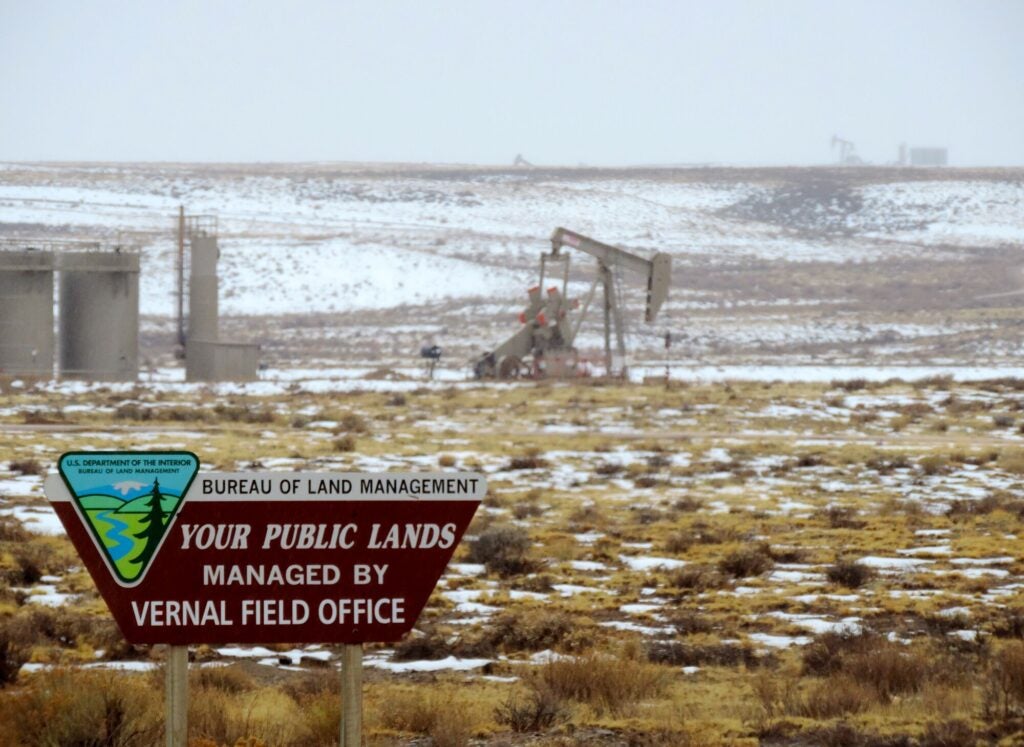
How the Senate’s Permitting Bill Could Lock in Fossil Fuel Extraction and Give Handouts to Oil and Gas Companies
This bill goes far beyond certainty and risks creating permanence, even for deeply flawed decisions.
Inquiries: Please email Earthjustice at media@earthjustice.org if you have any questions.