Indonesian Court Gave Coal a Free Pass
One of the world's biggest coal players made striking commitments to transition to renewables: the follow-through has been shaky.
In his late twenties, Hadi Priyanto installed solar panels on his roof in Depok, a satellite city near Jakarta, Indonesia: he wanted to contribute to the grid’s renewable energy share.
Hadi’s decision was inspired by his awareness of the true cost of coal, learned during his years as an activist working to protect people from coal’s dangerous health impacts across Indonesia. As a Jakarta commuter, he also experienced the city’s severe air pollution problem first-hand: 22 coal plant units surrounding the megacity pump dangerous levels of particulate matter into the air.
There were also pragmatic reasons to install the solar panels: Hadi knew that they would provide security against the grid’s unreliability and lack of affordability, especially during a global energy crisis.
However, Indonesia’s grid, almost entirely controlled by state-owned enterprise Perusahaan Listrik Negara (PLN), does not operate under a plan for a renewable future, let alone decentralized solar. PLN, with the government’s blessing, continues to favor fossil fuels.
Hadi and three other Indonesians — all of whom use PLN’s electricity and experience coal plants’ health and environmental harms — along with three Indonesian environmental organizations, challenged PLN’s 10-year electricity plan in Jakarta’s administrative court. Their simple ask to the court was to enforce what the law requires on paper: a scheduled phase-out of coal and the prioritization of renewable energy sources.
This month, after full hearings and overwhelming evidence showing legal violations, the court decided that they lacked jurisdiction to hear the case. This decision came a few months after the same court held that Indonesia’s National Electricity Plan, which includes prolonged use of coal assets until 2060 and beyond, also couldn’t be reviewed under the court’s jurisdiction.
Why this matters
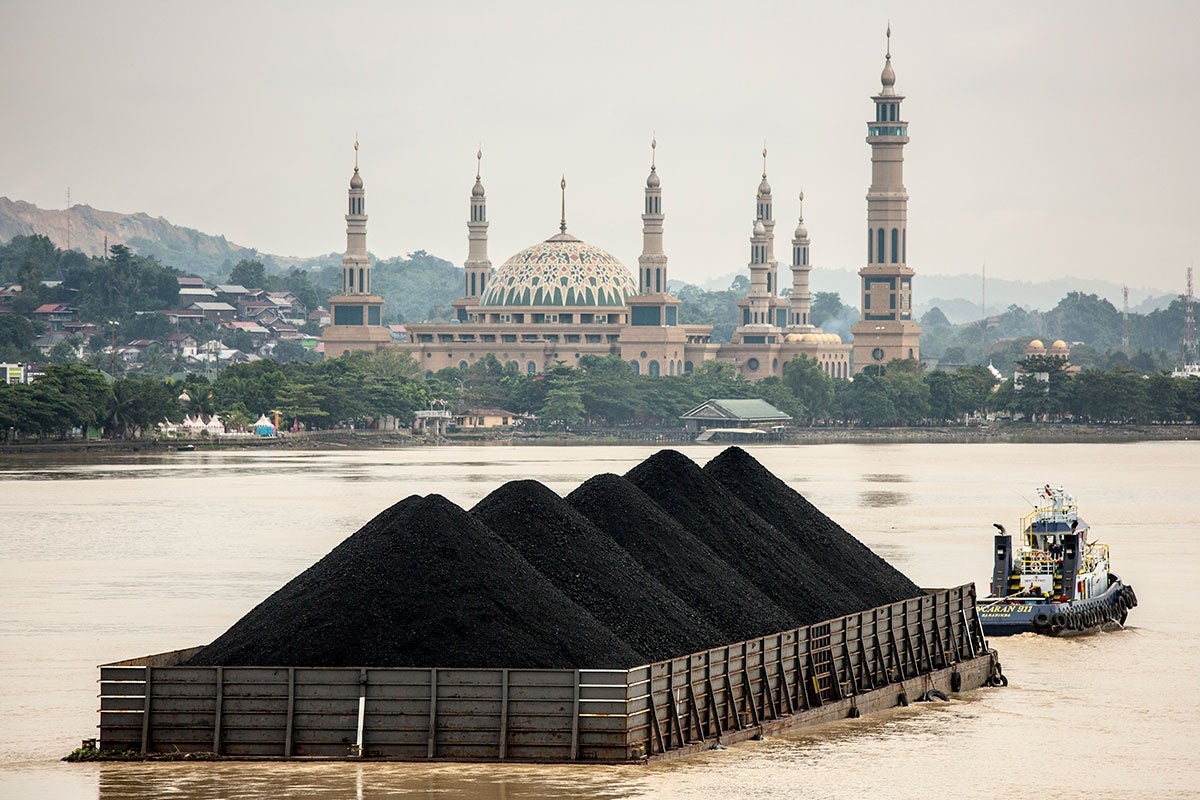
Indonesia’s energy decisions don’t just affect 280 million Indonesians. As the world’s largest exporter of coal, and a major domestic coal consumer, Indonesia holds a critical position in the global fight against climate change.
Despite having substantial untapped renewable resources, 80% of Indonesia’s energy comes from fossil fuels, and more than 62% of its electricity is powered by coal. The country’s energy sector emissions have more than doubled over the last two decades, growing significantly faster than energy demand itself.
Between 2022 and 2024, Indonesia adopted a series of legislative and regulatory actions that many saw as a mark of the country’s pivotal shift away from coal.
- A 2022 Presidential Regulation prohibits new coal plant development in future PLN plans and requires a “sectoral planning document” to develop an early retirement roadmap for the country’s coal fleet.
- The 2025-2045 National Development Plan, adopted in September 2024, includes a schedule to start phasing out coal beginning in 2030. This was backed by government studies concluding that such a phase out is feasible.
- That same year, President Prabowo Subianto announced plans to retire all fossil fuel plants within 15 years and reach net-zero emissions before 2050.
These were striking commitments from one of the world’s biggest coal players. But the follow-through has been shaky.
By 2025, the government had already rolled back its renewable energy target from 23% to 17-19%. Officials are reluctant to articulate a roadmap to retire the country’s aging fleet of coal-fired power plants. The National Electricity Plan, issued in early 2025, not only reflected that reluctance, but took it further by extending the operational lifespans of old coal plants through 2060 instead of scheduling retirement. PLN’s electricity provision plan, issued a few months later, completely abandoned the state’s earlier commitments, proposing new coal plants, delaying the retirement of existing coal plants, and preventing the cleanest and cheapest renewables from coming online as quickly as possible by capping the share of renewables allowed on the grid.
Both plans also significantly increase the country’s reliance on gas. Methane, the main component of gas, is a potent driver of climate change. Its warming effect is more than 80 times that of carbon dioxide during its first 20 years in the atmosphere. In addition to its climate effect, gas has suffered dramatic market disruptions that make it expensive and unreliable. At a time when Indonesia’s finances have been hit by previous energy crises, its energy plans failed to assess the continued impacts of gas price volatility and other market realities that impact reliability and affordability.
Indonesians like Hadi were hoping the court would be able to provide checks and balances and uphold the law. Environmental organizations, whose standing is recognized by Indonesian law and have spent decades advocating for the clean energy transition, joined Hadi and the other individual plaintiffs. Our partners, YLBHI-LBH Jakarta and Trend Asia, stepped up to represent them.
It’s not too late to put Indonesia on the path to a clean energy future
There are valid reasons for Indonesians to have high expectations of the judiciary. The court’s certification program for environmental judges prepares them with the education and skills they need to interact with environmental facts and decision-making. In the past, the court has often sided with the public interest in environmental cases, including landmark cases that compelled coal plants to assess their climate impacts and other cases that held government officials accountable to reduce air pollution.
The plaintiffs have not given up the fight. They are appealing the court’s decisions not to review the governments’ energy plans; the Supreme Court will review the lower court’s decision on the National Energy Plan before the end of the year.
If the courts side with the plaintiffs, Indonesia would need to redraw its energy roadmap to more honestly reflect its climate commitments and put Indonesia on a more realistic path to phasing out coal. That would be a significant win — not just for Indonesia but for a global climate movement that has struggled to hold governments accountable when ambition on paper doesn’t match action on the ground.
Earthjustice will continue to support our partners’ efforts to advance Indonesia’s transition from coal to cleaner energy and to protect communities from harms that will result if Indonesia fails to meet this critical moment.
The International Program partners with organizations and communities around the world to establish, strengthen, and enforce national and international legal protections for the environment and public health.
Miranda Fox
Public Affairs and Communications Strategist, Earthjustice
mfox@earthjustice.org