Earthjustice goes to court for our planet.
We’re here because the earth needs a good lawyer.
We’re Suing to Stop Arctic Oil Exploration
What happened: Earthjustice just filed our first legal challenge to the Trump administration’s all-out assault on Arctic lands. Representing conservation groups and an Alaska Native organization, we are suing the administration for approving ConocoPhillips’ plans to tear up and plunder the Western Arctic.
Why it matters: The Western Arctic is an essential refuge for wildlife, including caribou that provide vital sustenance to nearby Alaska Native communities and migratory birds from around the world. ConocoPhillips’ exploratory drilling program would subject hundreds of square miles to a caravan of industrial traffic, including bulldozers and 90,000-pound trucks.
The Trump administration approved this project without taking steps to mitigate the harms from these activities, as it is required to do by law. It also gave the public shockingly little opportunity for input, ending its comment period after just a week.
This move by the administration is part of a push to maximize drilling across the entire Arctic region of the U.S. It’s also illegal, which is why Earthjustice is suing as part of our decades-long work to keep much of this last wild place still wild.
What’s special about the Western Arctic?
- The Western Arctic is the nation’s largest intact tract of public land, and it remains largely undeveloped.
- The region covers 23 million acres of diverse habitats, ranging from tundra and wetlands to mountain foothills, grassy uplands, riparian areas, and river deltas.
- Home to iconic and imperiled wildlife species like polar bears, seals, and caribou, the Western Arctic is also a crucial breeding area and stopover point for migratory birds.
- Nearby Alaska Native communities depend on these lands in the Western Arctic for their food security and continued ways of life. Hunting, fishing, and gathering are integral to their culture.
How will exploratory drilling harm the Western Arctic?
- ConocoPhillips’ exploratory drilling program will subject a 300-square-mile area within the Western Arctic to a parade of harmful machinery, including 90,000-pound “thumper trucks” that repeatedly strike the ground with a large plate to send seismic waves into the earth.
- These seismic surveys, which are run in the winter and send enormous amounts of energy into the earth, causing irreversible ecological scarring.
- The exploratory program also pushes industrialization west into undeveloped and fragile ecosystems, including parts of the Colville River and Teshekpuk Lake Special Areas — specially-designated areas that require maximum protection because of their significant subsistence, recreational, fish and wildlife, historical and scenic values.
- Alaska’s Arctic is already warming four times faster than the rest of the planet. Expanding fossil fuel infrastructure on public lands increases greenhouse gases, worsening the climate crisis worldwide and locking Alaska residents into expensive and life-threatening climate-related damages.
What else is the Trump administration doing in the Arctic?
- The Trump administration is moving to take Arctic lands, most of which have never seen industrialization, and open the doors wide for fossil fuel drilling.
- The administration wants to strip protections from across the Western Arctic and open more than 80% of the region to oil and gas leasing.
- Further to the east in Alaska’s Arctic, the administration is attacking the Arctic National Wildlife Refuge. In October, it opened the entire 1.56 million acres of the Arctic Refuge’s Coastal Plain to oil and gas leasing. These lands are sacred to the Gwich’in people and are home to irreplaceable wildlife.
Arctic Ocean
Beaufort
Sea
Nuiqsut
Chukchi
Sea
Prudhoe Bay
Coastal Plain
Teshekpuk Lake
Western Arctic(National Petroleum
Reserve-Alaska)
Arctic National Wildlife Refuge
Russia
Arctic Circle
Canada
Alaska
Bering
Sea
Gulf of
Alaska
Peter Hoey for Earthjustice
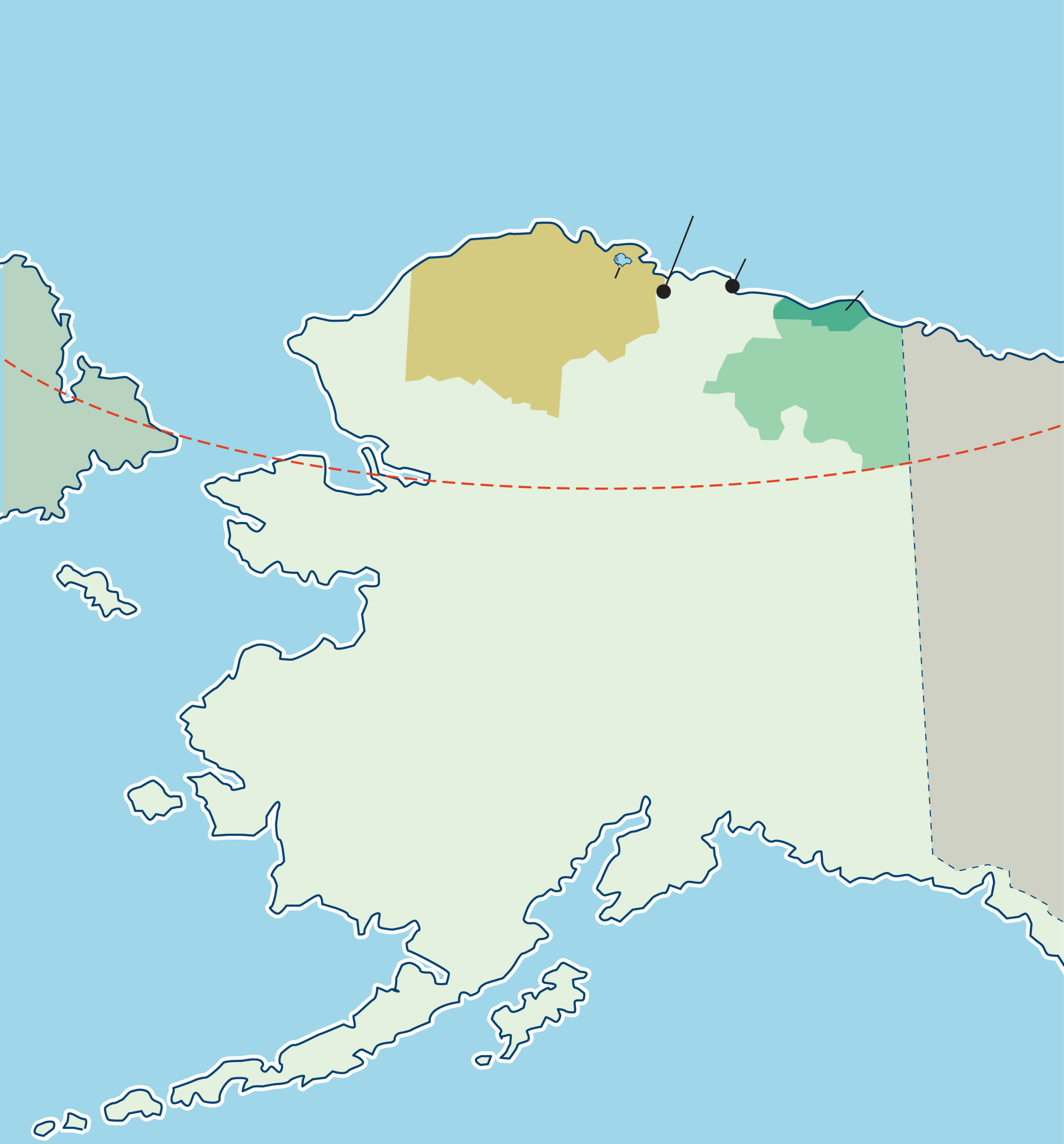
The Western Arctic (also called the "National Petroleum Reserve-Alaska" or NPR-A) is home to many millions of acres of specially designated lands because of their ecological and cultural importance. This includes Teshekpuk Lake, a wetlands area critical for migratory birds from around the world.
The Arctic National Wildlife Refuge is the country’s largest national refuge and home to diverse wildlife and Indigenous communities. Within the Arctic Refuge’s Coastal Plain are the calving grounds of the Porcupine Caribou herd.
What is Earthjustice doing to protect the Arctic?
- Earthjustice is suing to overturn the Western Arctic exploratory program for failing to mitigate the serious harm it would cause to the tundra, wildlife, and subsistence resources important to Alaska Native communities.
- Our lawsuit is part of a decades-long fight in court to keep oil and gas interests from destroying the Arctic and fighting fossil fuels that are driving the climate crisis — and we have a significant track record of success.
- During the first Trump administration, for example, an Earthjustice lawsuit helped halt the Peregrine oil exploration project, which could have led to the release of emissions equal to 170 coal-fired power plants operating for a year. We’ve also sued to block oil and gas development in the Arctic National Wildlife Refuge, and so far have prevented commercial drilling on public lands.