
Breaking Down Deep-Sea Mining Regulatory Authority
Understanding the U.S. and international laws that regulate deep-sea mining.
Last month, the international body that regulates seabed mining — the International Seabed Authority — began its meetings in Kingston, Jamaica.
And on July 16, the Trump administration announced a lease sale to allow seabed mining off the coast of American Samoa.
Are these two things related? Well, yes and no. They both involve deep seabed mining, a highly destructive technology that has never before been deployed at scale anywhere in the world.
Legally, however, the processes are entirely distinct. Let me explain.
What Is Seabed Mining?
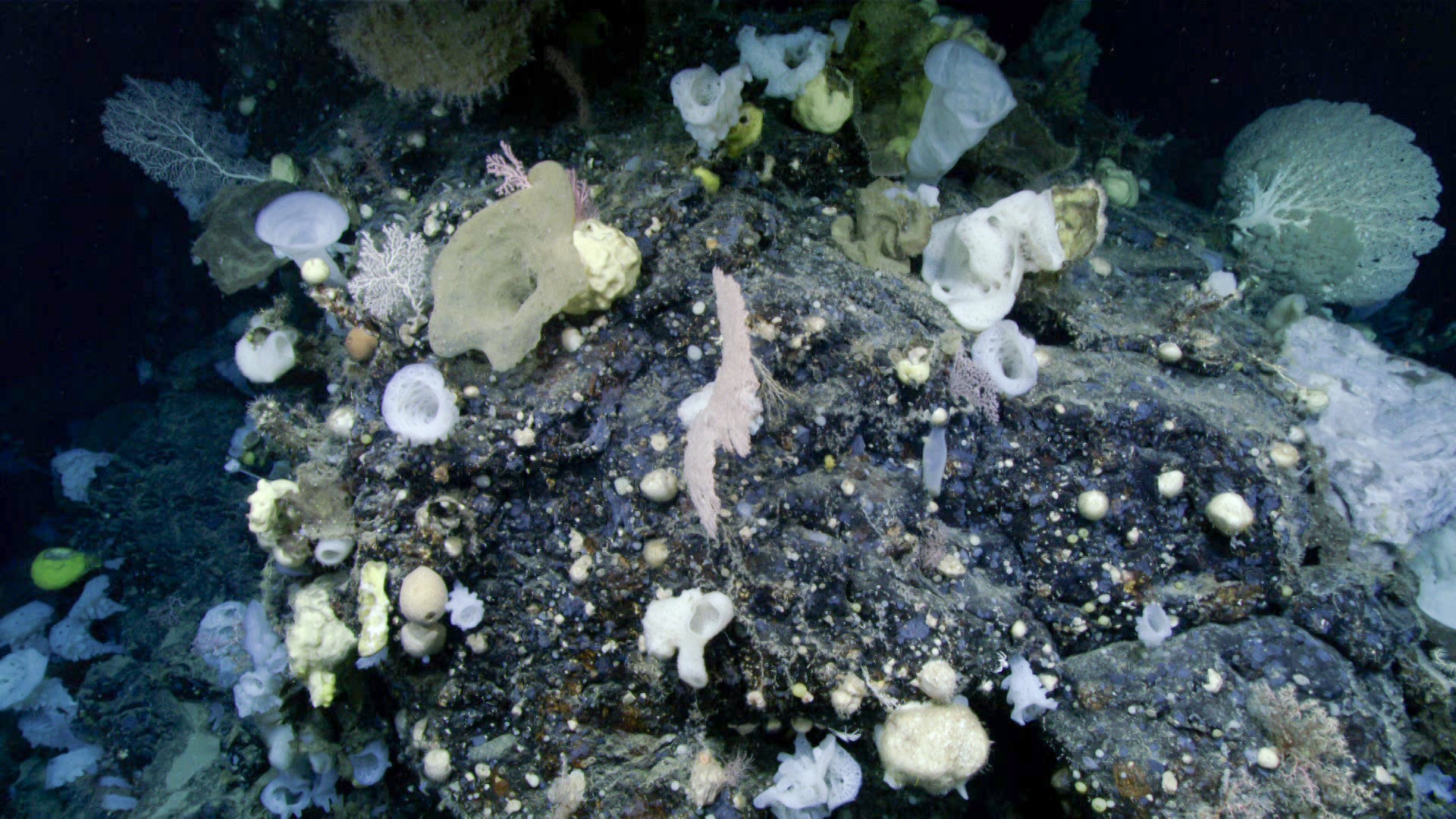
A handful of companies want permission to mine the sea floor — a public resource that’s our common heritage. But the minerals they propose to mine are already plentiful on land.
Some areas in the deep sea hold mineral deposits in crusts, sands, and potato-sized clumps on the seafloor called “polymetallic nodules.” Formed over millions of years, these clumps contain manganese, cobalt, nickel, and other elements that can go into the construction of electronics, batteries, weapons, and other technologies.

Polymetallic nodules, misshapen black globes encrusted with coveted metals like cobalt, nickel, and manganese, taken from the ocean floor. (William West / AFP via Getty Images)
Mining these minerals would devastate ocean ecosystems. It would wipe out deep-sea habitats and biodiversity, and could contaminate fisheries with toxic pollution. Experts agree that minerals from the deep ocean are not necessary to meet supply needs for the clean energy transition. The extremely high financial costs and environmental risks have prevented the seabed mining industry from developing — so far.
What Is the International Seabed Authority?
First, a brief primer on the different agencies and jurisdictions that govern decisions about deep-sea mining. The United Nations Convention on the Law of the Sea (UNCLOS) is the primary international treaty governing the world’s oceans. Under that treaty, each nation generally has exclusive rights over the resources in its continental shelf, meaning the seabed extending at least 200 nautical miles from its coast. UNCLOS established the International Seabed Authority (ISA) to regulate mining in the seabed beyond the limits of national jurisdiction, frequently referred to as international waters.
UNCLOS designates the international seabed and its mineral resources as the “common heritage of mankind.” This means that no individual nation may exclusively claim them, and any disposition of those minerals must benefit humankind as a whole. This principle is widely regarded as customary international law that applies to all countries. The ISA has authorized some exploration for minerals in the international seabed, but it has not authorized mining. That is because it is working carefully to first ensure that adequate regulations and procedures are in place to protect the environment. The ISA was working on those during its meetings last month.
What Is the American Samoa Lease Sale?
The ISA has no authority on the continental shelf of any nation. Congress enacted the Outer Continental Shelf Lands Act to govern the United States’ Continental Shelf. It is under that statute that the Marine Minerals Administration is proposing to sell mining leases off American Samoa. Because the sale is for the seabed under exclusive U.S. jurisdiction, the ISA is not involved at all. The same is true for other proposed seabed mining lease sales off the coasts of Virginia, Alaska, and the Northern Mariana Islands & Guam.
Isn’t the United States Trying to Allow Seabed Mining in Areas under ISA Jurisdiction?
Yes! Under a separate U.S. statute — the Deep Seabed Hard Mineral Resources Act (DSHMRA) — the National Oceanic and Atmospheric Administration is proposing to authorize seabed exploration and mining in the international seabed beyond U.S. jurisdiction. Congress enacted DSHMRA as a placeholder statute until UNCLOS was negotiated. But because the United States has not yet ratified UNCLOS, DSHMRA remains in effect. That statute has never before been used to authorize seabed mining. The pending applications seek U.S. approval to mine in areas where the ISA has jurisdiction under UNCLOS.
In the coming months, we are likely to see the Trump administration continue its rush to let seabed mining companies run amok in both the U.S. and the international seabed. Earthjustice is ready to hold them accountable to the law.
The International Program partners with organizations and communities around the world to establish, strengthen, and enforce national and international legal protections for the environment and public health.
Established in 1988, Earthjustice's Mid-Pacific Office, located in Honolulu, Hawaiʻi, works on a broad range of environmental and community health issues, including to ensure water is a public trust and to achieve a cleaner energy future.
Earthjustice’s Oceans Program uses the power of the law to safeguard imperiled marine life, reform fisheries management, stop the expansion of offshore oil and gas drilling, and increase the resiliency of ocean ecosystems to climate change.
Julie Hauserman
Public Affairs and Communications Strategist, Earthjustice
jhauserman@earthjustice.org