Wins and Highlights from the Washington 2026 Legislative Session
This year, Earthjustice’s work with the Washington Legislature focused on commonsense guardrails on data centers, curbing marine pollution, and securing state funding for two key Snake River studies.
The Washington Legislature convened for 60 days this year, compared to 105 days on odd-numbered years. This year’s fast and furious session included several challenges but also notable successes, namely progress on key environmental legislation and two significant budget victories.
As Earthjustice’s state policy representative for Washington, I worked predominantly on three bills — one that would help ensure data center growth in Washington state doesn’t harm people or the environment, a second to curb marine pollution by requiring vessels to use low sulfur fuel, and a third bill aimed at removing a dangerous chemical from tires, 6PPD, that is known to kill salmon.
Despite none of this legislation passing, our progress was significant — our work this year sets us up well to hopefully pass strong legislation next year when the legislature convenes for a longer session.
Regarding the state budget, we won a clear victory this year by securing funding to complete two important studies needed to prepare for the possible future removal of the four lower Snake River dams. Relatedly, our work to protect Columbia Basin is now back in court where we obtained emergency relief to protect imperiled salmon due to the Trump administration’s rescission of the historic Resilient Columbia Basin agreement.
We sent out an action alert mid-session urging our Washington supporters to pass the data center bill. That bill didn’t pass, but 804 Earthjustice supporters contacted their lawmakers through that alert. Constituent advocacy makes a big difference, so thank you to everyone who has communicated with their representatives about the need for commonsense guardrails for data centers.
If you live in Washington or Oregon and are reading this, please consider joining Earthjustice’s email list to receive regional action alerts and legislative summaries like this one so you can get more involved and informed.
Following is a rundown of those three main bills that I worked on within our focus areas of environmental protection, equity, and sustainability — plus more on the important budget victories!
Commonsense guardrails on data centers
Legislation to ensure AI data center growth happens responsibly (HB 2515/SB 6171) was our biggest priority this legislative session.
The core fight was over who pays for large, new data center loads and whether the state’s climate and utility policies should treat them like regular customers. It was an effort to set rules for very large, energy-intensive data centers built in Washington, specifically Emerging Large Energy Use Facilities (ELEUF). Our bill defined these ELEUF’s as data centers with a contract demand of 20 megawatts or more, which is enough electricity to power about 17,000 typical homes for a year.
Currently, these facilities have mainly been built in Washington state in small towns like Moses Lake and Quincy. Quincy has 2,600 households (based on the Census Bureau’s 2020-2024 American Community Survey), which means a single facility covered under this proposal would consume roughly the same amount of electricity as nearly seven towns the size of Quincy. Understanding the scale of these data centers and the large electricity loads they require is essential.
At a time when energy is a highly volatile commodity, Washington state lawmakers are looking to ensure that consumers are not burdened with the economic, environmental, and health impacts associated with these massive energy consumers.
The data center legislation aimed to enact the following guardrails and conditions on these data centers:
- Transparency: The bill included requirements of these facilities to provide public sustainability reporting and annual reporting on energy use, water consumption, permits, refrigerant use and leaks, and air emissions. (Some refrigerants include PFAS chemicals, for example).
- Preventing data centers from harming customers: A centerpiece of the legislation was a special tariff on these large facilities, structured to prevent cost shifts to consumers – this includes having them pay for stranded assets and any build-out costs like substations, transmission, and other infrastructure required to serve them.
- A plan for emergencies: A provision in the bill aimed to reduce load pressure from these data centers during grid emergencies if the utility or the Bonneville Power Administration calls on them to do so. This is known as a curtailment requirement. (A version of this exists in Texas law.)
- Planning for the future: The bill also included a provision directing Washington State’s Department of Commerce and the Utilities and Transportation Commission to enhance forecasting and interconnected practices for these large load users.
- Clean energy: Another provision would require new and expanded facilities to support the increasing use of new or non-emitting electricity; meeting 80% of annual energy and capacity needs with clean energy sources starting in 2031, and 100% by 2046.
- Protecting labor: The bill included strong labor standards in the construction of these data centers and as a provision of securing the bill’s data center tax incentive.
The bill faced some serious opposition, and several provisions were changed before it moved out of the House of Representatives, the bill’s original chamber. HB 2515 passed out of the House without the crucial curtailment component and included a tax incentive specifically for Spokane County. It then advanced out of the Senate Environment and Energy Committee with the curtailment restored, received a hearing in the influential Ways & Means (budget) Committee, and was even scheduled for a vote out of that committee.
However, from there the bill stalled. The International Brotherhood of Electrical Workers (IBEW), energy industry representatives, and companies like Microsoft were active in opposing the bill’s inclusion of curtailment and other regulations that environmental, tribal, and low-income advocates considered essential parts of the legislation.
We’re dedicated to moving this bill forward again next year, and maintaining essential elements in accordance with our principles, such as strict project labor agreement standards, clean energy mandates, and safeguarding the environment and consumers from harm.
Relatedly, Engrossed Substitute Senate Bill (ESSB) 6231 was signed into law by Governor Ferguson on April 1, 2026.
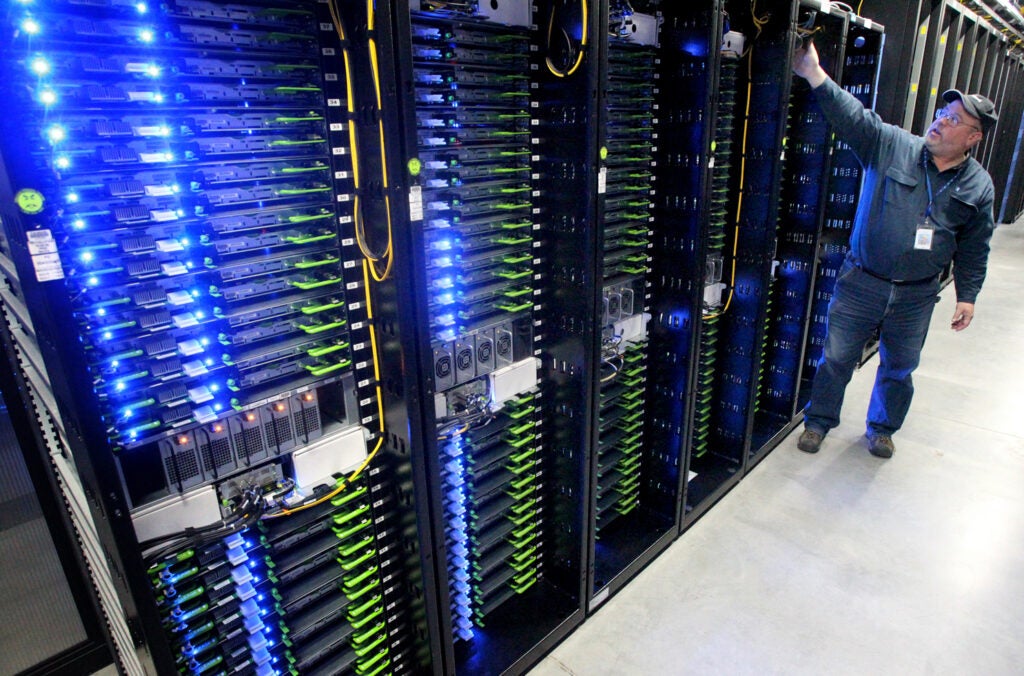
Computer servers at Facebook’s Prineville data centers. (Andy Tullis / The Bulletin via AP)
Curbing marine pollution by requiring low sulfur maritime fuels
Remember this bill (SB 5519/HB 1652) that we worked on last legislative session? It’s about curtailing marine pollution by requiring most vessels that transit Washington state waters use low sulfur maritime fuel.
Here’s what is happening now: Certain shipping companies and international cruise lines rely on exhaust-gas cleaning systems, which they claim are state of the art advanced technology, often called scrubbers. These systems simply transition what would otherwise be exhaust pollution and convert it to exhaust-laden wash-water, all to allow them to use cheaper cost high-in-sulfur fuel.
High-sulfur fuels have been linked to ocean acidification, poisoning, and killing sea creatures essential for ecological balance. The wash water discharged from these scrubbers contains many contaminants, including polycyclic aromatic hydrocarbons (PAHs), particulate matter, nitrates, nitrites, and heavy metals like lead, mercury, copper, and nickel.
There are two types of scrubbers – open loop and closed loop systems – and both use water spraying mechanisms to capture sulfur oxides before exiting through their exhaust systems. Both require disposing of wash water but in different ways: in a closed loop system, the water is retained until final disposal, while in an open loop, disposal happens continuously. These systems do not eliminate pollution but instead transfer much of it from the air into the water. They are pollution management systems, not pollution elimination systems. Requiring low-sulfur fuels is the best practice, which other countries and marine areas have already done successfully. Here are some examples:
- The Mediterranean Sea became a 0.1% sulfur emission control area (where low sulfur fuels are required) on May 1, 2025, while the Canadian Arctic and Norwegian Sea ECAs established the legal framework and will begin enforcing regulations on ships on March 1, 2027.
- Singapore bans the discharge of wash water from open-loop scrubbers in the Port of Singapore, while ships with hybrid scrubbers must switch to closed-loop mode. Ships equipped with open-loop systems must switch to compliant fuel before entering port limits.
- In Finland, discharging from open loop scrubbers is prohibited within their territorial waters.
- In Sweden, discharges from scrubbers operating in open loop are no longer permitted within their territorial waters.
The international standard now involves a stricter approach to using cleaner fuels in sensitive waters. Restrictions on discharges near coasts, ports, and ecologically important seas have become the standard.
Earthjustice and our partners worked between last year and this year’s legislative sessions with main sponsor Rep. Lekanoff on a new version of HB 1652. The outcome was a more practical, targeted bill that would require ocean-going vessels operating within three nautical miles of Washington state shorelines to use fuel with a sulfur content of 0.1% or less starting in 2028. The bill also introduced record-keeping requirements, established exemptions for through-transit voyages during emergencies and for government non-commercial service vessels, and clarified Washington State Department of Ecology’s authority to set testing and compliance methods.
Although we were unable to pass this Washington state bill this year to improve water conditions in the Salish Sea, we believe we made significant progress toward educating the Legislature, port and cruise-line representatives, and the public on our goal of preventing pollution instead of just shifting its impact. Support for this legislation is building.
Port and cruise line representatives did not oppose the bill but may have different ideas over implementation and what will be required. We plan to meet with key stakeholders this interim to ensure a shared understanding of the issue and a workable solution for the Salish Sea that is timely and impactful.
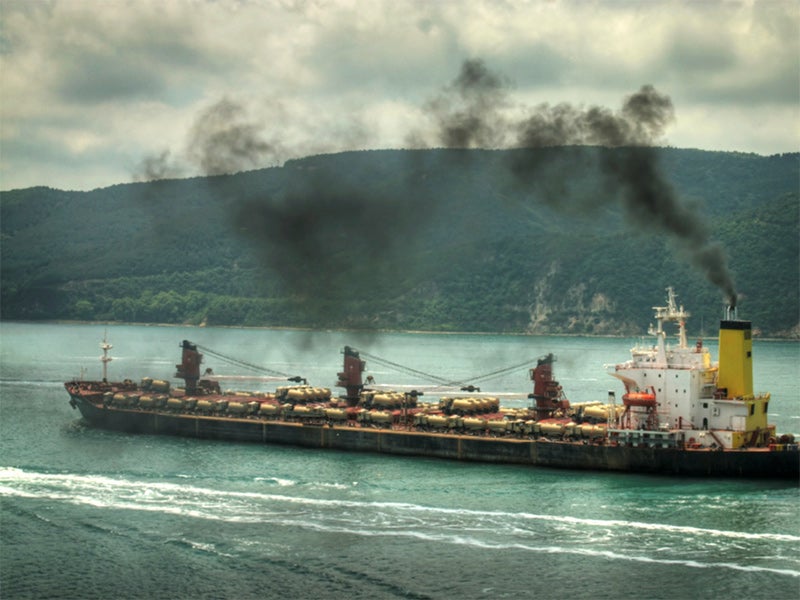
Ocean-going vessels with large marine diesel engines, such as container ships, tankers, freighters and cruise ships, are a significant source of air pollution in coastal states. (iStockphoto)
Keeping chemicals that kill salmon out of tires
6PPD is a chemical widely used in tires reportedly to stabilize the rubber and prevent it from cracking. Once the rubber begins to wear, however, 6PPD sheds onto roads and the environment, where it reacts to form 6PPD-quinone (6PPD-Q). The transformation of this product is a major concern because of its impact via stormwater runoff and other leaching processes. Water contaminated with 6PPD-Q can kill salmon and other fish in a matter of hours. Studies have found that even a few drops of the chemical compound in an Olympic-sized swimming pool can be a lethal amount.
Earthjustice is litigating the issue, and in January, our litigation team spent three days in federal court arguing the tire companies are violating the Endangered Species Act by allowing the chemical to enter waterways and kill salmon. Our expert witnesses and attorneys demonstrated a strong case against the use and impact of 6PPD in vehicle tires.
Meanwhile, as that case proceeds, the Washington Legislature introduced a straightforward bill proposing a future ban on manufacturing, selling, and distributing new tires that intentionally contain 6PPD in their makeup. The bill needed improvement — the ban wouldn’t have begun until 2035, which we believe is too long to wait to successfully protect salmon. It also imposed a mitigation fee on tires containing 6PPD, which required adjustments to ensure consumers wouldn’t bear the financial costs and ecological problems caused by the manufacturer.
Unfortunately, the bill was changed a few times during the session in ways that weakened the bill too much for us to continue to support it. The bill faltered and we have committed to working with the bill sponsors on necessary changes to ensure the measure balances the economic concerns associated with a transition or alternative to the chemical compound, and the reality that 6PPD/6PPD-q poses an immediate threat to salmonids. 6PPD will unequivocably be a high priority during the 2027 legislative session, and we plan on passing a law that helps ensure we protect our environment and consumers.
Funding further lower Snake River studies
In June 2025, the Donald J. Trump administration withdrew the federal government from the historic Resilient Columbia Basin Agreement, reversing the previous administration’s policy direction on the Lower Snake River dams. This reversal meant that studies that were supposed to be jointly funded by the state and the federal government—covering Transportation, Irrigation, Energy, and Recreation — were no longer a priority for the Trump administration. Two of the four studies initially funded and developed as collaborative state-federal projects were already well underway, but the Energy and Recreation studies still needed significant work, and the Trump administration had no interest and in fact abandoned their engagement in the completion of these studies.
Through our advocacy, in partnership with Nez Perce Tribe, Save Our Wild Salmon, Northwest Sportfishing Industry Association, American Rivers, Sierra Club, and others, we succeeded in securing the funds necessary to complete these important studies that will inform future planning. The final budget proviso included $800,000 for the energy study and $350,000 for the recreation study.
Washington state legislative leaders recognized the importance of having this information, and Governor Ferguson’s decision to include it in his proposed supplemental budget set the tone for what was expected of the budget writers on this issue of national importance. We appreciate and value the grassroots support for this effort and are grateful to those who took time to advocate for inclusion of these funds for these studies in the final budget bill passed by the legislature and signed by Governor Ferguson.
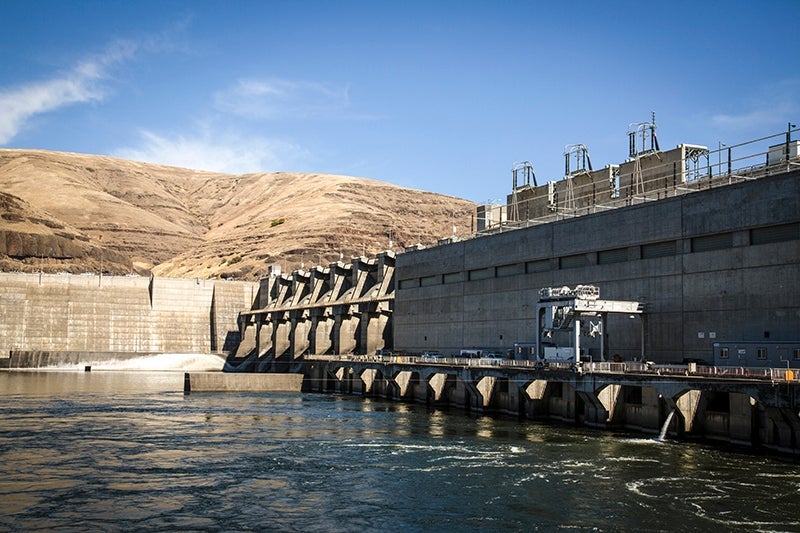
The Lower Granite Dam is one of the four Lower Snake River dams. (Chris Jordan-Bloch / Earthjustice)
Looking ahead
Next year’s session, which is an odd year, will be a longer one. We’re already working ahead to ensure the bills mentioned above pass next year — and on new policy solutions to forward our progress on clean energy, healthy communities, and affordability.
Sign up to receive our legislative updates to continue to stay informed! Join our supporter list!
Established in 1987, Earthjustice's Northwest Regional Office has been at the forefront of many of the most significant legal decisions safeguarding the Pacific Northwest’s imperiled species, ancient forests, and waterways.
Elizabeth Manning
Public Affairs and Communications Strategist, Earthjustice
emanning@earthjustice.org