

EPA’s Disastrous New Proposal Guts Coal Ash Rules – As Coal Plants Nationwide Pollute Water Supplies
EPA’s new proposed coal ash rule would permit widespread contamination from toxic chemicals in coal ash.
On April 13, 2026, the Environmental Protection Agency (EPA) published a proposed rule that eviscerates the regulations governing the disposal and cleanup of coal ash – the toxic sludge left over from burning coal to produce electricity. The proposal would grant coal power companies a free pass to continue dumping hazardous coal ash into leaking dumps and piles and allow utilities to ignore toxic pollution leaking into waterways. This reckless proposal would irreparably harm our health; drinking water sources; and rivers, lakes, and streams. The proposed rule dismantles protections for all coal ash dump sites – at both operating and retired coal plants. Most immediately at risk are the hundreds of vulnerable communities across the U.S. that live near these dangerous leaking dumps.
The widespread harm caused by toxic coal ash
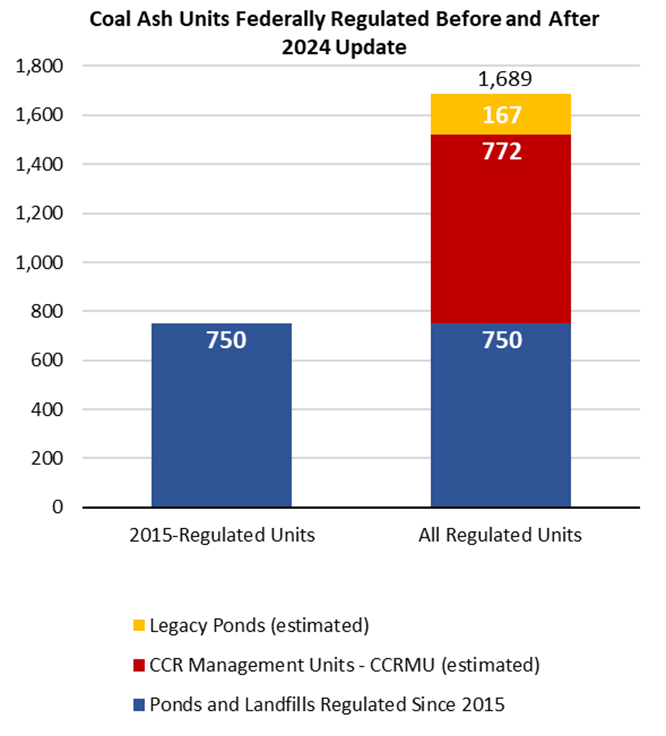
For more than a century, coal power companies have dumped billions of tons of toxic ash — the hazardous substance left after burning coal for energy — in leaking ponds, landfills, and random holes in the ground across the U.S. There are more than 1600 coal ash dumps at 449 former or current coal power plant sites.
Coal ash is a mix of hazardous pollutants, metals, carcinogens, radioactive substances, and neurotoxins, including arsenic, boron, cobalt, chromium, lead, lithium, radium, selenium, and other heavy metals. These have been linked to cancer, heart and thyroid disease, reproductive failure, and neurological harm.
According to industry’s own data, at 91 percent of the nation’s coal plants coal ash is contaminating water above federal standards for safe drinking water. This contamination is documented by industry at more than 265 plants and 765 dump sites. But this number underestimates the problem, as industry has barely begun to monitor the hundreds of coal ash dumps newly regulated by the 2024 Legacy Coal Ash Rule. Just as the coal power industry was finally being forced to reveal the full scale of its contamination to the public, the Trump Administration delayed and then proposed to effectively halt these regulations.
Hard-won protections in jeopardy
As a result of multiple lawsuits brought by Earthjustice and its partners against the EPA, the agency established the first-ever federal coal ash regulations in 2015 under the Resource Conservation and Recovery Act (RCRA), which required closure of dangerous ash dumps and cleanup of festering toxic sites. The EPA’s 2024 Legacy Coal Ash Rule expanded protections to hundreds of toxic dumps that were left unregulated by the 2015 rule. That same year, coal ash was designated a national enforcement priority for the EPA, due to industry’s widespread failure to comply with the rules. Together, the 2015 and 2024 coal ash rules require coal plants to determine the impact of their toxic dumps through monitoring of groundwater and frequent inspections; to conduct timely cleanup of coal ash-contaminated water; and to prevent pollution by safely closing old, unlined, secure disposal units. These rules protect hundreds of communities across the country near leaking coal ash dumps.
The Trump EPA delivers the coal power industry’s wish list
The coal power industry successfully lobbied the Trump administration to gut these coal ash protections. Immediately after Trump’s election, industry rushed in with wish lists of ways for the EPA to delay and eliminate essential coal ash protections in a series of letters, whitepapers, and strategic plans. Last July, EPA officials went so far as to hold an exclusive two-day meeting with coal utility executives, called “Industry Day” to solicit their views. It wasn’t long before the Trump EPA proposed a rule that would gut the cleanup requirements for coal ash waste and eliminate critical public health and environmental protections.
As requested by industry lobbyists, the proposed rule would reduce or eliminate health protections for coal ash and exempt hundreds of dumps from regulation entirely.
A permit system that permits pollution
The proposed rule would allow state and EPA permit authorities to weaken monitoring, closure, and cleanup requirements on a site-by-site basis. Upon request, authorities could exempt utilities from critical requirements and allow closure of ponds with coal ash in groundwater and relax monitoring requirements that would excuse the industry from cleaning up contaminated groundwater. The Trump administration is also moving quickly to finalize a federal coal ash permitting rule originally proposed during the first Trump administration. Under permissive state and federal permit systems, utilities can pressure overburdened and under-funded regulators to short-cut or eliminate protections on a site-by-site basis. The Trump EPA brags about this handout to industry at our expense, crowing that the proposal will save the coal industry hundreds of millions of dollars annually. But the costs of contaminated water and pollution are much higher and will be borne by us all.
A Sledgehammer to Essential Public Health and Environmental Protections
The proposed rule guts the core protections of the 2015 and 2024 rules. If finalized, fenceline communities across the country will again be unprotected from coal ash pollution. The proposed rule would:
- Exempt a large category of leaking ash dumps, Coal Combustion Residuals Management Units (CCRMU), were newly regulated by the 2024 Legacy Coal Ash Rule and include inactive landfills, dry coal ash ponds, structural fill sites and other old ash disposal sites on coal plant properties. There are hundreds of CCRMU dump sites and they are found at nearly every coal plant. These old, unlined ash dumps are leaking hazardous chemicals to groundwater, rivers, lakes and streams.
- Grant state agencies and EPA regional offices broad discretion to weaken monitoring and cleanup requirements at all coal ash dumps upon the request of utilities. The proposed rule creates new exemptions allowing companies to seek permits that may result in no cleanup being required at many sites. For example, companies could move the location of wells intended to detect coal ash contamination 150 meters from the coal ash dump rather than at the edge of the dump, effectively permitting a zone of contamination. The EPA even suggested that it might be appropriate to move monitoring even farther out to the boundary of large power plant sites.
- Allow states and EPA to increase the amount of cobalt, lithium, molybdenum and lead permitted in coal ash-contaminated water above federal safe standards
- Authorize state and federal permit writers to allow companies to close coal ash in place upon industry request, even when the ash is known to be in contact with and contaminating groundwater. The current rules forbid leaving coal ash in contact with groundwater, because of the threat to nearby waterways, drinking water wells, and communities.
- Delay the monitoring, closure and cleanup of hundreds of legacy coal ash ponds by removing deadlines set by the 2024 Legacy Coal Ash Rule. The proposed rule would allow permitting authorities to wait years to establish standards or to decide no closure and cleanup are even needed. Since federal and state permitting authority over the 2024 Rule does not yet exist, this dangerous delay is indefinite and likely to be lengthy.
- Remove all specific safety standards for “piles” of coal ash waste no matter how large they are, or where they are located. EPA’s 2015 Coal Ash Rule regulates coal ash piles at utility sites as landfills and requires liners, monitoring, dust control, closure, and cleanup. Utilities would be able to create massive ash piles with no specific controls required, as long as the piles are eventually removed, even if that takes decades.
- Eliminate all safeguards on the use of coal ash as a substitute for clean soil both on and off coal plant properties, even in such places as playgrounds, residential areas, and parks. Developers would be able to use large amounts of toxic ash as structural fill with no requirement to demonstrate its safety or to report or monitor its use, even though heavy metals and radioactive materials in coal ash can pose serious health and environmental harm.
In sum, the proposed rule would exempt hundreds of legacy coal ash dumps from cleanup requirements entirely, delay closure and cleanup of legacy ponds, allow coal plants to pollute groundwater with toxic chemicals above health and environmental standards, allow the permanent deposition of coal ash in aquifers, and permit the use of toxic ash as substitute for clean soil. In sum, the proposed rule would allow uncontrolled disposal of hazardous ash, ensuring that toxic coal ash dumpsites will continue to harm vulnerable communities across the nation.
What You Can Do To Save Protections
EPA will be accepting comments on the proposal until June 12, 2026. In addition, the agency is holding a virtual public hearing on May 28, 2026. Join us in opposing this exceedingly dangerous proposal, submit your comments below and register to testify at the public hearing.
Earthjustice’s Clean Energy Program uses the power of the law and the strength of partnership to accelerate the transition to 100% clean energy.
Kathryn McGrath
Public Affairs and Communications Strategist, Earthjustice
kmcgrath@earthjustice.org
