

Court Denies Request to Halt Western Arctic Oil Exploration
The ruling allows ConocoPhillips to proceed with its plans for winter exploration program
Contacts
Elizabeth Manning, Earthjustice, emanning@earthjustice.org
Nauri Simmonds, Sovereign Iñupiat for a Living Arctic (SILA), admin@silainuat.org
Keri Gilliland, The Wilderness Society, 303-386-2243, kgilliland@tws.org
A federal court ruling allows ConocoPhillips to continue its winter seismic and exploration drilling program in the Western Arctic despite concerns about the harm it would cause to wildlife, sensitive habitats and the subsistence and cultural values of local Alaska Native people and other Arctic residents.
Some of the exploration would take place in sensitive areas of the National Petroleum Reserve-Alaska, including within the Teshekpuk Lake Special Area, one of the most ecologically important wetlands in the Arctic and home to tens of thousands of migratory birds and the Teshekpuk Caribou Herd.
Earthjustice requested the preliminary injunction to halt the winter exploration program in December on behalf of an Iñupiat-led grassroots organization, Sovereign Iñupiat for a Living Arctic (SILA), and two conservation groups, The Wilderness Society and the Center for Biological Diversity.
The groups argue the Bureau of Land Management (BLM) unlawfully approved the project by failing to meet its obligation to mitigate the serious impacts the exploratory work would cause to sensitive ecosystems and subsistence resources important to Alaska Native communities. The court disagreed, noting “deference owed to BLM in selecting mitigation measures it deems are necessary or appropriate.”
The court ruling, issued yesterday, denied the request for a preliminary injunction to halt the program immediately. However, the underlying challenge to BLM’s approval of the winter exploration program remains pending.
“This ruling is difficult for many of us who live close to these decisions and their consequences, especially as we are still processing the recent rig collapse and diesel spill near Nuiqsut,” said Nauri Simmonds, Executive Director of Sovereign Iñupiat for a Living Arctic. “Incidents like this show how quickly risks on the land become risks for the people who rely on it. Our safety, our food sources, and the places we depend on deserve more than rushed approvals and delayed explanations. While this ruling allows exploration to continue for now, we remain committed to ensuring the Western Arctic is treated with the care and respect that future generations deserve.”
“Sadly, ConocoPhillips will now spend the winter disrupting caribou migration and crushing fragile Arctic tundra under massive thumper trucks before a full hearing of our case against this destructive exploration plan,” said Matt Jackson, Alaska senior manager for The Wilderness Society. “The fight is far from over. To protect one of the most ecologically rich landscapes in America, and to ensure that our rural communities remain free to sustain our Alaska way of life today and in future generations, it is critical that the court overturn approval of the exploration program.”
“It’s really frustrating that a private company got a fast-track approval to run roughshod over the Arctic just to look for oil we don’t need,” said Rebecca Noblin, a senior attorney at the Center for Biological Diversity. “The Western Arctic needs and deserves protection and we’ll keep working to ensure that it’s safe from destructive drilling.”
“While it is deeply disappointing that the exploration program can continue, this preliminary ruling does not end plaintiffs’ challenge to the program,” said Earthjustice Attorney Ian Dooley. “It is remarkable that BLM has not on its own halted this project to determine the cause of the rig collapse, fire, and diesel spill that occurred last week. BLM’s lack of action is consistent with the rushed process here that has prioritized extraction over protecting the Reserve’s remarkable environment and the people who live in and use it.”
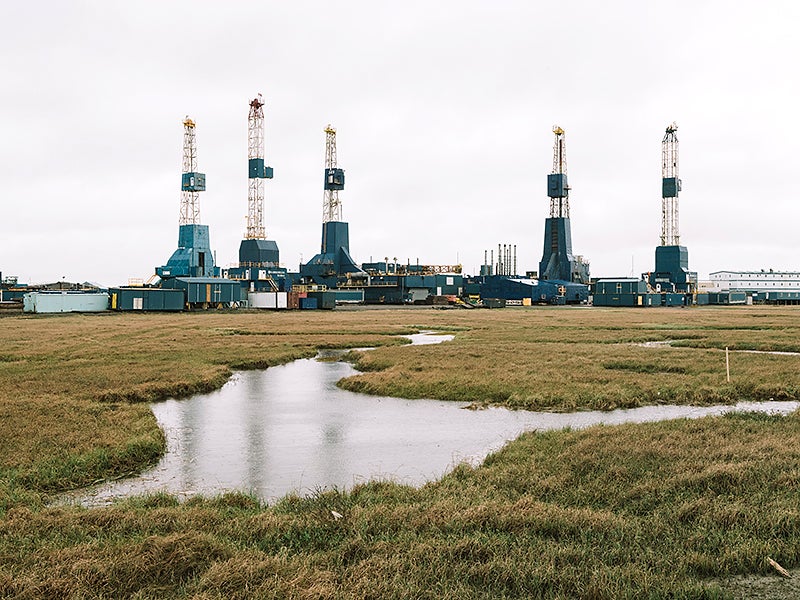
Yesterday’s ruling comes just four days after Doyon Rig 26, North America’s largest mobile land rig, toppled while being transported along a gravel road about seven miles northwest of the village of Nuiqsut. The rig was in transit to drill an exploration well as part of ConocoPhillips’ winter exploration program.
The rig narrowly missed hitting what appears to be a pipeline, described by state officials as oil and gas infrastructure located about 50 feet away from the topped rig. A diesel spill of potentially thousands of gallons was also noted by state officials, who stated in a Department of Environmental Conservation Situation Report that the spill occurred within “critical habitat for denning and non-denning polar bears and habitat for caribou, Arctic fox, muskox, and ptarmigan.” No immediate impacts to wildlife were reported, but state officials also noted that investigation of the accident was not yet complete due to safety issues posed by the unstable rig.
Background
The 23-million-acre Reserve in the Western Arctic is one of the most biologically, ecologically and culturally significant tracts of public land in the United States. Its diverse habitats range from tundra and wetlands to mountain foothills, grassy uplands, riparian areas, and river deltas. The region is home to iconic and imperiled wildlife species like polar bears and seals that depend on sea ice. It provides globally significant habitat for millions of migratory birds and for Alaska’s massive caribou herds.
The Naval Petroleum Reserves Production Act of 1976 recognized the importance of the Western Arctic for wildlife and migratory birds including animals protected under the Endangered Species Act, and for the cultural practices and food security of Indigenous communities. The act requires the BLM to assure adequate mitigation of harm from oil and gas activities, and “maximum protection” of the fragile tundra, birds, wildlife and other unique resources within the Reserve when it allows exploration or drilling in special areas. When Congress authorized leasing and oil extraction in 1980, it again directed the federal government to assure the protection of the Western Arctic’s ecological and cultural resources.
Additional Resources
About Earthjustice
Earthjustice is the premier nonprofit environmental law organization. We wield the power of law and the strength of partnership to protect people's health, to preserve magnificent places and wildlife, to advance clean energy, and to combat climate change. We are here because the earth needs a good lawyer.