

Lawsuit Challenges Federal Approval of Harmful Oil Exploration in Alaska’s Western Arctic
Interior approved ConocoPhillips’ plan to explore for more oil near its Willow project without addressing the harm it will cause to wildlife and sensitive ecosystems
Contacts
Elizabeth Manning, Earthjustice, emanning@earthjustice.org
Nauri Simmonds, Sovereign Iñupiat for a Living Arctic (SILA), admin@silainuat.org
Rebecca Noblin, Center for Biological Diversity, (907) 891-8528, rnoblin@biologicaldiversity.org
Tim Woody, The Wilderness Society, twoody@tws.org
Conservation groups and an Iñupiat-led grassroots organization filed a lawsuit today seeking to overturn the Trump administration’s approval of ConocoPhillips’ winter seismic and exploration drilling program in the Western Arctic.
The Bureau of Land Management on Nov. 26 approved the one-year exploration program proposed by ConocoPhillips. The work would subject hundreds of square miles within the National Petroleum Reserve–Alaska to a caravan of industrial traffic including bulldozers and “thumper trucks” that repeatedly strike the ground with a large plate to send seismic waves into the earth to help detect oil deposits.
In addition to the seismic work, ConocoPhillips is planning to drill four exploration wells to the west and east of its Willow project, which is under construction and itself a substantial source of ongoing harm in the region. The 23-million-acre Reserve is the nation’s largest tract of public land. It has remained largely undeveloped by oil and gas companies, except for the northeast portion where Willow and other drilling projects are intruding farther west into the Reserve.
In today’s lawsuit, the groups, represented by Earthjustice, say the BLM illegally approved the project by failing to meet its obligation to mitigate the serious harm this exploratory work would cause to the tundra, the Teshekpuk Caribou Herd, and to subsistence resources important to Alaska Native communities.
The public had just a week to comment on the BLM’s draft environmental assessment for the exploration program, which was released on Nov. 10 during the federal shutdown and just before a federal holiday. No public hearings were held before the comment period ended, and BLM issued its approval on Nov. 26, on the eve of another federal holiday.
“BLM is jamming through approval of this poorly designed program without regard for proper process or for the integrity of this vital ecosystem and the people who depend on it,” said Earthjustice Attorney Ian Dooley. “We’re suing to hold BLM accountable to federal laws and to prevent harm to resources and values that cannot be undone. The Arctic is an irreplaceable resource for people and wildlife and should remain that way for future generations.”
ConocoPhillips’ exploration program pushes industrialization west and south into undeveloped and fragile ecosystems, including parts of the Colville River and Teshekpuk Lake Special Areas – specially-designated areas that contain significant subsistence, fish and wildlife, historical and scenic values. Federal law requires the BLM to mitigate significant harm throughout the Western Arctic and afford maximum protection to special areas.
Today’s lawsuit, filed in the U.S. District Court in Anchorage, says BLM violated this law by approving the project without demonstrating how the project would avoid harm to these areas and to the wildlife and people who depend on them.
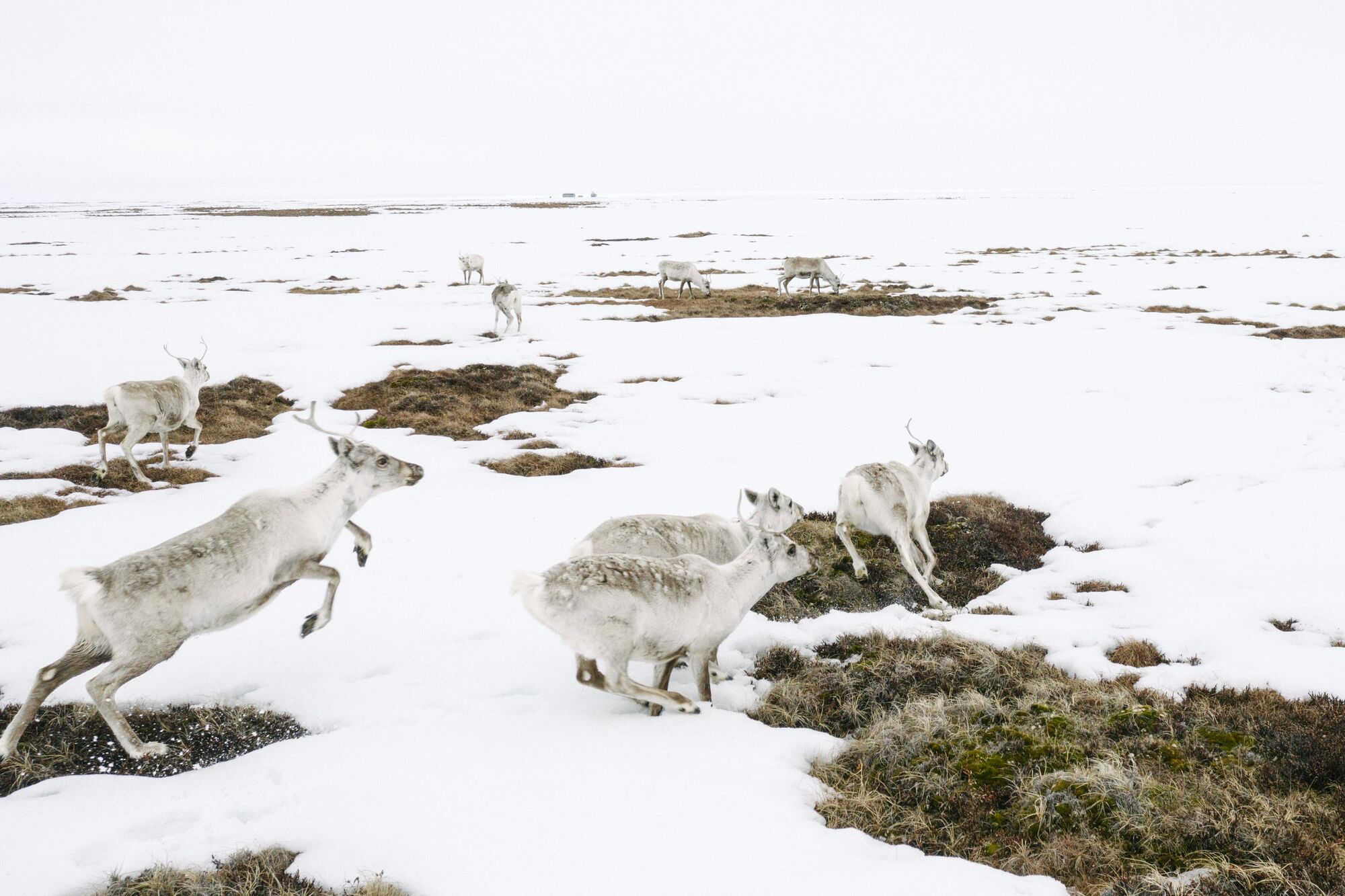
Of particular concern is the Teshekpuk Caribou Herd, central to the food security and ways of life for Alaska Native communities on the North Slope and beyond. These caribou migrate through the region and give birth and raise their calves in areas proposed for exploration.
Climate harms that would result from expanded extraction in the region would also lead to significant degradation of the Reserve’s resources. The Arctic is already warming four times faster than the rest of the planet. Impacts from greenhouse gas emissions could cause the loss of more snow cover, sea ice, and permafrost, and accelerate global warming through dangerous feedback loops, harming wildlife and human health and wellbeing.
Following are statements from groups involved in the lawsuit:
“For generations, our people have carried the weight of decisions made without our consent,” said Nauri Simmonds, Executive Director of Sovereign Iñupiat for a Living Arctic. “The Western Arctic is not just land to be leased — it is the heart of our culture, our food security, and our survival. Each new project compounds decades of human rights violations and cultural degradation, deepening divides within our communities and eroding the bonds that sustain us. Even among our own Iñupiat relatives who support oil development, there is recognition that some places are too important to risk, too vital to our way of life to be sacrificed. ConocoPhillips’ exploration program is not only an assault on caribou and tundra — it is another chapter in the enfoldment of our people into systems designed to fracture us from within. Sovereign Iñupiat for a Living Arctic stands against this approval because our future depends on protecting our homelands, our unity, and our right to live free from the harms of industrial expansion.”
“The Trump administration is so determined to plunder the Arctic for profit that it’s bulldozing environmental protections and stifling the public’s right to be heard,” said Rebecca Noblin, a senior attorney at the Center for Biological Diversity. “This massive oil and gas exploration program is getting red carpet treatment and no scrutiny of how it will trample habitat for caribou, polar bears, and migratory birds. While oil companies get richer, more drilling will lead to more greenhouse gas pollution and ravaged Arctic ecosystems and communities. We won’t let Trump get away with this.”
“We cannot allow this administration and ConocoPhillips to trample one of the most ecologically rich landscapes in America,” said Matt Jackson, Alaska senior manager for The Wilderness Society. “The company’s plans would crush sensitive Arctic tundra under 95,000-pound thumper trucks, disrupt caribou migration patterns and destroy our ability to enjoy these magnificent lands. With an administration bent on ignoring the public, our only choice is to turn to the court to defend these public lands for generations to come and ensure that our rural communities remain free to sustain our Alaskan way of life.”
Arctic Ocean
Beaufort
Sea
Nuiqsut
Chukchi
Sea
Prudhoe Bay
Coastal Plain
Teshekpuk Lake
Western Arctic(National Petroleum
Reserve-Alaska)
Arctic National Wildlife Refuge
Russia
Arctic Circle
Canada
Alaska
Bering
Sea
Gulf of
Alaska
Peter Hoey for Earthjustice
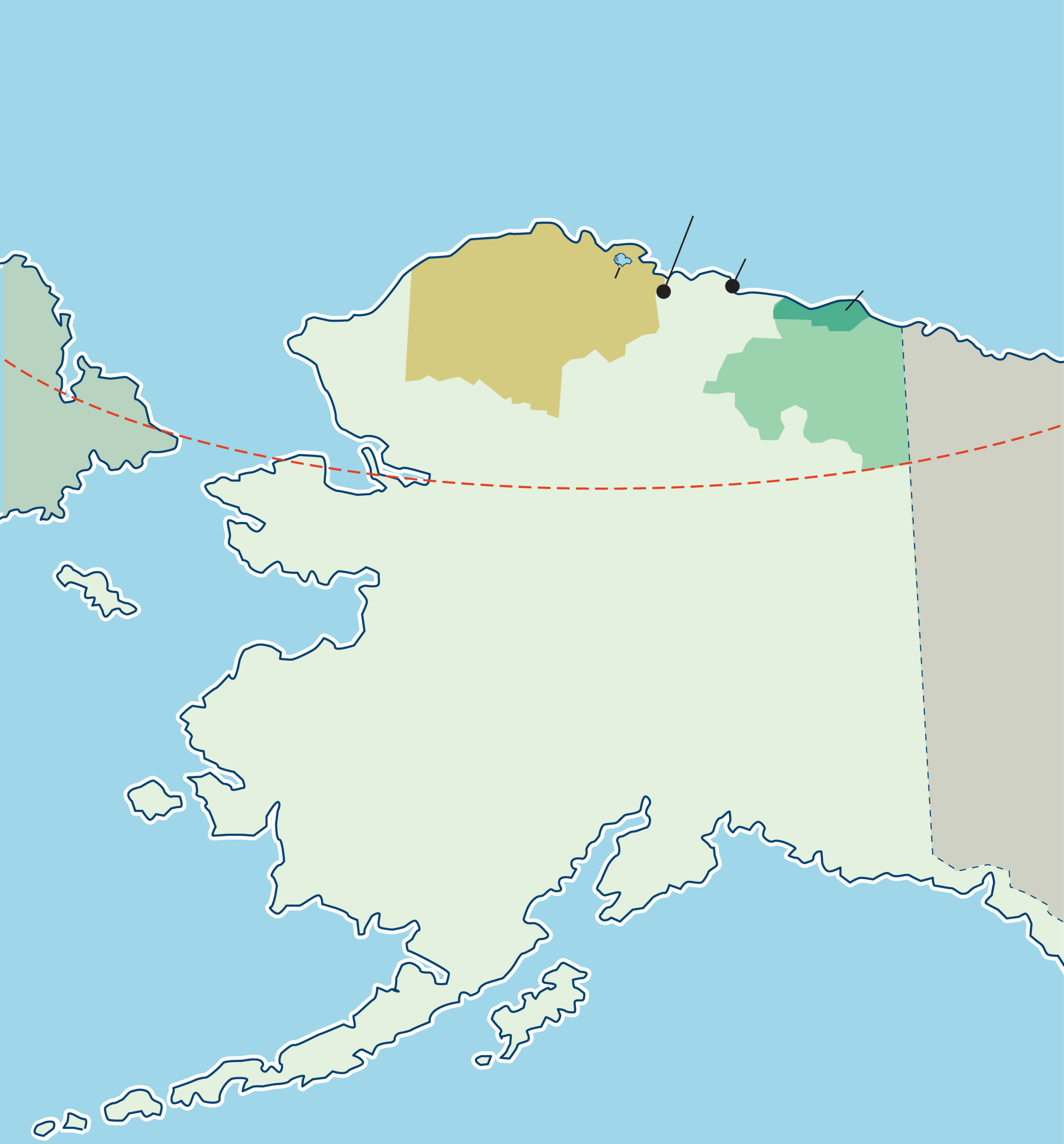
The Western Arctic (also called the "National Petroleum Reserve-Alaska" or NPR-A) is home to many millions of acres of specially designated lands because of their ecological and cultural importance. This includes Teshekpuk Lake, a wetlands area critical for migratory birds from around the world.
The Arctic National Wildlife Refuge is the country’s largest national refuge and home to diverse wildlife and Indigenous communities. Within the Arctic Refuge’s Coastal Plain are the calving grounds of the Porcupine Caribou herd.
Background
The 23-million-acre Reserve in the Western Arctic is one of the most biologically, ecologically and culturally significant tracts of public land in the United States. Its diverse habitats range from tundra and wetlands to mountain foothills, grassy uplands, riparian areas, and river deltas. The region is home to iconic and imperiled wildlife species like polar bears and seals that depend on sea ice. It provides globally significant habitat for millions of migratory birds and for Alaska’s massive caribou herds.
The Naval Petroleum Reserves Production Act of 1976 recognized the importance of the Western Arctic for wildlife and migratory birds including animals protected under the Endangered Species Act, and for the cultural practices and food security of Indigenous communities. The act requires the BLM to assure adequate mitigation of harm from oil and gas activities, and “maximum protection” of the fragile tundra, birds, wildlife and other unique resources within the Reserve when it allows exploration or drilling in areas open to these activities.
When Congress authorized leasing and oil extraction in 1980, it again directed the federal government to ensure the protection of the Western Arctic’s ecological and cultural resources. The 2025 Reconciliation Act amended the law governing the Reserve but did not change the BLM’s obligation to protect its highly unique and sensitive resources and values.
Additional Resources
About Earthjustice
Earthjustice is the premier nonprofit environmental law organization. We wield the power of law and the strength of partnership to protect people's health, to preserve magnificent places and wildlife, to advance clean energy, and to combat climate change. We are here because the earth needs a good lawyer.