

Grand Staircase-Escalante National Monument Under Attack from Utah Members of Congress
Threatens to bring chaos to a crown jewel of the nation’s public lands system and upend public land protection as we know it
Contacts
Grant Stevens, Southern Utah Wilderness Alliance (SUWA), grant@suwa.org
Keri Gilliland, The Wilderness Society, kgilliland@tws.org
Perry Wheeler, Earthjustice, pwheeler@earthjustice.org
Tim Peterson, Grand Canyon Trust, tpeterson@grandcanyontrust.org
Andrew Scibetta, NRDC, ascibetta@nrdc.org
Kris Deutschman, Conservation Lands Foundation, kris@conservationlands.org
Grand Staircase-Escalante National Monument is under attack from Utah members of Congress. In July 2025, Rep. Celeste Maloy (R-UT-02) secretly requested an opinion from the Government Accountability Office about whether Congress can overturn the current Grand Staircase-Escalante Monument Management Plan — a maneuver that would upend the monument’s management. Last week, the GAO released an opinion that Congress can interfere and undo the plan.
With GAO’s opinion in hand, Utah’s federal delegation (Senators Lee & Curtis, Representatives Owens, Moore, Maloy, and Kennedy) is expected to introduce a bill under the Congressional Review Act. If both chambers of Congress pass the bill, called a “resolution of disapproval” by simple majority votes, the Monument Management Plan will be eliminated and the Bureau of Land Management will be barred from issuing another plan that is “substantially the same” in the future.
Introducing a bill to strike at the heart of the Grand Staircase-Escalante National Monument will represent a clear escalation of use of the CRA to attack the nation’s wildest public lands. As the first CRA attack on a national monument, this action threatens to upend public land protection. Though this Congress is the first to use the CRA to overturn BLM resource management plans, using it to eliminate a national monument management plan goes much further: resource management plans cover multiple-use lands, but national monuments are not multiple-use lands and were specifically designated to elevate conservation over extraction.
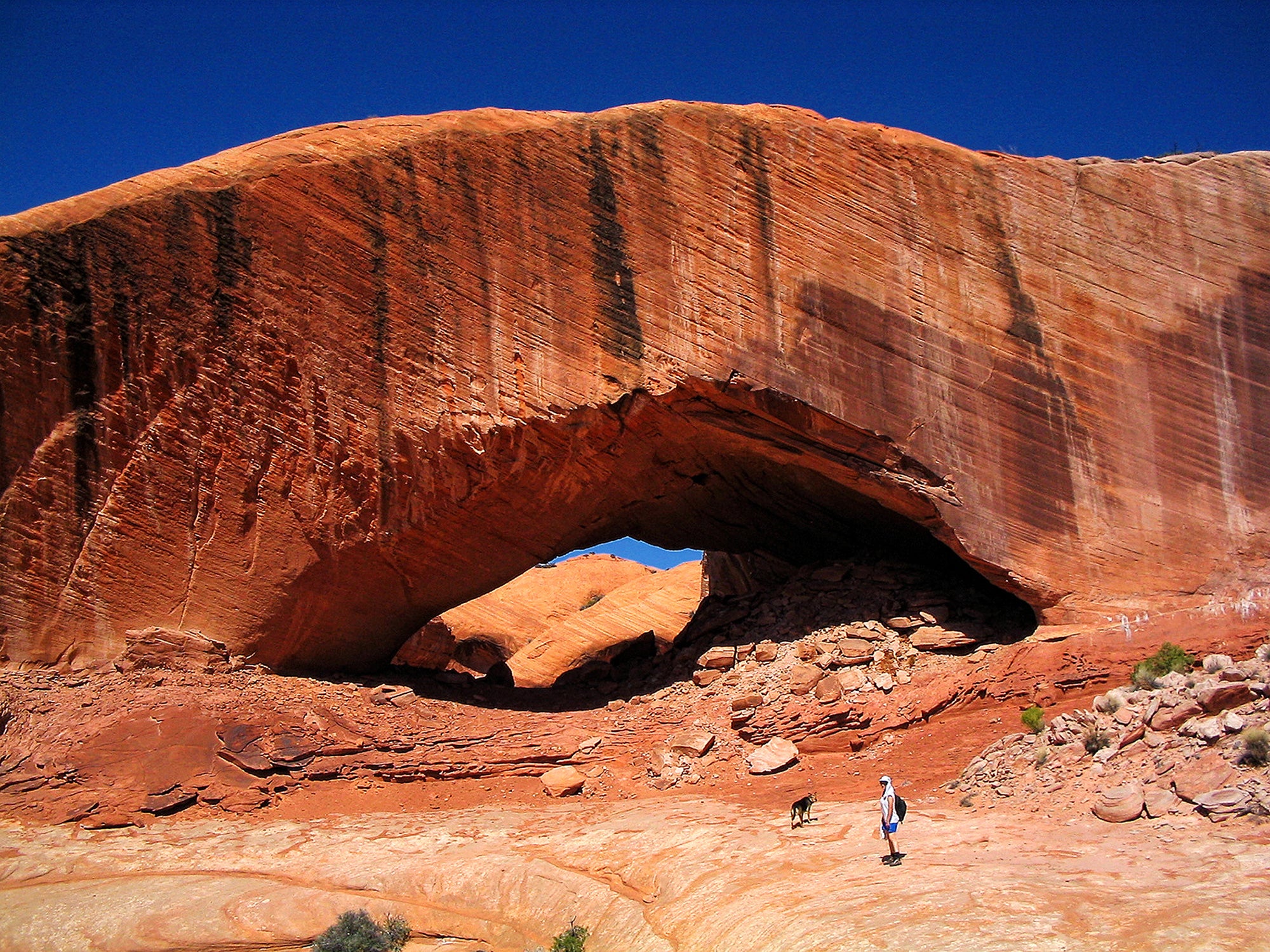
Beloved by Utahns and Americans, the monument was established in 1996 to protect the incredible geological, ecological, and paleontological resources within its 1.9 million-acre boundaries in southern Utah. A crown jewel of the nation’s public lands system, it was the first monument managed by the BLM and was the first unit in the agency’s now-robust and expansive “National Conservation Lands” program.
President Trump illegally reduced the monument in 2017, and it has been reported that he is again considering eliminating protections for Grand Staircase-Escalante. These unprecedented attacks are being harshly criticized by conservation organizations and members of the Grand Staircase-Escalante Inter-Tribal Coalition.
“This is a direct assault by Utah politicians on one of the crown jewels of America’s system of federal public lands,” said Steve Bloch, legal director at the Southern Utah Wilderness Alliance. “Any attempt to leverage this obscure federal law against the monument is an effort to thwart the will of millions of Americans who have repeatedly stood up in support of Grand Staircase-Escalante, its wild red rock landscape, and its irreplaceable cultural and fossil resources. Republicans are currently attempting to use the CRA to remove protections for the Boundary Waters Canoe Area Wilderness — neither landscape should be under attack and we encourage all Americans to contact their members of Congress and speak out in opposition.”
“The Grand Staircase-Escalante National Monument offers people the freedom to experience the very best of our nation’s public lands,” said Axie Navas, director of designation campaigns at The Wilderness Society. “We stand ready to defend our national monuments so that future generations may inherit these irreplaceable landscapes.”
“Utah politicians are at it again, doing whatever they can to erode protections for our public lands,” said Tom Delehanty, senior attorney at Earthjustice. “The monument management plan was created by local officials, Tribes, and communities working together to provide certainty in how this national treasure is managed and protected. Now Utah’s elected officials want to flush that effort down the toilet — a situation that benefits no one.”
“The Utah delegation knows that our national monuments are well-loved by Americans and protecting them is overwhelmingly popular among Utahns regardless of party affiliation,” said Tim Peterson, cultural landscapes director at the Grand Canyon Trust. “The public would not stand for legislation that gets rid of Grand Staircase-Escalante National Monument outright, so they’re trying to eliminate the commonsense management plan that affords day-to-day protections to the monument. We can’t let that happen.”
“Using the Congressional Review Act to unravel Grand Staircase‑Escalante’s management plan is an assault on a national treasure,” said Bobby McEnaney, director of land conservation at NRDC. “It would wipe out years of science and public input and lay the groundwork to make additional attacks on Grand Staircase easier. Americans overwhelmingly support this monument. Congress must reject this assault on our conservation values and honor its commitment to Tribes, local communities, and future generations.”
“No one ought to mistake this effort as isolated–it’s part of a concerted effort to destroy the Bureau of Land Management’s ability to manage public lands, so that privatizing or industrializing them are the only viable options,” said Chris Hill, CEO of the Conservation Lands Foundation. “Going after BLM’s first national monument sends the signal that the rest of the 30 monuments and all of the National Conservation Lands that BLM oversees are in the crosshairs, and we know from experience that the public will fight like never before to keep these places protected.”
About Grand Staircase-Escalante National Monument & the Monument Management Plan
Since its establishment, heightened protections for the monument’s geology, paleontology, wildlife, plant communities, and ancestral sites have succeeded in preserving these unique values for generations to come, and local communities on the monument’s doorstep have benefited as well. Nearly 30 years later, the numerous benefits of protecting Grand Staircase-Escalante are clear: the monument preserves a remarkable ecosystem at the landscape level and sets the stage for future discovery about human, paleontological, and geological history on the Colorado Plateau.
On December 4, 2017, President Trump ignored millions of public comments and unlawfully eliminated large swaths of the monument, slashing it by 47 percent – roughly 900,000 acres. On October 8, 2021, President Biden signed a proclamation restoring Grand Staircase-Escalante National Monument to its full, original boundaries. In 2023, BLM began developing a new management plan for the full monument. As a part of that work, the BLM engaged in extensive outreach to Tribal Nations, the state of Utah, local governments, stakeholders (including outfitters and guides, ranchers, local utilities), and the public. During the planning process, BLM received overwhelming support from throughout Utah and the nation for a holistic, conservation-based management plan worthy of this remarkable place.
In August 2023, a Federal District Court Judge in Utah dismissed lawsuits brought by the state of Utah and others challenging President Biden’s use of the Antiquities Act to restore the boundaries of Grand Staircase-Escalante and Bears Ears National Monuments. The state and other plaintiffs quickly appealed that decision to the Tenth Circuit Court of Appeals, which held oral argument on September 26, 2024, and may issue a decision at any time. Conservation organizations intervened on behalf of the United States to defend President Biden’s restoration of the monuments, as have four Tribal Nations.
National monuments are overwhelmingly popular. Seventy-five percent of Utah voters support the President’s ability to protect public lands as national monuments. Three in four Utah voters, including a majority of Republicans, want to keep Grand Staircase-Escalante as a national monument.
About the Congressional Review Act
The CRA is a federal statute enacted in March 1996 that requires federal agencies to submit “rules” to Congress for a mandatory review period “before they may take effect.” If Congress votes to overturn, or “disapprove,” the rule, it “may not be reissued in substantially the same form. . . .” The BLM has long maintained that its land management plans are not “rules” subject to the CRA. Other federal land management agencies, including the U.S. Forest Service and National Park Service, have similarly not submitted their land management plans to Congress under the CRA.
However, emboldened by a series of non-binding Government Accountability Office (GAO) opinions, Republican members of Congress have embraced the novel theory that federal land management plans are in fact “rules” subject to the CRA. This year, Congress has passed six CRA resolutions overturning previously finalized land management plans or other types of public lands management decisions. The GAO issued a decision regarding the Grand Staircase-Escalante Monument Management Plan on January 15, 2026.
Additional Resources
About Earthjustice
Earthjustice is the premier nonprofit environmental law organization. We wield the power of law and the strength of partnership to protect people's health, to preserve magnificent places and wildlife, to advance clean energy, and to combat climate change. We are here because the earth needs a good lawyer.