Posts tagged: Clean Air Act

unEARTHED. The Earthjustice Blog

Clean Air Act


    SIGN-UP for our latest news and action alerts:
   Please leave this field empty

Facebook Fans

Featured Campaigns

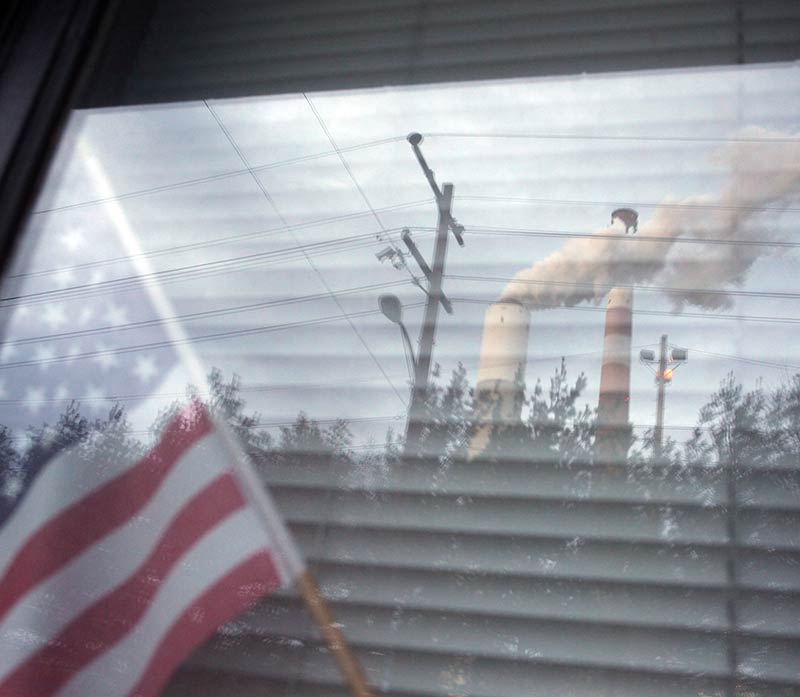
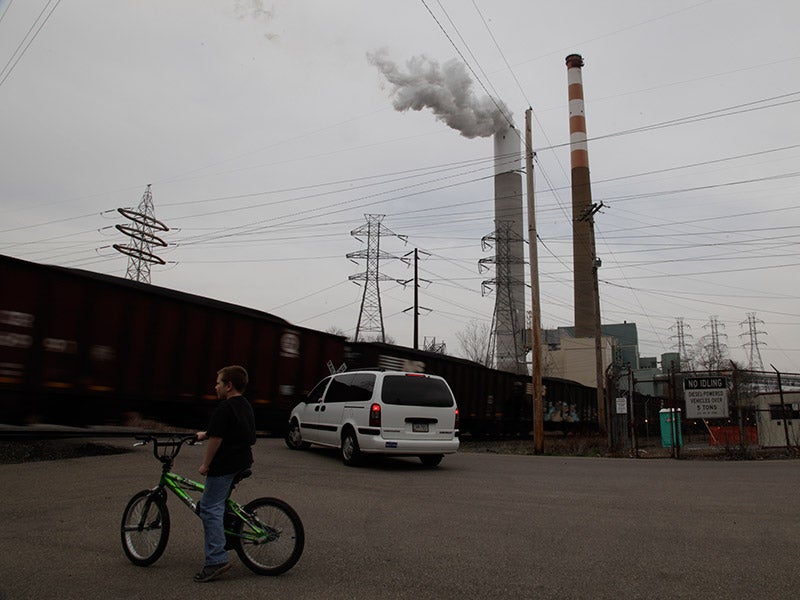
Everyone has The Right To Breathe clean air. Watch a video featuring Earthjustice Attorney Jim Pew and two Pennsylvanians—Marti Blake and Martin Garrigan—who know firsthand what it means to live in the shadow of a coal plant's smokestack, breathing in daily lungfuls of toxic air for more than two decades.

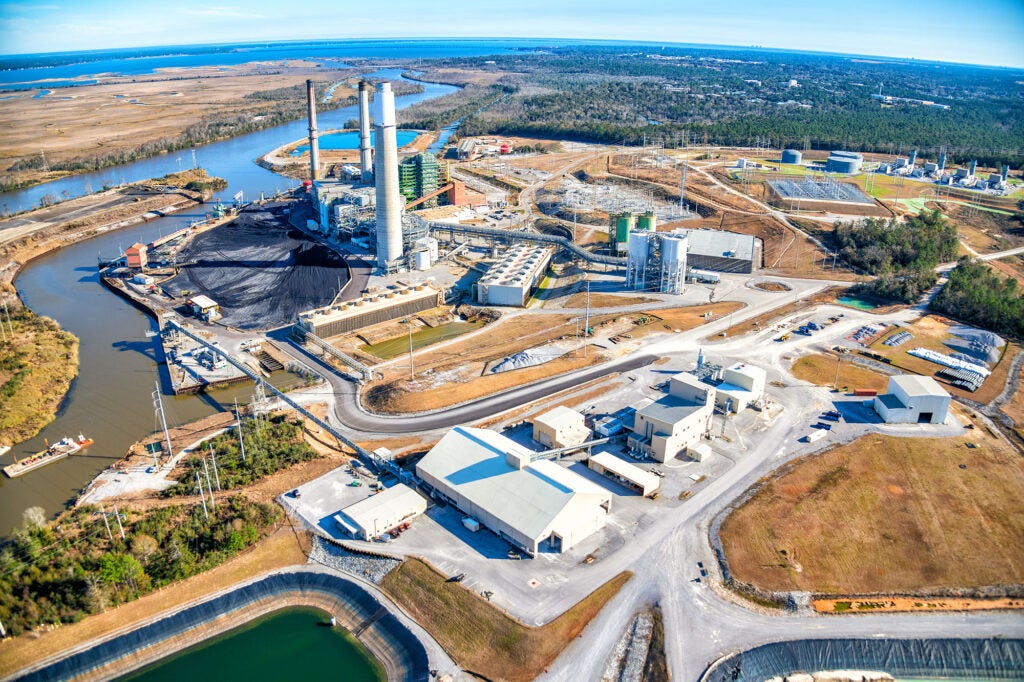
Coal Ash Contaminates Our Lives. Coal ash is the hazardous waste that remains after coal is burned. Dumped into unlined ponds or mines, the toxins readily leach into drinking water supplies. Watch the video above and take action to support federally enforceable safeguards for coal ash disposal.

ABOUT EARTHJUSTICE'S BLOG

unEARTHED is a forum for the voices and stories of the people behind Earthjustice's work. The views and opinions expressed in this blog do not necessarily represent the opinion or position of Earthjustice or its board, clients, or funders.

Learn more about Earthjustice.

View Sam Edmondson's blog posts
12 October 2011, 1:45 PM
Breathing turns out to be a bipartisan business

The title of this post isn't a revelation. If it's surprising at all, it's only because there is one highly visible place where it just isn't true: Congress.

The Republican leadership is working hard to make the legislative branch of our government a kind of Bermuda triangle where clean air standards disappear mysteriously down a smokestack never to be seen again. For example, the House of Representatives last week voted 262 to 161 to outright exempt cement kilns—one of the largest sources of mercury pollution in the nation—from the Clean Air Act.

If the bill in question (H.R. 2681) were to become law, it would ensure that between 900 and 2,500 people die preventable deaths due to air pollution every year. Thousands more would suffer from asthma and heart attacks, cases of bronchitis and other respiratory distress. Despite these unconscionable impacts to the public's health, only two Republicans in the entire House opposed the bill—less than 1 percent of all House Republicans.

OK. So supposing that members of Congress are actually the direct representatives of the people, do you think that less than 1 percent of registered Republican voters in the U.S. support clean air protections? Absolutely not!

View Raviya Ismail's blog posts
11 October 2011, 10:17 AM
After rejecting ozone standards, groups challenge EPA's decision

Yes, we did it. For the past month several reporters have been asking us about our litigation plans following the EPA’s scrapping of a stronger ozone standard Sept. 2  as directed by the White House.

Today we represent the American Lung Association, Environmental Defense Fund, Natural Resources Defense Council and Appalachian Mountain Club in a petition filed against EPA Administrator Lisa Jackson and the U.S. EPA.

7 Comments   /   Read more >>
View Alexandra Allred's blog posts
05 October 2011, 12:35 PM
Bill to exempt cement plants from Clean Air Act is dirty business
Cement kiln in Midlothian, where I live.

My name is Alex Allred. I live in a town that is surrounded by three cement plants. Two of our elementary schools were declared among the most toxic in the nation. Today, the House of Representatives is debating a bill—H.R. 2681—that could have a big impact on my health, my family's health, my community's health, and the health of communities all across America that are in the shadow of cement plants.

I worked with Earthjustice for many years to get the Environmental Protection Agency to issue strong air pollution standards for cement plants—the 2nd worst mercury polluters in the nation. Mercury exposure can cause birth defects and damage babies' developing brains. When the EPA finally did issue those strong standards last summer, we rejoiced. But H.R. 2681 threatens to take all of that away. It would exempt cement plants from the Clean Air Act and encourage those facilities to burn tires and other industrial garbage without controlling the toxic pollution that results.

H.R. 2681 will hurt families like mine but won't do a single thing to preserve or create jobs. Its supporters claim it is a cure for what ails us economically, but they haven't produced any evidence to support that. Meanwhile, EPA findings and independent studies consistently show that clean air is good for the economy! I know firsthand that it is good for my family.

I'd like to make an offer to the supporters of H.R. 2681: If you think that clean air isn't important, I invite ... no, I beg you to come to my home town. Please. I have been trying to sell my home for years. Please come buy my house. Allow me to leave my town that is surrounded by three cement plants, that has two elementary schools that were named as being the most toxic elementary schools in the nation! Come to my hometown and go to some of the fundraisers for children who are having unexplained seizures, see what it's like to attend funerals for 15-year-olds, and visit with a growing number of children with disabilities. Don't just read the reports or hear the pleas of concerned parents. Come. Visit. See for yourselves.

5 Comments   /   Read more >>
View Sam Edmondson's blog posts
04 October 2011, 1:59 PM
Dirty burning bills up for a vote this week

Quick! Somebody tell Tipper Gore that "clean air" and "public health" are now considered dirty words. Well, at least in the U.S. House of Representatives. If the House had a swear jar, I'd bet such utterances would be as punishable as your garden variety expletives.

Here's why: The House is voting this week on two bills that will trample clean air and public health if passed. H.R. 2250 and H.R. 2681 exempt industrial boilers, incinerators and cement plants from the Clean Air Act and actually encourage many such facilities to burn industrial garbage—think tires, scrap plastics, used chemicals and other waste—without controlling, monitoring or reporting the air pollution that results.

Imagine if you came home from work one day to find your neighbor setting fire to a heap of garbage in the backyard, fumes drifting over the fence into your yard and your home. You'd be outraged, no doubt, and rightfully so. Should the reaction be any different if the neighbor just happens to be a cement plant, a chemical plant or some other big industrial facility?

View John McManus's blog posts
30 September 2011, 11:39 AM
Earthjustice asks court to cancel lease of massive coal mine

Earlier this week, Earthjustice attorney Jenny Harbine went to court to argue that the state of Montana was legally required to consider steps to minimize the consequences of burning more than a half-a-billion tons of coal before leasing it to St. Louis-based Arch Coal, Inc. Earthjustice is representing the Montana Environmental Information Center and the Sierra Club in a lawsuit asking the court to cancel the lease so that the state may study options for minimizing or avoiding the environmental consequences of this massive strip mine.

Arch Coal also has leased coal on adjacent private lands, which combined with the state-leased coal, amount to 1.3 billion tons. If developed, the Otter Creek strip mine would be one of the largest coal mines in the country. Arch is making plans to ship at least a portion of this coal to Asia by way of west coast ports. Once burned, the coal will emit billions of tons of CO2 into the atmosphere, not to mention mercury, lead and a host of other nasty byproducts.

1 Comment   /   Read more >>
View Jessica Knoblauch's blog posts
30 September 2011, 12:17 AM
Clean air haters, Yellowstone meltdown, killer cantaloupe
Photo courtesy of sk8geek

Monsanto’s new broccoli designed to fight company’s own environmental pollution
Perhaps dismayed by the public’s outcry to genetically engineered (GE) crops and their environmental effects, last October America’s favorite biotech company, Monsanto, released a non-GE product that combines two different types of broccoli to create a sort of super broccoli that’s chock-full of nutrients, reports Grist. The problem, of course, is that broccoli is already considered a super food. According to the USDA, one medium stalk provides 200 percent of the daily recommended intake of vitamin C, 16 percent of recommended dietary fiber, and 10 percent of recommended vitamin A in the form of betacarotene. Broccoli also contains folate, potassium and several other minerals, providing 6 percent of daily calcium and 4 percent of daily iron needs. Heck, it can even prevent cancer. Talk about fixing something that ain't broken.

In addition to silly redundancy, Monsanto’s desire to provide a vegetable that helps “maintain your body’s defenses against the damage of environmental pollutants and free radicals,” is just plain ironic, as Grist cleverly points out, considering that the company’s cash cow—herbicides—have been shown to cause some of the very illnesses that eating broccoli can prevent. If selling a product that causes illness and then turning around and selling another product to prevent that illness seems, well, wrong, then it won’t be much of a surprise to find out the rest of Monsanto’s seedy past.

Climate change threatens Yellowstone National Park
Within the next century, Yellowstone National Park may be as hot as the LA suburbs thanks to climate change, reports Reuters. A recent study by Rocky Mountain Climate Organization and Greater Yellowstone Coalition found that warming in Yellowstone, one of the world’s last largely intact ecosystems, is likely to increase wildfires, kill large swaths of trees and damage areas vital to grizzly bears and other threatened species. And, as a vacation hotspot for tourists, failing to reverse the warming trend could put a dent in the region $700 million annual tourism economy. Despite the dismal predictions, the good news is that there’s still time to make choices that will influence how climate change effects Yellowstone, like preserving wildlife corridors and increasing resilience to damaged habitats. Earthjustice is working hard on both of these fronts in the Crown of the Continent, a 10-million-acre expanse of land that encompasses some of the largest blocks of wilderness in the contiguous United States, including Yellowstone. See for yourself what we’re protecting
 

2 Comments   /   Read more >>
View Ted Zukoski's blog posts
22 September 2011, 9:24 AM
Visits to National Park - By Smog - Increase
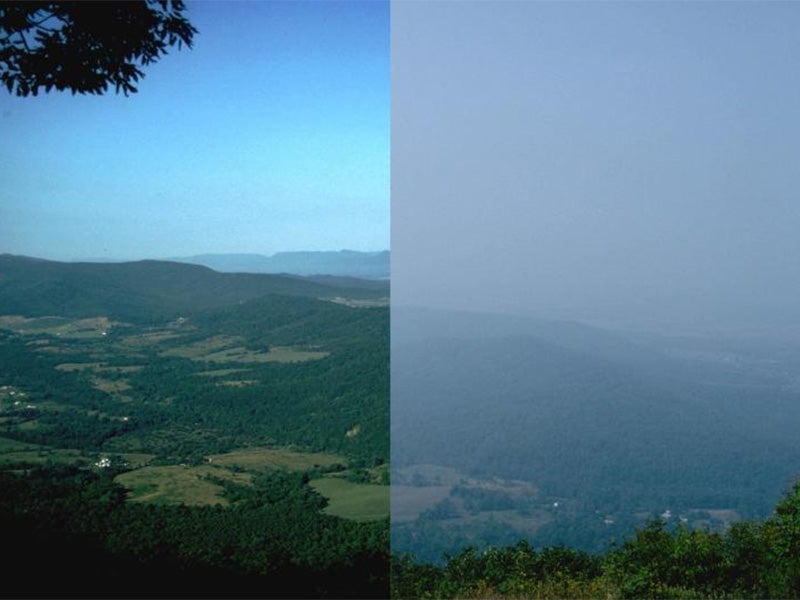
Can you tell which side shows the smoggy day at the Grand Canyon? NPS photo.

Our National Park system—the first in the world—has been dubbed "America's best idea." But that great idea, which offers millions a respite from our industrialized life, is now beseiged more than ever by a symptom of that life—smog.

The National Parks Conservation Association published a report last week showing that the number of bad ozone (smog) days in national parks has risen over the last three years. Flagship parks like Great Smoky Mountains, Rocky Mountain National Park, Grand Canyon, and Big Bend all had ozone violations over the last six months. Sequioa/Kings Canyon National Park suffered the worst—choking on smog for more than two months.

Smog is bad for the Parks—obscuring famous and magnificent views and depositing pollutants that foul lakes and streams.

But it's not so good for the visitors either, since its tied to all sorts of lung and heart disease. High enough ozone levels trigger recommendations for people to stay indoors and limit outdoor exercise, which kind of ruins the whole national park experience.

2 Comments   /   Read more >>
View David Lawlor's blog posts
21 September 2011, 2:49 PM
Bills would eliminate pollution controls for boilers, cement plants
Cement kiln

Try this the next time you go camping at your favorite state or national park: dump into your campsite’s fire pit a few tires, a little plastic, a dash of chemical solvents and some random industrial waste—then strike a match and let the inferno begin.

Oh sure, you’ll be sending toxic pollutants into the air but, hey, when the ranger comes by and asks you if you’re crazy, just tell him that you’re taking your cue from the House Energy and Commerce Committee.

Today, that committee passed two bills that, if signed into law, would rewrite the Clean Air Act and threaten the health of the American people.

3 Comments   /   Read more >>
View Ben Barron's blog posts
10 August 2011, 12:23 PM
Airlines can't fly past EU's "cap and trade" regulations
Courtesy Treehugger.com

Non-European airline carriers are up in arms over new EU regulations that would require all planes in the European airspace to either reduce their emissions or pay a carbon-offset fee after 2012. Backed by industry, the airlines are wielding the Revolutionary War cry -- “No taxation without representation” --  as their righteous slogan.

Only this time, it’s a very different Tea Party.

The new regulations, which form the “Aviation Amendment” to the EU Emission Trading Scheme, are not designed to oppress carriers from outside of the EU. They are a red flag warning to the U.S. and the rest of the world that Europe is moving to combat climate change, and we had better keep up.


View Emily Enderle's blog posts
29 July 2011, 7:07 AM
H.R. 2584 compromises public health, esp. in environmental justice communities
Millions of Americans are already suffering from asthma. (Chris Jordan / Earthjustice)

The Interior, Environment, and Related Agencies Appropriations Act, FY 2012 (H.R. 2584) is chock-full of riders that protect polluters, not people. This bill makes excessive budget cuts and policy decisions that compromise public health, especially the health of environmental justice communities already disproportionately impacted by pollution. The outrageous cuts have brought together more than 70 groups on a letter to outright oppose H.R.

1 Comment   /   Read more >>