Posts tagged: Endangered Species Act

unEARTHED. The Earthjustice Blog

Endangered Species Act


    SIGN-UP for our latest news and action alerts:
   Please leave this field empty

Facebook Fans

Featured Campaigns

Everyone has The Right To Breathe clean air. Watch a video featuring Earthjustice Attorney Jim Pew and two Pennsylvanians—Marti Blake and Martin Garrigan—who know firsthand what it means to live in the shadow of a coal plant's smokestack, breathing in daily lungfuls of toxic air for more than two decades.

Coal Ash Contaminates Our Lives. Coal ash is the hazardous waste that remains after coal is burned. Dumped into unlined ponds or mines, the toxins readily leach into drinking water supplies. Watch the video above and take action to support federally enforceable safeguards for coal ash disposal.

ABOUT EARTHJUSTICE'S BLOG

unEARTHED is a forum for the voices and stories of the people behind Earthjustice's work. The views and opinions expressed in this blog do not necessarily represent the opinion or position of Earthjustice or its board, clients, or funders.

Learn more about Earthjustice.

View John McManus's blog posts
27 January 2012, 2:32 PM
Whales, other creatures imperiled by Navy's insensitivity
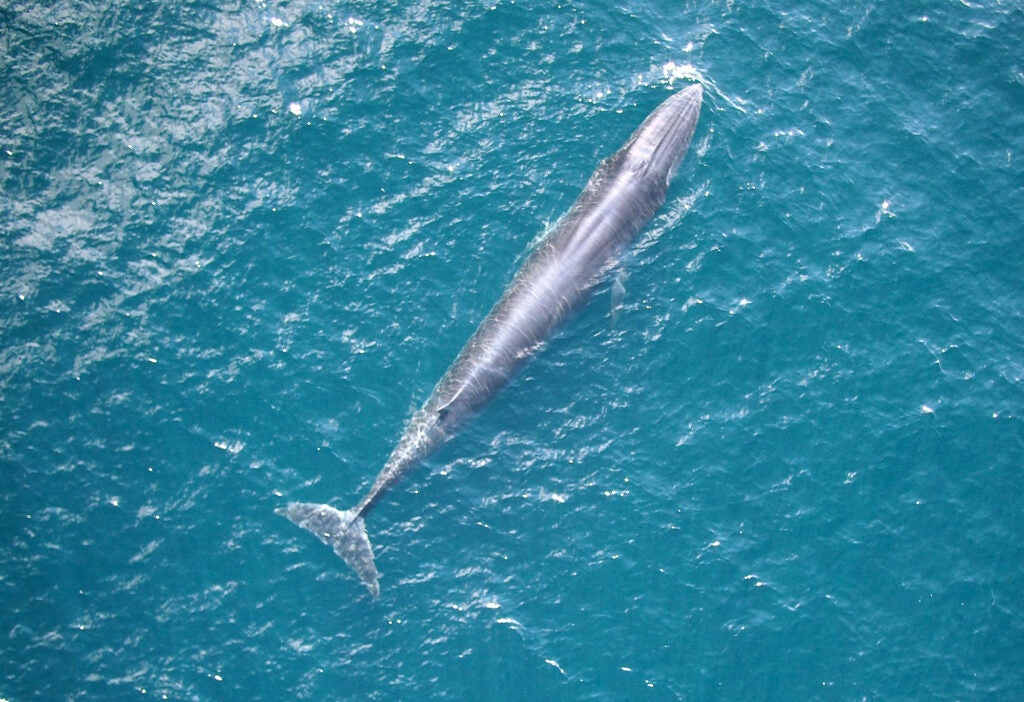
Grey whales are among the creatures threatened by sonar testing.

Environmental groups and some Indian tribes, represented by Earthjustice, have gone to court to get the U.S. Navy to change the way it trains off the West Coast to avoid harming whales, dolphins and porpoises.

The Navy currently has a permit from the National Marine Fisheries Service, allowing it to train from Northern California to the Canadian border. In its training, the Navy uses all kinds of weapon and surveillance tools, including mid-frequency sonar. This is super high-powered sonar blasts used to “see” underwater. The sound waves bounce off objects like the seafloor or enemy subs and the echo is picked up and read by the Navy ships.

The problem is that the high-powered underwater sound blasts can harass, injure or kill whales, dolphins and porpoises, which are already extremely sensitive to sound. These animals send and receive sound waves to “see” and communicate underwater. Their ability to pick up sound is so good that some whales can hear each other under water hundreds of miles apart.

2 Comments   /   Read more >>
View Liz Judge's blog posts
06 January 2012, 4:16 AM
The no-brainer decisions the president must make this year

President Obama won the White House on a platform of hope and change – promising an end to dirty corporate influence over our political system and a beginning to an era in which our energy choices lead us to a clean, sustainable future, or at least don’t kill us or make us sick.

So far, the president’s performance has been mixed – with some deliveries on the promise and some disappointments. His last year, whether in office or in his first term, will be crucial in righting his spotty record and making good on his campaign promises to the American people.

Leading up to his fourth year in office, and making sure the new year got off to a good start with supporters, he handed the country a solid. His EPA, led by Administrator Lisa Jackson, finalized a strong rule to protect Americans from mercury poisoning and toxic air pollution from power plants.

1 Comment   /   Read more >>
View David Lawlor's blog posts
13 December 2011, 11:55 AM
California, here he comes? His search for a mate goes viral
A wolf, but not OR7. There are no known photos of wolf OR7.(Photo: Galen Rowell)

There’s nothing like a good road trip—you grab a handful of your favorite CDs, some snacks, a sense of adventure, and you’re off! Cruising down the open road, wind blowing through your hair, eyeballing heretofore unknown terrain, wondering who the heck lives in that little shack beside the highway in the middle of nowhere.

That’s how we humans do a road trip. But if you want to learn what a real road trip looks like, then you need to follow the saga of a gray wolf known to Oregon officials simply as OR7. Sure, OR7 could have grabbed his favorite Howlin’ Wolf album, packed some elk jerky and brought along his map of eastern Oregon.

But this dude is hardcore.

2 Comments   /   Read more >>
View John McManus's blog posts
29 November 2011, 5:15 PM
An untold story behind the successful effort to reinstate protections
With the thousands of acres of dead whitebark pine trees, every year will be a bad cone year for grizzlies. It’s clear they will need help over the long term to survive. (Condon / NPS)

Yellowstone grizzly bears warrant protection under the Endangered Species Act. So says the federal 9th Circuit Court of Appeals which recently upheld a lower-court ruling that rejected a federal government effort to strip the bears of their protections.

When the government “delisted” the bears in 2007, which stripped them of protections under the Endangered Species Act, Earthjustice attorneys went to court to get the protections reinstated. The federal government failed to explain how grizzlies are supposed to make a living now that one of their key foods, whitebark pine seeds, are disappearing. The seeds are disappearing because the trees that produce them are being killed by beetles which are ravaging the high alpine habitat where the trees grow. The beetles are surviving what used to be harsh winters due to global warming.

One of the untold stories behind the successful effort to reinstate protections for the bears is the efforts of Earthjustice Attorney Doug Honnold and NRDC’s Louisa Willcox that largely put the whitebark pine issue on the map. Few in officialdom, or elsewhere, were talking about the decline of whitebark pines before these two went to work on it. Most people had never heard of these trees nor of their value as a food source to grizzly bears.

2 Comments   /   Read more >>
View Jessica Knoblauch's blog posts
23 November 2011, 8:48 AM
“Trawl fishing is like clear-cutting on land, but just in the bottom of the ocean.”
Earthjustice attorney Andrea Treece (Brian Treece)

This is the fourth in a series of Q and As on Earthjustice’s oceans work, which works to prevent habitat loss and overfishing, as well as reduce the impacts of climate change on the ocean. Earthjustice attorney Andrea Treece is part of a core oceans litigation team whose work helps protect forage fish species like herring, anchovies and sardines, which serve as the building blocks of the ocean food web.

Jessica Knoblauch: You focus specifically on west coast ocean issues at Earthjustice. Are there issues in ocean management that are unique to the Pacific?
 
Andrea Treece: The west coast faces a lot of issues that are prevalent across the nation. That actually is a great advantage because we can as an organization get a bigger picture of what’s going on in ocean resource management. We can apply the law in a way that will hopefully set a beneficial precedent for management in the rest of the nation.
 
JK: Earthjustice has litigated heavily against industrial fishing in the Alaska pollock fishery. Why?
 
AT: It’s really one of the first cases that highlighted the ecosystem effects of fishing and how important it is to consider not just how much fish we’re consuming, but whether we’re leaving enough in the ecosystem for everything else to keep on sustaining themselves, including seals and sea lions and a lot of other key predators in the ocean. So it was a great case to try and bring that issue to the forefront and change the way that major fishery was managed.
 

1 Comment   /   Read more >>
View Jessica Knoblauch's blog posts
21 November 2011, 7:33 AM
“The orcas are just so magical. They’re very much a part of the region.”

This is the second in a series of Q and As on Earthjustice’s oceans work, which works to prevent habitat loss and overfishing as well as reduce the impacts of climate change on the ocean. In early 2000, Patti Goldman, Earthjustice’s VP of Litigation, spearheaded efforts to protect the Puget Sound’s threatened orca whale population. Learn more at earthjustice.org/oceans

Jessica Knoblauch: Earthjustice has been working to protect a unique population of orcas in Washington State’s Puget Sound for almost a decade. Why?
 
Patti Goldman: Well, the orca whales in this region are hugely important to the people. They are so much part of the fabric here. There are three pods and each year when they come back to the Haro Straits in July, they do a ritual where they line up by pods and welcome each other. It’s just so magical. And there are no other orcas that really concentrate here in the same way, so they are unique and really special to this region.
 
The problem is that these orcas are further south than a lot of other orcas, so they are more accessible to where people are. In the 1960s and 1970s, about a third of the population was targeted for live capture by Sea World. Live capture ended when one of our clients, former Secretary of State Ralph Munro, was out on a boat with his wife and they found themselves in the middle of a live capture operation where they could hear the babies squealing as their mothers were captured. That was a very pivotal moment because he was then a member of the state legislature and was the lead proponent of banning live capture in Washington waters.

View Jessica Knoblauch's blog posts
17 November 2011, 3:27 PM
“A lot of people have no idea that many of these ocean species are so badly depleted.”
Steve Roady speaks about Earthjustice's oceans litigation.

Intro: This is the first in a series of Q and As on Earthjustice’s oceans work, which works to prevent habitat loss and overfishing, as well as reduce the impacts of climate change on the ocean. Earthjustice’s Oceans Program Director Steve Roady has been litigating cases that help protect our oceans for more than a decade. Check out earthjustice.org/oceans for more information.

Jessica Knoblauch: What first drew you to oceans management work?
 
Steve Roady: I was first exposed to the oceans while growing up on Florida’s Gulf coast. I spent a lot of time on the beaches as a child and was always fascinated by the shrimpers. But I really first became aware of the key problems in the environment in middle school where we were all forced to read Rachel Carson’s classic book, Silent Spring. The idea that birds were dying because of DDT was just amazing to me and it really got me thinking about environmental issues.
 
JK: How does Earthjustice use the law to protect oceans?
 
SR: Earthjustice is one of the leading groups to begin looking at oceans’ problems through the lens of potential federal litigation. Basically, we work with three or four of your standard environmental laws. There’s the Magnuson-Stevens Act, the main federal fisheries act, which directs the federal government to prevent overfishing and to minimize bycatch, to protect habitat and to rebuild overfished fish populations. There’s also the National Environmental Policy Act, which mandates the federal government to carefully study the environmental effects of their actions before they take them. And we also invoke the Endangered Species Act to protect species like sea turtles, which are protected under the ESA but often killed as so-called bycatch in trawl fisheries around the country.
 
We invoke all of these statutes in an effort to try to curb the unrestrained fishing practices going on in federal fisheries and do our best to make sure the federal government is complying with the basic thrust of the laws that protect the ocean resource. Since we started the Ocean Law Project back in 1998, we’ve had a number of significant wins in the courts that set some significant precedents with respect to how the federal government manages ocean resources in a sustainable way. And typically we’ll have a case that we’ll bring on behalf of other groups, so if a case is won the precedent goes to everybody’s benefit.

1 Comment   /   Read more >>
View Liz Judge's blog posts
14 November 2011, 2:17 PM
Will the Senate defeat a Dirty Water Amendment this week?
The Barrasso/Heller Dirty Water Amendment would wipe out pollution limits for streams, brooks, wetlands, lakes and other waters in every state.

From early morning tadpole pursuits to sunset creek walks, my summer days started and ended in the creek that ran behind my home. My dad built a bridge across the creek, but for our neighborhood gang of rascals, well, there was no use for such bridges when we could splash and wade right through that water. Whether we were forging the stream or sitting cross-legged in it with our heads above the water, exploding with impish giggles, this creek was as much our home as our bedrooms 50 yards away. And when we outgrew the shallow waters of our backyard creek, my siblings and I took our energies to nearby Lake Erie, where we swam in deeper, more mysterious waters.

Many people have memories of swimming, fishing, wading, visiting, or skipping rocks in waters during their youth—whether those ran through their hometowns or were the destinations of family travels. That these waters were safe for recreation—or even drinking water—was no accident. Our nation’s Clean Water Act is the force that has allowed us to fish and swim and sip our water without ill consequences.

But today, the Clean Water Act and 59 percent of our nation’s streams and headwaters are in peril. The danger facing our nation’s waters, along with all the little kids who want to play in them, has arrived in an amendment by Senators John Barrasso (R-WY) and Dean Heller (R-NV).

3 Comments   /   Read more >>
View John McManus's blog posts
04 November 2011, 4:39 PM
Court refuses to denude smelt of ESA protections
The Delta

On Monday, the U.S. Supreme Court handed conservationists a victory and some good news for endangered wildlife. The court denied a request by an anti-wildlife right-wing group to strip federal Endangered Species Act protections from a rare species – a California fish called the delta smelt.

The right-wing Pacific Legal Foundation, has tried repeatedly to get any federal court to rule that the federal government has no power to extend ESA protection to species that exist only in a single state and have no current commercial value. The smelt just happens to be a species of convenience that fit those terms. PLF has been rebuffed by five different federal courts of appeals and now the Supreme Court.

Earthjustice attorney Trent Orr was involved in the big rebuff of PLF, pointing out to the courts that the anti-wildlife group simply didn’t understand established law. The Supreme Court hardly needed to hear it, having upheld the ESA by rejecting review of five earlier challenges from other corners of the nation.

View David Lawlor's blog posts
21 September 2011, 3:10 PM
Earthjustice petitions to compel analysis of threat to wildlife
Whooping crane.

You can’t get something for nothing—there is always a trade-off, always a catch. In the case of Canada’s tar sands crude oil project, what’s being sacrificed in the name of the United States’ oil addiction are the lives of stoic woodland caribou and majestic whooping cranes.

Earthjustice filed a Pelly petition today with the U.S. Department of the Interior, asking Secretary Ken Salazar to investigate Canada’s destructive tar sands mining and examine how the mining is hampering international efforts to protect endangered and threatened species. The petition documents how tar sands mining and drilling in Alberta is harming threatened woodland caribou and at least 130 migratory bird species, including endangered whooping cranes.

The Pelly petition calls on Salazar to promptly investigate and determine whether tar sands activities are weakening treaties that protect endangered and threatened species. If Salazar’s investigation finds that tar sands activities are weakening those treaties, then he is required to report those conclusions to President Obama. The vast majority of Canada’s tar sands crude is exported to the United States.

9 Comments   /   Read more >>