Posts tagged: Endangered Species Act

unEARTHED. The Earthjustice Blog

Endangered Species Act


    SIGN-UP for our latest news and action alerts:
   Please leave this field empty

Facebook Fans

Featured Campaigns

Everyone has The Right To Breathe clean air. Watch a video featuring Earthjustice Attorney Jim Pew and two Pennsylvanians—Marti Blake and Martin Garrigan—who know firsthand what it means to live in the shadow of a coal plant's smokestack, breathing in daily lungfuls of toxic air for more than two decades.

Coal Ash Contaminates Our Lives. Coal ash is the hazardous waste that remains after coal is burned. Dumped into unlined ponds or mines, the toxins readily leach into drinking water supplies. Watch the video above and take action to support federally enforceable safeguards for coal ash disposal.

ABOUT EARTHJUSTICE'S BLOG

unEARTHED is a forum for the voices and stories of the people behind Earthjustice's work. The views and opinions expressed in this blog do not necessarily represent the opinion or position of Earthjustice or its board, clients, or funders.

Learn more about Earthjustice.

View Terry Winckler's blog posts
10 December 2010, 5:44 PM
Newspaper chastizes administration, Congress

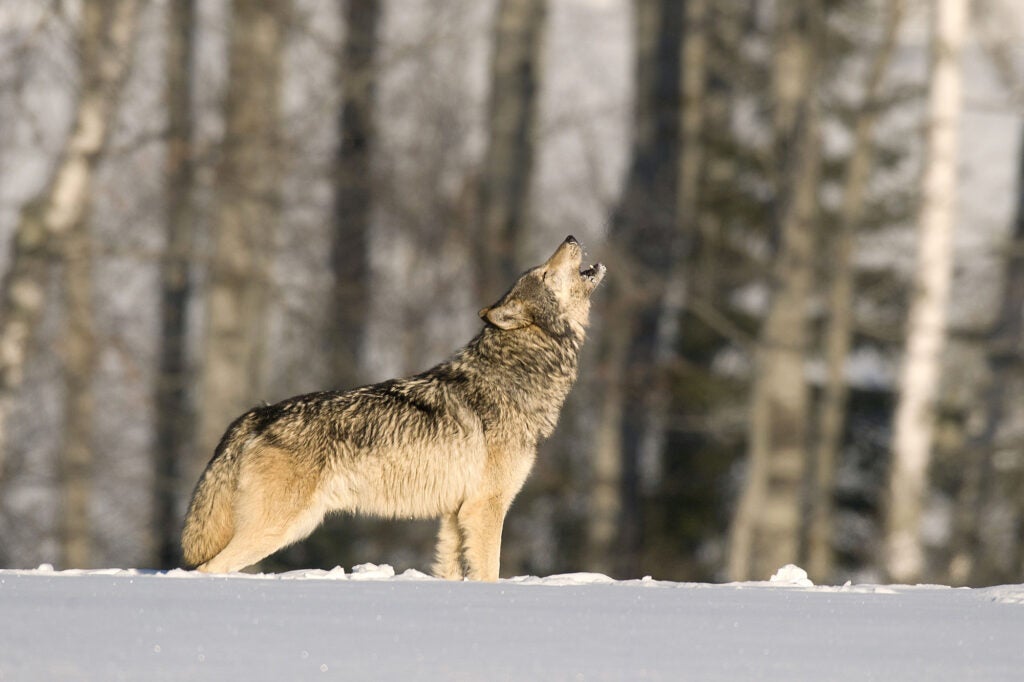
Based on today's editorial, the gray wolf -- and other creatures defended by the Endangered Species Act -- have no finer friend than The Arizona Republic. Here's what the Republic had to say about attempts in Congress to gut the EPA:

Congress may fire a shot in the dark that hits endangered gray wolves.

After a court decision reversed Interior Secretary Ken Salazar's decision to remove gray wolves in the northern Rockies from the endangered species list, the administration is backing an effort in Congress to simply exclude those wolves from current or future protection under the Endangered Species Act.

President Obama wants to throw wolves under the bus. Never mind that the Endangered Species Act includes a process for delisting that is based on science, not politics. Or that the proposed congressional action undermines the law by setting a precedent that could result in any number of controversial species being abandoned to extinction.

2 Comments   /   Read more >>
View Tom Turner's blog posts
16 November 2010, 11:20 AM
Spotted owl habitat under threat in Oregon

Reporters speak of a story having legs, meaning that it is likely to continue over an extended period. Spotted owls have legs.

The story began in the late '80s, when it became evident that out-of-control logging in ancient forests in the Northwest was about to extinguish the owls. Earthjustice sued, and managed to achieve Endangered Species Act protection for the owls.

End of story? Not quite.
 

2 Comments   /   Read more >>
View Jessica Knoblauch's blog posts
11 November 2010, 2:08 PM
Strange bedfellows, cheesy marketing schemes, hot dog humans
Starving grizzly bears are increasingly clashing with humans over food. Image courtesy of stock.xchng

Enviros and drillers become fracking bedfellows in regulator debate
New York's Department of Environmental Conservation is so ill-prepared to regulate gas drilling in the state that both the gas industry and environmental organizations agree that the department should be re-staffed, according to an investigation by the DC Bureau. That, in addition to a number of other environmental challenges that gas drilling presents, should make for quite a fracking mess for New York's next governor, Andrew Cuomo, when he arrives in the office on Jan. 1.

Department of Agriculture takes the cheese
Fast food chains like Domino's Pizza and Taco Bell are piling cheese onto their products to boost consumer sales, all at the urging of the USDA, according to a recent New York Times piece. The agency's marketing creation, Dairy Management, charged with "vigorously promoting" dairy products, has been working with businesses to increase American cheese consumption by creating cheese-strosities like the Domino's Wisconsin, a pizza that comes with six cheeses on top and two stuffed in the crust. Apparently the agency didn't get its own memo, which found that when it comes causing obesity and heart disease, the cheese stands alone.

1 Comment   /   Read more >>
View Raviya Ismail's blog posts
10 November 2010, 8:42 AM
Small town keeps government out by reviving threatened toad population
Amargosa toad

What the heck are we doing to our animals? I read a startling piece on birds afflicted with “long-billed syndrome” – abnormally long beaks which inhibits preening and eating in some dire cases. Many of these birds end up starving and infested with feather lice. These incidents are appearing in Alaska and the Pacific Northwest. The cause: undetermined. But I can’t help but suspect there’s a chemical, human-induced reason behind all of this.

It saddens me that these birds are growing abnormally long beaks, that the cute, furry American pika is slowly heating to death, that marbled murrelets have lost their habitats and their lives because of logging, that sea turtles are being caught and killed in nets, and that countless other animals are being decimated – all due to man’s continual and perpetual mishaps.

But here’s a story to bring some cheer: after the Amargosa toad of Beatty, Nev. was close to extinction years ago, locals banded together to revive the toad’s numbers, NPR reports.  

View Jessica Knoblauch's blog posts
05 November 2010, 1:49 PM
Compostable Canadians, childish owl snatchers, mainframe mind games
Owls are being targeted by Harry Potter fans in India. Photo courtesy of stock.xchng

BP's negligence could prove to be explosive, again
Maintenance of BP's Alaska operations is woefully neglected, according to an internal maintenance document reported on by ProPublica. The document shows that almost 150 BP pipelines on Alaska's North Slope got an F from the company and that many of the pipes are "worn to within a few thousandths of an inch of bursting." Based on this most recent report, it's not hard to see why Earthjustice is working to keep BP and others from drilling even more in the Arctic.

FritoLay Canada bites back at complaining consumers
Last month, amid consumer backlash and 50,000 plus Facebook fans who couldn't hear anything over a noisy SunChips compostable bag, SunChips owner Frito Lay buried its compostable chip bag, replacing it with the original, everlasting bag. But Frito Lay Canada stood its ground, according to Grist, launching a consumer awareness program that includes an offer for free earplugs, which is good news for those who can't hear the environmental concerns of an unrecyclable bag over their own self-interest.

View Trip Van Noppen's blog posts
04 November 2010, 4:49 PM
A new and hostile congressional leadership is not new to Earthjustice

There is no reason to beat around the bush: Tuesday's election results are a setback in our progress towards a cleaner, healthier, more sustainable planet.

At a time when the world desperately needs leadership from the United States, voters have installed in the House of Representatives those who have vowed to do all they can to obstruct progress in cleaning up dirty coal-burning power plants, reducing health-destroying and climate-disrupting pollution, and protecting wild places and wildlife.

Yet, while the news is bad, we can take heart that the election was not a referendum on the environment. Voters still want clean water, healthy air, protected public lands, and action on transitioning from dirty power plants to a clean energy economy.

38 Comments   /   Read more >>
View Terry Winckler's blog posts
18 October 2010, 9:58 AM
Satellites depict massive impact on spawning area

An estimated 20 percent of Atlantic bluefin tuna, spawned this year in the Gulf of Mexico, died because of BP's oil spill according to an assessment based on satellite images.

The European Space Agency, in league with the Ocean Foundation, reached that conclusion after collecting satellite images and other data from the start of the spill on Apr. 20 until Aug. 29. The nearly-200 million gallon spill occurred at the height of the spawn and affected one of two areas in which the tuna spawn.

Already under great stress because of overfishing and the impacts of longline fishing, the oil spill has put the tuna in such peril that the National Marine Fisheries Service is conducting its own year-long study into whether it should be protected under the Endangered Species Act.
 

View Terry Winckler's blog posts
11 October 2010, 2:56 PM
BP spill happened at peak of bluefin spawning season

It ain't easy being an Atlantic bluefin tuna—the tastiest, priciest and perhaps unluckiest tuna of them all. A good specimen can bring $100,000, so it's hunted relentlessly by Atlantic fishing fleets. More damage is done in the Gulf of Mexico, where longline fishermen inadvertently pillage tuna stock while seeking other species.

Until last April, the beleaguered fish could at least count on a spot in the Gulf to spawn, but—if you remember—April is when the BP oil well exploded, gushing hundreds of millions of gallons of oil directly into the tuna's boudoir, at the height of their spawning season.

It's anybody's guess how this year's tuna spawn was affected by all that oil, mixed with nearly 200,000 gallons of toxic dispersant, but now a government agency has announced its intent to take away the guesswork. In direct response to pressure from environmental groups.

View Shirley Hao's blog posts
04 October 2010, 9:33 PM
"Bear also drinks from fishbowl"
The zucchini. Image provided by the Missoula County Sheriff's Office

Bears, you’ve had it tough this past year.

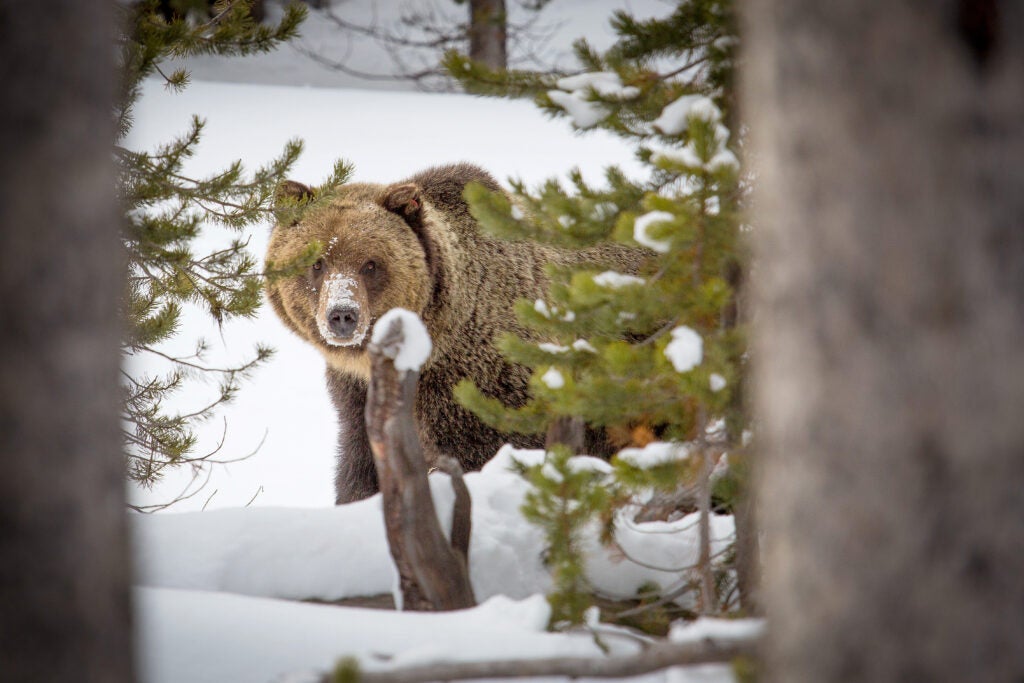
Out in Yellowstone, the grizzly members of the family are being thwarted by voracious mountain pine beetles, who are depriving the bears of one of their key food sources (fatty and delicious whitebark pine seeds). A year ago, Earthjustice won ESA protections for the bears, but the federal government has appealed the court’s decision. The fight continues.

Meanwhile, in the lush Arctic, oil and gas drilling leases in the Chukchi Sea (key habitat for the threatened polar bear) have been halted for now—but are not yet canceled.

If all that wasn’t bad enough, last month, a black bear in Montana was defeated by a zucchini. Yes, a zucchini.

View Ted Zukoski's blog posts
27 September 2010, 12:40 PM
Canyon’s imperiled fish left high and dry by Obama
The Grand Canyon - home of the humpback chub. National Park Service photo.

First impressions can be deceiving.

In 1861, as America entered its first year of civil war, the Government Printing Office published the report of Lieutenant Joseph Ives on his expedition up the Colorado River from the Gulf of California.

Chapter VIII of his report describes an area he called "Big Canyon." While he proclaimed the scene from the Canyon’s south rim "marvellous," he wrote off the area as a worthless wasteland, unlikely to be visited again except by the Indians who lived there:

The region last explored is, of course, altogether valueless. It can be approached only from the south, and after entering it there is nothing to do but to leave. Ours has been the first, and will doubtless be the last, party of whites to visit this profitless locality. It seems intended by nature that the Colorado river, along the greater portion of its lonely and majestic way, shall be forever unvisited and undisturbed… Excepting when the melting snows send their annual torrents through the avenues to the Colorado, conveying with them sound and motion, these dismal abysses, and the arid table-lands that enclose them, are left, as they have been for ages, in unbroken solitude and silence.

1 Comment   /   Read more >>