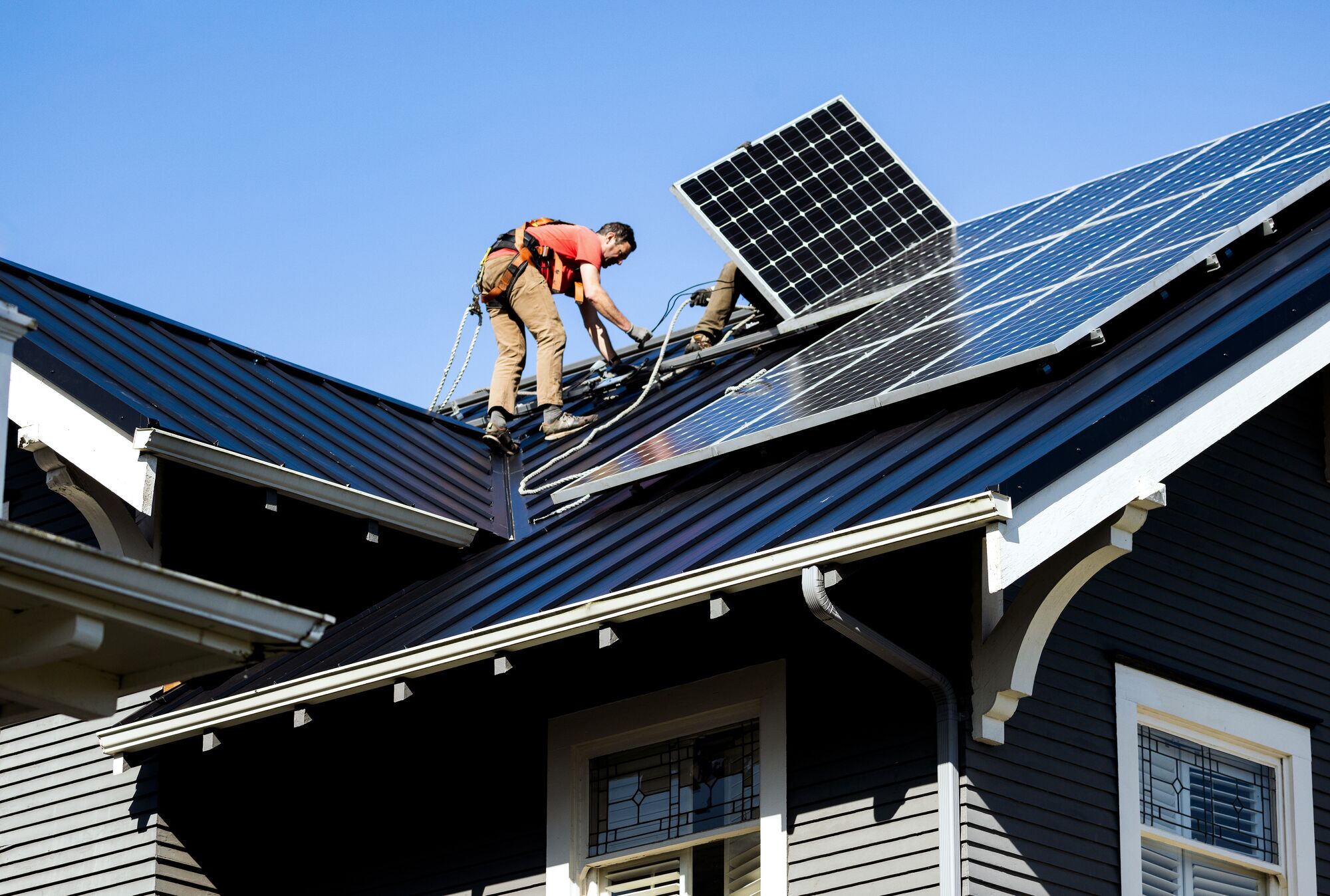

Washington’s Largest Utility Can Help Meet Washington’s Clean Energy Goals
Public interest groups are pushing for a healthier future powered by renewables by intervening in a utility rate proceeding.
Washington’s public utility commission will soon hold hearings on Puget Sound Energy’s (PSE) request to raise electric and gas rates over the next three years. Puget Sound Energy is Washington’s largest utility, providing electricity to 1.25 million ratepayers and gas to around 900,000. Because of its size, PSE’s rate proceedings carry an outsized importance and often set a benchmark for other gas and electric utilities in the Northwest. The Washington Utilities and Transportation Commission has the ability to approve or reject these rate increases — which determine customers’ utility bills and help chart Washington’s energy future.
Rising energy costs are increasingly of concern to Washington families. PSE’s rates have jumped considerably above the national average and the utility’s request in this proceeding would increase a typical residential customer’s monthly electric bill even more — by nearly 30% and their monthly gas bill by nearly 20%. Translated into dollars, it’s a lot — $51 more per month for an average electric bill and $23 more per month for an average gas bill.
In addition to cost increases due in large measure to significant investments in the gas system, PSE’s latest filings make clear that the company is not on track to meet the state’s clean energy targets. Washington’s Clean Energy Transformation Act, signed into law in 2019, requires utilities to be “carbon neutral” by 2030 — which requires 80% renewable generation, but allows for 20% mitigation of fossil powered generation. Further, PSE must sell only 100% clean, non-emitting power by 2045. In the rate increase proposal now before the Commission, PSE states that it plans to rely on renewable energy for just 66% of its energy supply by 2030 — well below the 80% required under state law.
One of our goals in this rate case will be to keep these rate increases as low as possible by discouraging further investment by PSE into expensive fossil fuel infrastructure. Investing in clean energy costs money too, but the evidence in this rate case shows that renewables are a cheaper way to meet the growing electric demand, resulting in lower household energy bills over time. Even though renewables are cheaper — and investment in them is required by law — PSE is still proposing a suite of new gas generation investments in this case, that will saddle ratepayers with hundreds of millions of dollars in capital costs.
For example, the utility wants to convert the now-defunct coal-fired power plant in Centralia into a dirty, expensive, and inefficient gas-fired plant. TransAlta, the company that owns the plant, estimates it will cost $600 million to convert this plant from coal to gas. These costs would be passed on to ratepayers through a 17-year tolling agreement, that gives PSE exclusive rights to operate the Centralia Plant. PSE also wants to construct two costly turbines, that will, at least initially, run on methane gas — a potent fossil fuel. Construction of these plants won’t help us reach state mandated clean energy targets and lock ratepayers into bankrolling expensive fossil fuel infrastructure.
These gas investments by PSE respond to fears that we are going to fall short of energy during peak events, like heatwaves or cold snaps. Keeping the lights on is obviously crucial: no one argues with that. But if we’re building new gas plants primarily to meet surging demand for a few days out of the year during peak events, we can make more energy efficient choices that cost less money. We can manage for peaks events instead and avoid crises. One place to start is making sure major new sources of electricity use, like data centers, can be shifted or turned off in a peak event.
On the gas side, the evidence is clear that there is no way to meet the state’s energy goals while continuing to burn fossil fuels. We should no longer rely on methane gas to heat homes and businesses and for hot water. Puget Sound Energy, in partnership with the state and local governments, needs to rapidly accelerate the conversion of gas furnaces and hot water heaters to clean and efficient electric alternatives like heat pumps. Here too, the company’s ambition is falling short. Instead of providing incentives to transition large number of customers off fossil fuels, PSE has implemented tiny pilot projects and continues to invest in outdated fossil fuel infrastructure that will eventually need to be phased out. Ratepayers should not continue paying higher rates to maintain the gas system without a clear transition plan.
In short, the Commission’s upcoming public hearings for Puget Sound Energy present an ideal opportunity to shape Washington’s energy future. Clean energy is affordable, protects public health, and reduces climate pollution.
Now is a great time for Washington ratepayers to get involved and learn more. We’ll be advertising the Commission’s hearings as soon as we know the dates and locations. Washington ratepayers should speak up and demand PSE ambitiously push for clean, affordable energy.
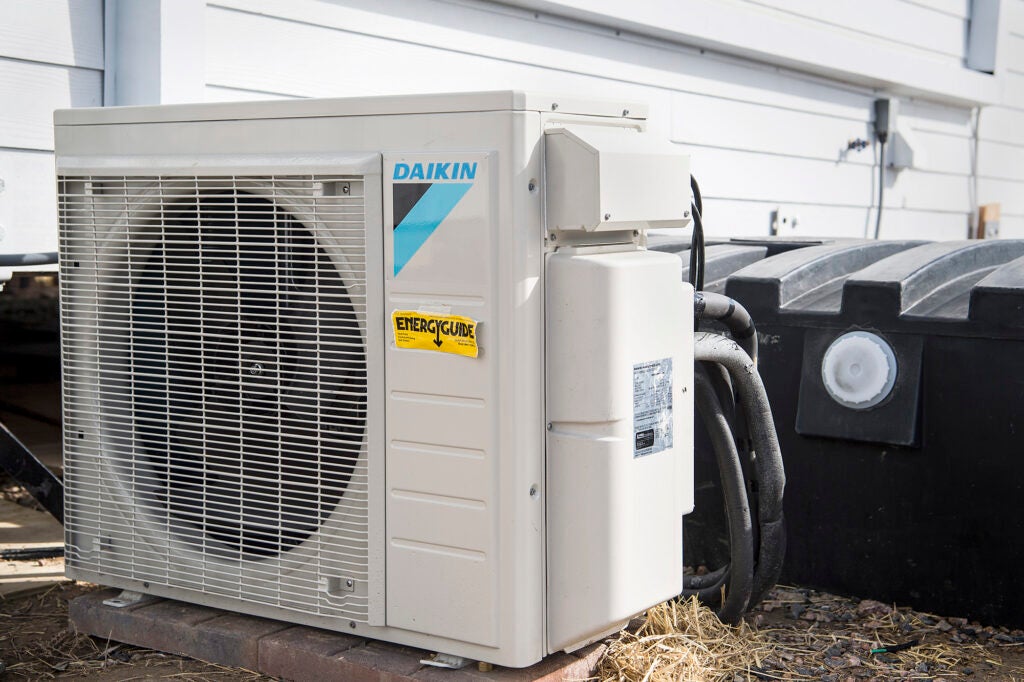
The outdoor unit of a heat pump system. (Dennis Schroeder / NREL)
Established in 1987, Earthjustice's Northwest Regional Office has been at the forefront of many of the most significant legal decisions safeguarding the Pacific Northwest’s imperiled species, ancient forests, and waterways.
Elizabeth Manning
Public Affairs and Communications Strategist, Earthjustice
emanning@earthjustice.org