How the Senate’s Permitting Bill Could Lock in Fossil Fuel Extraction and Give Handouts to Oil and Gas Companies
This past October was the warmest on record, about 1.76 degrees Celsius (3.2 degrees Fahrenheit) warmer than temperatures before the widespread burning of fossil fuels began driving climate change. As we head into what is expected to be another historically warm winter, mitigating the worst impacts of the climate crisis has never been more urgent….
This past October was the warmest on record, about 1.76 degrees Celsius (3.2 degrees Fahrenheit) warmer than temperatures before the widespread burning of fossil fuels began driving climate change. As we head into what is expected to be another historically warm winter, mitigating the worst impacts of the climate crisis has never been more urgent.
The Senate’s proposed permitting bill, the so-called Bipartisan American Affordability and Jobs Act (BAAJA), purports to accelerate clean energy deployment with the scale and speed needed to fight the climate crisis. But the stakes are too high not to fully examine whether the bill’s handouts to the oil and gas industry (among other industries) will cancel progress made elsewhere.
The bill threatens to create a set of laws under which oil and gas development essentially becomes untouchable.
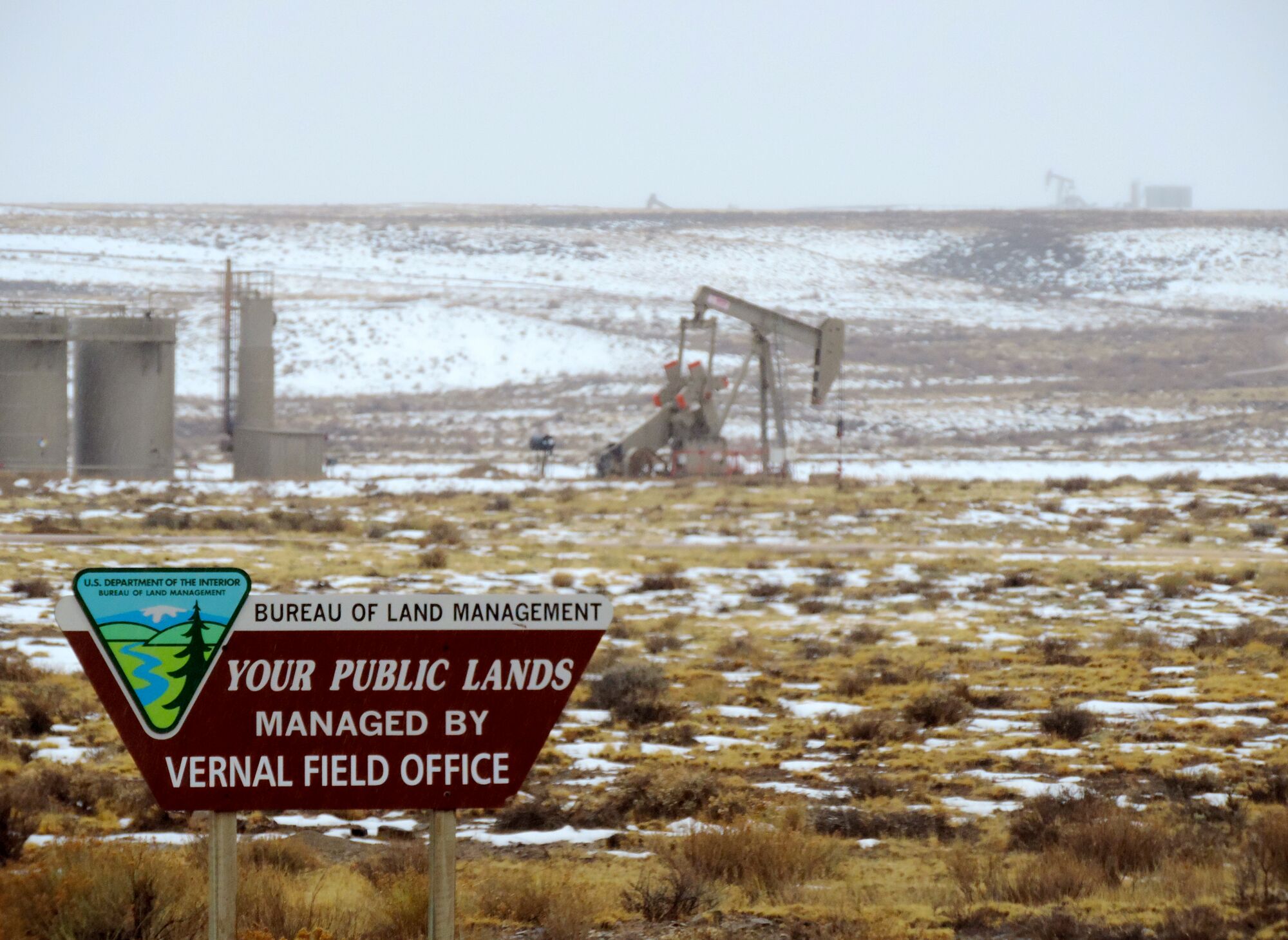
Provisions in Sec. 1401 that seek to guarantee “project certainty” are highly problematic because they will make federal oil-and-gas leases virtually impossible to overturn, even if they’re issued in violation of law. While proponents of the bill emphasize that it covers “permits,” it’s important to note that the language is much broader, covering federal “authorizations,” “permits,” “records of decision,” and “any other approval or order” necessary for a project. Courts would likely view an oil and gas lease to be a federal authorization necessary for a fossil-fuel company to obtain the right to extract oil and gas on federal lands or waters. Thus, the certainty provisions can be read to cover federal oil and gas leases just as they would other federal approvals.
Two examples of what this could mean in practice are the Arctic National Wildlife Refuge in Alaska and Chaco Canyon National Historic Park in New Mexico. Both places hold enormous cultural and historic significance to Tribal stakeholders with ancestral ties to those lands. Because of the permitting bill’s “project certainty” provisions, oil and gas leasing decisions made in either the Arctic Refuge or Chaco Canyon would be incredibly hard, if not impossible, for a future administration to undo. Even if it were possible, you can’t re-create a cultural landscape once it’s been industrialized.
Moreover, the Trump administration is proposing to vastly expand offshore oil and gas leasing to areas, such as the California and Florida coasts, where public opinion overwhelmingly opposes it. By making federal approvals so difficult to reverse, the bill’s “project certainty” provisions would leave states and local communities with very little ability to stop this destructive fossil fuel development.
There’s a difference between providing certainty for lawful decisions and making federal actions effectively irreversible. Congress can promote predictability without eliminating agencies’ ability to correct mistakes, respond to new information, protect cultural resources, and comply with court rulings. This bill goes far beyond certainty and risks creating permanence, even for deeply flawed decisions.
Sec. 1402 of the bill would create a disturbing new system where the oil industry can claim it is the “victim” and get paid for it.
To understand this provision, it’s useful to reflect on the concept of “disparate impacts” from the world of environmental justice. The phrase conveys the reality that many communities are overly burdened by industrial pollution; most often, lower-income communities of color shoulder a disproportionate burden compared with whiter and more affluent neighborhoods. One of the most prominent clusters of disproportionately impacted communities is along the Gulf Coast, where oil refineries and petrochemical facilities process raw products shipped in by oil tankers from offshore oil-drilling platforms. Because of the massive volume of toxic pollutants released into the air, such as benzene, formaldehyde, and chloroprene, nearby residents face a localized cancer risk that is up to 50 times higher than the national average.
Under this bill, the fossil fuel industry would be able to sue a future administration for so-called “disparate treatment” if it is not awarded a similar number of federal permits for fossil fuel development projects as it received under the Trump administration. A company could argue in court that it was treated differently from other energy projects and seek compensation from taxpayers for the project’s expected value. As a result, taxpayers could be on the hook for paying companies not to develop based on future losses calculated solely by that company.
The bill tilts the playing field even further toward approving oil and gas projects by establishing a five-year “lookback” period as the baseline for determining whether oil and gas companies have been treated “unfairly.”
The difference between the Trump administration’s approach and past administrations is significant. For example, in 2024, the Biden administration finalized a federal offshore drilling program with just three lease sales. In 2025, the Trump administration proposed 34(!) offshore lease sales, including in coastal areas that have never been offered for leasing.
By using this period as the benchmark, the bill effectively enshrines the Trump administration’s unusually aggressive leasing approach as the “appropriate level of oil and gas development” standard against which future decisions will be judged. This so-called “disparate impact” provision would allow oil companies to seek taxpayer-funded compensation by claiming they were harmed whenever a future administration approves fewer permits or leases than those being given to other industries, such as wind or other renewable industries.
There is way, way more.
The bill proposes major changes to the National Environmental Policy Act (NEPA), enacted in 1970 after the Santa Barbara oil spill to prevent similar disasters from happening ever again. The bill would severely limit communities’ ability to have their concerns heard and considered during the decision-making process as required under NEPA. Under BAAJA, many fossil fuel projects are exempted entirely from the NEPA statute. If BAAJA passes, there will be minimal review, no opportunity for public input, and even courts will have little ability to stop projects that fail to comply with the law.
Similarly, changes to the National Historic Preservation Act (NHPA) will make it far more likely that oil-and-gas companies will simply ignore the process of consulting with tribes to learn how their plans might adversely affect cultural resources – a process currently required by law. BAAJA’s proposed changes to NEPA, the NHPA, the Endangered Species Act, and the Clean Water Act would reduce public input, Tribal consultation, wildlife and clean water protections, and state and Tribal authority over harmful projects. These are just a few of the many anti-environmental provisions in this bill.
Every member of Congress is aware that rising carbon-dioxide emissions lead to a hotter planet. When a bill includes this many handouts to the oil and gas industry, it begs the question of whether provisions that shield fossil fuel projects from meaningful review and challenge will outweigh any clean energy benefits the bill contemplates.
From our point of view, the answer is a resounding No.
Established in 1989, Earthjustice's Policy & Legislation team works with champions in Congress to craft legislation that supports and extends our legal gains.
Siham Zniber
Associate Director, Policy & Legislation, Earthjustice
szniber@earthjustice.org