A Decision to Uphold New York City’s Foie Gras Ban Is a Win for Local Governments Across New York State
The Appellate Division’s decision affects far more than just foie gras; it also reinforces local governments’ ability to safeguard human health, the environment, and animal welfare
In March 2026, the New York Appellate Division upheld New York City’s ban on the sale of foie gras in restaurants and stores, and earlier this week, the Appellate Division denied a request to reconsider the decision or allow an appeal to the New York Court of Appeals, the state’s highest court. The Appellate Division’s decision affects far more than just foie gras; it also reinforces local governments’ ability to safeguard human health, the environment, and animal welfare.
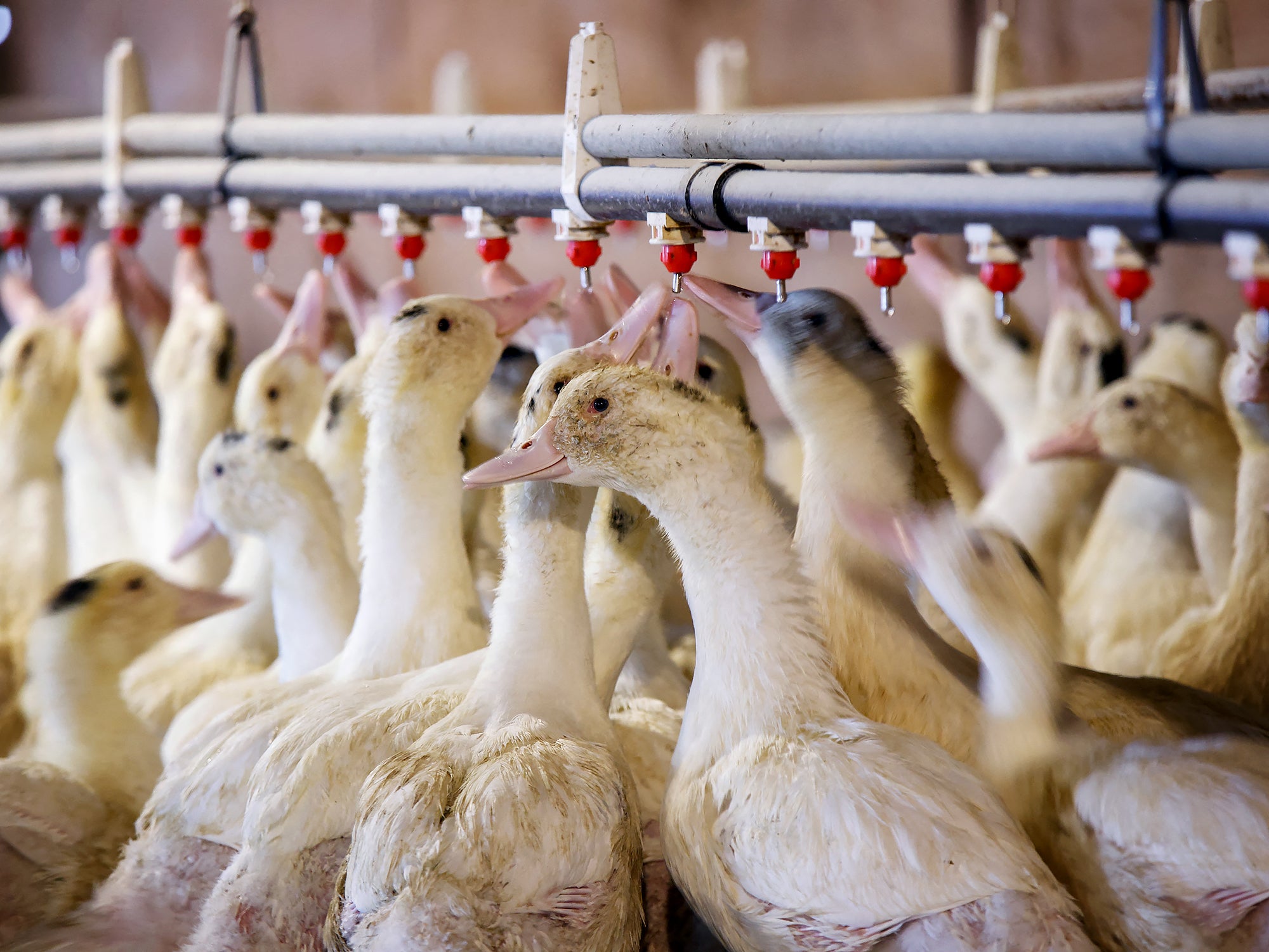
Foie gras is produced by force-feeding ducks or geese, which can cause stress, injury, illness, and even death. In 2019, the New York City Council passed Local Law 202, which banned the sale of foie gras in restaurants and stores, with broad public support. Since then, the ban has been subject to years of litigation under the New York State’s right-to-farm (RTF) law. RTF laws exist in every state, and they often prevent local governments and individuals from addressing harms from industrial agriculture. The Appellate Division’s decision upholding Local Law 202 is an important limitation on New York’s RTF law, and the denial of reconsideration and appeal will ensure that the decision stays in place for now. If the Court of Appeals decides to take up an appeal, we will continue to advocate for local governments’ authority to protect against harms from industrial agriculture.
Most RTF laws were enacted in the 1980s to protect farms from the increased regulation and nuisance lawsuits that can follow suburban expansion into rural areas. At that time, most farms were relatively small. Since then, however, our agricultural system has grown and industrialized, and with these changes have come grave new threats to human health, the environment, and animal welfare. Today, RTF laws often stand in the way of efforts by neighbors and local governments to address these new threats. And to make matters worse, state decisionmakers and courts have expanded the reach of some RTF laws, leaving rural communities with few options to protect themselves.
The dispute over Local Law 202 is a prime example of how state decisionmakers and courts can expand the reach of an RTF law. New York’s RTF law authorizes the Department of Agriculture and Markets to review and prevent enforcement of any local law that “unreasonably restrict[s] or regulate[s] farm operations within agricultural districts . . . unless it can be shown that the public health or safety is threatened.” Before Local Law 202 could take effect, two upstate foie gras producers — just one of which produces approximately 156,000 ducks per year — requested that the Department review Local Law 202 under the RTF law. The Department determined that Local Law 202 unreasonably restricted foie gras operations by depriving the producers of their primary market, even though they could still produce foie gras, sell outside New York City, and sell direct-to-consumers in the City. In 2024, the City challenged the Department’s determination, and the trial court ruled in favor of the Department and the producers, very broadly interpreting “unreasonable restrict[ion]” to include the ban’s indirect financial effects on foie gras operations located a hundred miles away from the City.
The City appealed the trial court’s decision, and the Appellate Division reversed the trial court, ruling that the RTF law does not reach local laws with only indirect financial effects on farm operations. The Appellate Division’s opinion relied on arguments from the amicus brief Earthjustice filed in support of the City, on behalf of local governments and officials. Our amicus brief argued that interpreting the RTF law to preempt local laws with only indirect financial effects on far-away farm operations would “render [its] preemptive effect . . . almost limitless.” Many local laws have the ability to create far-reaching economic ripple effects on agriculture. For example, laws banning smoking in public places could reduce the demand for tobacco products. The Appellate Division rejected the Department’s effort to give the RTF law this expansive reach. When the Department and the foie gras producers asked the Appellate Division to reconsider its decision or allow them to appeal to the Court of Appeals, again arguing for a broad reading of the RTF law, the Appellate Division denied their request, reaffirming its interpretation of the RTF law.
The challenge to Local Law 202 is far from the only example of state decisionmakers expanding the reach of an RTF law. In North Carolina, the legislature has broadened its RTF law to hinder residents’ efforts to challenge pollution from concentrated animal feeding operations (CAFOs). CAFOs are industrial facilities that confine hundreds, thousands, or even over a million animals and regularly cause air and water contamination that can lead to serious illness and even death in surrounding communities. In 2019, Earthjustice filed an amicus brief in support of North Carolina residents who had brought a nuisance lawsuit against nearby swine CAFOs due to their odor and air pollution. The residents won the case, but shortly afterward, the state strengthened its RTF law to make it even harder for residents to use nuisance lawsuits to protect themselves from the harmful effects of CAFOs.
In other states, RTF laws stand in the way of local efforts to protect human health and the environment from the growing threat of per- and polyfluoroalkyl substances (PFAS) — commonly called forever chemicals — in sewage sludge. Mounting evidence shows that the common practice of spreading sewage sludge on farmland is a key pathway for human exposure to PFAS, which is linked to testicular and kidney cancer, pregnancy complications, and decreased birth weight, among other harms. Despite this evidence, federal and state entities have been slow to regulate, leaving people living near sludge spreading sites exposed to PFAS. Earthjustice has assisted towns in drafting local laws that impose common-sense restrictions on the spreading of PFAS-contaminated sludge. However, state officials have initiated investigations under RTF laws, which threaten to invalidate the local laws.
As these examples show, RTF laws often protect harmful agricultural practices over human health, the environment, and animal welfare. The New York Appellate Division’s decision upholding New York City’s foie gras sales ban and its denial of reconsideration and appeal are an important counterweight in favor of local governments and community members. Earthjustice will continue to advocate for checks on RTF laws in New York and elsewhere.
Earthjustice’s Sustainable Food and Farming program aims to make our nation’s food system safer and more climate friendly.
Nydia Gutiérrez
Public Affairs and Communications Strategist, Earthjustice
ngutierrez@earthjustice.org