The Surface Transportation Bill: An Opportunity for a Clean Transportation Future
The BUILD America 250 Act fails to meet the moment.
Congress is currently considering a five-year surface transportation reauthorization bill that sets federal policies and funding levels for our nation’s transportation infrastructure, including highways, rail, and public transit. With high gas prices squeezing families at the pump and pollution from cars, trucks, and trains making our air dirtier and our children sicker, this bill is an important opportunity for the United States to build a cleaner, healthier, and more affordable transportation future.
Last month, the House introduced and passed out of the Transportation and Infrastructure Committee its version of the surface transportation bill, H.R. 8870, the Building Unrivaled Infrastructure and Long-term Development for America’s 250th Act (BUILD America 250 Act). Unfortunately, the bill, which we are expecting to be considered on the House floor soon, falls short on investing in electric vehicles (EVs) and charging infrastructure that would reduce climate and air pollution, misses a critical opportunity to make getting around more affordable by reducing guaranteed funding for public transit, and punishes EV drivers with a new annual fee. This is not the transportation system people deserve.
Transportation is responsible for approximately one third of U.S. greenhouse gas emissions and a major contributor to harmful air pollution. According to the American Lung Association’s latest State of the Air report, 44% of people in this country live in areas with unhealthy levels of pollution. Additionally, communities living near major transportation corridors, ports, and rail yards often face greater exposure to air pollution resulting in health impacts like cancer, cardiovascular disease, and even early death.
Recognizing the impacts of our transportation system on climate, public health, and communities, the bipartisan Infrastructure Investment and Jobs Act (IIJA), which was signed into law in 2021, made significant investments in zero-emission technologies and transportation options, including the first funding program for EV charging infrastructure deployment and the largest investment in public transit to date. Now Congress has the opportunity to build on that progress by supporting charging infrastructure deployment, electrifying our ports rail system, furthering the transition to electric vehicles, and expanding public transit.
Charging is Foundational to the EV Transition
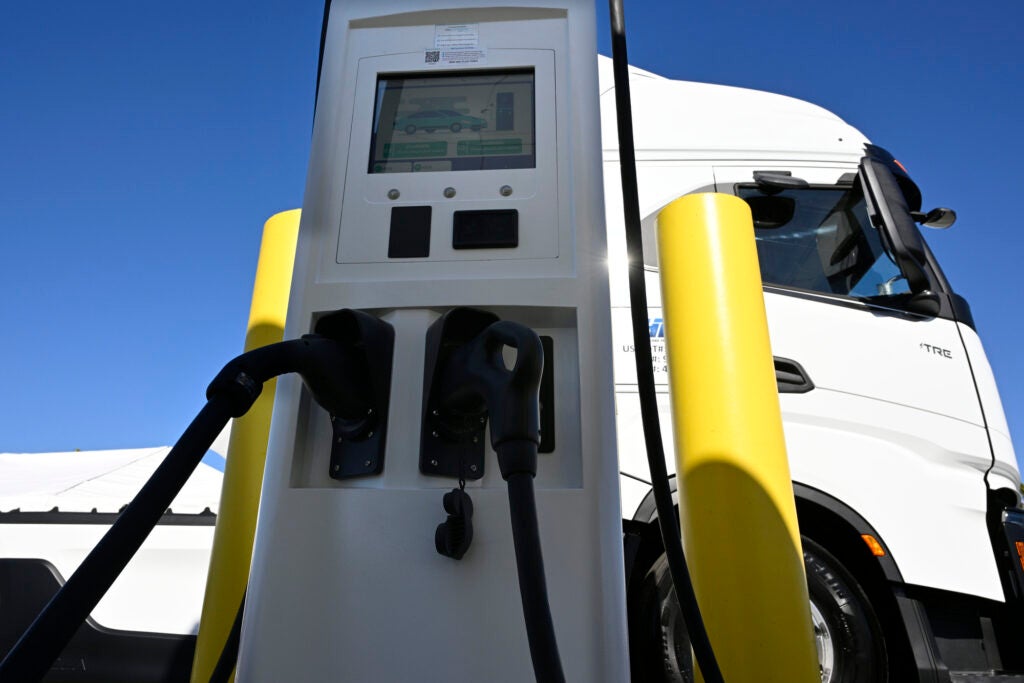
Heavy-duty electric trucks at a charging station at the Port of Long Beach in California. (Brittany Murray / MediaNews Group / Long Beach Press-Telegram via Getty Images)
Building out charging infrastructure is essential to support people choosing to drive EVs — especially as they respond to price pressures at the pump. Drivers need reliable access to charging in their own communities and along highways for longer trips. Operators of heavy-duty electric trucks transporting the goods we rely on should also feel confident that they can recharge when needed.
The IIJA provided $7.5 billion in dedicated program funding that could support charging infrastructure, including through the National Electric Vehicle Infrastructure (NEVI) Formula Program and the Charging and Fueling Infrastructure (CFI) Grant Program. Continuing to invest in charging infrastructure is important to meet estimated future demand. We would particularly like to see Congress include programs in a surface transportation bill that fund medium- and heavy-duty vehicle charging.
The current Build America 250 Act, however, undercuts progress made in the IIJA by failing to fund NEVI and CFI. This comes on the heels of the Trump Administration unlawfully freezing funding for the NEVI Program, stalling progress until a court decision ensured states could move forward with charging projects. Instead, the bill provides just $1 billion for alternative fueling infrastructure, which includes propane and natural gas fueling infrastructure in addition to EV charging, through the Congestion Mitigation and Air Quality Improvement Program.
Electrifying Our Ports and Rail Network Benefits Communities
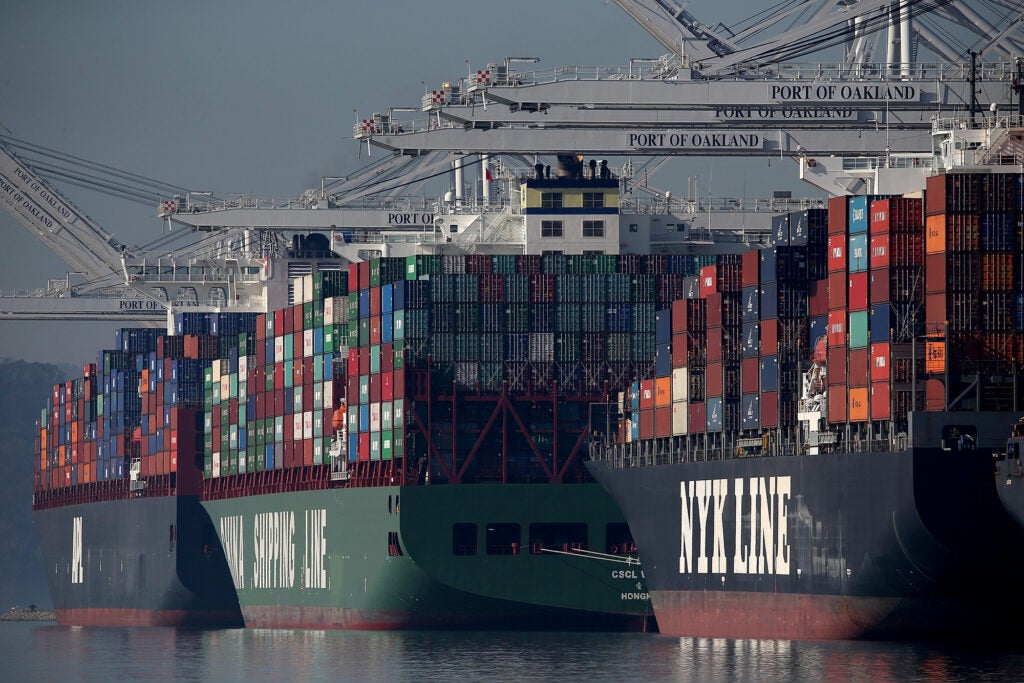
Container ships are seen docked at the Port of Oakland in Oakland, California. (Justin Sullivan / Getty Images)
Our ports and rail network are central to the transition to a cleaner transportation system. Environmental justice communities are disproportionately exposed to air pollution from freight, more often living near ports and railyards. Transitioning to a freight system powered by clean electricity could improve air quality for communities across the country.
Congress previously invested in electrifying ports, including through the Reduction of Truck Emissions at Port Facilities Program in the IIJA and other programs like the Clean Ports Program. There is considerable demand for funding for zero-emission port technologies, and Congress must continue to make these types of investments. We must also move the country away from relying on outdated diesel locomotives to electrified rail, which is in line with many countries around the world. The All Aboard Act of 2025, a bill that dedicates $200 billion over five years to build the rail system of the future, could set that transition in motion.
Unfortunately, the BUILD America 250 Act takes us backward. It repeals the Reduction of Truck Emissions at Port Facilities Program and does not include programs dedicated to port electrification. And, while it reauthorizes some important rail programs, it leaves out specific programs focused on electric rail projects or that address air pollution in frontline communities where rail yards are located.
Cleaning up Diesel Trucks and Buses Reduces Pollution
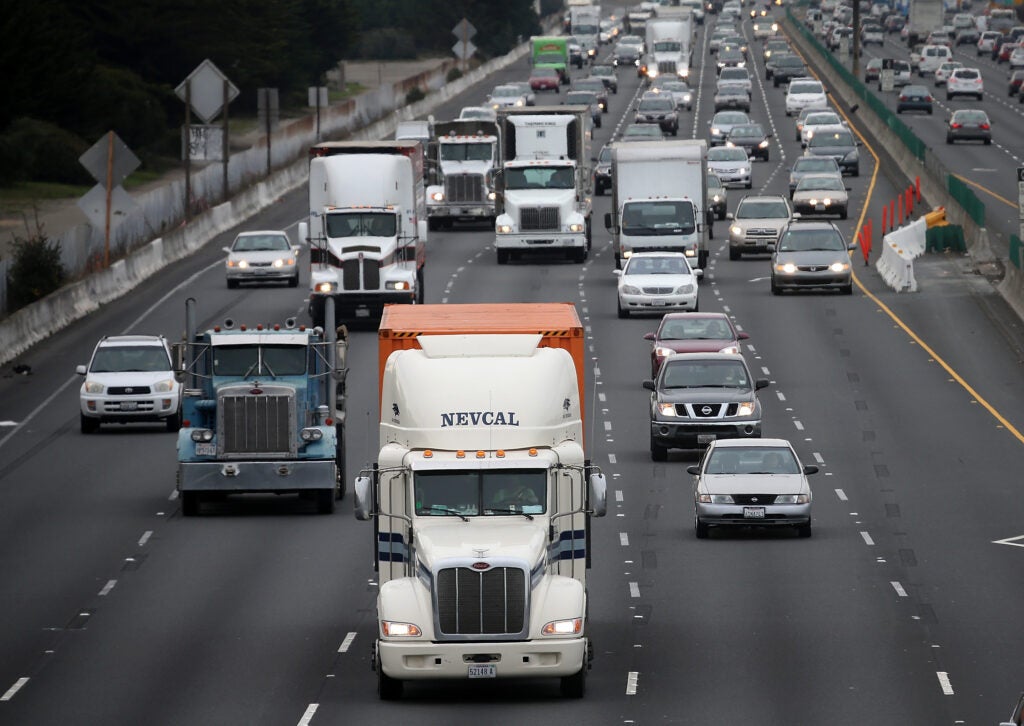
Trucks drive along Interstate 80 in Berkeley, Calif. (Justin Sullivan)
Cleaning up medium- and heavy-duty vehicles means electrifying trucks that carry our goods and the buses that carry people to work and children to school. The Low or No Emission (Low-No) Grant Program has been a cornerstone program to advance electric transit buses. It received more than $5 billion in the IIJA, helping transit agencies across the country transition their fleets to low and zero-emission technologies. The $5 billion Clean School Bus Program, which was established in the IIJA, has similarly helped school districts make meaningful strides by helping replace existing school buses primarily with electric models, giving kids a cleaner, healthier ride to school. Congress should continue to invest in these programs and focus on battery-electric buses.
The BUILD America 250 Act ends dedicated funding for the Low-No Program. Zero-emission and low-emission buses are eligible under a broader program that provides grants for buses, bus facilities, and ferries, but nothing guarantees the money in the broader program will fund these buses. Additionally, the bill does not reauthorize or fund the Clean School Bus Program.
Supporting Transportation Affordability
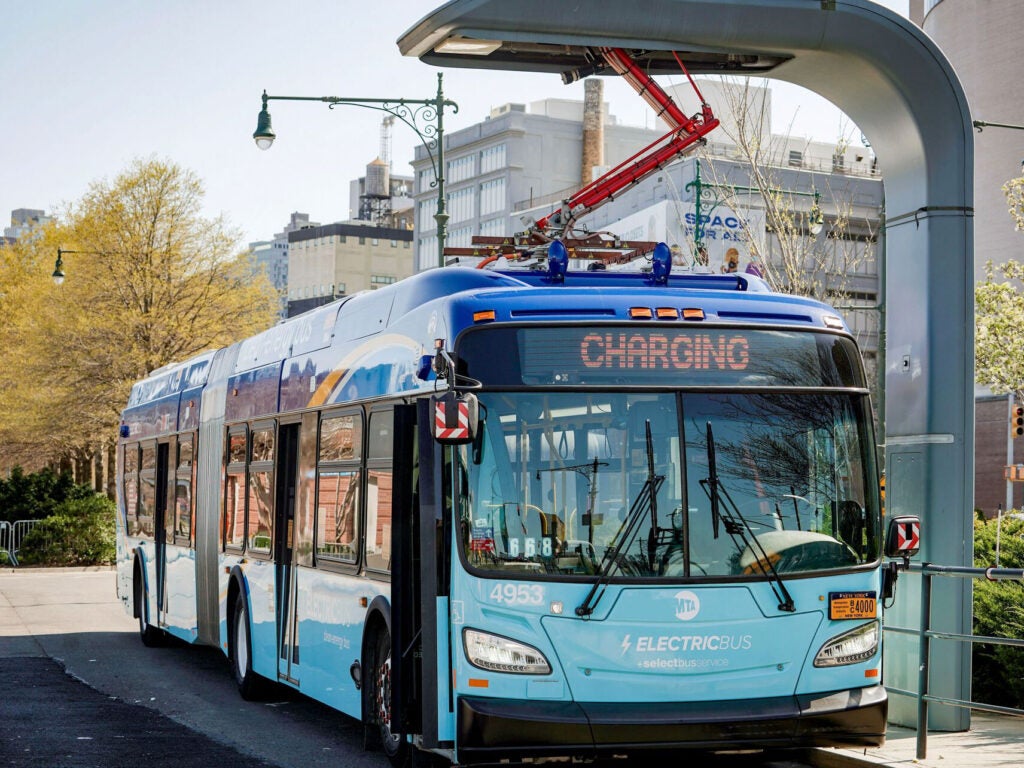
An electric transit bus at charging station in New York City. (Marc A. Hermann / MTA)
With gas prices reaching record highs, consumers have shown increased interest in EVs, which can save them money on fuel. Congress should encourage the transition to EVs rather than punish drivers who choose these vehicles. However, the BUILD America 250 Act seeks to penalize those who drive EVs by imposing a new $130 annual fee (that will increase up to $150). This punitive fee could not come at a worse time.
By investing in transportation options, such as public transit, Congress can deliver more affordable alternatives for people to get where they need to go. Tens of millions of people rely on public transit each day to travel to work or school. Yet, instead of building on the historic investment in public transit in the IIJA, the BUILD America 250 Act reduces guaranteed funding for public transit funding and leaves out important policies like a dedicated transit operations fund that could support frequent and reliable transit service. This is not the way to address the affordability crisis.
People deserve a transportation system that helps protect public health, the air they breathe, and the planet, and that also includes transportation options that can help keep costs down. Congress cannot miss the opportunity in the surface transportation reauthorization bill to build that system. There is still time to shape a bill that can deliver the transportation future the country needs.
Established in 1989, Earthjustice's Policy & Legislation team works with champions in Congress to craft legislation that supports and extends our legal gains.
Siham Zniber
Associate Director, Policy & Legislation, Earthjustice
szniber@earthjustice.org