AB 40: Protecting Californians from Trump’s Plan to Boost Dirty Coal
Earthjustice is co-sponsoring the Community First Coal Review Act to ensure environmental and community protection from coal in California
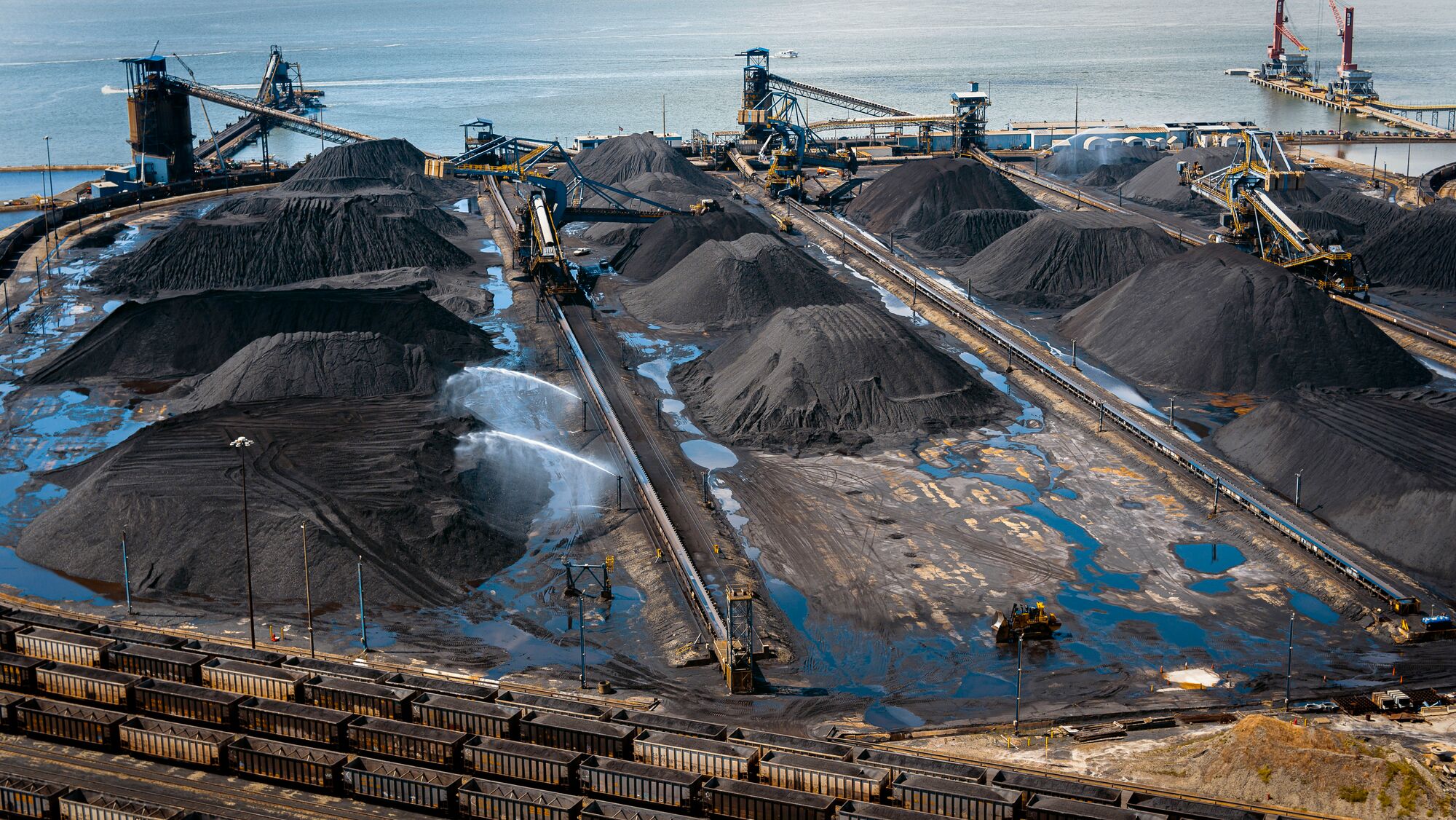
In June, the Trump administration announced that it was planning to allocate $75 million in taxpayer funding toward a new coal storage and handling facility in Oakland in the name of “national security.” The funding is part of a larger $700 million handout to corporations to support coal infrastructure — all while Californians struggle with rising energy bills.
To protect Californians and our communities in the Bay Area from toxic coal pollution, Earthjustice is co-sponsoring the Community First Coal Review Act, authored by Oakland Assemblymember Mia Bonta. AB 40 responds to the Trump administration’s plan to fund a high-volume coal terminal in West Oakland and the coal industry’s stated goal of opening more West Coast facilities.
AB 40 is a straightforward bill that will ensure developers of enormous bulk coal facilities, like the one proposed in West Oakland, fully disclose their impacts and develop mitigation measures before they are granted approval.
Transporting and shipping coal from Utah, Wyoming, and other western states is a dirty, dusty business that has no place in California’s clean energy future. A recent study funded by the California Air Resources Board measured air pollution at the coal terminal in Richmond, California, and from coal trains passing nearby. It found that these sources increase local levels of harmful fine particulate matter (PM2.5), which can cause or worsen lung and heart conditions and even result in premature death. Coal dust contains harmful toxins like arsenic, lead, and mercury. AB 40 is intended to protect West Oakland residents and other Californians from a similarly dirty and harmful facility.
Despite misleading claims from coal proponents, an environmental review has never been conducted that considers the impact of a bulk coal terminal in Oakland. A 2002 environmental impact report prepared for the much broader redevelopment of the former Oakland Army Base did not consider a coal facility. A 2012 addendum stated the site might be used as a bulk goods terminal, but it did not identify any specific commodities: it completely fails to examine the impacts of storing, handling, or shipping coal.
The developers of the would-be coal facility originally stated in their own community newsletter in 2013 that they were “publicly on record as having no interest or involvement in the pursuit of coal-related operations at the former Oakland Army Base” and that any rumors to the contrary were “simply untrue.”
Now, they’re proposing a bulk goods terminal three times larger than anything previously discussed that would handle 12 million tons of coal a year.
This is a huge amount of coal that would pass through California on hundreds of open train cars to West Oakland. Developers hope to bring three coal trains — each carrying around 100 cars that extend a mile in length — through California every day for the next 60 or so years. Originating out-of-state, these trains are expected to travel along the rail corridor adjacent to I-80 from Truckee down to Sacramento, then through Benicia, Martinez, Richmond, Berkeley, Emeryville, and ultimately to West Oakland.
Opponents of AB 40 tout a paid consultant’s report claiming that coal trains in Oakland would not affect air quality. This sounds hard to believe because it is. Putting aside that the report has not been released for public scrutiny of its methods or data, the limited information it has shared makes plain that opponents’ self-serving study does not address the project that developers are now proposing. Their report reflects data from just one or two individual coal cars passing through Oakland in a day. In reality, the developers plan for 300 or more coal cars to arrive at the bulk terminal every day — a stark contrast to the pollution generated by a single car or two.
We cannot rely on the claims that developers are making to ensure the health and safety of those living in West Oakland and along California’s railways. AB 40 will require meaningful environmental review and mitigation for the proposed Oakland coal project and any other similar projects that the Trump administration and Big Coal attempt to force upon Californians.
The California Regional Office fights for the rights of all to a healthy environment regardless of where in the state they live; we fight to protect the magnificent natural spaces and wildlife found in California; and we fight to transition California to a zero-emissions future where cars, trucks, buildings, and power plants run on clean…
Miranda Fox
Public Affairs and Communications Strategist, Earthjustice
mfox@earthjustice.org