Governor Hochul Can Save New Yorkers Money and Reduce Food Waste
With the affordability crisis looming over our everyday lives, Governor Hochul should sign the Food Date Labeling Act that will help save New Yorkers money, reduce food waste, and fight hunger
You open the refrigerator, see that the yogurt, cheese, or lettuce has passed the date printed on the package, and throw it away. Better safe than sorry, right? Maybe not.
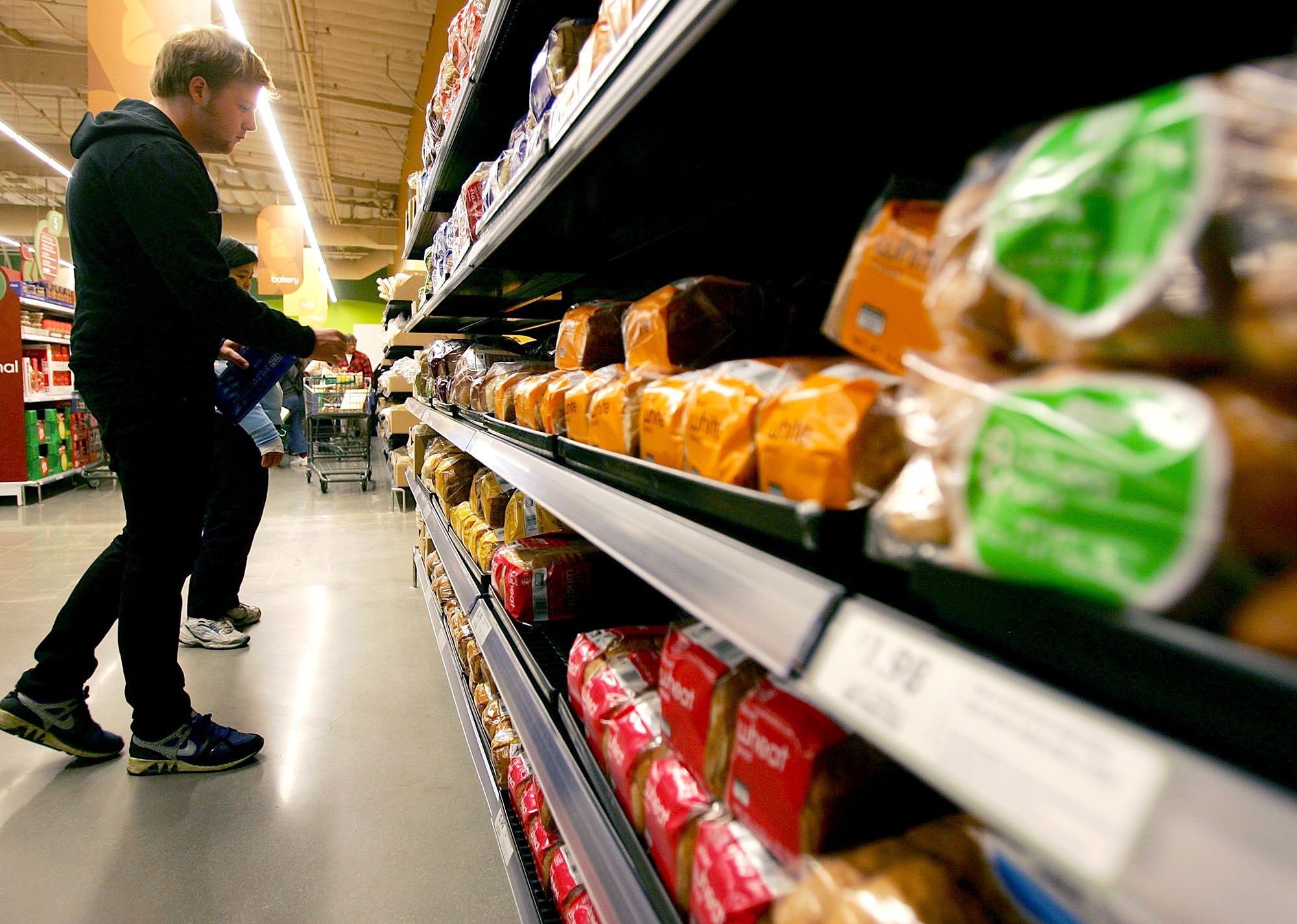
Americans routinely throw away perfectly good food because the jumble of “sell by,” “best by,” “use by,” deadlines printed on food packages leaves us confused about whether food is still safe to eat. In fact, 88% of consumers report throwing away food near or past the date on the package at least occasionally, but only 53% correctly identified the labels’ meanings.
That confusion costs us real money. Americans throw away an estimated $7 billion in food every year because of the date label. Standardizing those labels could save consumers an estimated $1.3 billion annually.
Here in New York, we could save $50 million a year.
Right now, Governor Hochul has the opportunity to make this a reality by signing the Food Date Labeling Act (A.7291-B/S.7618-B)—a remarkably simple solution to a costly problem.
“Best” Does Not Mean “Bad”
Federal law does not require product dating except for limited categories, such as infant formula. The U.S. Department of Agriculture (USDA) itself explains that dates on most foods are not indicators that a product has become unsafe.
Still, the marketplace confronts consumers with a bewildering assortment of more than 50 differently phrased date labels. And consumers understandably read significance into them. 44% mistakenly believe the federal government regulates the phrases used on food date labels.
New York’s Food Date Labeling Act solves for this confusion with two clear concepts: if a business uses a date label on food, it would use “BEST if Used by” for quality, or “USE by” for safety. That distinction matters. “BEST if Used by” tells you when the manufacturer believes the food may begin losing peak quality. It does not tell you that perfectly good food suddenly became garbage overnight.
That means more clarity for New Yorkers at the refrigerator, the supermarket, and the food bank.
Saving Food Means Feeding People
This is about more than the food any one of us throws away. New Yorkers are struggling with the cost of food. Food waste has been found to cost American families approximately $3,000 every year, making this a consumer protection issue. While usable food is being discarded unnecessarily, 84% of New Yorkers say the cost of food is rising faster than their income and nearly 25% of adult New Yorkers experience food insecurity.
Food banks and hunger organizations have a very practical stake in getting date labels right. That’s why they strongly support this bill. The Food Date Labeling Act can make it easier for donors and food banks to understand when food is merely past its peak quality rather than unsafe and can help prevent edible food from being discarded instead of donated. The Act expressly allows consumable food to be donated beyond its quality date.
Throwing away edible food while New Yorkers struggle to afford groceries makes no sense. Keeping good food on people’s tables and available for donation rather than sending it to the trash is an important first step in fighting hunger.
And Then There Is the Waste
All that unnecessary disposal carries another cost. New York households discard over 50,000 tons of food each year because of date-label concerns.
When food goes into landfills, it decomposes and produces methane, a climate super polluter. The U.S. Environmental Protection Agency estimates that food waste produces about 58% of the methane emissions from municipal landfills. And in New York, about 30% of all methane comes from landfills. Reducing food waste from date label concerns in New York by even 10% would have the same climate benefit as growing over 1 million tree seedlings for 10 years.
The Food Date Labeling Act is a rare policy that can help families save money, get more usable food to people who need it, and reduce climate pollution at the same time.
And it requires no complicated new technology. Mostly, it requires telling people clearly what the date on their food actually means.
Governor Hochul Should Sign the Food Date Labeling Act
New York has the chance to lead the nation in a common-sense solution for food waste. In December 2024, the federal Food and Drug Administration and USDA acknowledged that confusion over the multitude of date-label terms may account for about 20% of food waste in the home, but we still don’t have a federal requirement for labeling.
California has already acted. Its AB 660 took effect this year and requires the same basic distinction between “BEST if Used by” for quality and “USE by” for safety, while eliminating consumer-facing “sell by” dates. New Yorkers should not have to keep throwing good food and money into the garbage while waiting for Washington. By joining California in adopting a common-sense standard, New York can help build the momentum necessary to finally produce a national solution. Time and again, the federal government has acted only when several states have gone first; this bill is a key step toward a national solution.
The New York Legislature has done its job. The Food Date Labeling Act passed overwhelmingly. Food banks, hunger organizations, environmental advocates, and food-recovery groups want it. And the policy itself is remarkably straightforward: tell consumers whether a date label is about quality or safety.
That clarity can save New Yorkers money. It can keep good food out of landfills and methane emissions out of the atmosphere. It can make more food available for people who need it. Governor Hochul should sign the Food Date Labeling Act and let New York lead the way.
*Drafted with the assistance of Copilot AI.
Earthjustice’s Sustainable Food and Farming program aims to make our nation’s food system safer and more climate friendly.
Nydia Gutiérrez
Public Affairs and Communications Strategist, Earthjustice
ngutierrez@earthjustice.org