

Lease Sale Seeks to Transform Arctic National Wildlife Refuge into a Fossil Fuel Industrial Zone
All major oil companies refused to bid; one small oil company and a state of Alaska-sponsored corporation snapped up five leases in a rush to exploit the Refuge’s Coastal Plain
Contacts
Andrew Scibetta, Natural Resources Defense Council, (202) 289-2421
Elizabeth Heyd, Natural Resources Defense Council, eheyd@nrdc.org
Lindsay Tice, Friends of the Earth U.S., (202) 783-7400, ext. 8403, ltice@foe.org
Elizabeth Manning, Earthjustice, emanning@earthjustice.org
The Bureau of Land Management (BLM) today announced results from what was supposed to be sweeping oil and gas lease sale in the Arctic National Wildlife Refuge — the third oil and gas lease sale held in the Refuge.
Previous lease sales in the Wildlife Refuge have generated only a few bids or no bids — likely because drilling in the Refuge is considered financially risky and deeply unpopular among most Americans — and today’s sale was no different.
Oil companies had the chance to bid on 58 tracts across nearly 700,000 acres within the Coastal Plain. In today’s sale, just two bidders competed on five tracts covering about 70,000 acres.
The only companies willing to bid in the Coastal Plain were the Alaska Industrial Development and Export Authority (AIDEA) that had the high bid on three parcels and Hex LLC, an Alaska company, that had the high bid on two parcels. Neither has any experience drilling in the Arctic.
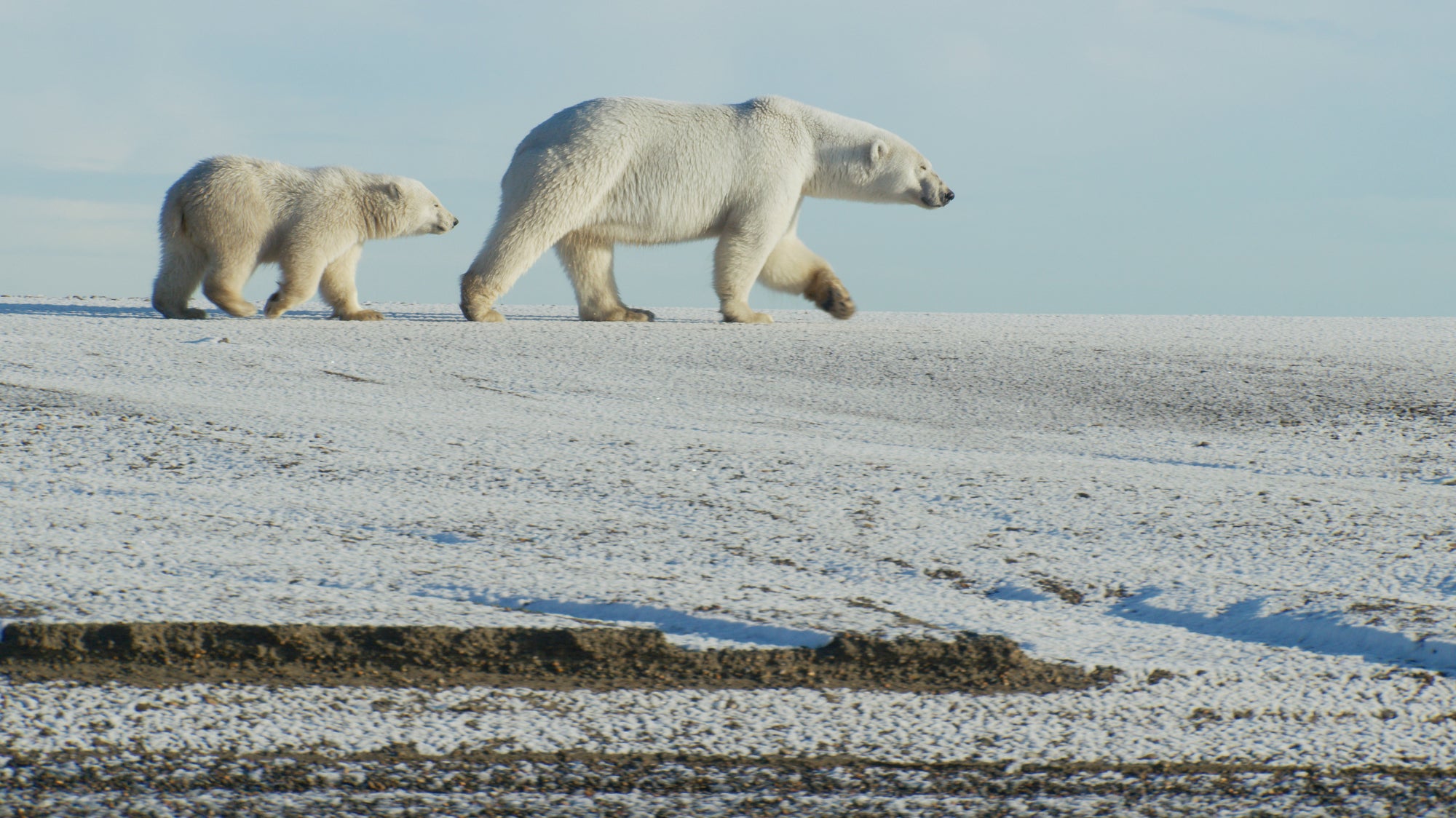
Even though the interest in today’s sale was tepid, the new leasing still poses significant threats to habitat, iconic wildlife, and Indigenous ways of life in one of the nation’s most wild and beautiful landscapes. All of today’s leases are in important polar bear habitat, for example.
BLM held today’s lawsuit under a legal cloud: a lawsuit previously filed by Natural Resources Defense Council, the Center for Biological Diversity, and Friends of the Earth U.S., challenges the Interior Department’s October 2025 decision to maximize oil and gas leasing in the Refuge’s Coastal Plain.
The lawsuit, originally filed in 2020 and amended this year, also challenges existing leases within the Coastal Plain obtained illegally by the state-sponsored corporation Alaska Industrial Development and Export Authority (AIDEA) during the first Trump administration.
The lawsuit alleges violations of the National Environmental Policy Act, the Endangered Species Act, and other laws. NRDC and Earthjustice are co-counsel for plaintiffs NRDC, the Center for Biological Diversity, and Friends of the Earth.
Statements in response to today’s lease sale from plaintiffs and Earthjustice:
“Drilling in the Arctic Refuge is reckless, and the market keeps confirming it,” said Bobby McEnaney, Director, Land Conservation, NRDC. “This is the third lease sale in a row to be a bust, with major oil companies sitting it out. The government spent public money to hold an auction no major company showed up for, and that tells you everything you need to know about the economics here. It is a remote, fragile landscape that is expensive to drill and risky to bet on, and no amount of pressure from Washington changes that. We should not be putting this delicate habitat on the line for an oil patch that does not exist.”
“We must not sacrifice Coastal Plain to Big Oil in the face of a climate catastrophe,” said Raena Garcia, Senior Energy Campaigner for Friends of the Earth. “This lease sale could bring tremendous harm to people and ecosystems, all for the sake of industry profit. It is absolutely reckless to continue down a path that overlooks the irreversible damage of the Arctic by the Trump Administration and Big Oil.”
“Today’s lease sale brings the threat of oil and gas extraction in the Refuge closer, but we will never back down from protecting these irreplaceable public lands,” said Earthjustice Attorney Hannah Foster. “Most Americans want the Coastal Plain protected, not sold to the highest bidder. A reckless few should not be allowed to destroy this sacred place to line the pockets of oil companies.”
Background
The Arctic National Wildlife Refuge was first protected under President Dwight Eisenhower in 1960 as the Arctic National Wildlife Range and later designated the Arctic National Wildlife Refuge by President Jimmy Carter. The Refuge spans 19.3 million acres. On the northern coast lies the Coastal Plain, the biological heart of the Refuge that contains 1.56 million acres of tundra, braided rivers, and wetlands. The Coastal Plain provides essential habitat for polar bears, caribou, and millions of migratory birds. It is exceedingly sensitive to disturbance and slow to recover.
Earthjustice and NRDC, on behalf of the conservation groups, filed suit in 2020 challenging the prior attempt to lease the Coastal Plain. A lease auction was held on Jan. 6, 2021, and the Biden administration subsequently imposed a moratorium and review. The Biden administration then offered a smaller sale in 2025 that drew no bids.
In October 2025, the Department of the Interior rescinded the Biden record of decision, readopted a program that opens the entire Coastal Plain to leasing, and lifted the suspension on AIDEA’s leases from the 2021 sale — prompting the resumption of the lawsuit.
Two other separate but parallel lawsuits are similarly challenging oil and gas leasing in the Refuge. Those plaintiff groups are represented by other counsel and include the Gwich’in Steering Committee, Native Village of Venetie Tribal Government, and others.
Arctic Ocean
Beaufort
Sea
Nuiqsut
Chukchi
Sea
Prudhoe Bay
Coastal Plain
Teshekpuk Lake
Western Arctic(National Petroleum
Reserve-Alaska)
Arctic National Wildlife Refuge
Russia
Arctic Circle
Canada
Alaska
Bering
Sea
Gulf of
Alaska
Peter Hoey for Earthjustice
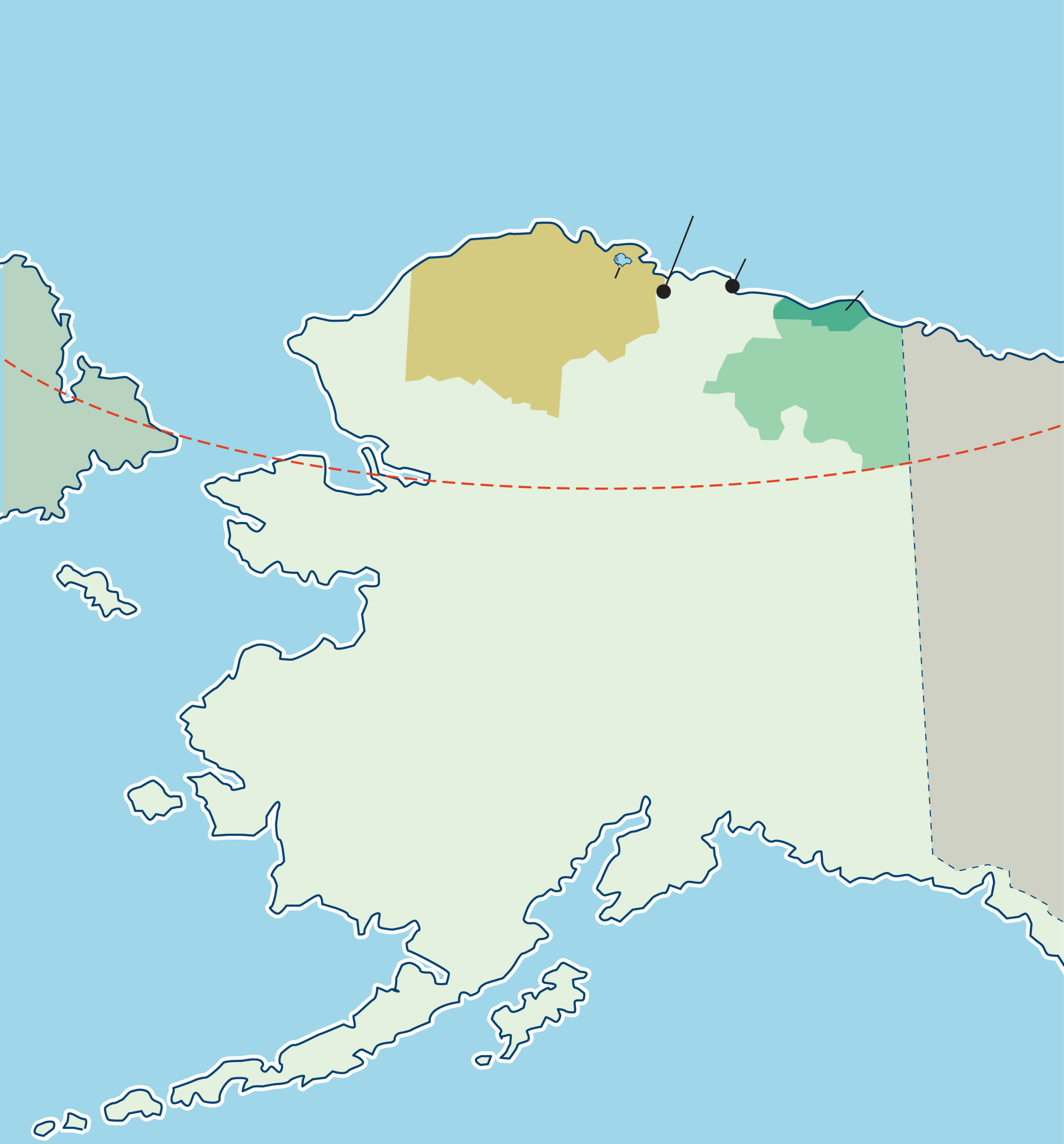
The Western Arctic (also called the "National Petroleum Reserve-Alaska" or NPR-A) is home to many millions of acres of specially designated lands because of their ecological and cultural importance. This includes Teshekpuk Lake, a wetlands area critical for migratory birds from around the world.
The Arctic National Wildlife Refuge is the country’s largest national refuge and home to diverse wildlife and Indigenous communities. Within the Arctic Refuge’s Coastal Plain are the calving grounds of the Porcupine Caribou herd.
Additional Resources
About Earthjustice
Earthjustice is the premier nonprofit environmental law organization. We wield the power of law and the strength of partnership to protect people's health, to preserve magnificent places and wildlife, to advance clean energy, and to combat climate change. We are here because the earth needs a good lawyer.