

Public Interest Groups Challenge Trump Administration Order to Keep Washington’s Last Coal Plant Operating
DOE’s order disrupts a long-planned shutdown of a coal plant in Centralia, Washington, designed to provide state residents with cleaner air and affordable, reliable, clean energy
Contacts
Lauren McCloy, NW Energy Coalition, Lauren@nwenergy.org
Sara Burleson, NW Energy Coalition, sara@nwenergy.org
Christine Ho, Sierra Club, christine.ho@sierraclub.org
Kathryn McGrath, Earthjustice, kmcgrath@earthjustice.org
Elizabeth Manning, Earthjustice, emanning@earthjustice.org
Alyssa Mayeda, Washington Conservation Action, amayeda@waconservationaction.org
Kimberly Larson, Climate Solutions, kimberly.larson@climatesolutions.org
Austin Matheny-Kawesch, Environmental Defense Fund, amatheny@edf.org
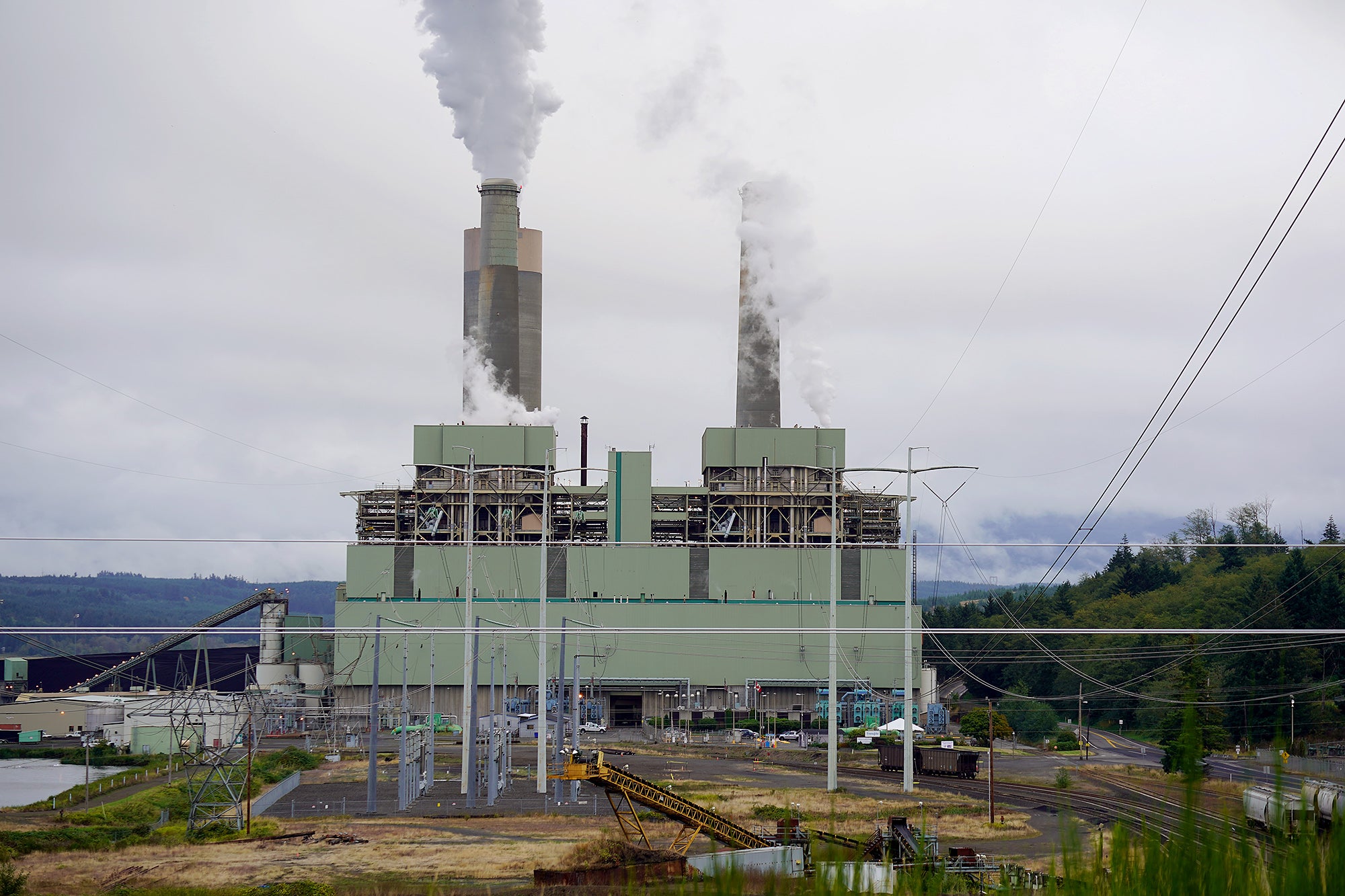
Today, public interest groups challenged the Department of Energy’s (DOE) illegal emergency order forcing Washington’s last coal plant to operate past its planned retirement date. The groups’ request for rehearing was filed with DOE in response to the 90-day order issued Dec. 16, just two weeks before the plant’s last coal-burning unit was legally required to shut down on Dec. 31.
The DOE order for the Centralia plant is one of several issued by the Trump administration to prevent the long-planned retirement of some of the dirtiest and oldest coal-burning power plants across the country. Similar orders so far have been issued for plants in Michigan, Indiana and Colorado.
Earthjustice, representing NW Energy Coalition, Washington Conservation Action, Climate Solutions, and Public Citizen, along with Sierra Club and the Environmental Defense Fund, filed today’s request for rehearing with the DOE. The DOE must respond to today’s rehearing request within 30 days. If the DOE does not respond, the public interest groups can challenge this order in court.
Section 202(c) orders may only address imminent and unexpected shortfalls – in other words, real emergencies. This DOE order exceeds that authority and instead tries to impose the administration’s preference for coal-fired power over a 2011 agreement between the State of Washington and TransAlta, the owner of the plant, to shut down the plant by the end of this year.
“The Department of Energy is misusing its narrow authority reserved for imminent emergencies to force a dirty, inefficient coal plant to keep operating,” said Earthjustice Attorney Patti Goldman. “Our region has moved beyond reliance on coal and this plant. We are meeting our region’s energy needs, now and into the future, with cleaner sources.”
Before the shutdown agreement, the Centralia coal plant was the largest single source of greenhouse gas and nitrogen oxide emissions, which cause smog and harm human health; 10 percent of Washington’s total greenhouse gas and nitrogen oxide emissions came from just this one coal plant. The shutdown agreement was codified in Washington law and environmental enforcement orders.
In today’s rehearing request, the groups argue the DOE failed to offer evidence of any emergency or electricity shortage in the region warranting the order to keep Centralia open. An analysis examining the planning studies the DOE relied on for its order found no support for an energy crisis or resource adequacy crisis. DOE selected only information from the studies that supported its arguments and ignored the region’s extensive and comprehensive planning for electric power in both the near and long term.
“So many of us – from state leaders and utilities to elected officials and public interest groups – have worked for decades to plan for and build cleaner, more efficient generation and transmission that will ensure Washington state’s transition to clean energy while keeping energy affordable and reliable,” said NW Energy Coalition Utility and Regulatory Director Lauren McCloy. “That work is ongoing, and burning more coal at Centralia is not the answer to meeting growing energy demand in the Northwest.”
Complying with the DOE order would also be expensive as Centralia does not have the coal, customers or workforce to keep the coal plant running. Other coal plants forced to keep operating are experiencing extremely high costs, which the Federal Energy Regulatory Commission can require ratepayers to pay. In Michigan, complying with the first DOE order for the J.H. Campbell Power Plant resulted in initial costs of more than $53 million, to be paid by electricity customers across 11 states.
Further, the order will lead to more air pollution and toxic contamination along with violations of environmental laws and enforcement orders under the Clean Air Act and several state laws aimed at controlling greenhouse gas emissions. Washington state’s Clean Energy Transformation Act (CETA) also requires utilities to stop using coal-fired electricity by the end of 2025 as the state moves to provide residents with carbon-free electricity by 2045. The Washington State Department of Ecology cited the plant for exceeding limits on air emissions and ordered TransAlta to clean up toxic contamination at the site caused by coal-burning operations.
“The Trump administration can’t get its story straight,” said Tyson Slocum, Public Citizen’s Energy Program Director. “While it claims the West Coast is in a state of emergency requiring families to bail out an expensive coal plant, Trump’s Department of Energy is simultaneously concluding the region has energy abundance to authorize electricity exports to Canada. Which is it, Donald?“
“This sham emergency order has zero legal basis and is just another attempt by the Trump administration to throw the coal industry a lifeline, this time asking Washingtonians to foot the bill,” said Sierra Club Senior Attorney Greg Wannier. “The biggest risk to reliability in the Northwest is this administration interfering in the long-planned and fully considered energy transition that regional planners laid out using existing procedures. If Donald Trump really cared about lowering costs and improving energy reliability, he would get out of the way and let the professionals do their job. We are challenging this unlawful order to call the administration on its lies and deception, and to push for a cleaner, cheaper energy future.”
“Washington has already turned the page on dirty and expensive coal power. We’re investing in homegrown, affordable resources like solar and wind energy to power our future,” said James Hove, Washington Director of Climate Solutions. “In the face of the growing climate crisis and rising energy bills, we won’t let DC dictate our energy future here in the Northwest by dragging us backwards to the waning coal era.”
“The Trump Administration’s overreach to stop the retirement of Washington’s last coal plant is as unnecessary as it is harmful,” said Christina Wong, Washington Conservation Action’s Vice President of Programs. “Burning coal pollutes our air and water, burning both our health and our energy bills. Washingtonians want to move forward with cleaner, more affordable energy. We refuse to be pulled backward by the other Washington in our efforts to protect people and nature.”
“Forcing the Centralia coal plant to stay open beyond its planned retirement date means more pollution and higher electric bills for no good reason,” said Ted Kelly, Director and Legal Counsel, U.S. Clean Energy, Environmental Defense Fund. “Washington state leaders decided years ago that at the end of 2025 their state would leave coal in the past to save customers money and allow families and businesses to benefit from more affordable, reliable, clean sources of energy. The Trump administration’s decision to needlessly upend those choices is unlawful and unjustified.”
The State of Washington is also challenging the DOE order, and filed a separate rehearing request yesterday.
Background
Efforts to close down the Centralia plant date back nearly 20 years. Earthjustice represented Sierra Club and National Parks and Conservation Association in advocacy and litigation to force the plant to reduce smog and harmful air pollution.
In 2011, rather than make upgrades to the plant to comply with federal pollution control laws and Washington state greenhouse gas emissions limits, TransAlta negotiated a deal with the state of Washington to close down its plant, with one of its units retiring in 2020 and the other slated to retire by December 31, 2025. The shutdown deal was incorporated into state law and air pollution enforcement orders. All utilities in the region, as required by CETA, planned for alternate energy sources to offset the loss of generation from Centralia from the coal unit’s closure.
Additional Resources
About Earthjustice
Earthjustice is the premier nonprofit environmental law organization. We wield the power of law and the strength of partnership to protect people's health, to preserve magnificent places and wildlife, to advance clean energy, and to combat climate change. We are here because the earth needs a good lawyer.