unEARTHED, the Earthjustice Blog

unEARTHED. The Earthjustice Blog

Blogs


    SIGN-UP for our latest news and action alerts:
   Please leave this field empty

Facebook Fans

Earthjustice on Twitter

Featured Campaigns

Everyone has The Right To Breathe clean air. Watch a video featuring Earthjustice Attorney Jim Pew and two Pennsylvanians—Marti Blake and Martin Garrigan—who know firsthand what it means to live in the shadow of a coal plant's smokestack, breathing in daily lungfuls of toxic air for more than two decades.

Coal Ash Contaminates Our Lives. Coal ash is the hazardous waste that remains after coal is burned. Dumped into unlined ponds or mines, the toxins readily leach into drinking water supplies. Watch the video above and take action to support federally enforceable safeguards for coal ash disposal.

ABOUT EARTHJUSTICE'S BLOG

unEARTHED is a forum for the voices and stories of the people behind Earthjustice's work. The views and opinions expressed in this blog do not necessarily represent the opinion or position of Earthjustice or its board, clients, or funders.

Learn more about Earthjustice.

View Kari Birdseye's blog posts
06 July 2012, 3:38 PM
A tale of Americans hard at work
A large lead develops north of Point Hope in the Chukchi Sea during sea ice breakup in late May. Chukchi Sea, Alaska. (Florian Schulz / visionsofthewild.com)

Many Americans used a Wednesday Fourth of July as an excuse to take the entire week off as a holiday. Here’s a patriotic tale of two examples of those who didn’t and we thank them for it.

First off—my red, white and blue hat is tipped to the Los Angeles Times for the excellent reporting today on the not-ready-for-prime-time oil spill cleanup barge called “Arctic Challenger” being readied to head to the Arctic. It is a story that most definitely didn’t come from a Royal Dutch Shell Company press release. In fact, I’d bet the winnings from a watermelon eating contest that Shell’s folks aren’t pleased with the story at all. During these lean times for newspapers, the enterprise article on a piece of cleanup equipment, vital to Shell’s final permits to drill for oil in America’s pristine Arctic waters, is about as apple pie as it gets.

The second nod goes to the Coast Guard—for this from Coast Guard Cmdr. Christopher O’Neil, chief of media relations:

Because of the intended use of the Arctic Challenger and the harsh conditions experienced by maritime traffic in the Arctic, the Arctic Challenger is required to be able to withstand the forces generated by a 100-year storm. The operators of the Arctic Challenger contend that the 100-year standard is too stringent of a design standard, and that a 10-year [storm] standard is more aligned with historical conditions for the area of the Arctic they intend to operate [in] this summer.

View David Lawlor's blog posts
05 July 2012, 3:18 PM
Accidents are an ominous harbinger for the Pacific Northwest

On Monday, a coal train derailed in Washington on its way to Spokane, spilling tons of coal and coal dust alongside the tracks. Then, on Wednesday afternoon, a coal train near Chicago derailed bringing a bridge down with it and killing a passenger in a car below. Finally, on Wednesday night, a train near the small town of Pendleton, Texas derailed, spewing coal from 43 rail cars.

In other words, it’s been a bad week for coal trains.

View Lisa Evans's blog posts
05 July 2012, 11:58 AM
Josh Galperin on growing threat of toxic waste
Devastation following the Kingston coal ash disaster

(Note from Lisa Evans: Last week, we nearly lost the battle for Environmental Protection Agency regulations. However, thanks to the chorus of voices from affected communities and public interest groups across the nation and to the amazing work of our champions in the House and Senate, a provision blocking an EPA coal ash rule was removed from the federal transportation bill.  Here is a wrap-up of the close fight by Josh Galperin, Policy Analyst and Research Attorney for the Southern Alliance for Clean Energy. Josh reminds us that -- contrary to what the coal industry would have us believe -- more (coal ash dumps) cannot equal less (regulation).)

Last week brought a lot of news about coal ash in national media, some good, some bad. On one side we learned of new information from the EPA to add to the growing mountain of evidence about the risks of unregulated coal ash (that’s bad). On the other side we pulled out a narrow victory in Washington, DC by keeping dangerous coal ash language out of the federal Transportation Bill (phew, that’s good!).

1 Comment   /   Read more >>
View David Lawlor's blog posts
02 July 2012, 2:37 PM
NMFS dragging its feet on implementing safeguards

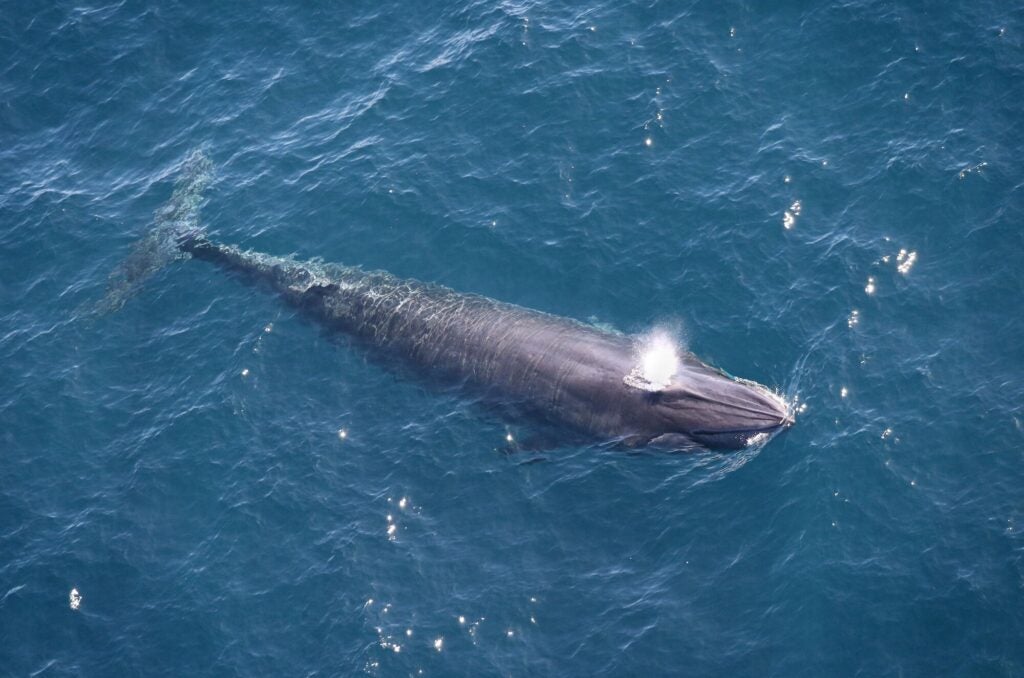
If you were a false killer whale off the Hawaiian coast you’d probably be calling ocean 911 right about now on your underwater cell phone.

You’d frantically shout: “Hurry, send help now! Us false killer whales are being killed by longline fishing hooks!” And the ocean 911 operator would respond: “We have been receiving a lot of calls from you false killer whales and I’m going to tell you what I tell everyone else: you’re just going to have to sit tight and wait because the National Marine Fisheries Service is still figuring it out! Have a nice day and may the odds be ever in your favor.”

Seriously, NMFS, what’s the deal? The agency said it would finalize its plan by last December to reduce the number of false killer whales dying at the hands of Hawai’i’s longline tuna fishery. Well, here we are at the start of July and still no final plan; the agency says it needs more time. But if you’re a false killer whale dodging longline hooks just to stay alive, excessive delay and bureaucratic hand-wringing is the last thing you need.

View Kathleen Sutcliffe's blog posts
29 June 2012, 2:59 PM
Live debate this Sunday featuring Earthjustice's own Deborah Goldberg

Tune in this Sunday to a debate between environmental advocates and defenders of the fracking industry.

Deborah Goldberg, Managing Attorney in Earthjustice’s Northeast office, and Katherine Hudson Watershed Program Director at Riverkeeper of Riverkeeper will be arguing that the country’s natural gas boom is doing more harm than good. They’ll be squaring off against Joe Nocera, the business-friendly OpEd columnist for the New York Times and Sue Tierney, a former Assistant Secretary for Policy at U.S. Dept. of Energy.

The debate takes place in front of a live, voting audience who will be polled before and after to determine the winner. The debate will be moderated by ABC News correspondent John Donvan.

2 Comments   /   Read more >>
View Jessica Knoblauch's blog posts
28 June 2012, 5:17 PM
Plus: Pesticide poisonings, fracking evictions and druggy meat

Bumblebees join honeybees in buzzing off
It turns out honeybees aren’t the only pollinators experiencing mysterious, massive die-offs, reports Grist. Bumblebees, those fuzzy, buzzy bees that pollinate everything from alfalfa to apples, are also disappearing. That’s bad news for farmers...and anyone who happens to like eating food. According to research published last year, the abundance of some bumblebee species has declined by as much as 96 percent in a mere two decades. One reason for the massive die-off may be a lack of wildflower-rich habitats. Another may be pesticides, which have been under increased scrutiny after two scientific studies linked a commonly used corn pesticide to the die-offs of pollinating bees. And yet still another cause may be climate change, which impacts the bees’ habitat range.
 
Pesticide poisoning all too common among farmworkers
The EPA estimates that up to 20,000 physician-diagnosed poisonings occur each year among agricultural workers but since no comprehensive database to track pesticide exposure incidents currently exists, there may be a lot more incidents that go unreported, reports iWatch News. Lack of data is just one of the many challenges in making agricultural fields safe for farmworkers, who often come in contact with toxic pesticides that can cause nose bleeds, rashes and vomiting. Another challenge  is that many farmworkers are illegal immigrants, so they're reluctant to speak up in fear of getting reported to the federal authorities. Currently, Earthjustice, along with other groups, is trying to increase protections for farmworkers by pressing for upgrades to the Worker Protection Standard, which hasn’t been thoroughly revamped in 20 years. 
 

View Sarah Burt's blog posts
28 June 2012, 3:20 PM
Vessels must avoid dirtier fuels off state coast

Twenty seven million Californians—80 percent of the state’s population—are exposed to emissions from ocean-going vessels, resulting in serious health impacts such as cancer, respiratory illnesses like asthma, as well as increasing the risk of heart disease. California estimates that the ships’ direct particulate emissions cause 300 premature deaths across the state every single year, even after excluding cancer effects.

The Ninth Circuit’s 2011 decision in Pacific Merchant Shipping Assn. v. Goldstene involved a shipping industry challenge to the Vessel Fuel Rule. The Ninth Circuit rejected industry’s claims that the ARB regulation is preempted by the federal Submerged Lands Act and contravenes dormant Commerce Clause principles. By denying certiorari, the Supreme Court has decided to let the Ninth Circuit’s decision stand.

View David Lawlor's blog posts
27 June 2012, 4:02 PM
Court decision protects biologically rich area from oil and gas development
The Rulison Gas Field on the Roan Plateau. (Photo by Save Roan Plateau)

How much are oil and natural gas worth? I’m not asking how much a barrel of sweet crude is going for these days or what your gas bill from the utility company was last month. The real question isn’t how much fossil fuels cost in terms of dollars, but rather, what is worth sacrificing in their pursuit? Since the physical process of extracting oil and gas tends to severely despoil the surrounding environment, asking how much oil and gas are worth is akin to asking what nature is worth.

But in nature, there is value that dollar signs cannot quantify—take Colorado’s Roan Plateau for instance.

View Liz Judge's blog posts
27 June 2012, 2:03 PM
Mountain Hero continues the work of her celebrated mother, Judy Bonds

Could there be a love more unconditional and more powerful than the love of a mother for her child? Most mothers I know would say, "No, not even possible." But if you've ever observed the adoring eyes of a child looking up to his or her mother, you might think twice.

Lisa Henderson's story is a remarkable tribute to this love and bond between mother and child.

Through our Mountain Heroes campaign, Lisa tells the story of watching her mother, renowned anti-mountaintop removal mining activist and Goldman Prize winner Judy Bonds, grow into a leader of the movement to save mountains, communities and people.

Lisa Henderson. (Chris Jordan-Bloch)

View Raviya Ismail's blog posts
26 June 2012, 11:09 AM
Federal appeals court sides with clean air

Today has turned into a better day for our planet—and our lungs. In a landmark decision, the D.C. federal appeals court upheld every single one of the EPA’s carbon pollution limits. These EPA protections are in response to the Supreme Court’s 2007 ruling in Massachusetts v. EPA, and are important parts of the agency’s efforts to curb such pollution under the Clean Air Act.

The rules went to oral argument in February after more than 60 lawsuits by companies including Massey Energy Co.; business groups such as the U.S. Chamber of Commerce; and states such as Texas and Virginia pushed the court to overthrow the “arbitrary” and “capricious” standards.

However, today the three-judge panel of the D.C. court of appeals ruled that the EPA’s interpretation of the Clean Air Act was “unambiguously correct.” The court also concluded that opponents don’t have the legal right to challenge the timing and tailoring rules.

3 Comments   /   Read more >>