Posts tagged: Environmental Protection Agency

unEARTHED. The Earthjustice Blog

Environmental Protection Agency


    SIGN-UP for our latest news and action alerts:
   Please leave this field empty

Facebook Fans

Featured Campaigns

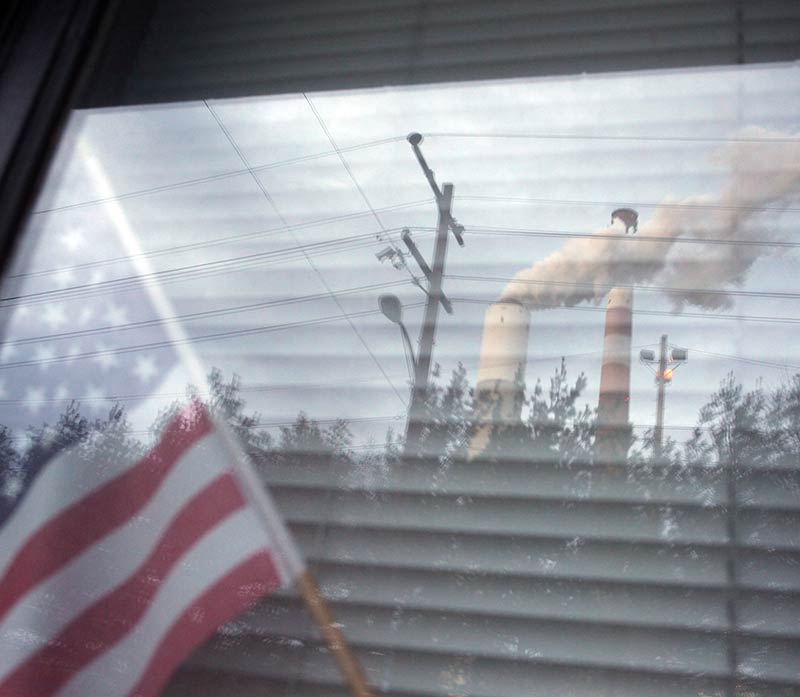
Everyone has The Right To Breathe clean air. Watch a video featuring Earthjustice Attorney Jim Pew and two Pennsylvanians—Marti Blake and Martin Garrigan—who know firsthand what it means to live in the shadow of a coal plant's smokestack, breathing in daily lungfuls of toxic air for more than two decades.

Coal Ash Contaminates Our Lives. Coal ash is the hazardous waste that remains after coal is burned. Dumped into unlined ponds or mines, the toxins readily leach into drinking water supplies. Watch the video above and take action to support federally enforceable safeguards for coal ash disposal.

ABOUT EARTHJUSTICE'S BLOG

unEARTHED is a forum for the voices and stories of the people behind Earthjustice's work. The views and opinions expressed in this blog do not necessarily represent the opinion or position of Earthjustice or its board, clients, or funders.

Learn more about Earthjustice.

View Stephanie Maddin's blog posts
24 December 2012, 11:49 AM
Health of thousands put on hold by weak agency action
Alexandra Allred. (Chris Jordan-Bloch / Earthjustice)

“…My son's school would be named in a USA Today report as being in the upper 1 percent of the most toxic schools in the nation—the same school I butted heads with cement plant executives about being under the toxic plumes while children were at recess.”

– Alex Allred,
50 States United Clean Air Ambassador from Texas

We are taught as children to play fair and to follow the rules. Apparently, everyone doesn’t get the same life lessons. For communities in the shadow of cement plant pollution, the rules of engagement seem to change when it comes to Clean Air Act protections. Last week, the Environmental Protection Agency decided to both weaken and delay an already overdue standard to clean up toxic cement plant emissions.

The decision was legally indefensible with a federal court requesting small technical changes to the standard. These plants emit dangerous levels mercury, lead, dioxin, benzene and fine particulate matter (soot) and are responsible for up to 2,500 premature deaths each year.

3 Comments   /   Read more >>
View John McManus's blog posts
18 December 2012, 1:56 PM
Pediatrics group urges heath professionals to take the lead

The American Academy of Pediatrics is calling on the government, schools, parents and medical professionals to take concerted action to protect children from pesticides.

The 60,000-member physicians organization is worried about the growing body of scientific evidence that links these toxic chemicals not only to obvious poisoning but also to subtle health problems kids can be particularly vulnerable to.

View Lisa Evans's blog posts
18 December 2012, 9:39 AM
S.3512 fails to ensure protection of public health, safety
CRS found that S.3512's and H.R.2273's weaknesses are “unprecedented” in environmental law.

The Congressional Research Service, dubbed the U.S. Congress’ 'think tank', recently released an authoritative analysis of S.3512 and—to the dismay of the bill’s stalwart sponsors—it’s a bust. CRS, a department of the Library of Congress and nonpartisan research tool for the House and Senate, recently weighed in definitively on the Senate and House coal ash bills, S.3512 and H.R. 2273, and concluded that the bills’ weaknesses are “unprecedented” in environmental law.

CRS found that the bills lack a clear purpose and would not ensure state standards “necessary to protect human health and the environment.” These bills—one passed by the House in October 2011 and the other now pending in the Senate—would prevent the EPA from ever setting federally enforceable safeguards for the disposal of toxic coal ash.

2 Comments   /   Read more >>
View Trip Van Noppen's blog posts
14 December 2012, 5:39 PM
Earthjustice set to make 2013 the year to powerfully engage climate change

Earthjustice has just won two major victories over fossil fuels that strengthen our resolve to make 2013 the year America turns from these dirtiest of energy sources and moves towards a clean energy future—the only real solution to climate change.

On Friday, the Environmental Protection Agency reacted to Earthjustice legal action by adopting drastic limits on the amount of soot poured out from coal-fired power plants and tailpipes. This powerful achievement will save thousands of lives a year and slow climate change by reducing pollution that accelerates sea ice melt.

And, a few weeks ago, we learned that the Danskammer coal-fired power plant, one of New York’s dirtiest polluters, will be retired and torn down. Recent Earthjustice legal action helped bring about this happy outcome, aided by flooding from superstorm Sandy, a storm made fiercer by the climate-changing emissions from coal power plants like this one.

But we aren’t basing our climate change plan on more poetic justice. Our plan for tackling climate change is based on the kind of justice we had great success in achieving this year through the courts and the political system.

22 Comments   /   Read more >>
View Stephanie Maddin's blog posts
14 December 2012, 4:56 PM
Rule will save up to thousands of lives
Soot is composed of tiny microscopic particles that penetrate deep within the lungs often triggering respiratory harm and even premature death. (Chris Jordan-Bloch / Earthjustice)

No one likes to breathe dirty and polluted air. Unfortunately, for some communities there may be little to no choice.

But today, the EPA took a step in the right direction to clean up soot pollution and protect millions of Americans forced to breathe dirty air. Administrator Lisa Jackson announced a tightened standard that will limit soot pollution in many major metropolitan areas across the country, cleaning up the smokestacks and tailpipes that belch out this dirty pollution.

The current standard, set in 1997, is outdated, prompting our legal action against the EPA. Last year, we partnered with the American Nurses Association, Physicians for Social Responsibility, the Hip Hop Caucus, and the National Council of Churches to collectively call on Congress and federal regulators to protect citizens from preventable air pollution. This effort, dubbed 50 States United for Healthy Air educated stakeholders on the need for strong clean air protections for all Americans. Thankfully, some voices on Capitol Hill got the message and called on the EPA to set forth strong soot standards.

15 Comments   /   Read more >>
View David Guest's blog posts
14 December 2012, 10:59 AM
EPA will step in to regulate 100,000 miles of Florida's waters
Visitors at spring-fed Santa Fe River near Gainesville, FL, for the 2012 Memorial Day weekend found a rude surprise—pollution from sewage, manure and fertilizer sparked an outbreak of nasty green slime. (John Moran)

We’re happy to report that our long fight to clean up the green slime that’s been plaguing Florida waterways for years hit a major turning point on Nov. 30. That’s the day the Environmental Protection Agency agreed to set numeric pollution limits for some 100,000 miles of Florida waterways and 4,000 square miles of estuaries.

We fought every polluting industry in Florida for four years to get this result. These slime outbreaks—caused by pollutants in inadequately treated sewage, manure and fertilizer—are a pestilence, contaminating water, killing fish, destroying property values and chasing off tourists. Now the EPA has to stop dragging its feet and deal with it.

Using extensive data it has been collecting and analyzing in concert with Florida Department of Environmental Protection scientists, the EPA will impose numeric limits on the allowable amount of phosphorus and nitrogen—so called “nutrient” pollution—in the state’s waterways.

11 Comments   /   Read more >>
View Raviya Ismail's blog posts
04 December 2012, 3:36 PM
Disproportionate burden of coal plant emissions placed on such communities

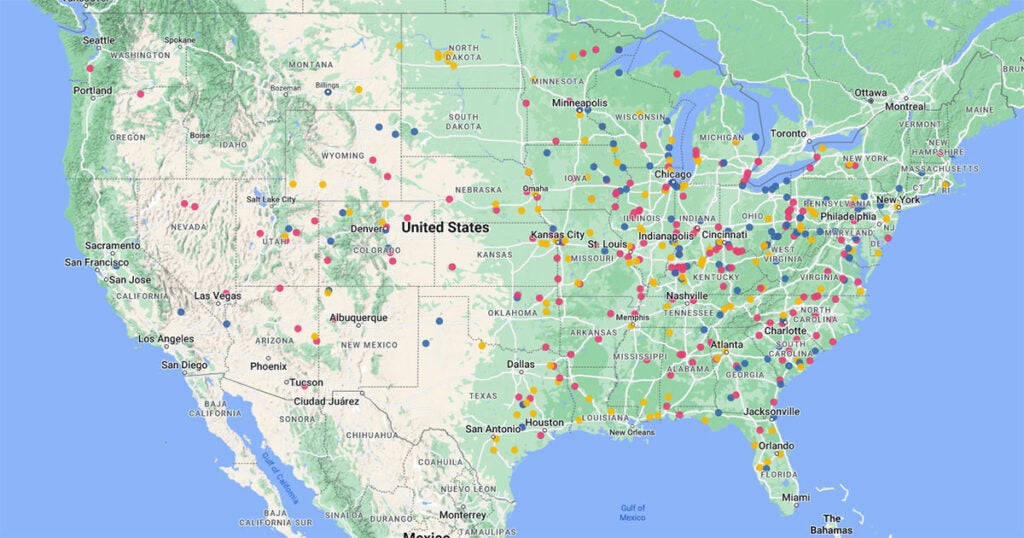
The results of a comprehensive study investigating the impacts of living near 378 coal plants in the United States have found that people of color and low-income communities are disproportionately more burdened by this pollution than any other segment of the population. Coal Blooded was pulled together by the NAACP, Little Village Environmental Justice Organization (LVEJO) and the Indigenous Environmental Network.

View Jared Saylor's blog posts
30 November 2012, 12:14 PM
Defends DoD Bill against unrelated Hoeven Coal Ash Amendment
Sen. Boxer takes a stand against false rider tactics.

Some members of the Senate believe it’s acceptable to write up legislation to prevent the EPA from regulating toxic coal ash—and then attach it to a completely unrelated bill.

They tried unsuccessfully earlier this summer to put it into must-pass legislation that would help maintain and improve our nation’s highway infrastructure. They’re considering including it as a “rider” on the pending “fiscal cliff” bill. They even talked about putting it on a spending bill for the Department of Defense.

It seems some senators know no bounds on allowing polluters to continue dumping this waste—filled with arsenic, lead, mercury and more—into unlined and unmonitored ponds and landfills next to coal-fired power plants. Already, coal ash has polluted lakes, rivers, streams and aquifers at nearly 200 sites across the country.

But yesterday, one senator made clear that she’s not willing to allow dangerous environmental riders onto unrelated legislation.

2 Comments   /   Read more >>
View Raviya Ismail's blog posts
29 November 2012, 11:22 AM
Nearly two-thirds of those surveyed support standards
The microscopic size of soot allows it to lodge deep within the lung. (Chris Jordan-Bloch / Earthjustice.)

They have spoken! Nearly two-thirds of American voters are demanding stronger protections against one of the most dangerous and pervasive pollutants around: soot.

Today, the American Lung Association released results from a national survey of 942 registered voters, finding that support for these clean air protections is broad and deep, with strong majority backing even after hearing balanced messages on both aisles of the debate.

Now it’s time for the EPA and the White House to listen: on Dec. 14, 2012, the EPA will release final updated standards for PM 2.5 (soot). Earlier this year the EPA proposed updated clean air safeguards that will prevent thousands of premature deaths and take steps toward clearing hazy air in national parks.

The proposal came in response to legal action filed by Earthjustice on behalf of the Lung Association and the National Parks Conservation Association.

The polling specifically finds that 62 percent of voters favor the proposal, compared to 30 percent who oppose it. Nearly 40 percent of voters strongly favor the standards, while only 20 percent express strong opposition.

ALA poll results.

A survey by ALA found broad and deep support for stronger soot standards.
1 Comment   /   Read more >>
View Lisa Evans's blog posts
28 November 2012, 1:16 PM
Lawmakers are leading nation to environmental cliff
More than a hundred million gallons of coal ash slurry were released when a coal ash dam failed, flooding Buffalo Creek Valley in West Virginia.

In the aftermath of a major catastrophe, lawmakers and regulators should be held accountable to create new safety protocols to avert future disasters. Incidents like the Cuyahoga River catching fire and the Exxon Valdez oil spill prompted changes in how we protect our nation’s waters from industrial chemicals. The Buffalo Creek disaster in West Virginia in 1972 likewise prompted changes to the regulation of dams storing toxic materials. Similarly, we must demand changes to how coal ash is handled, following the largest toxic waste spill in our nation’s history—the spill in Kingston, Tennessee in December 2008, which will have its fourth anniversary in a few weeks.

Former Director of the National Mine Health and Safety Academy Jack Spadaro remembers the Buffalo Creek disaster and knows that its grim legacy still casts a shadow today.