Posts tagged: mountaintop removal

unEARTHED. The Earthjustice Blog

mountaintop removal


    SIGN-UP for our latest news and action alerts:
   Please leave this field empty

Facebook Fans

Featured Campaigns

Everyone has The Right To Breathe clean air. Watch a video featuring Earthjustice Attorney Jim Pew and two Pennsylvanians—Marti Blake and Martin Garrigan—who know firsthand what it means to live in the shadow of a coal plant's smokestack, breathing in daily lungfuls of toxic air for more than two decades.

Coal Ash Contaminates Our Lives. Coal ash is the hazardous waste that remains after coal is burned. Dumped into unlined ponds or mines, the toxins readily leach into drinking water supplies. Watch the video above and take action to support federally enforceable safeguards for coal ash disposal.

ABOUT EARTHJUSTICE'S BLOG

unEARTHED is a forum for the voices and stories of the people behind Earthjustice's work. The views and opinions expressed in this blog do not necessarily represent the opinion or position of Earthjustice or its board, clients, or funders.

Learn more about Earthjustice.

View Kathleen Sutcliffe's blog posts
11 June 2010, 8:44 PM
Let’s turn this bad action-adventure plot around
Have we been cast as extras in a fossil fuels end-of-days flick?

Is it just me? Or did this week's oil and gas news have a doomsday quality to it?

On Monday we had not one, not two, but three industrial gas disasters: a natural gas pipeline in Texas exploded, killing one worker, injuring several others and sending up a geyser of flame visible for miles around; a fireball and explosion burned seven workers drilling for natural gas in West Virginia; and authorities shut down activities at a Pennsylvania gas drilling site after a plume of toxic wastewater shot 75 feet into the air from a ruptured gas well, raining chemicals down on the site for 16 straight hours.

All of this as BP kept churning out an estimated 25,000 to 30,000 barrels of oil a day into the Gulf of Mexico and investigations continued into the Massey mine disaster in West Virginia that killed 29 miners.

Looking around at this fossil fuels end-of-days drama unfolding around us, I can't help but feel like we've all been cast as extras in some scary action-adventure movie.

5 Comments   /   Read more >>
View Trip Van Noppen's blog posts
09 June 2010, 1:29 PM
Vote down Sen. Murkowski's resolution to bail out big polluters
Sen. Lisa Murkowski (R-AK)

Yesterday the White House took a firm stand against an effort to undermine the 40-year-old Clean Air Act, reverse a Supreme Court decision, and block the federal fuel efficiency standards that were finalized this past spring, which will reduce the nation's consumption of oil by at least 455 million barrels.
 
The effort at hand is a seldom-used congressional "Resolution of Disapproval" by Sen. Lisa Murkowski (R-AK), on the Senate floor for a vote tomorrow, June 10. The resolution, which was influenced by oil- and polluter-industry lobbyists, is at the center of a fury of political positioning and partisan politicking. Its purpose is to block the EPA's ability to regulate greenhouse gases, authorized by the Clean Air Act and reaffirmed by the 2007 Massachusetts v. EPA Supreme Court decision.
 
In an official statement yesterday, the White House threatened to veto the resolution if it is passed by the Senate tomorrow. Meanwhile, Sen. Murkowski and her Republican allies held a press conference to solicit public attention and support for this vote. The rest of the Senate and, more importantly, the public, should see through their smoke-and-mirrors routine. After all, the connection between reducing our national dependence on oil and controlling fossil fuel pollution are two sides of the same coin.

6 Comments   /   Read more >>
View Liz Judge's blog posts
29 April 2010, 12:24 PM
And more evidence of climate change, & learning things the hard way

Einstein defined insanity as doing the same thing over again and expecting different results. Einstein, who had a particular knack for coming up with enduring and timeless ideas, may find application in our country's energy landscape today.

Looking out yonder, we see a devastating oil spill and possibly one of the worst and most costly ecological disasters in our country's history, mountains being destroyed by explosives and the resulting toxic sludge getting dumped into our waterways, communities and people being poisoned by coal ash and coal waste, and carbon pollution exacerbating heat waves, warming our oceans, and increasing ocean acidity until building blocks of our underwater life are killed off—and these are just some of the things we are seeing here in the U.S.

Looking beyond the U.S., we see unfriendly regimes getting stronger and richer from our reliance on foreign oil, we see China boosting its share of the renewables market in its quest for global economic leadership and to meet its growing thirst for energy.

6 Comments   /   Read more >>
View Raviya Ismail's blog posts
22 April 2010, 1:24 PM
Study shows link between cancer and mine waste

With the recent mining tragedy in West Virginia there has been argument enough that mountaintop removal mining takes the human element out of mining – that is, machines extracting coal from deep within mines supplant the human cost of mining.

A new study shows that this belief has no merit.

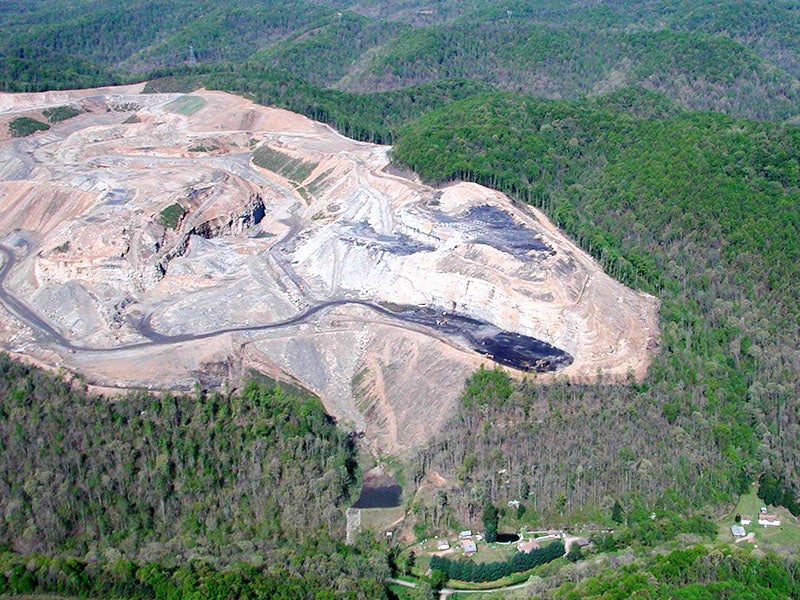
According to researchers at West Virginia University and Virginia Tech, West Virginians living near streams polluted by mine waste are more likely to die of cancer. This study is the first to see the connection between the health of Appalachian streams and the health of coalfield residents. If you didn't know, mountaintop removal mining is a method that blows up mountains and dumps mine waste into streams.

1 Comment   /   Read more >>
View Liz Judge's blog posts
22 April 2010, 9:41 AM
Thanks for all you've done

“The battle to restore a proper relationship between man and his environment, and between man and other living creatures, will require a long sustained political, moral, ethical, and financial commitment far beyond any commitment ever made by any society in the history of man. Are we able? Yes. Are we willing? That’s the unanswered question.” – Gaylord Nelson, founder of Earth Day.

When Earth Day was born 40 years ago, there were “spumes of pollution pouring out of smokestacks, people spraying children in parking lots and at picnics with DDT, air pollution in major cities that was basically unbreathable, rivers catching on fire, lakes dying,” says one of Earth Day’s original organizers, Denis Hayes, in this Washington Post video. “It was just deteriorating very rapidly, but what addressed those problems was a wave of legislation immediately after Earth Day.” (For more on Earth Day’s storied history, read this.)

As we celebrate 40 years of Earth Day, we’re also celebrating 40 years of Earthjustice victories – check out 40 of our favorite victories along with stunning photos in this new slideshow made for Earth Day 2010.

We're also celebrating our army of supporters, activist members, and concerned citizens. We have you to thank for each of these major victories, and the many victories and wins in between.

1 Comment   /   Read more >>
View Trip Van Noppen's blog posts
20 April 2010, 10:30 AM
EPA embraces science and the law in two strong actions

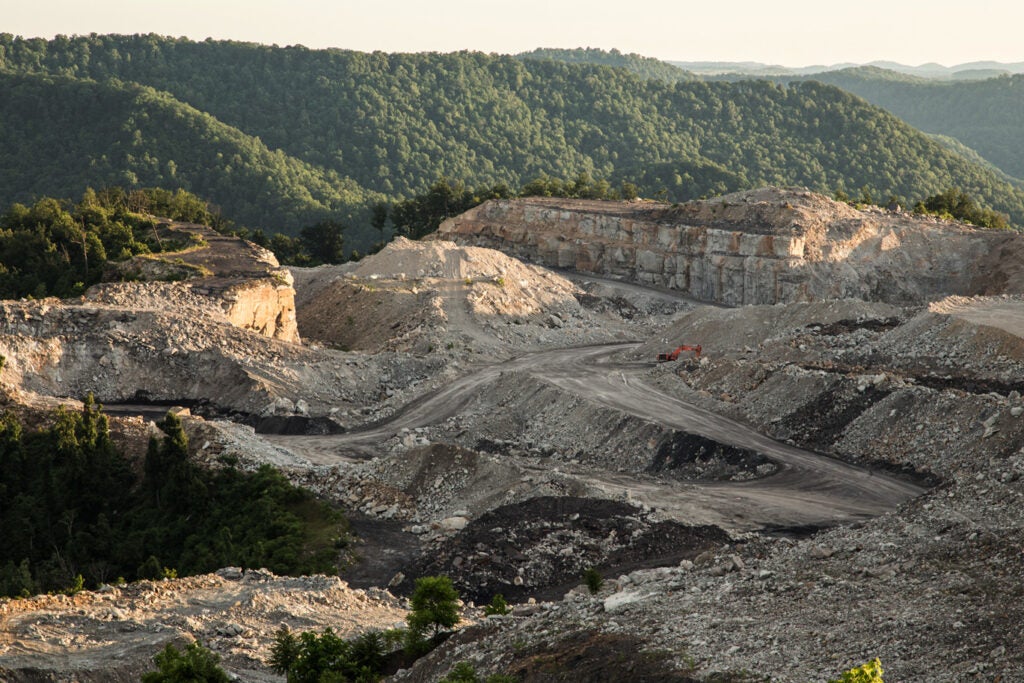
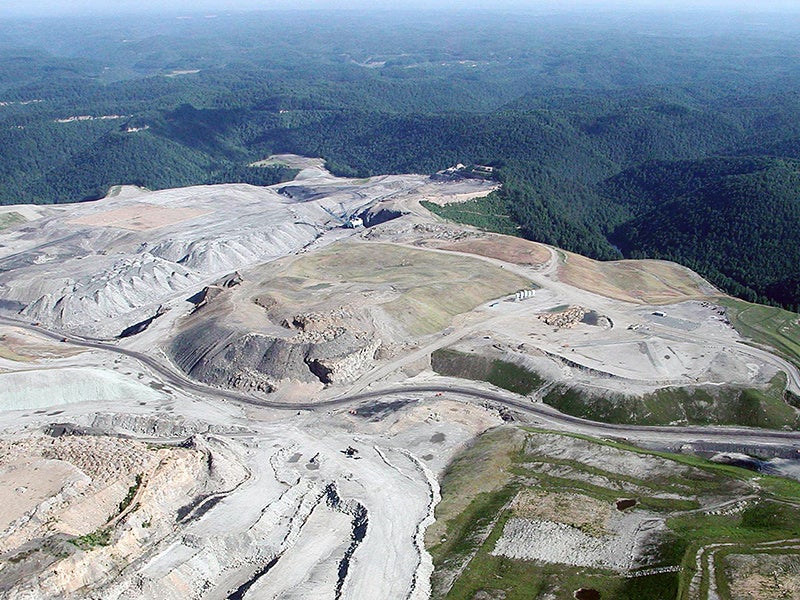
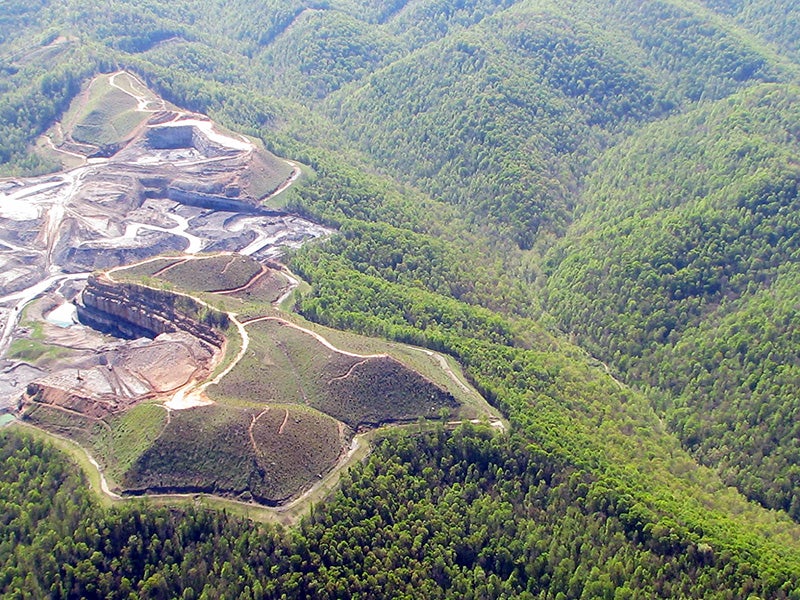
In Appalachia, moving mountains is easy. What's hard is keeping them where they are. Coal companies have used dynamite's muscle to blast hundreds of the earth's oldest summits into neighboring valleys, permanently altering the landscape. But two recent developments are shaking the foundations of mountaintop removal mining, signaling that perhaps, at long last, what's moving is the mountain of science and law that compels the end of this destructive practice.

In late March, the Environmental Protection Agency took dramatic action in proposing to veto a permit issued by the U.S. Army Corps of Engineers for the Spruce No. 1 mine in West Virginia—one of the largest mountaintop removal projects ever approved—on the grounds that mine operations would violate the Clean Water Act. The action was presaged by an Earthjustice lawsuit filed in 2007 that challenged approval of a Clean Water Act permit for the mine for failing to follow science and the law.

If the EPA does veto the permit, the agency's invocation of the Clean Water Act to curtail operations at the Spruce mine will be an important victory. It could have broader repercussions on mountaintop removal in general. (The agency is currently accepting public comments on the veto proposal. You can take action by telling EPA to follow through with the veto and enforce the Clean Water Act.)

But the good news doesn't end there.

10 Comments   /   Read more >>
View Raviya Ismail's blog posts
01 April 2010, 11:57 AM
EPA announces plans to reduce destruction from MTR

Hooray for Appalachia!

Today, EPA Administrator Lisa Jackson announced guidelines to prevent continuing harmful environmental impacts as a result of mountaintop removal mining. This is a second win for environmentalists who cheered EPA's announcement last week to veto an Army Corps of Engineers permit for the Spruce No. 1 mine in West Virginia, the largest mountaintop removal mine ever authorized in Appalachia.

These recent EPA actions come on the basis of scientific studies that have determined that the resulting waste from mountaintop removal mining significantly compromises water quality often causing permanent damage to ecosystems and waterways.

1 Comment   /   Read more >>
View Terry Winckler's blog posts
10 February 2010, 12:46 PM
Flathead Valley’s natural riches will be kept intact

<Update: Sen. Max Baucus (D-Mont.) announced that he will introduce legislation that provides the same protections on federal lands in Montana that British Columbia has agreed to.> Canada's portion of the Flathead Valley—a dazzling part of wilderness known as the "Crown of the Continent"—has been saved from the kind of mineral development that is destroying many parts of the United States.

British Columbia, in partnership with the state of Montana, has agreed to ban mining, oil and gas development and coalbed gas extraction in the valley, which is adjacent to a World Heritage site spanning the U.S.-Canadian border.

This is a big win for Earthjustice and its Canadian counterpart, EcoJustice, which had petitioned the United Nations in 2008 to investigate proposed mining activities. What's been saved, says Earthjustice attorney Tim Preso, is "a treasure more precious than coal or gold."

2 Comments   /   Read more >>
View Molly Woodward's blog posts
29 January 2010, 11:16 AM
Coal industry and park preservation
Bighorn sheep headbutting in Glacier National Park. Photo: USGS

Some top stories from the past week at Earthjustice…

One result of burning coal is lots and lots of toxic coal ash. It's stored in hundreds of ponds across the U.S., and it can flood and devastate entire communities. Yesterday, Earthjustice joined more than 100 environmental groups in a Day of Action, urging the White House to finally call coal ash what it is: hazardous waste.

A heated debate over mountaintop removal coal mining last week drew huge crowds. The competitors: Don Blankenship, CEO of coal giant Massey Energy, and Waterkeeper founder Robert F. Kennedy, Jr. The reporter: Earthjustice Campaigns Director, Jared Saylor. The victor: Decide for yourself!

The same Massey Energy is one of several industry groups asking a federal appeals court to review (aka do away with) the EPA Clean Air Act endangerment finding. In defense of the finding, 16 states and New York City filed a motion last week to intervene in the case.

Glacier National Park is nearly 100 years old, and Monday Reads introduces us to a truly incredible photography project in celebration of its centennial birthday. Right next door on the U.S.-Canadian border lives the Waterton-Glacier International Peace Park, now threatened by mining plans in the nearby Flathead Valley. But there was hopeful news last week: Earthjustice encouraged an investigation that has resulted in a recommendation of a moratorium on mining and a conservation plan for this essential region.

View Shirley Hao's blog posts
22 January 2010, 6:11 PM
One hundred years of national park goodness
Beargrass, a lily native to Glacier National Park, blooms along the Iceberg Lake trail in Montana. Photo: NPS.

Happy Birthday, Glacier National Park!

Okay, so we’re a few months early…but when you’re coming up on one hundred, you clearly deserve a more grandiose and extended celebration.

The birthday star is one half of the dynamic duo making up Waterton-Glacier International Peace Park. North of Glacier National Park lies its companion, Canada’s Waterton Lakes National Park. Together, these parks represent a corridor of nearly unparalleled pristine wilderness, where almost all of the historical flora and fauna still exist.

In honor of Glacier’s centennial, Glacier Park Magazine editor Chris Peterson set about to photograph the park for a hundred consecutive days. The results are nothing short of thrilling. Chris’s images and insightful commentary bring alive the beauty, diversity, and wonder of this amazing place.

A sampling of Chris’s work:

6 Comments   /   Read more >>