Posts tagged: oceans

unEARTHED. The Earthjustice Blog

oceans


    SIGN-UP for our latest news and action alerts:
   Please leave this field empty

Facebook Fans

Featured Campaigns

Everyone has The Right To Breathe clean air. Watch a video featuring Earthjustice Attorney Jim Pew and two Pennsylvanians—Marti Blake and Martin Garrigan—who know firsthand what it means to live in the shadow of a coal plant's smokestack, breathing in daily lungfuls of toxic air for more than two decades.

Coal Ash Contaminates Our Lives. Coal ash is the hazardous waste that remains after coal is burned. Dumped into unlined ponds or mines, the toxins readily leach into drinking water supplies. Watch the video above and take action to support federally enforceable safeguards for coal ash disposal.

ABOUT EARTHJUSTICE'S BLOG

unEARTHED is a forum for the voices and stories of the people behind Earthjustice's work. The views and opinions expressed in this blog do not necessarily represent the opinion or position of Earthjustice or its board, clients, or funders.

Learn more about Earthjustice.

View Jessica Knoblauch's blog posts
01 October 2012, 12:06 PM
Plus: Bacon blues, ocean critter jitters, burger smog and cattle candies
(flickr, cookbookman17)

Climate change may ruin BLTs and loaded baked potatoes
You know Americans may be a little food-obsessed when the only time we get concerned about climate change is when it affects our favorite meals. According to the USDA, this year’s drought is so bad that it’s expected to negatively impact next year’s pork production, reports Mother Jones, meaning that BLTs and pork chops may soon become a luxury item for many Americans. And forget about importing your bacon fix from Europe. Britain’s National Pig Association recently announced that a “world shortage of pork and bacon is now unavoidable” thanks to high pig-feed costs that are causing farmers to reduce their herd sizes. Though the association’s press release doesn’t specifically mention “climate change,” it does allude to “disastrous growing and harvesting weather,” which scientists only expect to get worse with increasing carbon emissions. In other words, if we don’t get our act together soon, it may mean good-bye, baconator®. Hello, tofu maker?
 
Consumers’ caffeine consumption gives ocean critters the jitters
Many people these days tend to be a little over-caffeinated, and it turns out that all of the sodas, coffee and energy drinks that people consume are having a similarly jittery effect on the world’s oceans, reports National Geographic. Conditions are especially amped up along the Pacific Northwest, home of Starbucks and many a caffeine-fiend, where researchers recently discovered caffeine pollution off of Oregon’s coast. Currently, caffeine’s impact on natural ecosystems is relatively unknown, though at least one researcher has found that the stimulant’s presence in water does tend to stress out mussels. Surely anyone who has knocked back too many cups of black gold can relate. But the problem isn’t just coming from the Pacific Northwest. Caffeine has also been detected in Boston Harbor and Massachusetts Bay seawater. The presence of caffeine is the oceans isn’t all that surprising though considering that most water treatment facilities typically don’t screen or filter for many pollutants, such as pharmaceuticals, detergents or estrogen-containing birth control pills. But given the growing evidence for elevated levels of human contaminants in the water, they may soon have to, or suffer the caffeinated consequences.
 

1 Comment   /   Read more >>
View Kari Birdseye's blog posts
27 September 2012, 1:44 PM
Drilling poses too many environmental risks, says Total CEO

The “Big Oil” companies are breaking ranks. The fourth largest oil company in the world told the Financial Times yesterday that drilling in the Arctic is too risky, a position held by the environmental community for the past seven years.

Total SA CEO Christophe de Margerie, said, “Oil on Greenland would be a disaster … A leak would do too much damage to the image of the company.” This is the man who runs one of the world's largest integrated oil companies, with operations in 130 countries. According to Hoover’s, Total “explores for, develops, and produces crude oil and natural gas; refines and markets oil; and trades and transports both crude and finished products.”

The outspoken Big Oil CEO isn’t the only leader expressing concern.

1 Comment   /   Read more >>
View Terry Winckler's blog posts
18 September 2012, 3:19 PM
His legacy flows through America's waterways
Russel Train -- Photo Courtesy The Heinz Awards

It’s not the passing of Russell Train – who died Monday at 92 – that we remember, but the life he led as a powerful, humble, principled warrior for the Earth.

Mr. Train was chairman of the newly created White House Council on Environmental Quality before President Nixon picked him to be the second head of the Environmental Protection Agency, a role that fully launched his career as a conservationist, recalls Joan Mulhern, a colleague of mine who worked with this remarkable man to protect the Clean Water Act.

A lifelong Republican, Mr. Train embodied what it meant to be a conservative conservationist, Joan said.

View Trip Van Noppen's blog posts
15 September 2012, 8:39 PM
Your voice can help put the environment on the political agenda
Your voice is as important as your vote—there is a lot you can do. (Jason Langheine)

After the summer we have had, my mind is on climate change, what more Earthjustice can do about it, and what’s at stake in this election.

I experienced the effects of climate change this summer during a trip through Colorado. Heat, drought and fire set an almost apocalyptic tone for the trip. There was no snow on the peaks, stream flows were down, and smoke filled the air. Similar impacts afflicted 60 percent of our nation and spread over three continents; sea ice coverage in the Arctic was at a record low.

Earthjustice is working hard to slow and reverse these climate trends by bringing cases across the country to beat down coal, reduce greenhouse gas emissions, and expand the market for renewable energy and efficiency. And with your support we are doing more every day: hiring more attorneys and bringing more cases in more places. We are grateful not only for your support which makes this possible, but also for your advocacy which helps get better rules adopted and enforced.

28 Comments   /   Read more >>
View Trip Van Noppen's blog posts
18 August 2012, 5:44 PM
U.S. lax about chemicals used in oil and gas operations
A U.S. Air Force chemical dispersing C-130 aircraft drops an oil dispersing chemical into the Gulf of Mexico as part of the Deepwater Horizon response effort. (U.S. Air Force Photo / Tech. Sgt. Adrian Cadiz)

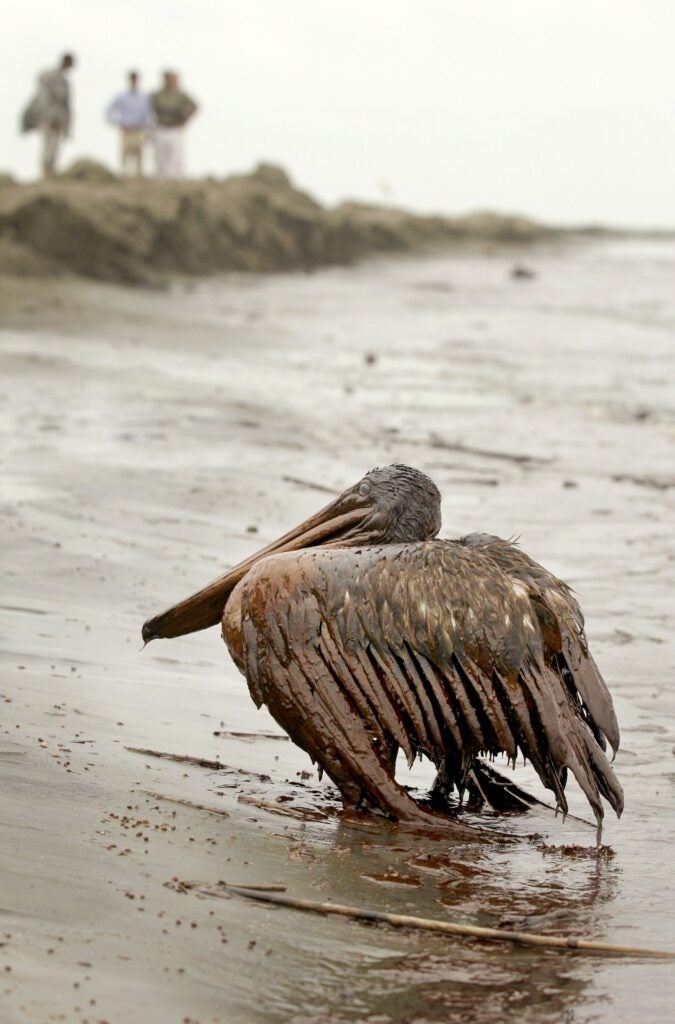
In April 2010, a national nightmare began with a blowout into the Gulf of Mexico. But the hundreds of millions of gallons of oil from the Deepwater Horizon spill were just the beginning of the disaster. We are still learning about the real damage, which is much more insidious than tar balls and slicked beaches.

Recently, researchers found that the millions of gallons of chemical dispersants used to break up the oil may disrupt the Gulf of Mexico’s food chain by killing off plankton, the fuel on which marine ecosystems run. At the time of the spill, little was known about the dispersants’ health and environmental effects, but oil executives and government officials justified the risk by arguing that desperate times call for desperate measures.

Welcome to the age of extreme energy, which requires us to risk the health of our bodies and our environment just to keep the lights on. From oil dispersants to fracking fluid, the chemicals used in extreme energy all have one thing in common: We know little about them, and what we do know is worrisome.

9 Comments   /   Read more >>
View Kari Birdseye's blog posts
18 July 2012, 4:16 PM
Shell’s latest Arctic blunder
Noble Discoverer being towed away from land on July 14. (Photo courtesy of Kristjan Laxfoss)

U.S. Coast Guard divers are now on the way to Dutch Harbor, Alaska to inspect the 571-foot drill rig Noble Discoverer, which is scheduled to drill three exploratory wells in the American Arctic waters of the Chukchi Sea as early as August. The locals say it ran aground in the harbor in broad daylight on Saturday and took pictures to prove it. Shell Oil Co. says otherwise; it “lost its moorings and came close to the coast.” We’ll have to wait and see what the Coast Guard has to say about reasons for the mistake.

The company that can’t keep a ship in safely anchored in a harbor (in four-foot seas!) has had a tough couple of weeks. First the company told the federal government it based its nearshore and shoreline oil spill cleanup equipment on the “assumption” that the company will be able to recover 90 percent of any oil spill in the water, which helped get approval of the spill plans. Later Shell took it back and said it only expected to “encounter” 90 percent of the oil spilled, whatever that means. Then Shell asked the Coast Guard to let the company back out of its commitment to have its oil spill containment barge, the “Arctic Challenger,” meet the 100-year storm-worthy standard and instead drop to the less-stringent 10-year storm standard. And just last week, Shell said whoops, it can’t meet the air pollution standards imposed by it Clean Air Act permit and asked the federal government to lower them …

View Jessica Knoblauch's blog posts
13 July 2012, 1:56 AM
Plus: Toxic ships, seed wars and dirty produce

Extreme gas drilling fracks up ice cream ingredient
Hydraulic fracturing, or fracking, may cause a worldwide ice-cream headache by eating up supplies of a food additive that’s used in everything from ice cream to cosmetics, drugs and explosives, reports the Houston Chronicle. It turns out that guar gum, a magical white flour-like substance that’s added to all kinds of foods for thickening, binding and volume enhancing, is also useful for forcing pockets out of gas out of deep fissures in the earth. Currently, purchasing guar gum accounts for about one-third of fracturing costs. A typical fracking job requires about 20,000 pounds of the stuff so it's unsurprising that the U.S.'s fracking boom has put a strain on guar gum availability over the past few years, causing prices to skyrocket. That’s bad news for ice cream lovers since guar gum is one of the main ingredients in the dairy dessert. So what does the fracking industry get for ruining our water, our air and now our ice cream? According to Grist, the industry gets a tax loophole that allow gas industries like Chesapeake Energy Corp. to pay just 1 percent in income tax over the last two decades. There’s got to be a better way to get our energy

Navy rekindles its love for dumping toxic ships into U.S. waterways
The U.S. Navy is going back to its old ship-dumping ways, reports the LA Times. After a nearly two-year moratorium spurred by both cost and environmental concerns, the Navy will soon dump three inactive warships into Hawaii’s waters as part of a series of naval exercises known as RIMPAC. In late 2011, Earthjustice sued the U.S. EPA for failing to adequately regulate the Navy’s ship sinking program, which pollutes the sea with a group of highly toxic chemicals called PCBs (polychlorinated biphenyls). Though PCBs were banned by the EPA in 1979, they still linger in many of the Navy's old ships. Currently, the Navy is required to document the amount of toxic waste that’s left on the ships while removing as much as the material as possible. But, environmental groups believe that the Navy should clean up the vessels to higher standards before sinking them, especially because some of the toxics have been found to eventually work their way into the ecosystem.

View Sarah Burt's blog posts
28 June 2012, 3:20 PM
Vessels must avoid dirtier fuels off state coast

Twenty seven million Californians—80 percent of the state’s population—are exposed to emissions from ocean-going vessels, resulting in serious health impacts such as cancer, respiratory illnesses like asthma, as well as increasing the risk of heart disease. California estimates that the ships’ direct particulate emissions cause 300 premature deaths across the state every single year, even after excluding cancer effects.

The Ninth Circuit’s 2011 decision in Pacific Merchant Shipping Assn. v. Goldstene involved a shipping industry challenge to the Vessel Fuel Rule. The Ninth Circuit rejected industry’s claims that the ARB regulation is preempted by the federal Submerged Lands Act and contravenes dormant Commerce Clause principles. By denying certiorari, the Supreme Court has decided to let the Ninth Circuit’s decision stand.

View Erika Rosenthal's blog posts
22 June 2012, 1:56 PM
Nations take positive actions to enhance ocean protections

The news out of the Rio+20 Earth Summit has been bleak. World leaders, yet again caught in the headlights of financial crises and electoral cycles, fundamentally failed us and the planet. However, there is a bright spot—and it is blue. Both the formal Rio text and the voluntary, on-the-ground and on the water commitments nations made, are a reason for hope.

The oceans sequester, or absorb, about 30 percent of the CO2 we spew into the atmosphere from burning fossil fuels. But this remarkable environmental service, helping to moderate the climate impact of our fossil fuel addition, comes at a heavy cost—ocean acidification.

Ocean acidification has created renewed urgency to reduce pollution, over fishing and coastal damage to build ocean ecosystem resilience against the adverse effects of carbon pollution. The only long-term solution to acidification is deep cuts in CO2 emissions, but to ensure that as much marine biodiversity as possible survives the inevitable acidification in the coming decades, building resilience is essential and urgent.

1 Comment   /   Read more >>
View Roger Fleming's blog posts
22 June 2012, 12:16 PM
Finally, oversight coming for poorly regulated fisheries
Herring school.

A special thank you goes out to the thousands of Earthjustice supporters who took action over the last few months by writing to the fishery management councils. Your voices made a huge difference.

After a long struggle, we just concluded two great weeks in the campaign to protect forage fish, some of the most important fish in the sea.

I want to share with you some of the details about what happened.

1 Comment   /   Read more >>