Posts tagged: wolves

unEARTHED. The Earthjustice Blog

wolves


    SIGN-UP for our latest news and action alerts:
   Please leave this field empty

Facebook Fans

Featured Campaigns

Everyone has The Right To Breathe clean air. Watch a video featuring Earthjustice Attorney Jim Pew and two Pennsylvanians—Marti Blake and Martin Garrigan—who know firsthand what it means to live in the shadow of a coal plant's smokestack, breathing in daily lungfuls of toxic air for more than two decades.

Coal Ash Contaminates Our Lives. Coal ash is the hazardous waste that remains after coal is burned. Dumped into unlined ponds or mines, the toxins readily leach into drinking water supplies. Watch the video above and take action to support federally enforceable safeguards for coal ash disposal.

ABOUT EARTHJUSTICE'S BLOG

unEARTHED is a forum for the voices and stories of the people behind Earthjustice's work. The views and opinions expressed in this blog do not necessarily represent the opinion or position of Earthjustice or its board, clients, or funders.

Learn more about Earthjustice.

View Doug Honnold's blog posts
03 August 2012, 2:59 PM
Wyoming wants gray wolves off the endangered species list

The anti-wolf crowd in Wyoming has this irrational fear of wolves, and no amount of evidence can calm them. These are the folks who want to turn back the clock to the Wild West days where they could kill every wolf they see—and, unfortunately, the Interior Department is going to let them do just that in most of the state.

It’s hard to believe that, in this day and age, recklessly killing wolf pups would be encouraged by a state government, but that is what we are facing. The state of Wyoming is openly discussing taking dogs from a dog pound to the backcountry, staking them dead or alive until wolves arrive, and then killing the wolves on sight. The sad part is that this would be perfectly legal in most of the state.

42 Comments   /   Read more >>
View Kari Birdseye's blog posts
18 May 2012, 5:23 PM
California's only "official" gray wolf runs with the coyotes
OR7, well camouflaged.
(Richard Shinn / DFG)

Oh, Journey, we know you are lonely. We know you have been searching for that special girl, maybe even from California. The search has been long—months long. We know you broke the pack rules, crossed the state of Oregon and then the California state border looking for love and made national news doing it.

But recent reports say you’ve been hanging out with the wrong crowd. They say you’ve traded in your lone wolf status and are hanging with … the coyotes.

I know they are fun. I hear them often, laughing and carrying on all hours of the night. But, Journey, you are not going to find that special gal hanging with those California cavorters. If you aren’t careful and officials see hybrid babies of yours and one of those coyotes, the California Department of Fish and Game has to kill them.

View Jessica Knoblauch's blog posts
15 March 2012, 12:23 PM
Dog-gone oil spill cleanups, coastal city wipeouts, leaded bullets
Is your baby getting its daily dose of hormone-disrupting chemicals? (photo courtesy of pfly)

Low chemical doses may have big health effects
A recent finding that tiny doses of certain hormone-altering chemicals can lead to harmful health effects could lead to a paradigm shift in the way that regulators evaluate a chemical’s harmfulness, reports Environmental Health News. Traditionally, toxicologists and regulators have evaluated the toxicity of a chemical by following the common adage, “The dose makes the poison,” which means that some chemicals can be harmful at high doses but perfectly fine at lower doses. However, this latest research has flipped that theory on its head by finding that some chemicals, especially those with hormonal properties like bisphenol A (BPA), can actually have a more harmful effect on people at low, rather than high, doses. Considering that BPA is found in everything from baby bottles to soup cans, the new study has implications not only for scientists and regulators, but for the people who are exposed to these chemicals on a daily basis.

Arctic oil spill cleanup methods go to the dogs
Norwegian researchers are experimenting with using dogs to sniff out oil spills in the harsh Arctic environment, reports the UK Guardian. So far the super-sniffing dogs, a dachshund and two border colliers, have been able to detect the scent of oil up to three miles downwind of a spill. Though impressive, the oil sniffing dogs experiment has largely been derided as a last ditch option for cleaning up oil in an area where “we do not have adequate science and technology…particularly in ice,” said Marilyn Heiman, a director of PEW’s US Arctic Program. Though Shell doesn’t plan to deploy oil-sniffing dogs to the Arctic anytime soon, its existing “plan” to clean up an oil spill in the Arctic if one were to occur is scarily inadequate and is based on very unrealistic assumptions, says Earthjustice attorney Erik Grafe, who added, “The fact is, there simply is no way to adequately respond to an oil spill in the Beaufort Sea—it is too remote, icy, stormy, dark, and foggy. Shell’s plan needs to acknowledge the difficulties of the region, not assume them away.” 

View Tim Preso's blog posts
16 February 2012, 5:15 PM
Last, best wild national forest lands shielded from development
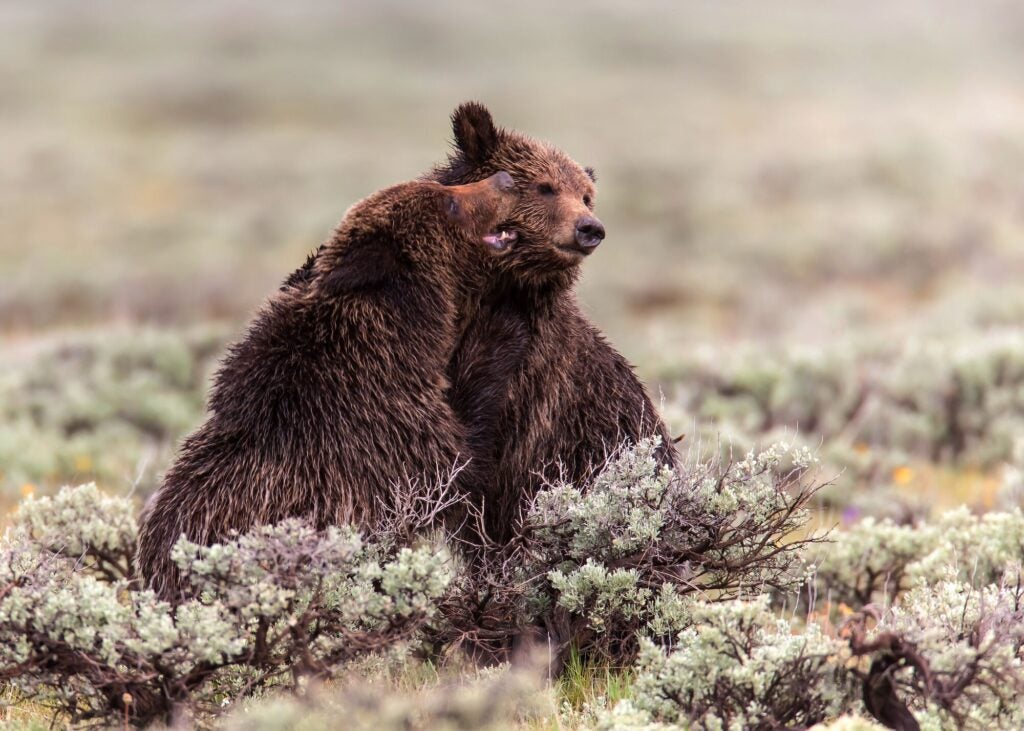
A grizzly bear taking a stroll in Yellowstone National Park.
(Terry Tollesfbol / USFWS)

Nearly 50 million acres of America’s most pristine public forest lands remain protected today, thanks to a decision this afternoon by the 10th Circuit Court of Appeals denying a last-ditch effort by the State of Wyoming and the Colorado Mining Association to overturn the U.S. Forest Service Roadless Area Conservation Rule, more commonly known as the Roadless Rule.

Earthjustice has been in the courts for the past 13 years fighting to protect the Roadless Rule, a landmark conservation measure that protects wild national forests and grasslands from new road building and logging. Protection of these forests secures vital habitat for some of our nation’s most sensitive wildlife. From condors of the southern California mountains, to grizzly bears and wolves near Yellowstone National Park, to migratory songbirds among the Appalachian hardwoods, many species would no longer exist—or would be severely depleted—but for the forest lands protected by the Roadless Rule.

View Kari Birdseye's blog posts
03 February 2012, 10:46 AM
Using the power of popular media to educate or misinform

The uplifting movie Big Miracle, opening this weekend, has the power to educate people across the country about America’s Arctic Ocean, along with the people and wildlife that call it home.

This is the same place Royal Dutch Shell is planning to drill in our Arctic waters this summer—with no viable method to clean up an oil spill in these extreme conditions. And President Obama has the power to stop them.

1 Comment   /   Read more >>
View Marty Hayden's blog posts
16 December 2011, 4:31 PM
Arctic rider snuck into year-end funding legislation
(Florian Schulz /visionsofthewild.com)

It’s that time of year again. No, I’m not talking about the great big man in the red suit and last-minute Christmas shopping.

I’m talking about the House GOP majority trying to deliver on their year-long assault on environmental and public health protections in the last two bills that will be passed by Congress this year.

The first is the omnibus spending bill that was passed by the House and Senate today. For the past two weeks, the GOP House Leadership and Appropriations Chairs have had a priority list of anti-environmental policy riders they had to have in any final spending bill. Some of those at the top of the list included blocking measures to require the clean up of industrial boilers and incinerators, cement kilns and power plants, and attempts to railroad Clean Water Act protections for streams, rivers and lakes. Removing protections for gray wolves in Wyoming and the Midwest were also on the list.

Thanks to the efforts of the White House, and Senate and House Democrats, none of these anti-environmental riders will become law in the final spending bill. Sadly, the same cannot be said of the Arctic. A last-minute, backroom deal tacked on a measure that excludes oil companies from complying with Clean Air Act protections in the Arctic.

View David Lawlor's blog posts
13 December 2011, 11:55 AM
California, here he comes? His search for a mate goes viral
A wolf, but not OR7. There are no known photos of wolf OR7.(Photo: Galen Rowell)

There’s nothing like a good road trip—you grab a handful of your favorite CDs, some snacks, a sense of adventure, and you’re off! Cruising down the open road, wind blowing through your hair, eyeballing heretofore unknown terrain, wondering who the heck lives in that little shack beside the highway in the middle of nowhere.

That’s how we humans do a road trip. But if you want to learn what a real road trip looks like, then you need to follow the saga of a gray wolf known to Oregon officials simply as OR7. Sure, OR7 could have grabbed his favorite Howlin’ Wolf album, packed some elk jerky and brought along his map of eastern Oregon.

But this dude is hardcore.

2 Comments   /   Read more >>
View Jessica Knoblauch's blog posts
22 July 2011, 10:26 AM
Fishy cleanups, meaty eco dilemmas, dirty soaps
Grey wolves in Yellowstone help keep the elk population in check. Photo courtesy of Arran_Edmonstone

Environment loses in predator versus people standoff
A new study has found that the decline of the world’s largest predators is wreaking havoc on the rest of the ecosystem, reports the Washington Post. Nature abhors a vacuum, and by killing off large sums of the world’s wolves, lions, buffalo and wildebeest, humans have inadvertently opened a door to other, sometimes less beneficial, wildlife. For example, the decimation of lions and leopards in parts of sub-Saharan Africa has allowed disease-ridden baboons to thrive, sometimes venturing into populated areas. And in the U.S., the hunting and killing of wolves in Yellowstone Park has incresed the numbers of elk and deer, which devour the forest food supply, leaving less food for other creatures. Deer also carry ticks that spread Lyme disease, an emerging infectious disease that can affect the joints, heart and central nervous system in humans.

Though the authors of the report acknowledge that it can be difficult to predict the effect that the loss of a large predator will have on the environment, what is clear is that no species is an island unto itself. In fact, the reintroduction of a native species can sometimes have a positive effect on the environment. For example, a reintroduction of wolves into Yellowstone back in the 1990s has helped keep the elk population in check, thereby allowing other creatures like beavers and birds to bounce back. Said William Ripple, co-author of the international report, “It’s amazing the effect one species, the wolf, can have on the entire ecosystem.”

View Liz Judge's blog posts
06 July 2011, 9:03 AM
House comes out swinging in its newly revealed 2012 spending bill

The 112th Session of the House of Representatives is at it again, doing what they do best: writing legislation to strike and block the clean air and clean water laws that keep us alive and healthy.

This morning, the House majority released its spending bill for the year 2012, and not to disappoint those who wish to live in a world with big corporations enjoying full freedom to foul our air and water without restriction, penalty or accountability, the bill manages to take direct aim at a handful of landmark environmental safeguards and a slew of major public health protections.

Legislating through appropriations is a back-door, manipulative move in its own right. It essentially means that instead of having to muster the votes required to pass new laws or take our current environmental and health safeguards off the books, House leadership is using a spending bill to simply stop and block all funding for these protections. The laws still stand as they are, they just can't be enforced. The way this House sees it, if the agencies can't get the money to enforce our current laws, there's no need to worry about what the laws actually mandate.

1 Comment   /   Read more >>
View Raviya Ismail's blog posts
12 April 2011, 12:20 PM
Federal budget targets gray wolves and wild lands

It’s been a harrowing past few weeks (to say the least). The first jolt came Feb. 19, when House leaders approved a spending plan that slashed an array of environmental safeguards and pretty much gave polluter industries a free pass to continue using our air and water as their dumping grounds.

Amid the back and forth over the final spending legislation, the government came this close to a disastrous shut-down, with rumors that women’s reproductive rights and the EPA’s authority to regulate carbon emissions were on the bargaining table, but in the end, President Obama and Senate Majority Leader Harry Reid were able to stave off clean air and water attacks. The final budget will be voted on by congressional leaders in the next few days and cuts $38 billion.

But not all was won. In the 11th hour, House Speaker John Boehner and his Tea Party flank were able to slip a few anti-environmental attacks in there, among them one that will remove ESA protections for gray wolves.