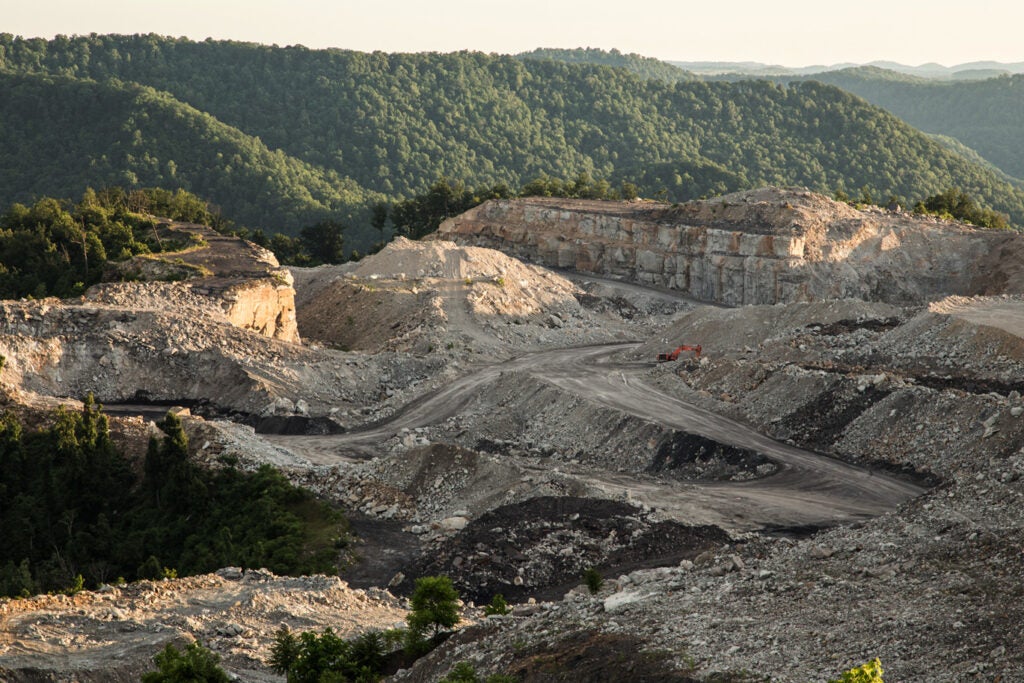
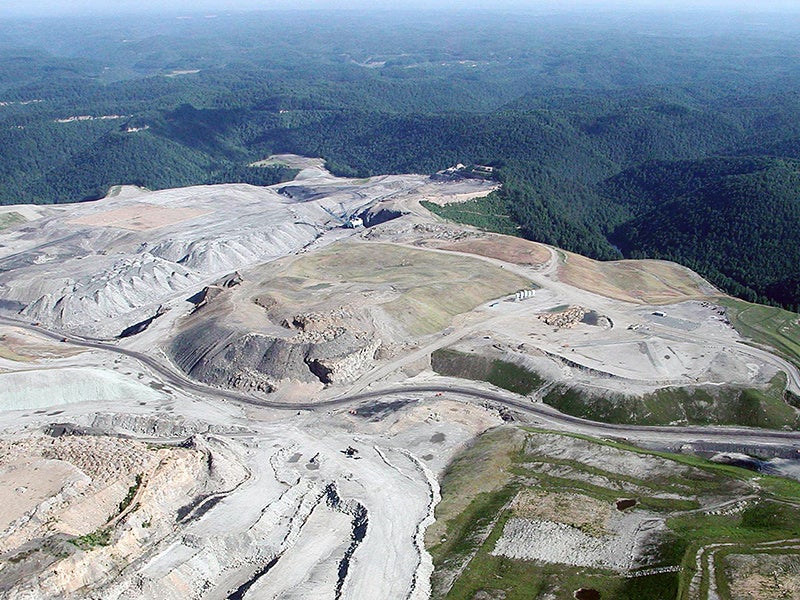
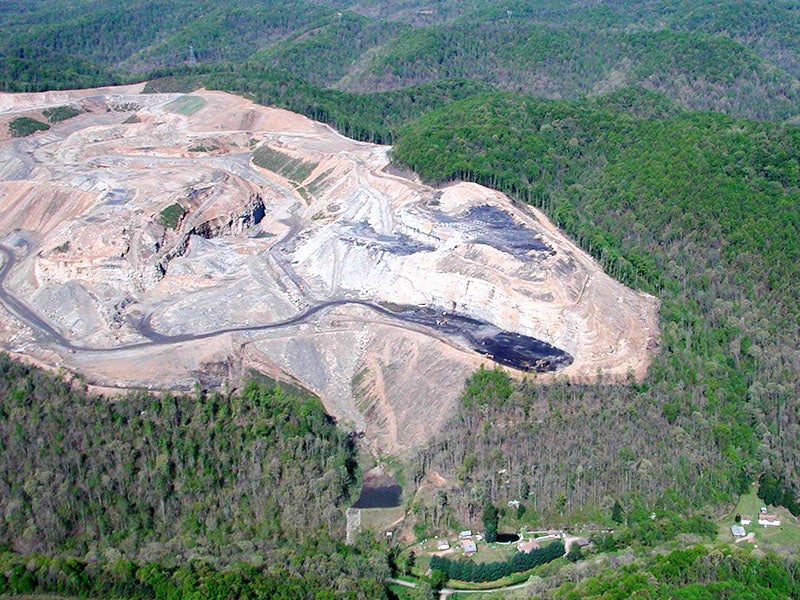
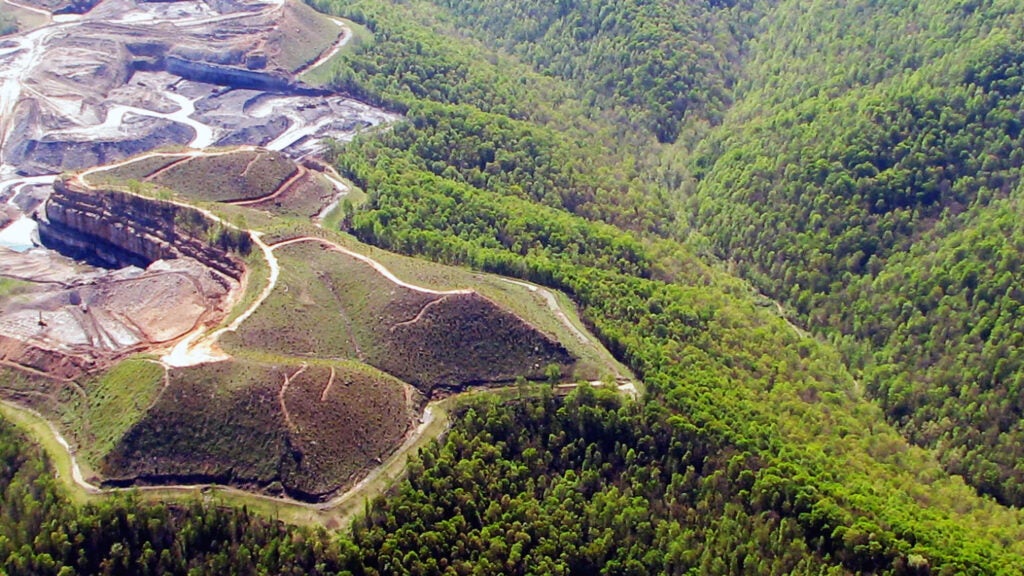
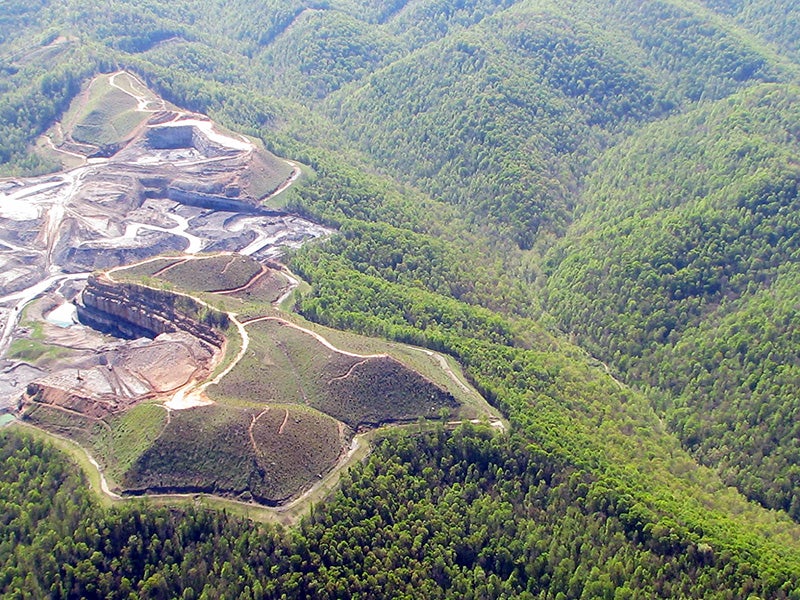
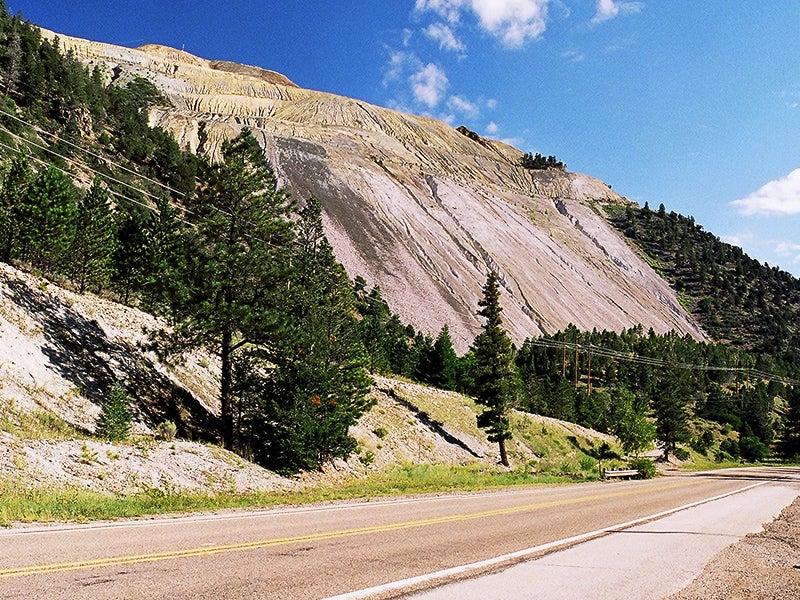
Mountaintop removal mining devastates the landscape, turning areas that should be lush with forests and wildlife into barren moonscapes.
Huge machines called draglines push rock and dirt into nearby streams and valleys, forever burying waterways. The massive dragline in the photo, which can weigh up to 12 million pounds and be as big as an entire city block, is dwarfed by the scale of this devastation.
Photo: © OVEC
Related
Mountaintop removal mining uses an explosive mixture of ammonium nitrate and fuel oil, commonly called ANFO.
Communities located near mountaintop removal sites have reported having their homes bombarded with rocks and other dangerous projectiles from blasting.
Photo: © Giles Ashford
Related
Flooding in communities near mountaintop removal sites is becoming more common and more deadly. Residents say that flooding that happened once a decade is now happening two and three times a year.
As mountains are cleared of trees, shrubs and other plants, rainwater that usually would be caught in these natural filters is running unabated into oversaturated streams.
Photo: © Giles Ashford
Related
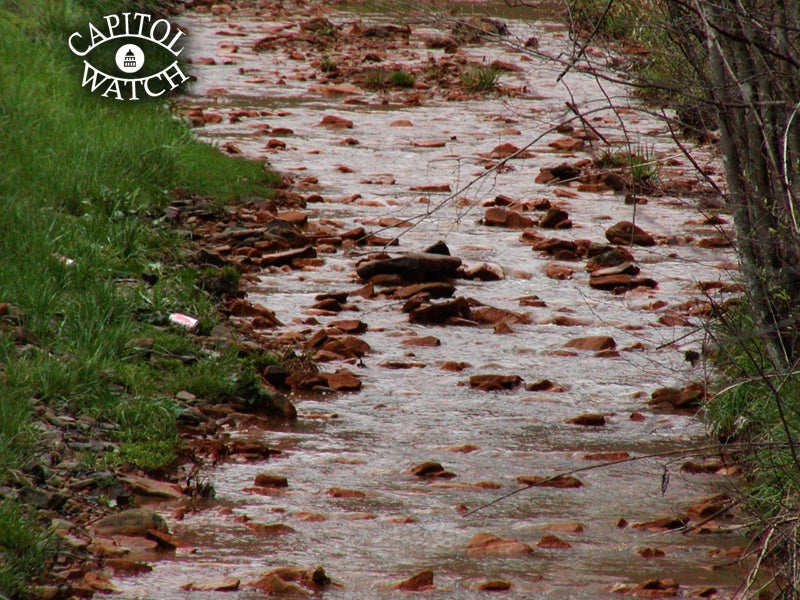
Polluted runoff from valley fills creates a bright, unnatural color on the surrounding rock.
In the past few decades, over 2,000 miles of streams and headwaters that provide drinking water for millions of Americans have been permanently buried and destroyed.
Photo: © OVEC
Related
Polluted Cabin Creek, near Leewood, West Virginia.
In Congress, two proposed bills could curtail mountaintop removal mining by banning certain activities related to this destructive mining practice. The Clean Water Protection Act, a bill in the House, would put tighter restrictions on dumping pollution into Appalachian streams by overturning the dangerous fill rule. The Appalachia Restoration Act, a much narrower bill in the Senate, would prohibit dumping "excess spoil" resulting from mountaintop removal into streams and headwaters.
Photo: © Mark Schmerling
Related
Black coal is processed and cleaned in this West Virginia processing plant.
Coal mining in the region destroys mountains and forests, and also creates a witches brew of toxic chemicals in containment ponds such as the one shown here.
Photo: © OVEC
Related
Kayford Mountain, West Virginia.
In the past few decades, an area the size of Delaware has been flattened. Coal companies first raze an entire mountainside, ripping trees from the ground and clearing brush with huge tractors. This debris is then set ablaze as deep holes are dug for explosives.
Photo: © Mark Schmerling
Related
Kayford Mountain, West Virginia.
An explosive is poured into these holes and mountaintops are literally blown apart. Coal companies use explosives to blast as much as 800 to 1,000 feet off the tops of mountains order to reach thin coal seams buried deep below.
Photo: © Mark Schmerling
Related
Local activists represent generations of coal miners and Appalachians. Community groups are growing as neighbors stand up to defend their land and their heritage.
Photo: © OVEC
Related
The U.S. Army Corp of Engineers has approved mountaintop removal mining permits that require very few protections for nearby streams and headwaters, violating the Clean Water Act and destroying more than 1,200 miles of waterways in West Virginia alone.
Photo: © Mark Schmerling
Related
Earthjustice has been in the courts and in Congress on behalf of other local and national environmental and community groups to stop this destructive practice and protect Appalachia for future generations.
Photo: © Mark Schmerling
Related