Posts tagged: grizzly bears

unEARTHED. The Earthjustice Blog

grizzly bears


    SIGN-UP for our latest news and action alerts:
   Please leave this field empty

Facebook Fans

Featured Campaigns

Everyone has The Right To Breathe clean air. Watch a video featuring Earthjustice Attorney Jim Pew and two Pennsylvanians—Marti Blake and Martin Garrigan—who know firsthand what it means to live in the shadow of a coal plant's smokestack, breathing in daily lungfuls of toxic air for more than two decades.

Coal Ash Contaminates Our Lives. Coal ash is the hazardous waste that remains after coal is burned. Dumped into unlined ponds or mines, the toxins readily leach into drinking water supplies. Watch the video above and take action to support federally enforceable safeguards for coal ash disposal.

ABOUT EARTHJUSTICE'S BLOG

unEARTHED is a forum for the voices and stories of the people behind Earthjustice's work. The views and opinions expressed in this blog do not necessarily represent the opinion or position of Earthjustice or its board, clients, or funders.

Learn more about Earthjustice.

View Kari Birdseye's blog posts
20 December 2012, 4:56 PM
Salazar announces National Petroleum Reserve conservation measures
Caribou in the western Arctic, Alaska. (Florian Schulz / visionsofthewild.com)

Secretary of the Interior Ken Salazar recently announced a final plan for managing the National Petroleum Reserve-Alaska, a vast and wild area in northwestern Alaska that provides vital habitat for caribou, countless shorebirds, waterfowl, bears, wolves and wolverines, among others.

The plan is the first that covers the entire reserve, and it is a major step forward for protective management of the western Arctic.

Under provisions of the plan, key habitat areas such as these are protected:

3 Comments   /   Read more >>
View Tim Preso's blog posts
16 February 2012, 5:15 PM
Last, best wild national forest lands shielded from development
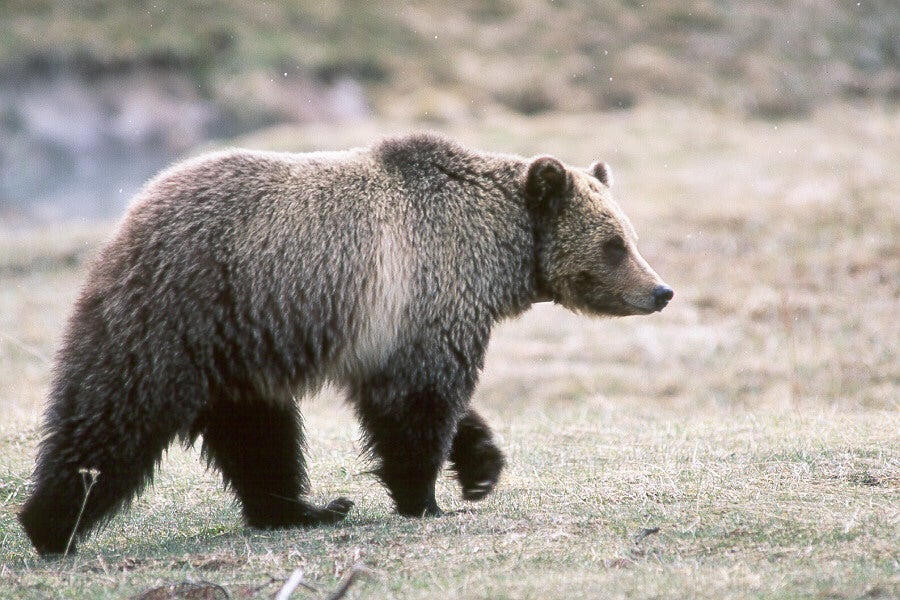
A grizzly bear taking a stroll in Yellowstone National Park.
(Terry Tollesfbol / USFWS)

Nearly 50 million acres of America’s most pristine public forest lands remain protected today, thanks to a decision this afternoon by the 10th Circuit Court of Appeals denying a last-ditch effort by the State of Wyoming and the Colorado Mining Association to overturn the U.S. Forest Service Roadless Area Conservation Rule, more commonly known as the Roadless Rule.

Earthjustice has been in the courts for the past 13 years fighting to protect the Roadless Rule, a landmark conservation measure that protects wild national forests and grasslands from new road building and logging. Protection of these forests secures vital habitat for some of our nation’s most sensitive wildlife. From condors of the southern California mountains, to grizzly bears and wolves near Yellowstone National Park, to migratory songbirds among the Appalachian hardwoods, many species would no longer exist—or would be severely depleted—but for the forest lands protected by the Roadless Rule.

View John McManus's blog posts
29 November 2011, 5:15 PM
An untold story behind the successful effort to reinstate protections
With the thousands of acres of dead whitebark pine trees, every year will be a bad cone year for grizzlies. It’s clear they will need help over the long term to survive. (Condon / NPS)

Yellowstone grizzly bears warrant protection under the Endangered Species Act. So says the federal 9th Circuit Court of Appeals which recently upheld a lower-court ruling that rejected a federal government effort to strip the bears of their protections.

When the government “delisted” the bears in 2007, which stripped them of protections under the Endangered Species Act, Earthjustice attorneys went to court to get the protections reinstated. The federal government failed to explain how grizzlies are supposed to make a living now that one of their key foods, whitebark pine seeds, are disappearing. The seeds are disappearing because the trees that produce them are being killed by beetles which are ravaging the high alpine habitat where the trees grow. The beetles are surviving what used to be harsh winters due to global warming.

One of the untold stories behind the successful effort to reinstate protections for the bears is the efforts of Earthjustice Attorney Doug Honnold and NRDC’s Louisa Willcox that largely put the whitebark pine issue on the map. Few in officialdom, or elsewhere, were talking about the decline of whitebark pines before these two went to work on it. Most people had never heard of these trees nor of their value as a food source to grizzly bears.

2 Comments   /   Read more >>
View Trip Van Noppen's blog posts
20 November 2011, 12:08 AM
Court ruling climaxes 13-year legal struggle
Young boy fishing in the West Fork Humptulips River by the Moonlight Dome Roadless Area in Washington’s Olympic National Forest. (© Thomas O’Keefe)

Last month, protection for nearly 50 million acres of wild lands was resoundingly affirmed in a court decision that will benefit future generations. After 13 years of legal battles by Earthjustice on behalf of our allies, the Tenth Circuit Court of Appeals reinstated the Roadless Rule, a landmark preservation act that protects our nation’s wild forests and grasslands from new road building, logging and development.

The conviction behind the Roadless Rule, that we should protect pristine wild lands not only for the well-being of the last survivors of our wild heritage, but also for our own well-being, is one held by most Americans. The public outpouring of support for the Roadless Rule has been unprecedented. The Roadless Rule victory is living proof that the desire to protect America’s natural heritage lives on in us all.

But despite overwhelming public support for the Rule, the fight to uphold it has been far from easy and is still not over. Since the Clinton administration first began considering the idea of protecting the last undeveloped lands on our national forests, the Roadless Rule has been subjected to relentless attacks by loggers, miners and supporting politicians.

16 Comments   /   Read more >>
View Liz Judge's blog posts
06 April 2011, 10:27 AM
Attorney Tom Waldo explains why our National Forests are worth fighting for

(This is the second in a series of Q & As with Earthjustice staff who work to protect our nation's forests and their critical natural resources and wildlife. Protecting our national forests, in particular, is essential for the future of our nation. The Obama administration recently proposed new planning rules that may leave our National Forests in peril. National forests are the single largest source of clean drinking water in the United States, serving 124 million Americans. Visit our Forests For Our Future campaign site to learn more. Tom Waldo joined Earthjustice in 1989 and is a staff attorney in the Juneau, Alaska office.)

EJ: Tell us about your work to protect national forests.

TW: In a couple dozen cases or more, I have represented a wide variety of clients in lawsuits and administrative appeals seeking to protect the old growth of the Tongass National Forest in southeast Alaska as well as pristine roadless areas in all the national forests. The main threat we have countered is clearcut logging and its associated road construction, though this work sometimes encompasses mining operations, proposed highways, and the like. Besides the litigation, we work closely with our clients in administrative and Congressional advocacy, ensuring that our legal and political strategies are integrated.

EJ: How did this work begin?

1 Comment   /   Read more >>
View Marty Hayden's blog posts
16 February 2011, 10:38 AM
Amendments to funding bill target everything from wolves to water to health
Wolves are on the congressional hit list

House Republicans are using the oft-repeated refrain of “fiscal restraint” as their excuse for gutting several environmental initiatives that will put the public in harm’s way. But there simply is no excuse for hacking away at health protections that will leave our air and water dirtier and our children and seniors at risk.  It’s not hard to see their real agenda. In many cases their proposals are clearly designed to make it easier for some of America’s biggest polluters to dump their pollution on us rather than pay to dispose of it responsibly. 

House GOP’s Public Enemy Number 1: the U.S. Environmental Protection Agency. The spending legislation introduced this week slashes the EPA budget by $3 billion and blocks the agency from regulating greenhouse gas emissions. And in a symbolic dig against the White House, the bill also stymies President Barack Obama from replacing departing lead White House climate and energy advisor Carol Browner.
 
The spending plan also tries to block the EPA from fully implementing the Clean Water Act, while effectively letting major polluters foul our water. This will jeopardize drinking water for 117 million Americans and could leave millions of  acres of wetlands and thousands of miles of streams and rivers without Clean Water Act protections from pollution. But it doesn’t stop there.

7 Comments   /   Read more >>
View Terry Winckler's blog posts
15 February 2011, 3:53 PM
Legislative amendments target air, water, public lands and wildlife

Teabag by teabag, the anti-environment faction in the House of Representatives has filled its federal government spending bill with amendments that will cripple protections for our water, air, natural resources, wildlife and public health. 

Not since the darkest days of the Bush administration have we seen such an onslaught on the environment—and the hits are still coming. By mid-day today (Tues., Feb. 15), the list has grown to include attacks on a number of endangered species, including wolves and salmon, and on the power of the Environmental Protection Agency to keep lethal pollutants out of the air we breathe and the water we drink. Some amendments are outright handouts to our nation’s worst polluters.

The spending bill will fund the government so that it can continue operating after March 4, but first the Senate must pass the bill. Today, Pres. Barack Obama warned that he would veto the bill as constructed.

The following is a list of the most harmful provisions and amendments proposed so far:

1 Comment   /   Read more >>
View Jessica Knoblauch's blog posts
11 November 2010, 2:08 PM
Strange bedfellows, cheesy marketing schemes, hot dog humans
Starving grizzly bears are increasingly clashing with humans over food. Image courtesy of stock.xchng

Enviros and drillers become fracking bedfellows in regulator debate
New York's Department of Environmental Conservation is so ill-prepared to regulate gas drilling in the state that both the gas industry and environmental organizations agree that the department should be re-staffed, according to an investigation by the DC Bureau. That, in addition to a number of other environmental challenges that gas drilling presents, should make for quite a fracking mess for New York's next governor, Andrew Cuomo, when he arrives in the office on Jan. 1.

Department of Agriculture takes the cheese
Fast food chains like Domino's Pizza and Taco Bell are piling cheese onto their products to boost consumer sales, all at the urging of the USDA, according to a recent New York Times piece. The agency's marketing creation, Dairy Management, charged with "vigorously promoting" dairy products, has been working with businesses to increase American cheese consumption by creating cheese-strosities like the Domino's Wisconsin, a pizza that comes with six cheeses on top and two stuffed in the crust. Apparently the agency didn't get its own memo, which found that when it comes causing obesity and heart disease, the cheese stands alone.

1 Comment   /   Read more >>
View Trip Van Noppen's blog posts
04 November 2010, 4:49 PM
A new and hostile congressional leadership is not new to Earthjustice

There is no reason to beat around the bush: Tuesday's election results are a setback in our progress towards a cleaner, healthier, more sustainable planet.

At a time when the world desperately needs leadership from the United States, voters have installed in the House of Representatives those who have vowed to do all they can to obstruct progress in cleaning up dirty coal-burning power plants, reducing health-destroying and climate-disrupting pollution, and protecting wild places and wildlife.

Yet, while the news is bad, we can take heart that the election was not a referendum on the environment. Voters still want clean water, healthy air, protected public lands, and action on transitioning from dirty power plants to a clean energy economy.

38 Comments   /   Read more >>
View Shirley Hao's blog posts
04 October 2010, 9:33 PM
"Bear also drinks from fishbowl"
The zucchini. Image provided by the Missoula County Sheriff's Office

Bears, you’ve had it tough this past year.

Out in Yellowstone, the grizzly members of the family are being thwarted by voracious mountain pine beetles, who are depriving the bears of one of their key food sources (fatty and delicious whitebark pine seeds). A year ago, Earthjustice won ESA protections for the bears, but the federal government has appealed the court’s decision. The fight continues.

Meanwhile, in the lush Arctic, oil and gas drilling leases in the Chukchi Sea (key habitat for the threatened polar bear) have been halted for now—but are not yet canceled.

If all that wasn’t bad enough, last month, a black bear in Montana was defeated by a zucchini. Yes, a zucchini.