Posts tagged: Tr-Ash Talk

unEARTHED. The Earthjustice Blog

Tr-Ash Talk


    SIGN-UP for our latest news and action alerts:
   Please leave this field empty

Facebook Fans

Featured Campaigns

Everyone has The Right To Breathe clean air. Watch a video featuring Earthjustice Attorney Jim Pew and two Pennsylvanians—Marti Blake and Martin Garrigan—who know firsthand what it means to live in the shadow of a coal plant's smokestack, breathing in daily lungfuls of toxic air for more than two decades.

Coal Ash Contaminates Our Lives. Coal ash is the hazardous waste that remains after coal is burned. Dumped into unlined ponds or mines, the toxins readily leach into drinking water supplies. Watch the video above and take action to support federally enforceable safeguards for coal ash disposal.

ABOUT EARTHJUSTICE'S BLOG

unEARTHED is a forum for the voices and stories of the people behind Earthjustice's work. The views and opinions expressed in this blog do not necessarily represent the opinion or position of Earthjustice or its board, clients, or funders.

Learn more about Earthjustice.

View Hartwell Carson's blog posts
02 May 2012, 12:13 PM
EPA and North Carolina need to step up coal ash regulation, enforcement
As evidenced in North Carolina and other states burdened by coal ash ponds, waiting for states to effectively regulate coal ash is a lose-lose situation.

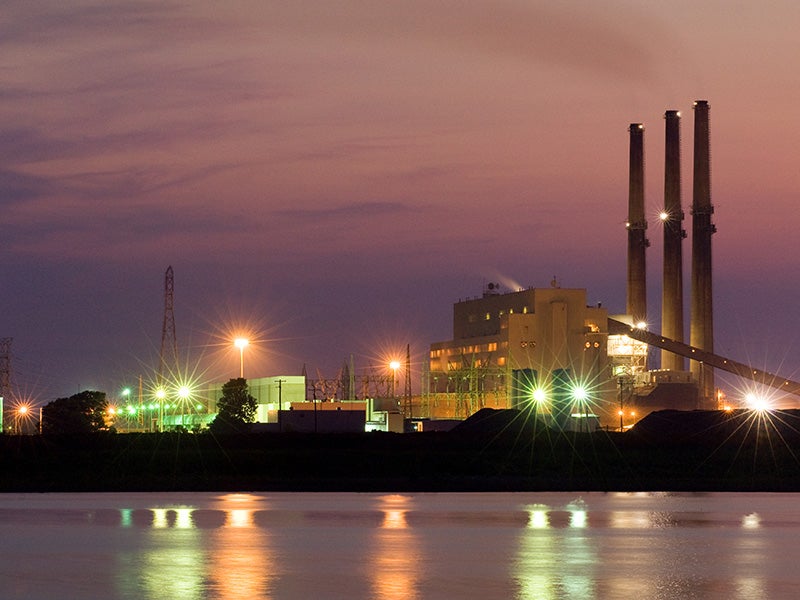
The Progress Energy plant in Asheville, NC operates two of the nation's tallest high-hazard coal-ash ponds. “High-hazard” means that if either of the pond’s decades-old earthen dams were to break, loss of life would be likely. In Asheville, such a break would completely swamp the French Broad River and Interstate 26.

Absent a dam break, these unlined ponds unfortunately still pose tremendous threats, releasing dangerous chemicals into the area’s groundwater, river and air. The people of North Carolina are tired of being exposed to toxic coal ash, and on World Water Day last March, more than 200 North Carolinians joined together for a “Clean Water, Not Coal Ash” rally against this pollution. On Coal River videographer Adams Wood captured the essence of this event in the accompanying video:

View Jared Saylor's blog posts
24 April 2012, 6:09 AM
Conservative group ALEC would weaken coal ash standards
The 2008 coal ash spill in Kingston, TN, motivated the EPA to propose the first ever federal rules regarding safe disposal of coal ash in 2010. (TVA)

The New York Times reported over the weekend that Common Cause, a nonprofit watchdog group, was using thousands of documents it received to bolster a claim that the American Legislative Exchange Council (ALEC) violates its nonprofit status by practicing in state and federal lobbying. ALEC, which has been in the news lately, is a corporate funded conservative group composed of lobbyists and elected officials that often drafts and votes on legislative language on a variety of issues that undermine the health and safety of the American public. Their initiatives include measures to weaken labor and environmental laws, and most notoriously, "Stand Your Ground" laws, such as the one being used as a defense in the murder of Florida teen Trayvon Martin.

It should come as no surprise then that ALEC also drafted and adopted a resolution pertaining to relaxed federal protections for coal ash.

Currently, no federal coal ash safeguards exist. A 2008 coal ash spill in Kingston, TN, motivated the EPA to propose the first ever federal rules regarding safe disposal of coal ash in 2010. After a lengthy public hearing process, those rules are still pending final approval.

View Lisa Evans's blog posts
20 April 2012, 10:54 AM
House panders to Big Coal, allowing risks of spills and poisoning
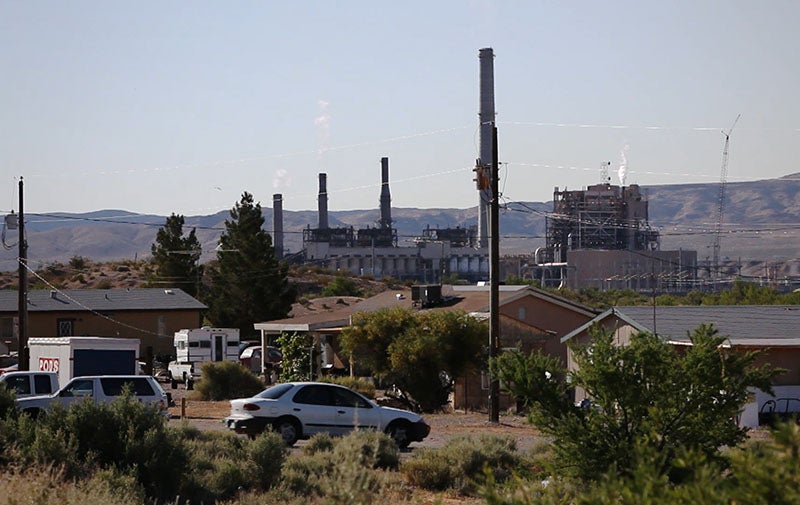
A cloud of highly toxic coal ash is seen blowing like a sandstorm straight at the homes on the Moapa River Reservation, one of many communities across the country at risk from unregulated coal ash dump sites. (Photo by Moapa Band of Paiutes)

The House’s embrace of David McKinley’s (R-WV) amendment and its attachment to the transportation bill is nothing short of a deadly betrayal of public health. This measure ensures that the nation’s dangerous and leaking coal ash ponds and landfills will continue to operate indefinitely without regulation or federal oversight. If it passes the Senate, it may be the most effective protection of Big Coal ever enacted by Congress.

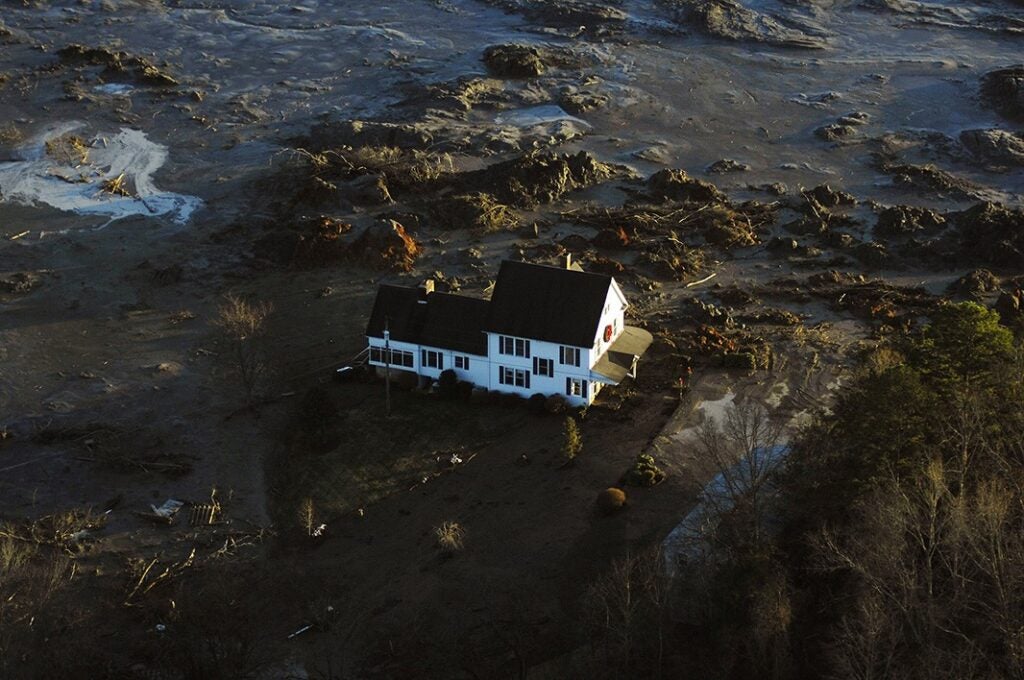
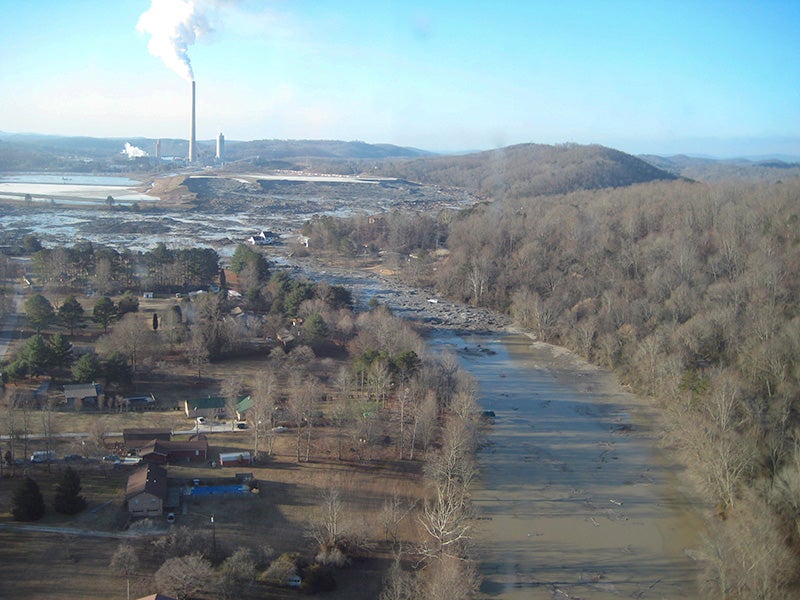
Clearly such protection is at the expense of thousands of communities where toxic coal ash is dumped into drinking water, stacked high above towns, and blown into the lungs of children. The House has conveniently forgotten the largest toxic waste spill in U.S. history, which occurred in 2008 when a coal ash pond collapsed onto a riverside town in Kingston, TN, sweeping away houses and permanently destroying a community.

Instead of addressing the nationwide problem, the House amendment prevents the EPA from regulating coal ash and setting minimum standards for safe disposal. As a result, disposal of banana peels and other household trash would be more stringently regulated in the U.S. than the dumping of toxic ash.

View Lisa Evans's blog posts
04 April 2012, 9:57 AM
11 public interest groups sue EPA for a coal ash rule
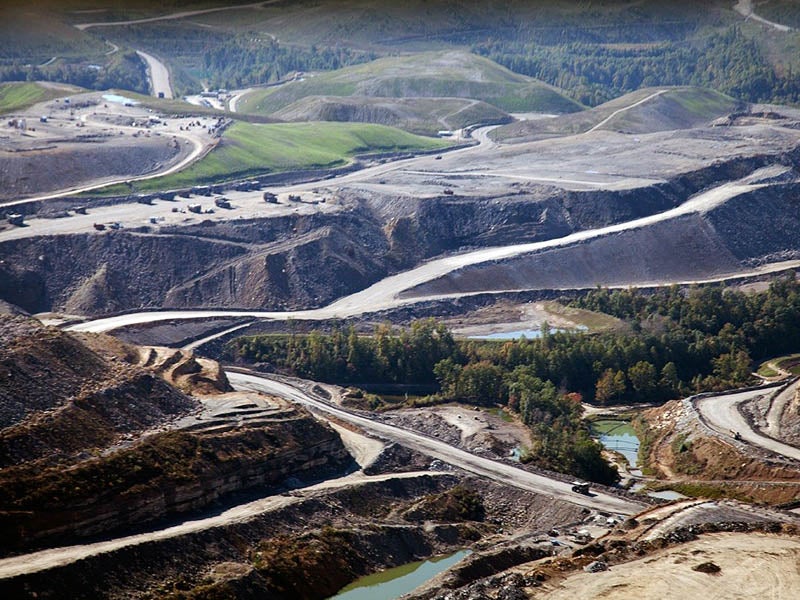
Coal ash landfill in Tennessee

Today, 3 years after the largest toxic waste spill in U.S. history, 11 environmental and public health groups will file a lawsuit to force the Environmental Protection Agency to complete its rulemaking and finalize public health safeguards against coal ash pollution.

The EPA has delayed federal protection for decades despite overwhelming evidence that carcinogenic, neurotoxic, mutagenic and other disease-causing chemicals are leaking from coal ash ponds, landfills and fill sites across the U.S.  High on the list of pollutants flowing from coal ash dumps are arsenic, hexavalent chromium, lead, mercury, selenium and thallium.

Delay is the deadliest form of denial.  Delay denies justice.  The EPA’s delay in issuing a coal ash rule places thousands of communities in harm’s way from contaminated drinking water, dangerous dust and potentially deadly coal ash dam failures.  We seek an end to that delay by asking a court to set a date certain for the review and revision of ineffective regulations governing one of the largest toxic waste streams generated by U.S. industry. 

2 Comments   /   Read more >>
View Russ Maddox's blog posts
30 March 2012, 6:53 AM
Soil, water and air often contaminated by coal ash in Fairbanks
Picture of coal ash site in Fairbanks, Alaska

(Russ Maddox is an Alaska Chapter Sierra Club volunteer.)

As the rest of the nation wakes up and begins to realize how damaging wanton handling and disposal of coal ash truly is, regulators and leaders in Alaska continue to keep their heads buried in the sand, or in this case, coal ash.

The forests of Alaska’s interior fueled the early gold rush. When they became scarce the railroad was pushed south to the coal fields of Nenana to fuel the steamships, massive dredges necessary to access and extract the gold.

These days it’s difficult to tell which hills are natural and which are just massive piles of mine tailings and waste. Along with the coal rush that fueled and heated the gold rush came millions of tons of coal ash. With the majority of the lowlands being wetlands and subject to periodic floods, coal ash was seen as a valuable resource for filling in low areas for development. Peat was mined for use as topsoil to support what was once a thriving local agriculture. Coal ash was and is still routinely used to refill the leftover peat pits to prepare them for development.

3 Comments   /   Read more >>
View Lisa Evans's blog posts
21 March 2012, 7:51 AM
Why the delay in drinking water protection near coal ash dumps?
75% of American cities depend on groundwater for at least some of their drinking water. (Imagesource)

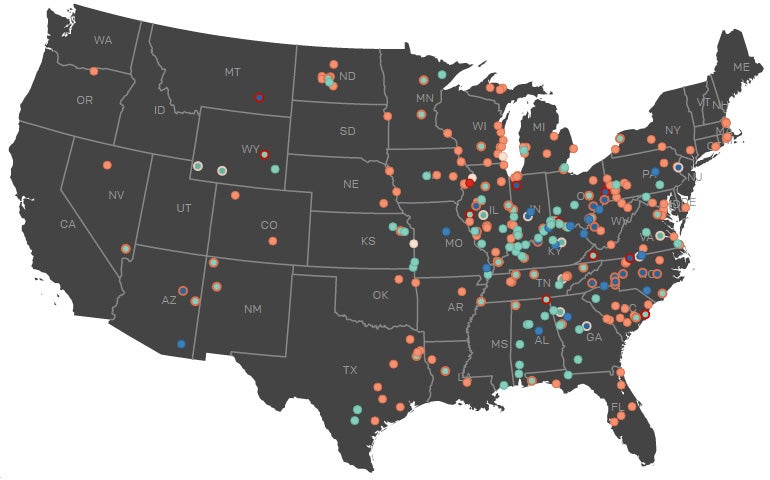
Tomorrow is World Water Day and across the globe, the United Nations and many grassroots groups are holding events to highlight the importance of clean water to our health and global security. In North Carolina, Appalachian Voices will gather residents in and around Asheville for a “Clean Water Not Coal Ash” Rally to call attention to the local and nationwide threat posed by coal ash to drinking water and the nation’s rivers, lakes and streams. In North Carolina, there are at least 10 sites where coal ash dumping has contaminated groundwater or surface water. Nationwide, coal ash dumping has poisoned aquifers and streams at over 150 sites in 34 states. Yet thousands of communities near coal ash impoundments, landfills and minefills still wait for the EPA to take action.

And they’ve been waiting a very long time. Despite 12 years of public pronouncements and promises from the EPA, final rules offering basic drinking water protections are nowhere in sight. In fact, twice every year since 2000, the EPA has officially stated in its semiannual regulatory agenda that it would establish national rules protecting drinking water from coal ash dumping.  In 2000, the EPA announced that the national rule would be final in August 2002. Yet with each successive regulatory agenda, the agency pushed out further the date of promulgation, leaving one to conclude that a political agenda is trumping the EPA’s regulatory one.

The wait is far too long, however, and the burden is unbearable on many communities. Ask the residents of Town of Pines, IN.

View Lisa Evans's blog posts
14 March 2012, 8:09 AM
McKinley's “urgent” request to view leaks at nation’s largest coal ash pond
Aerial view of the Little Blue Run coal ash storage reservoir in Beaver County

Has Rep. David McKinley had a change of heart?  In a letter dated March 8, 2012, the primary author of EPA- bashing HR 2273 and best friend of coal ash, McKinley (R, WV) wrote Secretary Randy Huffman, head of the West Virginia Department of Environmental Protection, to request that he accompany him on a visit to Chester, WV, at the southeastern edge of the massive Little Blue Run coal ash pond.  The goal of the urgent request is to assess the effectiveness of a new pumping system, which was designed to address the leaks in the pond that have plagued Chester residents for years.

The Little Blue Run coal ash pond is the largest in the nation, spanning two states and bordering a third, covering approximately 1,000 acres (over 1.5 square miles), and held back by a 40-story high hazard dam. The pond is 30 times larger than the TVA pond at the Kingston Fossil Plant, which burst in December 2008 and flooded 300 acres with 1 billion gallons of toxic sludge.  Pennsylvania Department of Environmental Protection estimates that a failure of the Little Blue dam would take the lives of 50,000 people.
 

2 Comments   /   Read more >>
View Lisa Evans's blog posts
07 March 2012, 12:53 PM
Closure of old coal plants raises toxic cleanup issues
Coal ash ponds in Nevada.
(Chris Jordan-Bloch / Earthjustice)

Across the country, communities near retiring coal plants are breathing collective sighs of relief. Closures, however, raise vexing questions about the millions of tons of toxic waste that may lie beneath the surface. Over decades, most plants have buried battleship-sized deposits of coal ash in landfills and lagoons near their plants. In the absence of federal mandates, utilities may leave behind a leaking legacy of deadly pollution, even after the belching stacks are long gone.

Communities have reason to be concerned. Buried coal ash can leach toxic metals into underground water supplies and adjacent lakes and streams for generations unless dumps are properly closed. Neighbors of Dominion’s Stateline Power plant, which will be retiring next month, have expressed these exact concerns. Located just across the Illinois border on the shore of Lake Michigan, the site has buried waste that could easily reach the lake.

1 Comment   /   Read more >>
View Lisa Evans's blog posts
27 February 2012, 1:21 PM
Similar threats at coal ash impoundments remain unresolved
Buffalo Creek disaster

February 26, 2012 marked the 40th anniversary of the Buffalo Creek disaster—the “most destructive flood in West Virginia history,” which took 125 lives in Logan County, West Virginia, injured 1100, and left 4000 homeless.

The accounts of the manmade tsunami, borne of greed and negligence, are heartbreaking. The close-knit community was destroyed in an instant as children, neighbors, families and pets were swept to their deaths. According to one reporter who witnessed the event 40 years ago, the local high school was turned into a morgue like a scene from Gone with the Wind.

Because of the near total destruction of the community, not even photographs exist of all the victims. Nevertheless, the angelic face of 1-year old Jesse Gunells, who perished in the flood, graced a West Virginia gathering last weekend, speaking a thousand words of warning: that scores of coal ash dams, some entirely unregulated, pose similar deadly threats to communities living under them.

There are strong similarities between the Buffalo Creek disaster and the 2008 coal ash disaster in Harriman, Tennessee. A significant difference, however, is that—unlike in Tennessee—federal officials responded meaningfully to the West Virginia tragedy. The dam break led to the passage of the Surface Mining and Control and Reclamation Act and the addition of new standards in the Mine Safety and Health Administration (MSHA) that require all coal slurry impoundments to meet stricter engineering standards and undergo frequent inspections.

No regulatory reform whatsoever followed the TVA dam failure. No rules have been established by EPA, and our myopic, industry-funded leaders in the House passed a bill (HR 2273) that contains absolutely no requirements for inspections or specific engineering standards to address the nation’s hundreds of aging coal ash impoundments. The Senate is currently considering an identical bill (S 1751).

View Lisa Evans's blog posts
22 February 2012, 1:31 PM
Battlefield Golf Course plaintiffs cite injuries, ask for damages
Trainloads of coal

On Tuesday, Virginia attorney Ted G. Yoakam, representing nearly 400 people living near the Battlefield Golf Club in Chesapeake, refiled a lawsuit against Dominion Virginian Power, MJM Golf LLC (the owner of the golf course) and two additional parties involved in building the course, requesting more than $2 billion in damages. 

The refiling doubles the demand for damages of the original suit and is based on new evidence of residential water wells contaminated with hazardous substances.  Wells near the golf course were found with elevated levels of toxic metals, including lead, vanadium, manganese, cobalt, nickel, cadmium and zinc. The complaint also alleges that 10 individuals – nine of them children – are injured by exposure to the hazardous chemicals from coal ash. Arsenic found in the fly ash on one of the properties was 700 times the accepted level, and radioactive elements thorium, radium and uranium in the ash was twice the level of background soils.  
 
Yet, according to Dominion, the ash is “completely non-hazardous.” This is a familiar story.