Posts tagged: water

unEARTHED. The Earthjustice Blog

water


    SIGN-UP for our latest news and action alerts:
   Please leave this field empty

Facebook Fans

Featured Campaigns

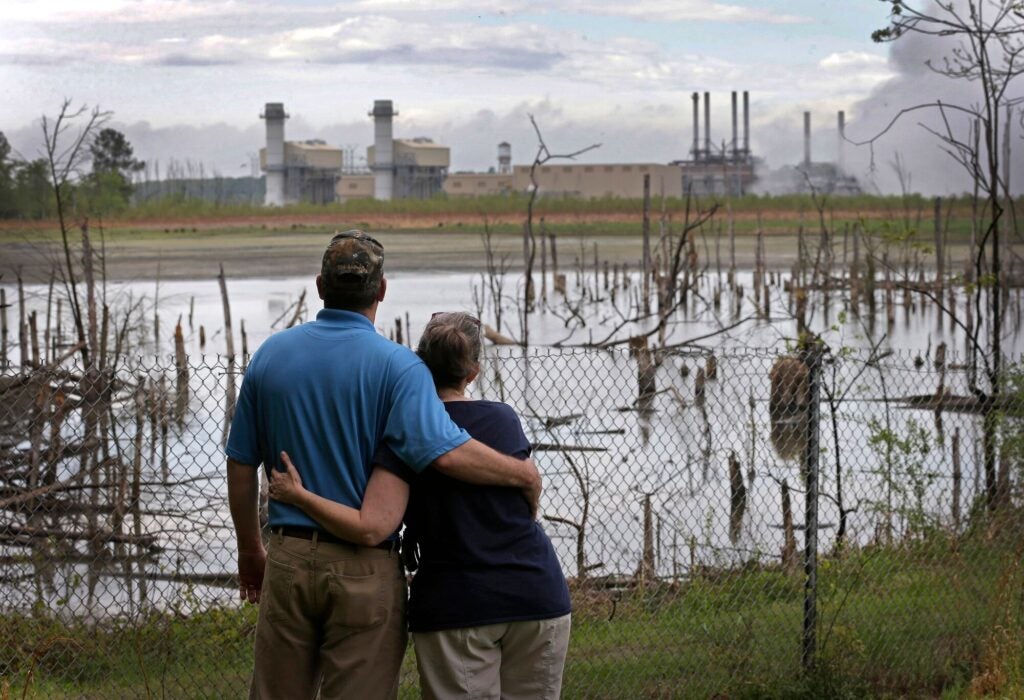
Everyone has The Right To Breathe clean air. Watch a video featuring Earthjustice Attorney Jim Pew and two Pennsylvanians—Marti Blake and Martin Garrigan—who know firsthand what it means to live in the shadow of a coal plant's smokestack, breathing in daily lungfuls of toxic air for more than two decades.

Coal Ash Contaminates Our Lives. Coal ash is the hazardous waste that remains after coal is burned. Dumped into unlined ponds or mines, the toxins readily leach into drinking water supplies. Watch the video above and take action to support federally enforceable safeguards for coal ash disposal.

ABOUT EARTHJUSTICE'S BLOG

unEARTHED is a forum for the voices and stories of the people behind Earthjustice's work. The views and opinions expressed in this blog do not necessarily represent the opinion or position of Earthjustice or its board, clients, or funders.

Learn more about Earthjustice.

View Jim McCarthy's blog posts
04 June 2010, 12:10 PM
Earthjustice fights back in court
Bone dry stretch of the Scott River. Photo: Klamath Riverkeeper

Northern California's Shasta River was once the most productive salmon stream for its size in the Golden State. But just nine Shasta coho salmon made it home last year to spawn. Even worse, all of the returning fish were male. Talk about a tough dating pool.

There wasn't much water in the river to greet the few fish that showed up. Local ranchers had withdrawn so much water that stretches of the river went completely dry.

Scientists now believe that two out of the three year-classes of Shasta coho have become functionally extinct. Next door in the Scott River, only eighty-one coho returned last year. Illegal dams, water withdrawals, and unchecked livestock grazing in streambeds are destroying these rivers.

3 Comments   /   Read more >>
View Jared Saylor's blog posts
24 May 2010, 1:14 PM
Groups work to push power company shareholders on coal ash resolutions
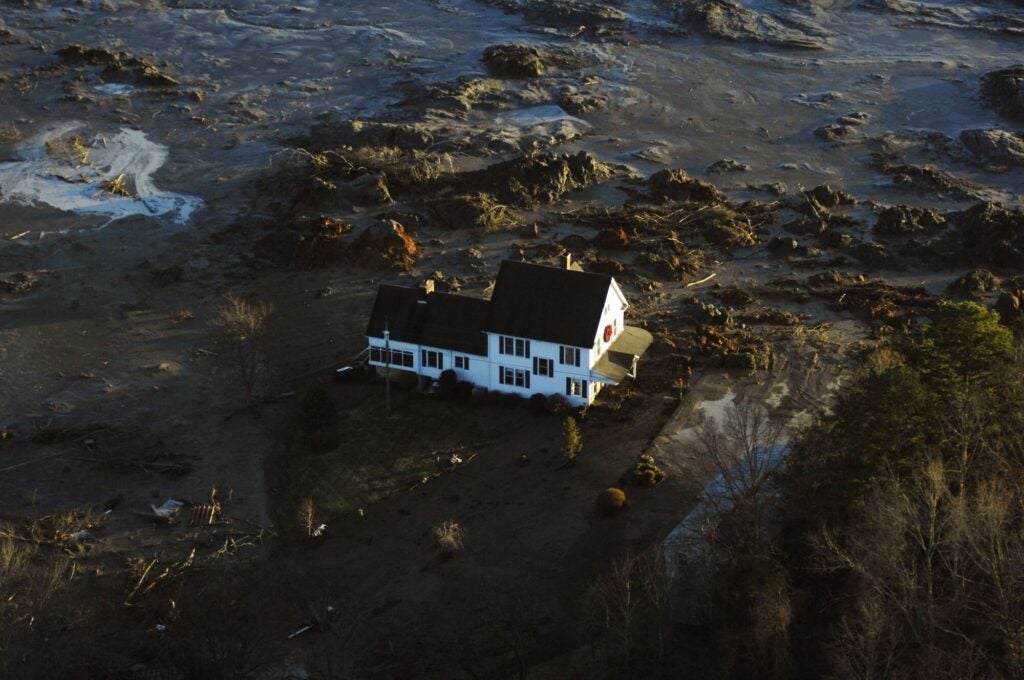
Massive coal ash-spill in Tennessee

Power companies generate millions of tons of coal ash every year, enough to fill train cars that stretch from the North Pole all the way to the South Pole. EPA recently introduced a mish-mash plan for coal ash, one that was heavily influenced by lobbyists from coal and power companies who forced a plan that includes no preference from the EPA. Earthjustice and dozens of other groups have been pushing on the EPA to establish federally enforceable safeguards that truly protect public health and the environment.

And while we take on the EPA and the coal and power industry lobbyists, some other groups have been quietly and effectively working on the inside of these companies to push for recognition of the collosal problems of coal ash dumping and contamination.

Boston-based Green Century Capital Management proposed a resolution to be voted on this Wednesday at the annual meeting of Southern Company, one of the biggest power companies in the South. The resolution asks Southern to report on efforts and information about the company's coal ash dumps and waste ponds by August, which should run right during the EPA's public comment period on their proposed regulation.

3 Comments   /   Read more >>
View Jared Saylor's blog posts
04 May 2010, 1:38 PM
Agency offers two plans: one good, one bad
Cleaning up after the TVA coal ash spill in Tennessee, December 2008. Photo: http://www.tva.gov

It's been a long time coming, but they're finally here: the EPA announced today plans to set the first ever federal safeguards for coal ash, one of America's most dangerous wastes. But what they really did was announce two plans: one good and one bad. The agency will accept public comment on both plans and then decide which to pursue.

The good plan classifies coal ash as hazardous waste, a move we've been pushing the EPA to make for some time. The agency also proposed, however, to classify coal ash as non-hazardous (the bad plan), a move that will not yield strong protections for communities and won't get at the problems associated with coal ash ponds and landfills.

1 Comment   /   Read more >>
View Liz Judge's blog posts
22 April 2010, 9:41 AM
Thanks for all you've done

“The battle to restore a proper relationship between man and his environment, and between man and other living creatures, will require a long sustained political, moral, ethical, and financial commitment far beyond any commitment ever made by any society in the history of man. Are we able? Yes. Are we willing? That’s the unanswered question.” – Gaylord Nelson, founder of Earth Day.

When Earth Day was born 40 years ago, there were “spumes of pollution pouring out of smokestacks, people spraying children in parking lots and at picnics with DDT, air pollution in major cities that was basically unbreathable, rivers catching on fire, lakes dying,” says one of Earth Day’s original organizers, Denis Hayes, in this Washington Post video. “It was just deteriorating very rapidly, but what addressed those problems was a wave of legislation immediately after Earth Day.” (For more on Earth Day’s storied history, read this.)

As we celebrate 40 years of Earth Day, we’re also celebrating 40 years of Earthjustice victories – check out 40 of our favorite victories along with stunning photos in this new slideshow made for Earth Day 2010.

We're also celebrating our army of supporters, activist members, and concerned citizens. We have you to thank for each of these major victories, and the many victories and wins in between.

1 Comment   /   Read more >>
View Trip Van Noppen's blog posts
20 April 2010, 10:30 AM
EPA embraces science and the law in two strong actions

In Appalachia, moving mountains is easy. What's hard is keeping them where they are. Coal companies have used dynamite's muscle to blast hundreds of the earth's oldest summits into neighboring valleys, permanently altering the landscape. But two recent developments are shaking the foundations of mountaintop removal mining, signaling that perhaps, at long last, what's moving is the mountain of science and law that compels the end of this destructive practice.

In late March, the Environmental Protection Agency took dramatic action in proposing to veto a permit issued by the U.S. Army Corps of Engineers for the Spruce No. 1 mine in West Virginia—one of the largest mountaintop removal projects ever approved—on the grounds that mine operations would violate the Clean Water Act. The action was presaged by an Earthjustice lawsuit filed in 2007 that challenged approval of a Clean Water Act permit for the mine for failing to follow science and the law.

If the EPA does veto the permit, the agency's invocation of the Clean Water Act to curtail operations at the Spruce mine will be an important victory. It could have broader repercussions on mountaintop removal in general. (The agency is currently accepting public comments on the veto proposal. You can take action by telling EPA to follow through with the veto and enforce the Clean Water Act.)

But the good news doesn't end there.

10 Comments   /   Read more >>
View Jared Saylor's blog posts
01 March 2010, 3:45 PM
Streams, rivers & lakes are polluted; here's what we can do to stop it.

The New York Times today reported in the next chapter of their exceptional "Toxic Waters" series that:

"Thousands of the nation's largest water polluters are outside the Clean Water Act's reach because the Supreme Court has left uncertain which waterways are protected by that law, according to interviews with regulators.

"As a result, some businesses are declaring that the law no longer applpies to them. And pollution rates are rising."

The saddest part of this legal debacle is that the streams, lakes and rivers losing federal protection also provide drinking water for approximately 117 million (or more than 1 in 3) Americans, according to the U.S. Environmental Protection Agency. Polluters are free to dump carcinogens, bacteria and even oil directly into our waters with little or no recourse. This all stems from two misguided rulings by the Supreme Court that cast doubt upon what waters should be protected under federal law. Their ruling on "jurisdiction" left thousands of streams, lakes and rivers unprotected; EPA officials estimate that "as many as 45 percent of major polluters might be either outside regulatory reach or in areas where proving jurisdiction is overwhelmingly difficult."

1 Comment   /   Read more >>
View Brian Smith's blog posts
28 January 2010, 3:54 PM
Canadian mining projects should not proceed
The Flathead River.

Last week, we got a bit of good news.

Earthjustice and our allies in British Columbia and Montana convinced a UN committee in 2009 to come investigate serious environmental threats facing the Waterton-Glacier International Peace Park which lies on both sides of the U.S and Canadian border.

After sending a team to investigate last fall, the UNESCO World Heritage Committee will recommend a moratorium on mining in the Flathead Valley of southeastern British Columbia and the development of a conservation and wildlife management plan for the region. (Video after the jump.)

2 Comments   /   Read more >>
View Kathleen Sutcliffe's blog posts
28 January 2010, 1:31 PM
Is there something strange in your drinking water?

Okay, so technically the name for EPA's new hotline isn't Gas Busters. It's the 'Eyes On Drilling' Tipline. But with all the scary stuff happening in the gas fields these days, I couldn't resist. 

Folks in the oil and gas fields: if you see suspicious activity related to oil and gas drilling, call EPA at 1-877-919-4EPA (toll free number) or email eyesondrilling@epa.gov (This is the non-emergency number. For emergencies, stick with 911.)

Why does EPA need a hotline for suspicious gas drilling activity? Good question: These days, the gas industry has a new method for drilling gas. It's called horizontal hydraulic fracturing. And if it sounds scary, that's because it is. They take millions and millions of gallons of clean water, spike it with toxic chemicals, then blast the water thousands of feet beneath the ground into horizontally drilled wells, blasting the gas out of the rock pores. Some of the polluted water comes back up through the well. The rest stays in the ground, migrating who knows where.

2 Comments   /   Read more >>
View Jared Saylor's blog posts
22 January 2010, 4:09 PM
RFK Jr.'s passion for environmental protection carries the day
Photo: Lawrence Pierce, West Virginia Gazette

People began filing into the University of Charleston's auditorium nearly two hours before the debate began. Charleston police, county sheriffs, state troopers and UC police lined the hallways and entrances. There were rumors of activists chaining themselves to trees and coal miners planning a huge rally. Television cameras were stationed along the walls and in nearly every corner of the auditorium.

It was the hottest ticket in town. All 950 seats in the main auditorium sold out in a few days, and an overflow room holding 2,000 more was expected to be fill. The biggest debate of the century was happening: Massey Energy CEO Don Blankenship against Waterkeeper founder Robert F. Kennedy, Jr.

The UC dean, Dr. Edwin H. Welch, moderated. He walked onstage 15 minutes before the debate began, telling the audience that "it does not happen very often in our society to have people who disagree so much come to speak together…we're going to try and recapture the art of argument tonight."

36 Comments   /   Read more >>
View Molly Woodward's blog posts
21 January 2010, 5:04 PM
Salmon, false killer whales, mercury, water pollution
Scene from the San Francisco Bay Delta

Some top stories from the past week at Earthjustice…

It’s a rainy week here in Oakland, as a storm system bestows California with some much-needed H2O. Our short supply of water has meant trouble for salmon. A new video by Salmon Water Now illuminates startling alliances between big agribusiness and the political interests controlling water and the fate of salmon in the San Francisco Bay Delta.

A wholly different marine creature in peril will get some help at last. The NMFS announced it will take measures to protect false killer whales from the commercial longline fishing industry, following years of Earthjustice litigation. Rarely seen by humans, false killer whales are close relations of dolphins.

Mercury pollution is a big problem for aquatic life (and people who eat fish), and a lot of it comes from medical waste incinerators. In September, the EPA set groundbreaking rules that significantly reduce air pollution from this source, but now these rules are being challenged in court. Earthjustice has intervened in the lawsuit.

And, the toxic green slime clogging Florida’s waterways might finally loosen its hold, thanks to a historic first step by the EPA to limit fertilizer, animal waste and sewage pollution in the state. While the proposed limits aren’t as stringent as they could be, they’re a big improvement.