Posts tagged: water

unEARTHED. The Earthjustice Blog

water


    SIGN-UP for our latest news and action alerts:
   Please leave this field empty

Facebook Fans

Featured Campaigns

Everyone has The Right To Breathe clean air. Watch a video featuring Earthjustice Attorney Jim Pew and two Pennsylvanians—Marti Blake and Martin Garrigan—who know firsthand what it means to live in the shadow of a coal plant's smokestack, breathing in daily lungfuls of toxic air for more than two decades.

Coal Ash Contaminates Our Lives. Coal ash is the hazardous waste that remains after coal is burned. Dumped into unlined ponds or mines, the toxins readily leach into drinking water supplies. Watch the video above and take action to support federally enforceable safeguards for coal ash disposal.

ABOUT EARTHJUSTICE'S BLOG

unEARTHED is a forum for the voices and stories of the people behind Earthjustice's work. The views and opinions expressed in this blog do not necessarily represent the opinion or position of Earthjustice or its board, clients, or funders.

Learn more about Earthjustice.

View Neil Gormley's blog posts
03 January 2013, 3:26 PM
Why this destructive practice is holding Appalachia back
Satellite imagery of the massive Hobet mine. September 20, 2012. (NASA's Earth Observatory)

Last month, Earthjustice Associate Attorney Neil Gormley took a trip to West Virginia to visit partners and clients and to see the effects of mountaintop removal mining first-hand. As he explains in this unEarthed entry, his visit prompted questions about the relationship between this destructive practice and regional poverty.

The Hobet mining complex is one of the largest mountaintop removal surface mines in the country. It was my destination last month when I took off from Charleston’s Yeager Airport in a four-seater Cessna, courtesy of Earthjustice’s partners at SouthWings.

Neil Gromley.Neil, on board the SouthWings plane.

Hobet is huge. Between current and past mining, it spans more than 15 square miles. At the time of my visit, miners were operating a dragline, an earth-moving machine so enormous it dwarfed the 240-ton dump trucks. The destruction is impossible to miss from above. Yet the mine is barely visible from the state highway that runs along its eastern perimeter. It’s shielded from view by a tall ridgeline, sparing most passers-by the eyesore.

Hobet mine.

Aerial view of the Hobet mine.  (Neil Gormley / Earthjustice via Southwings)
View Lisa Evans's blog posts
30 December 2012, 9:20 PM
But EPA must not leave the job half done
Outgoing EPA Administrator Lisa P. Jackson.  (The National Academy of Sciences)

During her four-year tenure as administrator of the EPA, Lisa Jackson was a true champion for public health and environmental justice.

One of her greatest legacies is the Mercury and Air Toxics Standard, a rule that will help Americans breathe a little easier since it sharply limits the amount of mercury and other toxic metals that can be emitted by coal-fired power plants. The rule finally requires the capture of mercury, arsenic, hexavalent chromium, nickel, selenium and other heavy metals at the plant smokestacks.

1 Comment   /   Read more >>
View Maria Beloborodova's blog posts
27 December 2012, 10:00 AM
Readers were most inspired by stories of the wild
Two of the first five calves born at Ft. Peck Indian reservation this year. (Bill Campbell)

Blog posts about Earth's magnificent places and creatures were the most popular themes for unEarthed readers in 2012. By far the most-read post concerned Arctic drilling, followed by reports of bison being restored and wolves losing protection. Not shown in our top 10 blog posts, below, are the delightful tales of curious critters painted in words by our own Shirley Hao. Posts written years ago by Shirley are still being discovered and read by thousands of people every year.

And, now, for your enjoyment, we present our most-read posts of 2012:

View Marty Hayden's blog posts
19 December 2012, 2:26 PM
A fighter for all who suffered environmental injustice
Joan was a tireless advocate for the underdog in every situation. She will be greatly missed.

Earthjustice mourns the passing of the strongest and bravest advocate for clean water and justice that we have ever known, our very own senior legislative counsel Joan Mulhern.

Earthjustice’s original “Mountain Hero,” Joan began her great work at Earthjustice in 1999, bringing with her a remarkable dedication to clean water and leading the organization in its work to save Appalachian waters and communities by ending mountaintop removal mining, to protect Florida waters from toxic algae slime, and to bring the protections of the law to all waters of the United States.

27 Comments   /   Read more >>
View Raviya Ismail's blog posts
17 December 2012, 12:45 PM
Need for cleanup dire as residents continually consume toxic fish
The Pepco Benning Road Power Plant towers over the river. PCB waste allegedly comes from the plant and has ended up in the river.

We have spent more than 15 years championing the need for cleaning up the Anacostia River (as well as the Potomac River and Rock Creek). And what better reason than the fact that several District and Prince George County residents depend on the river for sustenance. This disturbing (you’ll know why in a moment) Washington Post article details the hundreds of anglers who fish the river, pulling out catfish, rockfish and carp, according to a study released by several groups, including the Anacostia Watershed Society. AWS is one of several environmental groups we’ve represented in numerous legal challenges.

According to the Post, nearly 75 percent of anglers consume part of their catch, despite a strong advisory to catch and release. Here are the facts: catfish bottom-feed in the Anacostia, where their food is mixed in with a cancer-causing stew of toxic metals and polychlorinated biphenyls (PCBs).

This is not good. What is particularly bad about this scenario, is that of the nearly 75 percent who catch these contaminated fish, most share it with people back home, dispersing these fish sometimes to pregnant women and children.

1 Comment   /   Read more >>
View David Guest's blog posts
14 December 2012, 10:59 AM
EPA will step in to regulate 100,000 miles of Florida's waters
Visitors at spring-fed Santa Fe River near Gainesville, FL, for the 2012 Memorial Day weekend found a rude surprise—pollution from sewage, manure and fertilizer sparked an outbreak of nasty green slime. (John Moran)

We’re happy to report that our long fight to clean up the green slime that’s been plaguing Florida waterways for years hit a major turning point on Nov. 30. That’s the day the Environmental Protection Agency agreed to set numeric pollution limits for some 100,000 miles of Florida waterways and 4,000 square miles of estuaries.

We fought every polluting industry in Florida for four years to get this result. These slime outbreaks—caused by pollutants in inadequately treated sewage, manure and fertilizer—are a pestilence, contaminating water, killing fish, destroying property values and chasing off tourists. Now the EPA has to stop dragging its feet and deal with it.

Using extensive data it has been collecting and analyzing in concert with Florida Department of Environmental Protection scientists, the EPA will impose numeric limits on the allowable amount of phosphorus and nitrogen—so called “nutrient” pollution—in the state’s waterways.

11 Comments   /   Read more >>
View Daniel Hubbell's blog posts
13 December 2012, 10:39 AM
Moapa Band of Paiutes blaze a trail to clean energy and better health
Vickie Simmons, a tribal member, stands in front of Reid Gardner Power Station.  (Chris Jordan-Bloch / Earthjustice)

In his address at the Tribal Nations Conference, President Obama spoke with his usual eloquence about invigorating growth on tribal lands, and the perfect example of this new growth is the Moapa solar project on the Moapa River Indian Reservation. Situated just 30 miles north of Las Vegas, the site will generate up to 350 megawatts of clean, renewable energy. It highlights in many ways the future of the nation’s energy supply, and unfortunately the Paiute Indians themselves know the industry’s cloudy past.

Just next to the reservation is the Reid Gardner Power Station. This coal-fired power plant generates more than just electricity; it produces more than 4,000 tons of toxic, arsenic-laden coal ash every year. This waste is stored in landfills near the power station, but often it does not stay there. On bad days, the wind sends the ash sweeping into the reservation, a condition some tribal members compare to a sandstorm. Locking the doors and staying inside is the only recourse on these bad days, and even that has not protected the Moapa Band of Paiutes. The locals have plenty to say about their health, ranging from headaches and dizziness to asthma and even serious heart conditions. The almost-50-year-old belching coal plant has plenty to answer for.

Still, the Moapa Paiutes are determined to show the world that there is a better way forward.

View John McManus's blog posts
11 December 2012, 12:06 PM
Earthjustice and allies fight back
Chicken manure and other pollutants end up in protected creeks, rivers and streams. (USDA)

Recently the EPA ordered an industrial animal factory in West Virginia to clean up massive amounts of chicken manure and other pollution lying around the ground, lest they end up in local streams after it rains. The farm refused to get a permit to address the pollution, so the EPA is in court—with Earthjustice on its side—to force the issue.

Arrayed with the farm against the EPA are the American Farm Bureau Federation and West Virginia Farm Bureau Federation. They know that that EPA’s permit stance here could translate into similar permit requirements for thousands of other industrial animal factories that similarly pollute creeks, rivers and streams coast to coast.

5 Comments   /   Read more >>
View Raviya Ismail's blog posts
04 December 2012, 3:36 PM
Disproportionate burden of coal plant emissions placed on such communities

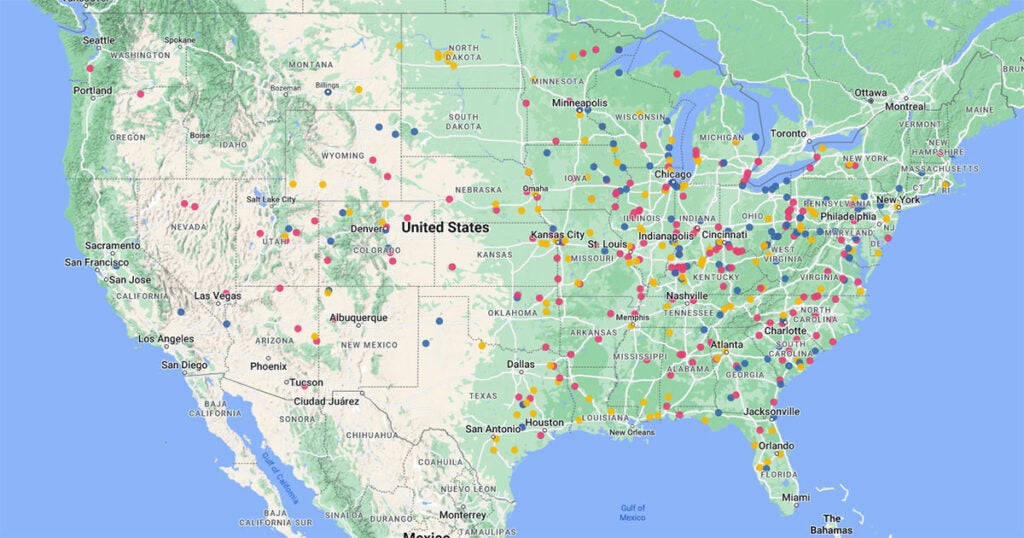
The results of a comprehensive study investigating the impacts of living near 378 coal plants in the United States have found that people of color and low-income communities are disproportionately more burdened by this pollution than any other segment of the population. Coal Blooded was pulled together by the NAACP, Little Village Environmental Justice Organization (LVEJO) and the Indigenous Environmental Network.

View Patti Goldman's blog posts
03 December 2012, 5:53 PM
Supreme Court considers two citizen enforcement cases
The U.S. Supreme Court. (Mark Fischer)

The U.S. Supreme Court is considering a pair of cases that could cut back on the ability of citizens to enforce the Clean Water Act. Although different, at their core, both afford the court opportunities either to preserve or weaken the power of citizens to hold polluters accountable for harming our nation’s waters.

The Clean Water Act, enacted four decades ago, aimed to make the nation’s waters drinkable, fishable, and swimmable. To make good on this promise, it prohibits discharges of pollution into U.S. waters without a permit and holds polluters to the limits imposed in such permits. Congress gave citizens the power to enforce the Clean Water Act, for Congress recognized that the government often lacks the financial resources and political will to enforce environmental laws against violators. In this way, the Act enlists people who use treasured waters or live near facilities that expose their communities to untenable pollution to stand in the shoes of the government to enforce the law against wrongdoers.

3 Comments   /   Read more >>