Grizzly Bears
This species of bear can weigh up to 600 pounds and can outsprint a horse. Grizzlies eat plants and animals. Female grizzlies—often emerging in the spring with one to two cubs—are very protective over their offspring.
What's Happening Now On Sept. 21, 2009, a federal court action reversed a 2007 decision by the U.S. Fish and Wildlife Service to remove ESA protections for grizzly bears in the Yellowstone ecosystem. The decision was in response to Earthjustice litigation challenging the Bush-era delisting.
In November 2011, the Ninth Circuit Court of Appeals upheld the lower-court ruling that reinstated Endangered Species Act protections for Yellowstone’s iconic grizzly bear population.
Related
Marbled Murrelet
Marbled murrelets are shy, robin-sized sea birds that nest in old-growth forests along the coasts of California, Oregon, and Washington. Indiscriminate logging has wiped out up to 90% of west coast old-growth forests, and murrelets have suffered steep population declines as a result.
What's Happening Now In the early 1990s, Earthjustice successfully fought to get federal protections for marbled murrelets and their habitat.
Since then, Earthjustice has litigated a long list of cases all designed to prevent further damage to this sea bird. Most of this litigation has been aimed at preventing the continued loss of the big, old trees murrelets need for nesting.
Related
Orca
(Killer Whales)
Orcas, also known as killer whales, live in a close-knit matriarchal family unit for their entire lives. Since the last ice age, the Southern Resident orca community has made its home in Puget Sound, the San Juan Islands, Haro Strait, the Strait of Juan de Fuca, and the northwest coast, with the entire population reuniting there every summer. These whales are among the most intelligent animals in the world with their own language and greeting rituals.
What's Happening Now In the 1990's, the Southern Resident orca population declined by 20%, with fewer than 90 remaining.
[…Continue Reading…]
In December 2005, Earthjustice represented several conservation groups and won protection for these animals under the Endangered Species Act. The government designated critical habitat for the orcas in and around the Sound.
In December 2006, a federal court threw out a challenge to the ESA protections given to these orcas brought by industry and farm groups.
Photo: © Kelley Balcomb Bartok
Related
American Pika
The American Pika is a small mountain-dwelling relative of the rabbit that's adapted to cold alpine conditions. When temperatures climb above 75°F, they can die in less than an hour. Due to climate change these animals are moving to higher elevation as a result of rising temperatures and may soon run out of habitat.
What's Happening Now On Feb. 4, 2010, the U.S. Fish and Wildlife Service denied Endangered Species Act protections for the pika. This was in response to a challenge filed by Earthjustice, representing the Center for Biological Diversity, against the agency for failing to respond to a scientific petition submitted in 2007. Earthjustice may challenge the latest decision.
In October 2011, the California Fish and Game Commission designated the American Pika as a "candidate" for protection under the California Endangered Species Act, the first step towards full protection for the species in California.
Related
Polar Bears
Alaska's Beaufort and Chukchi seas are home to one in five of the world's remaining polar bears. In 2008, polar bears were the first animal listed under the Endangered Species Act specifically due to the effects of global warming. Polar bears are threatened by a massive expansion of oil and gas drilling in their Arctic ocean habitat, threats of oil spills, and loss of habitat caused by climate change.
What's Happening Now On May 14, 2008, polar bears received Endangered Species Act Protection but the government failed to stop oil and gas activities in polar bear areas.
[…Continue Reading…]
Earthjustice has two separate legal actions aimed at protecting polar bears and their remaining habitat in the Polar Bear Seas and other wildlife such as bowhead whales and walrus.
In the first lawsuit, Earthjustice is challenging the federal government's approval of plans by Shell Oil to drill in the Chukchi and Beaufort seas in the summer of 2010. If there were an oil spill, it could lead to mass fatalities of polar bears and other wildlife because there’s no way currently known to clean up such a spill in icy Arctic waters.
In the second lawsuit, Earthjustice represents environmental groups and Alaska Natives who are challenging the Bush administration's sale of millions of acres of oil and gas leases in the Chukchi Sea—prime polar bear habitat.
Related
North Atlantic Right Whale
The critically endangered North Atlantic Right Whale has calving grounds off the coast of Florida and Georgia—and only 300–400 whales remain in existence. The loss of one individual whale could contribute to the extinction of the species. The species has been listed as endangered under the Endangered Species Act since 1973.
What's Happening Now On Jan. 28, 2010, Earthjustice joined several conservation groups to challenge a military or naval training range 50 miles east of Jacksonville, Florida next to the only known calving ground for these whales.
The U.S. Navy's decision to build its $100 million Undersea Warfare Training Range would introduce multiple threats to these whales—ship strikes, entanglement, and noise disturbances—and to an area critical for whale calves and their mothers.
Related
Salmon
Many salmon populations are in severe decline up and down the west coast—in California, Oregon and Washington—because of human activities such as dam-building, water diversions, pollution and reckless logging in watersheds.
What's Happening Now Earthjustice has lodged suits to address the numerous salmon problems for years and there are several lawsuits pending in the courts now.
[…Continue Reading…]
Earthjustice's focus currently is on restoring the two largest salmon runs in the lower-48 states; those from the Columbia and Snake Rivers in Oregon, Washington and Idaho, and those from the Sacramento River in California.
In 2005, Earthjustice gained increased releases of water from Snake and Columbia River dams to assist baby salmon migrating to sea every spring and summer. Salmon have responded positively.
In California, Earthjustice succeeded in winning a strong salmon protection plan and is in the courts now defending it from fierce attack by those who divert California salmon waters, mostly for industrial agriculture.
Photo: Steve Mashuda
Related
Sea Turtles
Sea turtles have existed for more than 150 million years—even before the time of many dinosaurs—and now all seven species are either threatened or endangered. Threats include the large-scale poaching of adult turtles, destruction of nesting beaches, and the hooking and drowning of turtles in fishing nets and longlines. Increasing ocean temperatures also present a serious challenge to survival.
What's Happening Now Earthjustice has two active challenges to protect sea turtles—one affecting sea turtles off the cost of Florida and another in Hawaii.
[…Continue Reading…]
In the Florida case, on Dec. 18, 2009, Earthjustice represented several environmental organizations in a challenge against the National Marine Fisheries Service for failing to protect loggerhead sea turtles, which have been steadily declining due to activities from a bottom longline fishery.
On Dec. 16, 2009, in Hawai'i, Earthjustice, on behalf of three conservation organizations, challenged NMFS's new rule removing limits on fishing in the Hawai'i-based longline swordfish fishery. NMFS's rule allows the longline fleet to catch nearly three times as many loggerhead sea turtles as previously permitted.
At the same time, the species is being listed from threatened to endangered status under the Endangered Species Act.
On Feb. 7, 2011, a settlement was agreed upon to limit the number of imperiled Pacific loggerhead turtles taken by longlines to 17.
Related
Northern Spotted Owls
Due to logging of their old growth habitat, northern spotted owl populations have been declining for decades. Today, there are 2,000 or fewer spotted owl pairs scattered across western Washington, Oregon, and northern California. These owls are very territorial and sensitive to habitat disturbance. They prefer forests several hundred years old with high canopies such as the undisturbed, cathedral forests that once blanketed the Pacific Northwest. The greatest threat to these owls is the loss of this old-growth habitat from logging and forest fragmentation.
What's Happening Now Earthjustice filed a lawsuit in 1988 against the U.S. Fish and Wildlife Service to list the northern spotted owl under the Endangered Species Act.
[…Continue Reading…]
At that time, the timber industry was logging an estimated 70,000 acres of old growth forest each year—critical habitat for the northern spotted owl and hundreds of other species that evolved in these forests over millennia.
Since the first lawsuit, Earthjustice has secured a string of legal victories, including the listing of the northern spotted owl under the ESA and court rulings that led to the landmark Northwest Forest Plan. This is an unprecedented management plan that reduced logging of old growth forests on federal lands in the Northwest by more than 80%.
Most recently, Earthjustice sued to prevent timber sales in spotted owl critical habitat. In February 2007, the Ninth Circuit Court of Appeals ruled that the U.S. FWS violated the Endangered Species Act by approving the sales.
On Sept. 2, 2010, a U.S. District Court judge in Washington, D.C., ruled that the U.S. Fish and Wildlife Service must revise a recovery plan and critical habitat designation for northern spotted owls.
Photo: © Galen Rowell / Mountain Light
Related
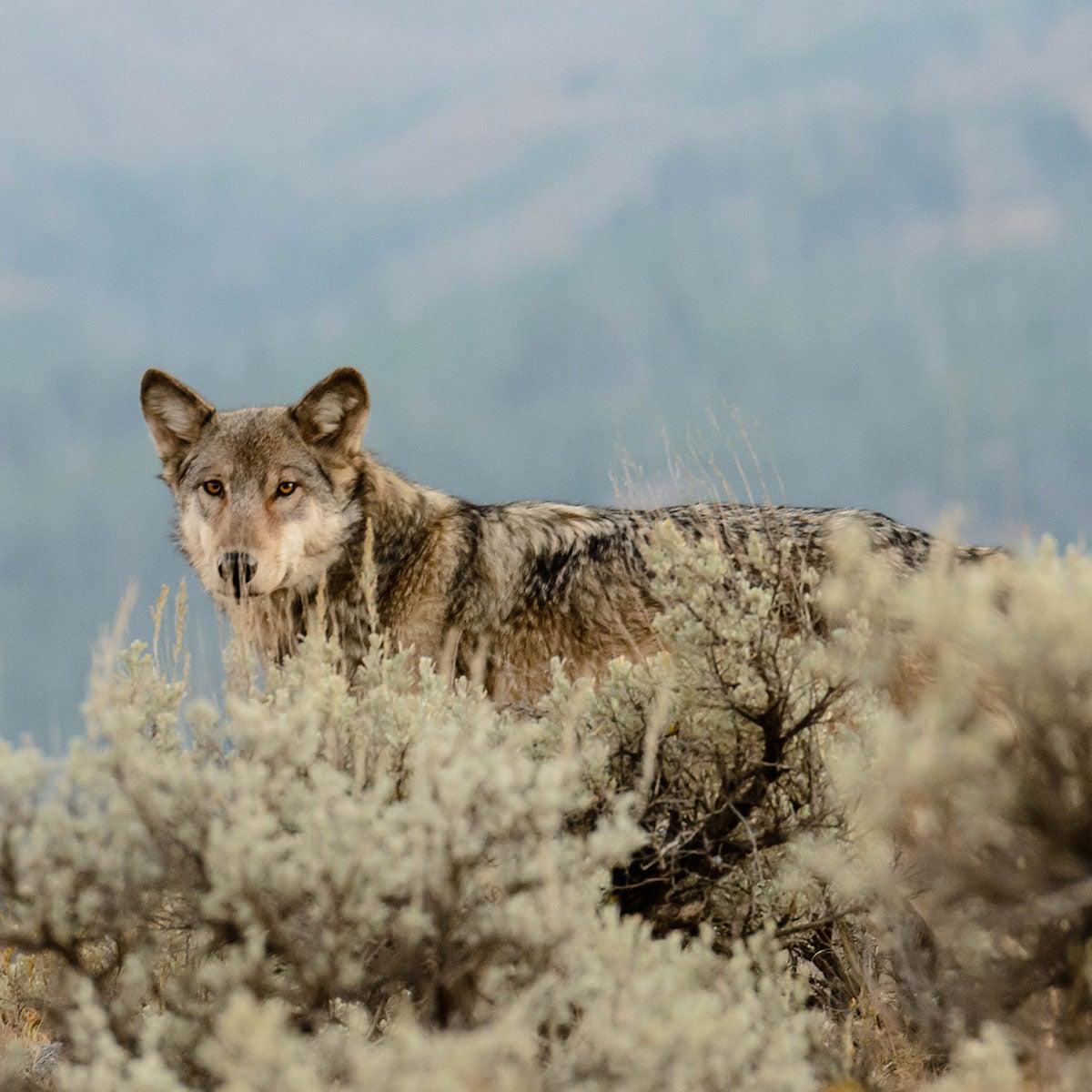
Gray Wolves
Gray wolves have come close to extinction in the northern Rocky Mountains, with a population of less than 50 only two decades ago. There are more than 1,500 wolves in the northern Rockies today, but they still face dangers due to killing by humans.
What's Happening Now On Apr. 2, 2009 the Obama administration stripped ESA protections for the threatened species in the northern Rocky Mountain states of Idaho and Montana and parts of Washington, Oregon and Utah.
[…Continue Reading…]
On Jun. 2, 2009, Earthjustice filed suit on behalf of conservation groups challenging the decision to delist the wolves. Also, in August 2009, Earthjustice sought an emergency injunction to halt wolf hunts in Idaho and Montana. Idaho authorized the intentional killing of 255 wolves and Montana authorized the intentional killing of 75 wolves in wolf hunts.
In September 2009, a federal district court in Montana determined that the delisting of wolves in the northern Rockies was likely illegal, but did not stop the ensuing wolf hunts in Idaho and Montana.
As a result of the hunts, 260 gray wolves were killed. With the addition of wolf killing by government agents in the name of livestock protection, more than 500 wolves have been killed in Montana and Idaho since ESA protections for northern Rockies wolves were removed.
Photo: © Galen Rowell / Mountain Light
Related