Posts tagged: Tr-Ash Talk

unEARTHED. The Earthjustice Blog

Tr-Ash Talk


    SIGN-UP for our latest news and action alerts:
   Please leave this field empty

Facebook Fans

Featured Campaigns

Everyone has The Right To Breathe clean air. Watch a video featuring Earthjustice Attorney Jim Pew and two Pennsylvanians—Marti Blake and Martin Garrigan—who know firsthand what it means to live in the shadow of a coal plant's smokestack, breathing in daily lungfuls of toxic air for more than two decades.

Coal Ash Contaminates Our Lives. Coal ash is the hazardous waste that remains after coal is burned. Dumped into unlined ponds or mines, the toxins readily leach into drinking water supplies. Watch the video above and take action to support federally enforceable safeguards for coal ash disposal.

ABOUT EARTHJUSTICE'S BLOG

unEARTHED is a forum for the voices and stories of the people behind Earthjustice's work. The views and opinions expressed in this blog do not necessarily represent the opinion or position of Earthjustice or its board, clients, or funders.

Learn more about Earthjustice.

View Lisa Evans's blog posts
02 May 2013, 12:00 PM
Toxic coal ash found on school paths in Florida
Truckloads of the coal ash product EZBase were delivered to one Florida homeowner's property.  (Clean Water Action)

Recent sampling of paths constructed of coal ash near J.L. Wilkinson Elementary School in Middleburg, Florida reveal high levels of vanadium, a hazardous substance linked to cardiovascular disease and nervous system damage. Vanadium levels were up to seven times higher than levels deemed safe for residential soil by the Florida Department of Environmental Protection.

Earthjustice sampled two paths near the school after concerns were raised that EZBase, a product made from toxic fly ash and bottom ash residuals at coal-burning power plants and marketed by Jacksonville Electric Authority, may have been used to construct paths near the elementary school.

Exposure to high levels of vanadium in the air can cause lung and cardiovascular damage. In addition, nausea, mild diarrhea and stomach cramps have been reported in people ingesting vanadium. Vanadium is classified as “possibly carcinogenic” by the International Agency for Research on Cancer. Children are particularly susceptible to impacts from toxic exposure due to low body mass and developing systems.

4 Comments   /   Read more >>
View Andrea Delgado's blog posts
19 March 2013, 12:34 PM
Budget resolution tees up fight against harmful amendments
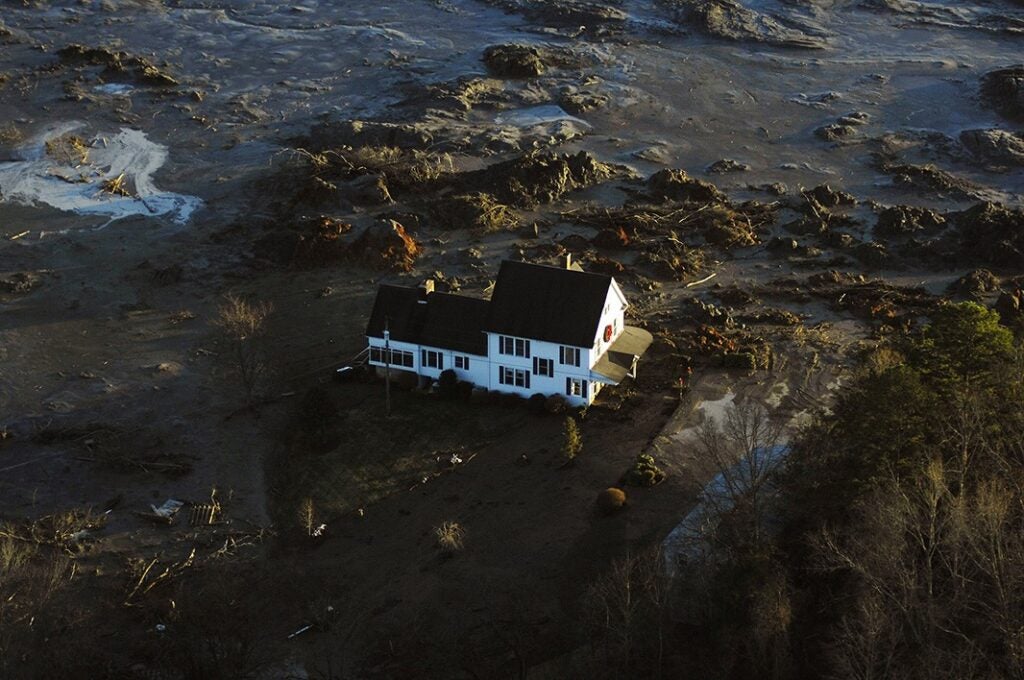
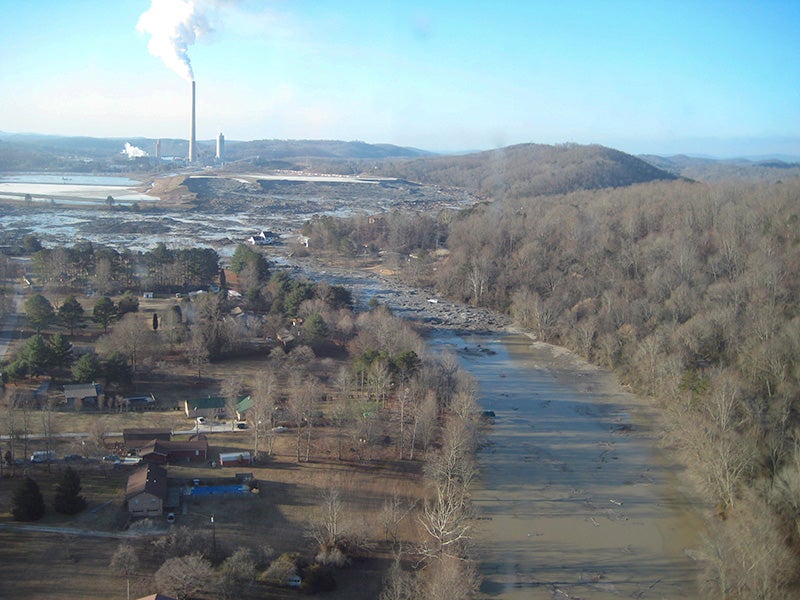
The devastating Kingston Fossil Plant coal ash spill in 2008. (TVA)

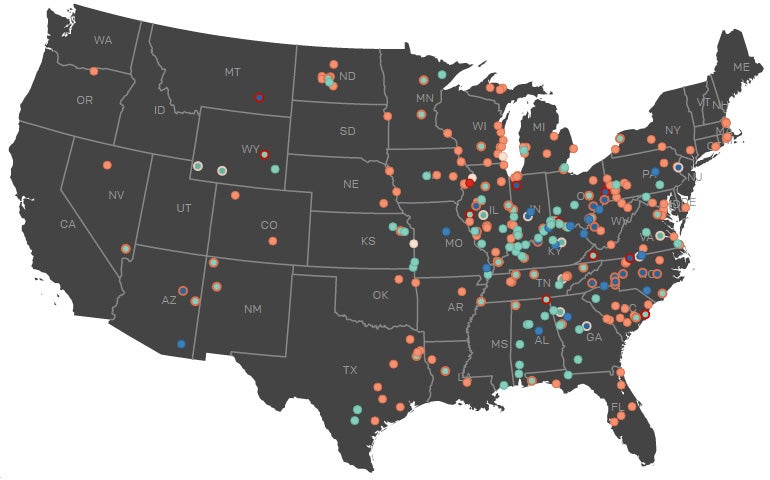
Arsenic-infused drinking water, the risk of cancer, and the fear of being washed away by a flood of toxic sludge are a burden of concern for Americans living near more than 1,300 toxic coal ash dump sites.They have expressed their concerns through numerous letters to Congress, petitions, and more than 450,000 public comments to the Environmental Protection Agency. They urge federal action to stop disposal practices that trap communities in clouds of toxic ash, contaminate drinking water, and lead to massive dam collapses.

Yet, protection from toxic heavy metals and standards that will prevent another dam failure are not solutions the EPA has provided. Meanwhile, as the administration plays a waiting game with potential disaster, citizens across the U.S. live in harm’s way.

View Debra Mayfield's blog posts
08 March 2013, 2:36 PM
University has a historic coal ash contamination problem
“Simply moving dangerous coal ash from one site to another contaminated site on campus is not being ‘Spartan Green.'"

My favorite aunt became a dean at Michigan State back in the early 1980’s. She was a role model for us all, assuming a level of power and influence that most women—especially African American women—had not been able access at that time. She, like many other students and faculty at the time, enjoyed the campus and resources it provided. But what she didn’t know was that the water that she drank, bathed in and used for cooking and cleaning and cleaning, may have been poisoned by toxic coal ash.

Last month, members of the Clean Energy Now Coalition, an alliance of nearly 50 environmental groups in Michigan aimed at educating citizens about the benefits of using clean, renewable energy, exposed the historical use of coal ash at Michigan State University and the dangers it poses to the health of students, faculty, and neighboring communities.

View Debra Mayfield's blog posts
08 March 2013, 10:32 AM
Tons of toxic, mostly unregulated coal ash, threaten state's lifeblood
Coal ash landfill at Florida's Stanton Energy Center, February 2012. (Angelique Giraud / CWA)

Though dubbed the Sunshine State, Florida’s lifeblood is water. With its wetlands, high water table, extremely porous soil and intricate ecosystem, the state's laws are intended to keep its water safe and clean, which is necessary for the state’s very survival.

Unfortunately, the state’s regulations are simply not good enough—especially when it comes to coal ash. Florida produces more than 8 million tons of coal ash each year, yet has one of the worst records in the nation for regulating it. There are no requirements in Florida for liners, siting design, maintenance, or groundwater monitoring for coal ash ponds; the permitting process for constructing coal ash landfills is almost non-existent. In fact, Florida is one of only two states that relaxed portions of its coal ash standards between 1988 and 2005. Something must be done, and Clean Water Action is doing it.

1 Comment   /   Read more >>
View Jared Saylor's blog posts
01 March 2013, 12:41 PM
Lawsuits by local and national groups clean up toxic coal ash sites
Pennsylvania residents Sabrina Mislevy and Barbara Reed stand near the Little Blue Run coal ash dump site. Litigation has led to the state phasing out the dump by 2016.

It’s been over four years since a billion gallons of toxic coal ash flooded a small town in Tennessee. We’ve been fighting ever since for the EPA to set federally enforceable safeguards to protect the thousands of communities across the country threatened by coal ash, but the agency has yet to act.

But just because the EPA isn’t doing anything doesn’t mean nothing is being done. While the agency twiddles its regulatory thumbs on much-needed protections from the arsenic, lead, mercury, selenium and other pollutants commonly found in coal ash, many local and national environmental groups are taking coal ash pond owners to court to get them to clean up the coal ash mess. The Center for Public Integrity published a story today outlining some of the dozens of legal actions happening from Montana to North Carolina where groups are challenging coal ash disposal using a variety of environmental laws.

3 Comments   /   Read more >>
View Angela Garrone's blog posts
12 February 2013, 12:30 PM
Equips communities on how to take on coal burning

Note from Lisa Evans: The National Association for the Advancement of Colored People (NAACP) last week released the "Coal Blooded Action Toolkit," which is a companion to its report, Coal Blooded: Putting Profits Before People, published jointly by the NAACP and Little Village Environmental Justice Organization and the Indigenous Environmental Network last November.

The 2012 report found low-income communities and communities of color are more likely to suffer the damaging effects caused by coal plant operations, including the disposal of toxic coal ash. Expressly designed for grassroots communities, the Coal Blooded Action Toolkit is a step-by-step guide on how to take action to address pollution from coal fired power plants, covering investigation, raising community awareness, litigation, direct action and much more. It is essential reading for those who care about protecting communities from toxic pollution and defending civil and human rights violated by the burning of coal.

The following Tr-Ash Talk guest post is written by Angela Garrone, Southeast Energy Research Attorney for the Southern Alliance for Clean Energy:

The National Association for the Advancement of Colored People (NAACP), in conjunction with Little Village Environmental Justice Organization and the Indigenous Environmental Network, released a report analyzing sulfur dioxide (SO2) and nitrogen oxide (NOx) emissions in conjunction with demographic factors, including race, income and population density. The report, entitled “Coal Blooded: Putting Profits Before People,” demonstrates the urgent need for community action focused on shutting down coal plants located in low-income communities and communities of color.

View Lisa Evans's blog posts
01 February 2013, 8:36 AM
Utility floats dangerous plan to barge toxic coal ash
Mississippi River at Vicksburg closed after barge hit railroad bridge and began leaking oil. (Photo: WLBT)

Utility giant FirstEnergy Corp unveiled plans last week to barge 3 million tons of coal ash annually nearly 100 miles on the Monongahela and Ohio rivers for disposal in an unlined pit in LaBelle, PA. The ash comes from its Bruce Mansfield Power Station—one of the largest coal burning power plants in the U.S.

There's not a thing right about this scheme, according to residents who take their drinking water from the river. Also unhappy are citizens of LaBelle, PA, whose water and air are already poisoned by nearly 15 years of coal ash dumping.

View Lisa Evans's blog posts
22 January 2013, 9:07 AM
GOP sponsors press CRS to change its unfavorable report on coal ash bills
Sen. Chuck Schumer (D-NY)

The Congressional Research Service, the non-partisan research arm of the Library of Congress, drew anger from two legislators after it issued an unfavorable report on their coal ash bills (S. 3512 and H.R. 2273). Sen. John Hoeven (R-ND) and Rep. David McKinley (R-WV) have aggressively pursued the CRS since early December, after it gave both bills a failing grade, finding their weaknesses “unprecedented” in environmental law. The CRS concluded in no uncertain terms that the bills lack a clear purpose and cannot ensure state standards “necessary to protect human health and the environment.”

In light of CRS’ unfavorable legal analysis, the reasonable course for Hoeven and McKinley was to redraft their bills—but instead they demanded that the CRS redraft their report. This is not the first time in recent months that Republicans have played this game.

View Lisa Evans's blog posts
15 January 2013, 8:37 AM
Toxicologist suggests nation's children can eat toxic ash
Water that has come into contact with coal ash has been found to contain poisonous levels of arsenic, lead and other pollutants at more than 200 sites across the nation.

In Missouri, rape apparently does not cause pregnancy, and it’s OK for children to eat coal ash.

When Missouri Republican Todd Akin said last August that “legitimate rape” rarely results in conception, the congressman caused quite a stir—and this offensive nonsense, broadcast coast to coast, likely cost him a Senate seat.

More provocative baloney was recently heard in Missouri—this time from toxicologist Lisa Bradley about the safety of children eating coal ash—the waste produced by burning coal.  Never mind that coal ash contains an alphabet soup of toxic trash, such as arsenic, hexavalent chromium, lead, mercury and a dozen other hazardous metals, Dr. Bradley testified at a public hearing in Union, MO that “a child could consume coal ash every day and have no increased exposure to arsenic.”

Dr. Bradley is a vice president and senior toxicologist at AECOM, a prominent international consulting firm that has received numerous contracts to investigate coal ash sites, including controversial investigations of the Kingston TVA disaster and the Town of Pines Superfund Site.

3 Comments   /   Read more >>
View Lisa Evans's blog posts
18 December 2012, 9:39 AM
S.3512 fails to ensure protection of public health, safety
CRS found that S.3512's and H.R.2273's weaknesses are “unprecedented” in environmental law.

The Congressional Research Service, dubbed the U.S. Congress’ 'think tank', recently released an authoritative analysis of S.3512 and—to the dismay of the bill’s stalwart sponsors—it’s a bust. CRS, a department of the Library of Congress and nonpartisan research tool for the House and Senate, recently weighed in definitively on the Senate and House coal ash bills, S.3512 and H.R. 2273, and concluded that the bills’ weaknesses are “unprecedented” in environmental law.

CRS found that the bills lack a clear purpose and would not ensure state standards “necessary to protect human health and the environment.” These bills—one passed by the House in October 2011 and the other now pending in the Senate—would prevent the EPA from ever setting federally enforceable safeguards for the disposal of toxic coal ash.

2 Comments   /   Read more >>