LA Hid Its Smog the Last Time It Hosted the Olympics. We Have a Better Game Plan This Time
LA can become a heavyweight in modern transit as it makes more electric bus progress.
With the 2028 Olympic and Paralympic Games just two years away, Los Angeles is moving forward on electrifying the LA Metro transit bus fleet. There is now a fighting chance that the world will see the inevitable swarms of visitors and residents being whisked around the region on clean, quiet, battery-electric buses rather than polluting versions — and that after the Games, Angelenos will be left with cleaner air and a better transit system.
New Budget Dollars Are Bringing Clean Buses to LA
Despite a tough funding year, in May the Metro Board approved a 30% increase in the agency’s budget for purchasing new battery-electric buses, raising the total to $47 million. Metro staff highlighted that non-polluting buses were a top priority amongst young riders who engaged in the budget process. This marks a major victory for the hundreds of Angelenos who urged Metro to electrify its transit buses ahead of the 2028 Games. It is also a real testament to the power of dedicated community advocacy.
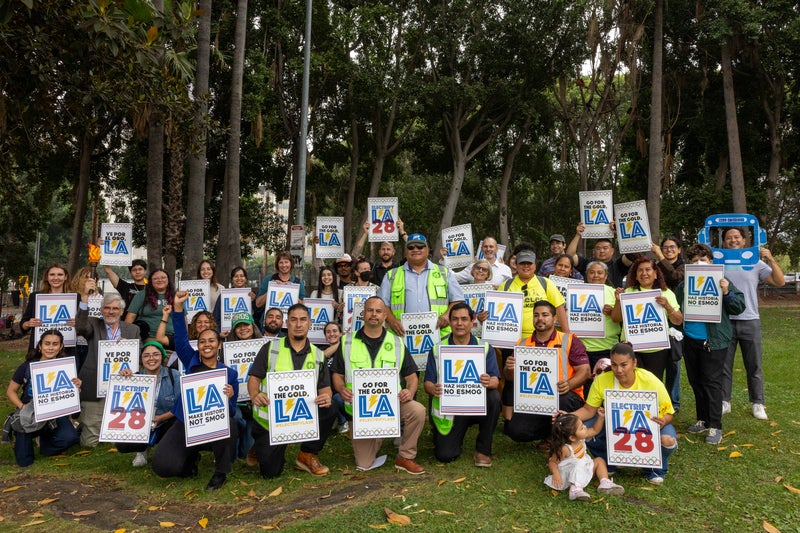
LA County Electric Truck and Bus Coalition and community members gather for a rally to support electrifying LA’s bus fleet (Tara Pixley for Earthjustice)
Based on estimates, this new funding could support the purchase of roughly 30 new electric buses. Electric buses currently make up only 6.46% of Metro’s overall fleet of just over 2,000 buses, so this additional funding is a key investment in new, clean buses that can cut the unhealthy air pollution that riders and drivers breathe.
And the good news is more non-polluting buses are coming our way. Metro just voted to buy 220 more electric buses this year — the second-largest electric transit bus purchase in the country. These buses put the agency within striking distance of electrifying 20% of its fleet. It’s fantastic news for both Angelenos’ lungs and our climate given that all-electric buses emit zero tailpipe pollution. While modern smog controls have helped Los Angeles make progress in cleaning its air, the American Lung Association still has a blunt warning for local residents: “If you live in Los Angeles County, the air you breathe may put your health at risk.”
A Game-Changing Opportunity to Fund the Bus Chargers LA Needs
As Metro rolls out more non-polluting buses, building the charging infrastructure to power them will be critical. This fall, Metro’s first electrified bus depot at its El Monte Transit Center is set to be completed. The scale of the project is impressive. In addition to four chargers that are intended for quick use during a driver’s break, the depot features extensive rows of overhead connectors that can charge up to 120 electric buses overnight.
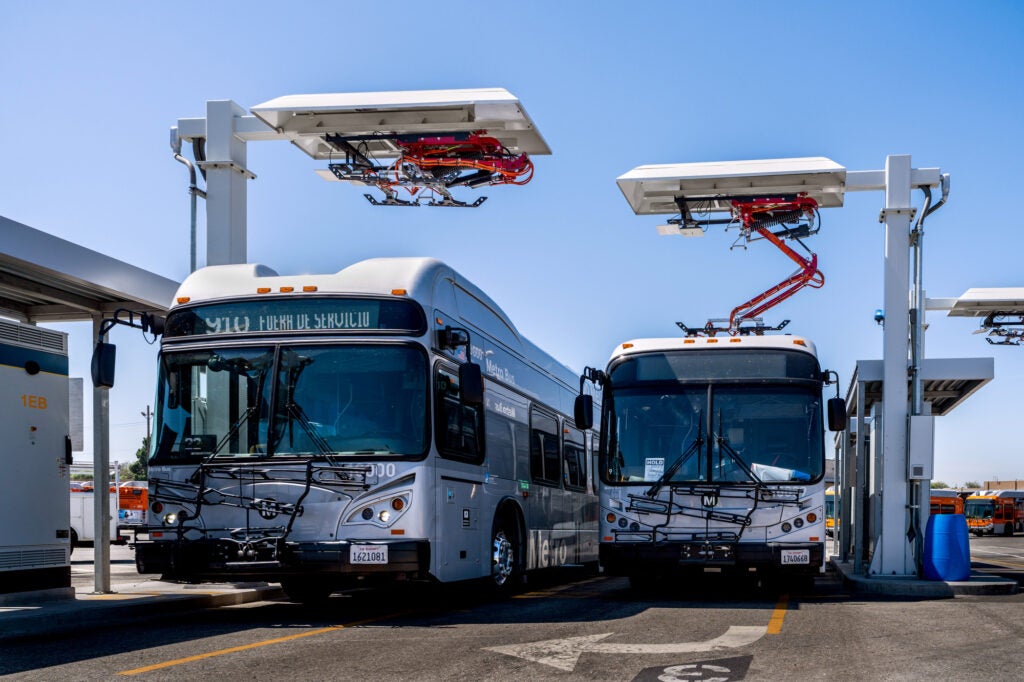
Electric buses at their charging stations during LA Metro’s tour and presentation about their bus electrification progress in El Monte, California, on August 21, 2026 (Hannah Benet for Earthjustice)
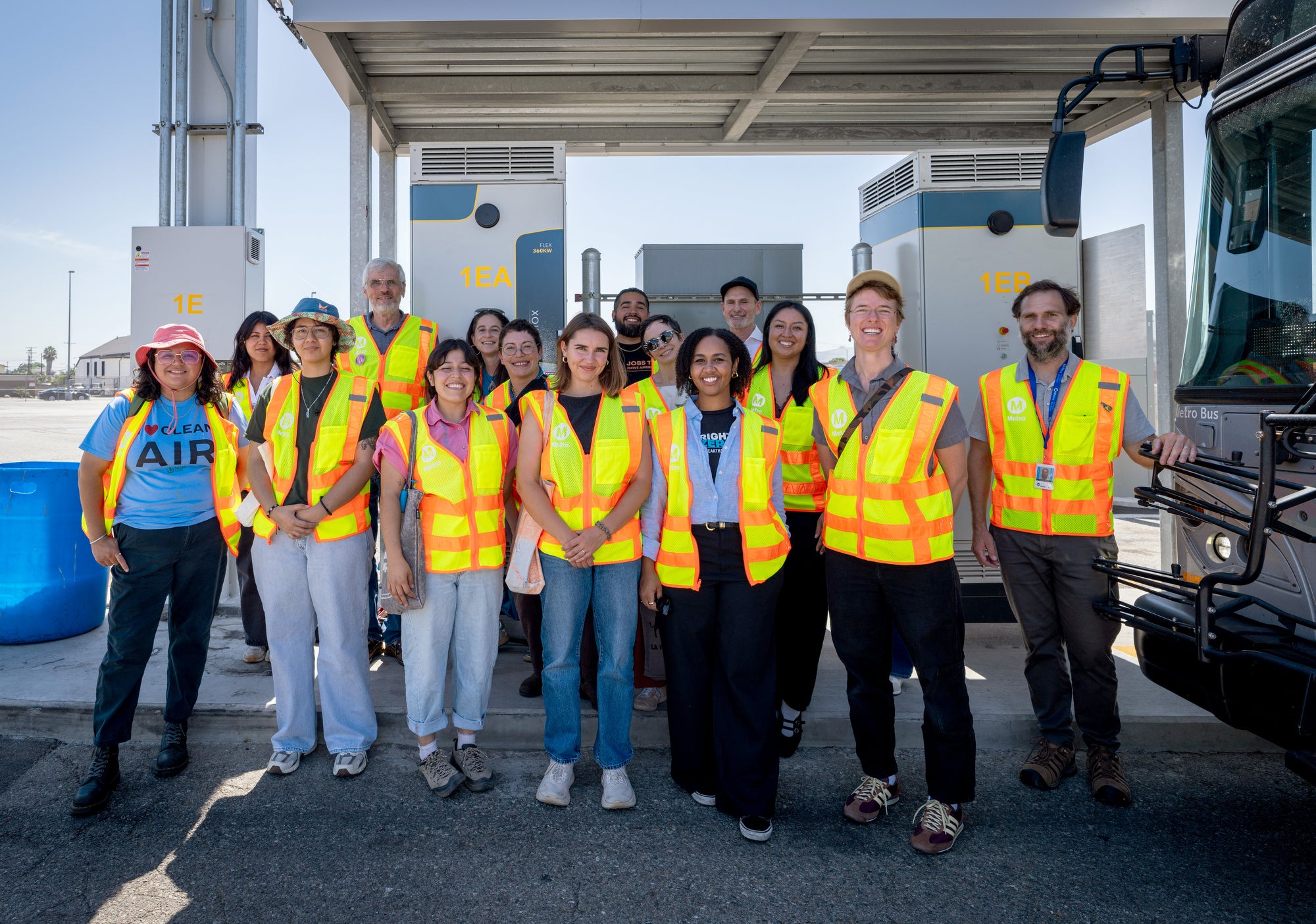
The El Monte bus depot supports Metro’s J Line, which will be its second all-electric transit bus line once completed. Shaun Miller, Metro’s Deputy Executive Officer who heads the zero-emission bus program, recently gave a tour of the bus depot for environmental, labor, and community groups.
Miller shared that Metro’s J Line serves some of the region’s most densely populated, congested, and polluted communities — so the public health benefits of electrification are significant. He also said the new electric buses will cost less than gas-powered buses at scale. Two more depots will be electrified by 2028, but funding remains a challenge for future depots. Miller emphasized that continued collaboration to secure funding will be critical for future electrification progress.
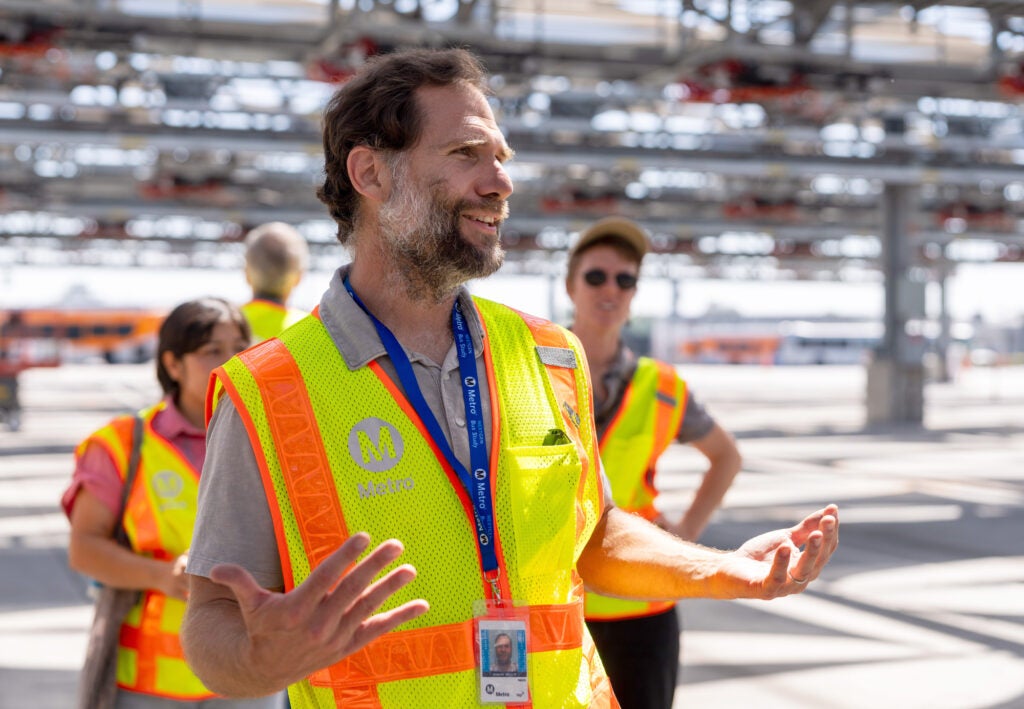
Shaun Miller, with LA Metro, leads a presentation about the agency’s bus electrification progress for the LA County Electric Truck and Bus Coalition in El Monte, California, on August 21, 2026 (Hannah Benet for Earthjustice)
Electrifying the rest of these depots will not be cheap. Fortunately, Los Angeles is approaching two pivotal moments that could help close that funding gap: LA County’s Measure M review process, and the 2028 Olympic and Paralympic Games.
Passed by voters in 2016, Measure M is a countywide half-cent sales tax that generates funding for a list of transportation projects that reduce congestion and cut pollution. Measure M generated $4.5 billion in revenue in its first five years. Every 10 years, Metro reviews project progress and the Board has an opportunity to add new projects to the plan, allowing them to fund priorities that were not originally included.
This could be a game-changing opportunity to fund bus charging, and it only comes once every decade. Because Measure M was approved a year before Metro made its landmark commitment to transition to a 100% zero-emission bus fleet, charging infrastructure is not included in Measure M’s list of projects. The review process began this summer and is expected to conclude in June 2027 — and we will be sure to advocate heavily for the bus charging dollars LA needs.
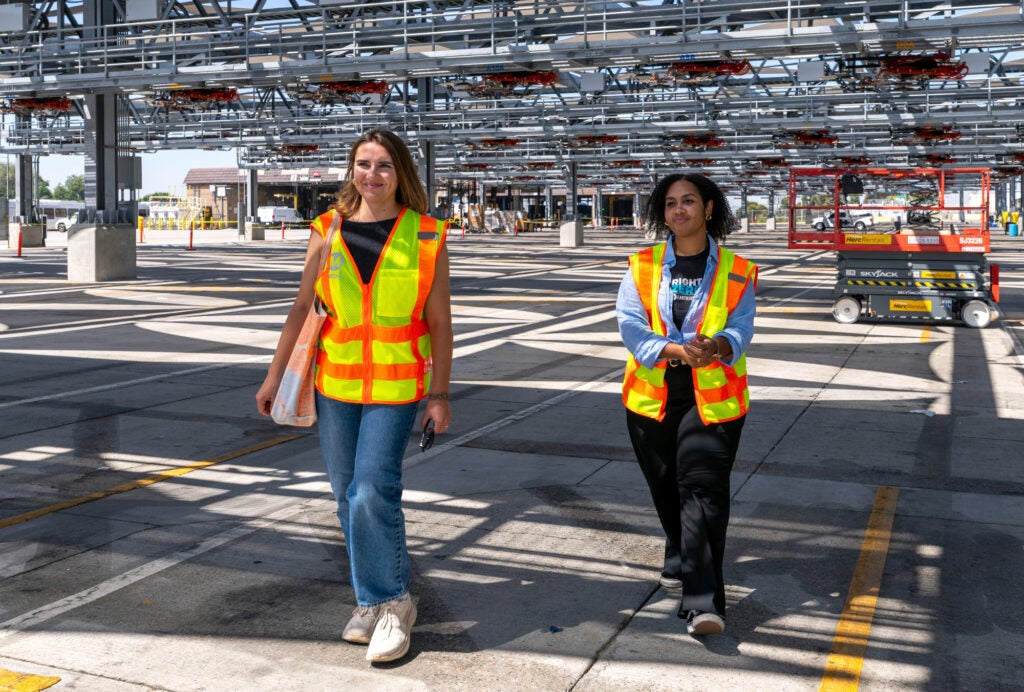
Earthjustice staff Kjellen Belcher and Candice Youngblood walk under the El Monte Station’s overhead bus depot chargers on August 21, 2026 (Hannah Benet for Earthjustice)
“Where Did You Hide Your Famous Smog?”
Local officials were so worried about traffic and smog during the 1984 Los Angeles Olympics that “workers were encouraged to stay home and an intensively planned traffic management system was enforced.” Those measures brought so much relief that the president of the International Olympic Committee joked, “Where did you hide your famous smog?”
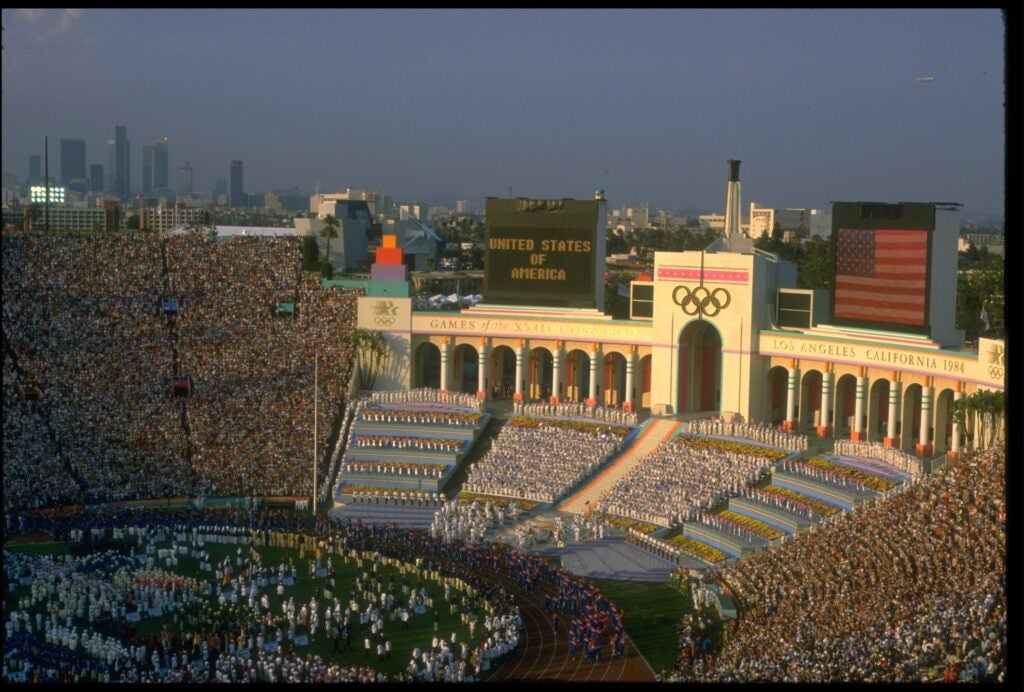
The opening ceremony for the LA 1984 Olympics — still smoggy, but above average after an intensively planned traffic management system was put in place (Steve Powell / Getty Images Sport)
Now, 44 years later, LA County can do better than two weeks of relief. The 2028 Olympic and Paralympic Games will bring a surge of economic activity to the Greater Los Angeles region, including a projected $593.5 to 729.8 million in sales and excise tax revenue.
This presents a once-in-a-generation chance to secure long-term transportation investments that will benefit Angelenos long after the closing ceremonies. By updating Measure M to fund bus charging infrastructure, Metro can ensure the 2028 Games deliver lasting public benefits: cleaner air in communities that need it most, family sustaining jobs, and better rides for those who depend on the bus every day.
While the 2028 Games will last only a few weeks, investments in a modern transit system can serve Angelenos forever. The whole world will soon have its eyes on the smog capital of the U.S.
As Los Angeles steps into the spotlight, there is no better time to show the world that Angelenos understand how to protect our lungs and the planet while delivering clean, modern public transportation for all.
Zoe Woodcraft
Public Affairs and Communications Officer, Earthjustice
zwoodcraft@earthjustice.org